

What if the most sustainable way to manage your daily comfort isn't found in a laboratory-synthesised compound, but within your own biology? For the 60% of Australians living with chronic conditions, the search for relief is often clouded by a valid fear of the side effects associated with traditional painkillers. You likely want a solution that respects your body's natural processes without the anxiety of long-term dependency or systemic toxicity.
This clinical guide provides a transparent look at PEA supplement long term use safety, detailing how this native molecule functions as a biological "dimmer switch" for inflammation and overactive nerve signals. We'll examine the scientific evidence behind its exceptional tolerability, address the rare side effects like mild nausea, and explain why there are no documented drug interactions to date. By the end of this article, you'll have the clarity needed to choose high-purity Australian supplements that support your long-term vitality with professional-grade confidence. It's time to move beyond the confusion and embrace a more disciplined, evidence-based approach to your health journey.
Key Takeaways
- Understand why PEA is recognised as a biologically native compound that supports your body's natural inflammatory response without the systemic risks of synthetic alternatives.
- Confirm PEA supplement long term use safety through an analysis of clinical trials that demonstrate high tolerability and minimal risk of liver or gastric complications.
- Learn about the rare and mild potential side effects, such as minor gastrointestinal discomfort, and why these occurrences are significantly lower than those associated with traditional painkillers.
- Discover how PEA can be safely used alongside common medications to provide synergistic support for nerve health without known drug-drug interactions.
- Identify the importance of choosing micronised, high-purity formulations to ensure optimal absorption and avoid the safety risks posed by industrial solvents or fillers.
Understanding Palmitoylethanolamide (PEA) Safety: A Biologically Native Compound
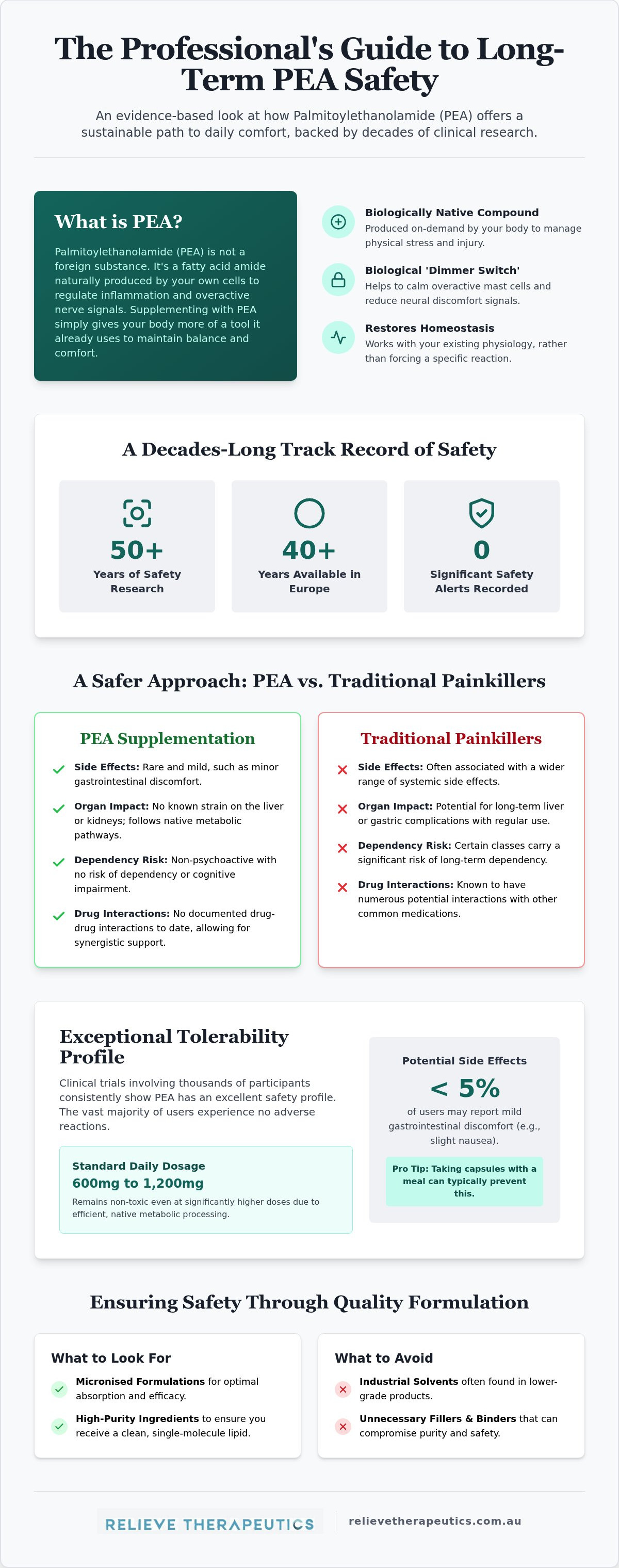
To understand the foundation of PEA supplement long term use safety, we must first recognise that Palmitoylethanolamide is not a foreign synthetic compound. It's a fatty acid amide naturally produced by your own cells. When your body encounters physical stress, injury, or persistent discomfort, it synthesises PEA on-demand to help regulate inflammatory responses. This production mechanism acts as a protective buffer, ensuring that local cellular stress doesn't spiral into systemic issues. Essentially, taking a supplement is simply providing your body with more of a tool it already creates and utilises to maintain internal balance. PEA is an endogenous lipid modulator with over 50 years of safety research.
For those asking What is Palmitoylethanolamide (PEA)?, it's helpful to view it as a biological "repair" molecule that works quietly in the background of our cellular chemistry. Unlike many pharmaceuticals that force a specific reaction, PEA works with your existing physiology to restore homeostasis. This native compatibility is the primary reason why it is so well-tolerated by the human body over extended periods.
The Discovery and History of PEA Safety
The story of PEA began in the 1950s when researchers identified it as a potent protective factor found in egg yolks. This discovery laid the groundwork for decades of investigation into its role in human health. In the 1990s, Nobel Prize-winning scientist Rita Levi-Montalcini validated its biological mechanism, proving how PEA calms overactive mast cells and reduces neural discomfort. This historical context provides a level of reassurance that few modern supplements can match. While it may feel like a recent arrival to some in Australia, PEA has been available in various forms across Europe for over 40 years. During this extensive timeframe, there have been no significant safety alerts or product recalls recorded, which underscores its reliable profile for long-term support.
Why Natural Does Not Always Mean Safe (And Why PEA is Different)
We often hear that "natural" is synonymous with "safe," but clinical experts know this isn't always true. Many herbal supplements contain complex, unpredictable chemistries that can lead to unexpected side effects or liver strain. PEA is different because it's a simple, single-molecule lipid. It follows well-understood, native metabolic pathways that your body already manages efficiently every day. Because the body recognises the molecule, it possesses specific enzymes designed specifically to break it down once its job is done. There is no "build-up" of foreign toxins; there is only a natural cycle of use and restoration. Furthermore, PEA is non-psychoactive and doesn't interact with the brain's reward centres. This distinction is critical for PEA supplement long term use safety, as it allows for consistent daily use without the risk of cognitive impairment or dependency.
Common Side Effects and Clinical Trial Data for PEA Supplements
Clinical trials involving thousands of participants have consistently demonstrated that Palmitoylethanolamide possesses an excellent safety profile. Unlike many pharmaceutical interventions that can leave users feeling lethargic or mentally "foggy," PEA doesn't cause cognitive impairment or hangover effects. This makes it an ideal candidate for Australians who need to remain alert and functional during their daily work and family activities. Research indicates that even at doses significantly higher than the standard 600mg to 1,200mg daily range, PEA remains non-toxic. This metabolic flexibility is a hallmark of PEA supplement long term use safety, as the body possesses efficient, native pathways to process and eliminate the compound without placing undue strain on the liver or kidneys.
Digestive Comfort and Tolerability
While the vast majority of users experience no adverse reactions, a small percentage may report mild gastrointestinal discomfort. This usually manifests as slight nausea or a sensation of heaviness in the stomach. These instances are rare and can typically be avoided by simply taking your capsules alongside a meal. The quality of the supplement plays a decisive role here. Lower-grade products often contain industrial solvents or unnecessary fillers that can irritate the digestive lining. To ensure you're choosing a formulation that prioritises your comfort, consult our high quality PEA capsules guide. By selecting a pure, micronised product, you minimise the risk of these minor digestive triggers.
Long-Term Use: Is PEA Safe for Chronic Management?
The question of whether a supplement remains safe over several months is vital for those managing chronic conditions. Clinical studies monitoring patients over six to twelve months of continuous daily use have shown no evidence of cumulative toxicity or organ damage. One of the most significant benefits of PEA is that it doesn't lead to pharmacological tolerance. You won't find yourself needing to constantly increase the dosage to achieve the same level of support, which is a common challenge with traditional opioids or gabapentinoids. This predictable nature is a cornerstone of PEA supplement long term use safety, providing peace of mind for those planning a multi-month wellness strategy. Additionally, there are no reported withdrawal symptoms or "rebound" effects if you decide to cease supplementation. For those looking to maintain this consistency, choosing a specialist provider of pure PEA ensures you have access to the high-purity support your body requires.
PEA vs. Traditional Pain Relief: An Australian Safety Comparison
Many Australians rely on common chemist staples like Ibuprofen or Aspirin for daily comfort. However, these Non-Steroidal Anti-Inflammatory Drugs (NSAIDs) are well-documented for their potential to cause gastric ulcers and significant stomach lining irritation. PEA operates through entirely different biological pathways. It doesn't inhibit the protective enzymes in the gut, making it a safer alternative for those with sensitive digestive systems. Similarly, while paracetamol is a standard choice, its regular use can lead to serious liver toxicity concerns over time. PEA offers a restorative approach that respects your internal chemistry. It provides a viable option for individuals who face health restrictions preventing the use of traditional anti-inflammatories. Long-term PEA use also lacks the cardiovascular risks often associated with chronic pharmaceutical interventions.
The Kidney and Liver Factor
Most standard medications place a heavy demand on the liver and kidneys for filtration and clearance. PEA is unique because it's metabolised locally within the cells by specific enzymes. This means it doesn't rely exclusively on hepatic or renal pathways to be processed. This decentralised metabolism is particularly advantageous for elderly patients who may have reduced organ function. It allows for consistent support without the fear of systemic accumulation. While the safety profile is high, determining the correct PEA dosage for pain is a vital step. We encourage you to consult with an Australian GP to tailor your intake to your specific health profile.
Non-Addictive Support for Nerve Health
Dependency is a major concern when discussing chronic discomfort management. Unlike opioid-based medications, PEA carries no risk of addiction or withdrawal. It doesn't target the brain's reward centres or opioid receptors. Instead, it focuses on calming overactive glia cells, mast cells, and neural pathways. This targeted action provides relief without affecting your central nervous system alertness. You won't experience the drowsiness, lethargy, or "brain fog" that often accompanies traditional prescriptions. Because of these qualities, PEA is increasingly used as a foundational element in non-opioid pain relief supplements. Choosing this path ensures your PEA supplement long term use safety while maintaining the mental clarity needed for daily life. It's a disciplined choice for those seeking substance over temporary fixes.
Drug Interactions and Contraindications: Who Should Be Cautious?
Clinical literature to date has not recorded any serious drug-drug interactions involving Palmitoylethanolamide. This is a significant factor in PEA supplement long term use safety, as it allows individuals to integrate the compound into existing health regimes without the fear of pharmacological clashes. For those already prescribed gabapentin or pregabalin, PEA often acts as a synergistic partner. It can enhance the overall comfort profile without increasing the side-effect burden of the primary medication. While the molecule is remarkably stable, certain groups should still exercise a higher level of professional care. It's vital for those with complex underlying conditions or those on multi-drug regimens to seek specialist advice before starting any new supplement.
To facilitate an informed discussion during your next consultation, we've prepared a checklist for your GP appointment. Discussing these points ensures your health journey remains transparent and safe:
- Review your current liver and kidney function test results.
- Confirm the specific dosage of PEA you intend to take daily.
- Provide a full list of your current medications, including over-the-counter chemist staples.
- Discuss your long-term goals for managing discomfort and vitality.
Pregnancy, Breastfeeding, and Children
The endogenous nature of PEA suggests a high level of biocompatibility, yet clinical trials haven't yet been specifically conducted in pregnant or lactating women. We recommend the precautionary principle in these cases. Unless specifically directed by your medical specialist, it's best to avoid use during these periods. Similarly, PEA supplementation is generally reserved for adult populations. Paediatric use should only occur under strict medical supervision to ensure safety and appropriate dosing for younger physiology.
Taking PEA with Other Supplements
PEA works exceptionally well when paired with other nerve-supportive nutrients. Combining it with B-vitamins or Alpha-lipoic acid can create a multi-layered approach to cellular health. Many Australians also find success using PEA alongside hemp-based products or natural anti-inflammatories like curcumin. To understand the best timing and combinations for these nutrients, read our guide on how to take PEA for nerve pain. This ensures you maximise the synergistic effects while maintaining a clean safety profile. If you're ready to begin your journey with a high-purity product, you can purchase pure PEA capsules directly from our Australian-based store.
Ensuring Safety Through Quality: The Relieve Therapeutics Standard
Choosing a supplement for daily use requires a high level of discernment. While the molecule itself is native to the body, the manufacturing process used to produce it can vary significantly between brands. Low-cost alternatives often bypass rigorous testing, which can lead to the presence of industrial solvents, heavy metals, or environmental impurities. These contaminants are the primary drivers of adverse reactions, rather than the PEA itself. Maintaining PEA supplement long term use safety depends entirely on the purity of the raw material. By selecting a dedicated Australian supplier, you ensure a level of accountability and local support that international marketplaces simply cannot provide.
The Importance of Purity and Testing
High-purity Palmitoylethanolamide production requires sophisticated laboratory environments and strict adherence to quality control protocols. At Relieve Therapeutics, we ensure our capsules are free from unnecessary allergens, synthetic colours, and industrial fillers. This clean approach minimises the metabolic load on your body, allowing you to focus on restoration rather than processing additives. Transparent labelling is a cornerstone of our philosophy; you deserve to know exactly what you're putting into your body. This clarity eliminates the anxiety often associated with starting a new wellness routine, providing the professional-grade reassurance you need for chronic management. It's a disciplined way to manage your vitality without the clutter of hidden ingredients.
Why Particle Size Matters for Your Stomach
The physical structure of the supplement is just as important as its chemical purity. Standard PEA is often produced in large, crystalline particles that are difficult for the digestive system to break down and absorb. This can lead to the minor gastric irritation mentioned earlier in this guide. Micronisation is the process of reducing these particles to a microscopic size, significantly increasing the surface area for absorption. Micronised PEA is easier for the body to process and move into the bloodstream efficiently. This improved bioavailability often means you can achieve the desired support with lower required doses, further reducing any minor side effect risks.
For those committed to a consistent routine, we recommend viewing our PEA 180 capsules guide. This bulk option supports a steady, safe routine for long-term comfort while ensuring you never miss a day of your recovery programme. Maintaining a consistent intake is essential for PEA supplement long term use safety, as it allows your body to maintain a stable level of this restorative molecule. Our focus remains on providing a reliable, high-purity ally for your personal health journey, backed by the quiet confidence of scientific rigour.
Empowering Your Long-Term Wellness Journey
Understanding the science of your own biology is the first step toward reclaiming your daily function. We've explored how Palmitoylethanolamide works as a native lipid to regulate discomfort without the systemic risks of traditional pharmaceuticals. By choosing a high-purity, micronised formulation, you ensure that PEA supplement long term use safety remains a cornerstone of your recovery strategy. This evidence-based approach allows you to manage chronic conditions with precision, transparency, and complete peace of mind. It's about moving toward a future defined by comfort rather than restriction.
As an Australian owned and operated specialist, Relieve Therapeutics is committed to providing high-purity, filler-free formulations for maximum safety. We offer free shipping on bulk orders across Australia, ensuring you can maintain a consistent routine without interruption. Browse our range of pure PEA capsules and start your journey to natural support today. You don't have to navigate this path alone; we're here to provide the reliable, scientific support you deserve for a more vital and vibrant future.
Frequently Asked Questions
Can PEA cause liver damage like other common painkillers?
No, PEA doesn't cause liver damage. Unlike paracetamol, which relies heavily on hepatic processing, PEA is an endogenous molecule metabolised locally by cellular enzymes. This decentralised process prevents the toxic accumulation often associated with synthetic painkillers. Clinical studies have shown no elevation in liver enzymes even with consistent daily use. It's a restorative option for those concerned about long-term organ health while managing chronic discomfort without the risks of hepatotoxicity.
Is it safe to take PEA every day for a long period of time?
Yes, it's safe to take PEA daily for extended periods. Because the body naturally produces this molecule, it doesn't recognise it as a foreign toxin. Long-term clinical trials spanning six to twelve months have confirmed that PEA supplement long term use safety is excellent. You won't develop a pharmacological tolerance, so there's no need to increase your dose over time. It remains a stable, reliable partner for sustained health support.
Does PEA interact with blood thinners or heart medication?
There are no documented interactions between PEA and blood thinners or heart medications to date. Its unique mechanism of action focuses on mast cells and glia rather than systemic pathways used by cardiovascular drugs. However, we always recommend a consultation with your cardiologist or GP before starting any new supplement. This ensures your specific medication regime remains balanced and effective while you introduce natural support for your nerve health and vitality.
Can I take PEA if I am pregnant or breastfeeding?
We recommend avoiding PEA during pregnancy or breastfeeding unless specifically advised by your medical specialist. While it's a native molecule, there's currently a lack of clinical trials involving these specific groups. Safety is our primary concern, so we follow the precautionary principle. Always discuss your wellness goals with your obstetrician to ensure any supplement you introduce is appropriate for both you and your baby's development during this sensitive time.
Will PEA make me feel high or sleepy during the day?
No, PEA won't make you feel high or sleepy. It doesn't target the brain's reward centres or central nervous system receptors responsible for sedation. Unlike some prescription medications that cause "brain fog" or lethargy, PEA works quietly at the cellular level. You can maintain your mental clarity and physical alertness throughout the day. It's a disciplined choice for Australians who need to stay productive while managing persistent discomfort with professional-grade support.
What should I do if I experience an upset stomach from PEA?
If you experience mild nausea, try taking your capsules alongside a substantial meal. This simple adjustment usually resolves any minor gastrointestinal discomfort. It's also vital to ensure you're using a high-purity, filler-free product. Impurities in lower-grade supplements are often the culprit behind digestive upset. Choosing a micronised formulation improves absorption and reduces the metabolic load on your stomach, ensuring a smoother experience during your recovery journey and daily function.
Is PEA safe for elderly patients with multiple health conditions?
PEA is generally considered safe for elderly patients, even those managing multiple health conditions. Its local metabolism by cellular enzymes reduces the strain on aging kidneys and livers. This makes it a preferred option for those who may be sensitive to the side effects of traditional anti-inflammatories. Maintaining PEA supplement long term use safety is particularly beneficial for seniors seeking to improve their daily function and mobility without complicating their existing medication schedules.
Can I take PEA alongside my prescription nerve pain medication?
Yes, PEA can be taken alongside prescription nerve pain medications like gabapentin or pregabalin. Research suggests a synergistic effect, where PEA provides additional support without increasing the side-effect profile of your primary medication. This multi-layered approach can be highly effective for managing complex discomfort. We encourage you to share your plan with your GP to ensure your combined regime is optimised for your specific recovery goals and long-term comfort and stability.