

Did you know that one in five Australians aged 45 and over is currently living with chronic pain? If you're part of this statistic, you've likely experienced the exhaustion of managing persistent discomfort while trying to decipher conflicting advice on supplement labels. It's completely natural to feel hesitant about whether your PEA dosage for pain is sufficient to provide real relief or if it might interfere with your current prescriptions.
We understand that you're looking for more than just a bottle of capsules; you're seeking a reliable strategy for restoration. This guide provides an evidence-based protocol for Palmitoylethanolamide (PEA) to help you manage discomfort and support your long-term nerve health. We'll outline a clear daily schedule, explain the science behind the 1200mg loading phase, and clarify when you can expect to see tangible results. By the end of this article, you'll have the clinical clarity needed to organise your intake with confidence and safety.
Key Takeaways
- Learn how Palmitoylethanolamide functions as a naturally occurring fatty acid to replenish your body's internal defences against persistent discomfort.
- Understand the clinical necessity of a 1200mg loading phase to ensure your PEA dosage for pain reaches the therapeutic levels required for tissue saturation.
- Discover how factors such as bioavailability and metabolic rate influence your unique requirements for effective lipid absorption and nerve support.
- Identify the specific intake adjustments needed to tailor your protocol for either nerve-related sensitivity or joint-based discomfort.
- Gain practical strategies for organising a split-dose routine that maintains a consistent steady state within your system for maximum efficacy.
Understanding Palmitoylethanolamide (PEA) Dosage: Why Precision Matters
Precision in dosage is often the deciding factor between lingering frustration and genuine relief. Many individuals approach supplementation with the same mindset as a quick-acting analgesic, expecting immediate results from a single pill. However, Palmitoylethanolamide (PEA) operates on a distinct biological principle. PEA is a fatty acid amide produced naturally in your body to manage inflammation and maintain cellular homeostasis. When you experience chronic discomfort, your system's demand for this molecule often outstrips its ability to produce it, leading to a state of deficiency. PEA is an endogenous modulator that requires consistent dosing to reach therapeutic saturation. Consequently, determining the correct PEA dosage for pain is about restoring a depleted biological reserve rather than simply masking a symptom for a few hours.
The Endogenous Nature of PEA
Your body is remarkably resilient. It synthesises PEA on-demand during periods of physical stress, injury, or cellular threat to protect your nervous system and regulate inflammatory responses. To better understand What is Palmitoylethanolamide (PEA), it helps to view it as a bio-identical lipid that mirrors your own internal chemistry. Because it is a natural lipid rather than a synthetic drug, your body handles it through specific metabolic pathways designed for fatty acid processing. It doesn't introduce a foreign substance to your system; instead, it provides the raw materials your body already knows how to use. This natural alignment is why many Australians find it a supportive addition to their wellness routine, as it works with the body's existing restorative mechanisms.
Why 'More' Isn't Always Better
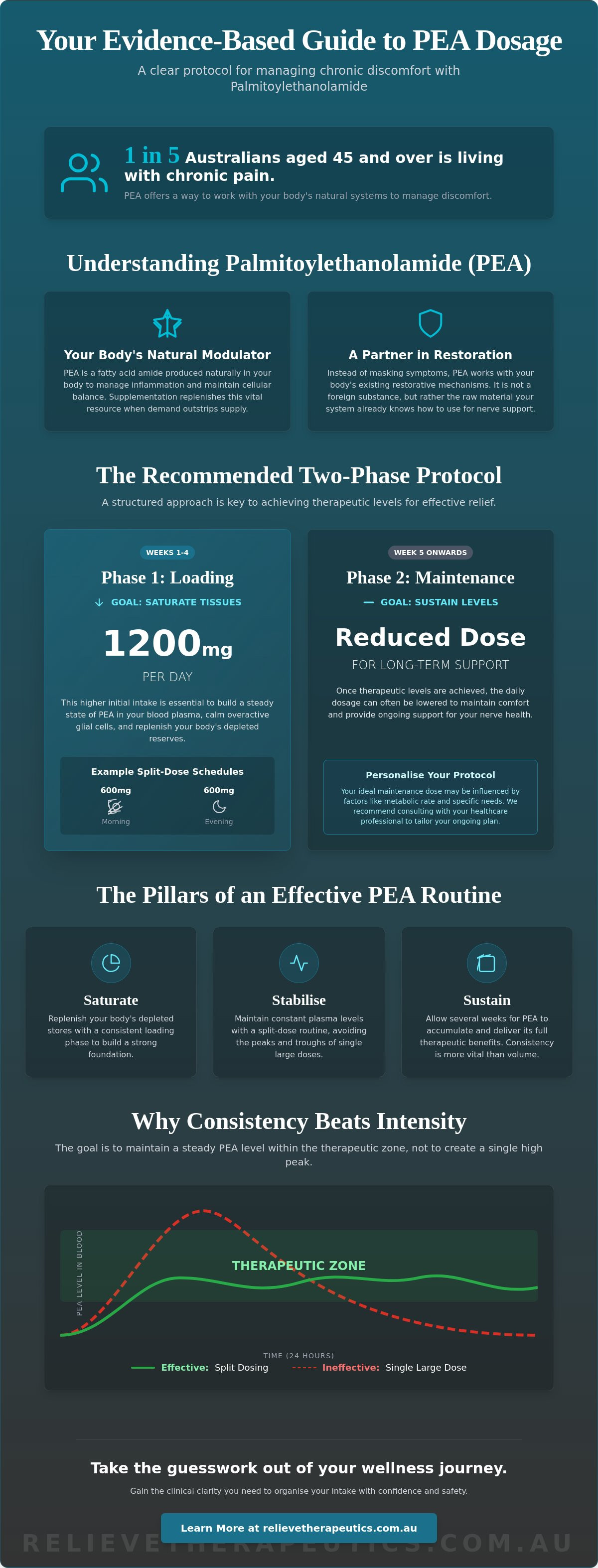
In the world of clinical wellness, the "ceiling effect" is a critical concept to grasp. Taking an excessive amount of a supplement in one sitting doesn't necessarily lead to better or faster results. Your body has a specific capacity for lipid absorption at any given time, and once that threshold is reached, the excess is simply not utilised. The primary objective is to achieve sustained blood plasma levels that remain steady throughout the day. A single high peak followed by a sharp drop-off is significantly less effective than a disciplined, moderate routine. When calculating your PEA dosage for pain, success is built upon three pillars:
- Saturate: Use a consistent loading phase to replenish depleted cellular stores over time.
- Stabilise: Maintain steady levels to prevent a dip in comfort and support nerve health.
- Sustain: Allow the lipid to accumulate over several weeks to see the full therapeutic benefit.
Consistency in timing is far more vital than the sheer volume of a single dose. By spacing your intake, you ensure your glial cells and nerve endings have a constant supply of the modulators they need to function correctly. This methodical approach transforms the supplement from a temporary fix into a reliable partner for long-term health.
The Recommended PEA Dosage Protocol: Loading and Maintenance Phases
Establishing a successful routine requires more than just a casual approach. Most clinical trials and health professionals suggest a structured protocol that begins with a high-intensity period. Specifically, a starting dose of 1200mg per day for the first month is widely considered the gold standard for an effective PEA dosage for pain. This initial stage is designed to saturate your tissues and calm overactive glial cells that contribute to chronic discomfort. By providing your system with a concentrated supply, you're effectively recharging the biological reserves we discussed in the previous section. It's a methodical way to signal to your body that the period of deficiency is over.
The Loading Phase (Weeks 1–4)
During these first four weeks, the goal is to build a steady state of Palmitoylethanolamide in your blood plasma. A systematic review and meta-analysis of clinical data confirms that this higher initial intake is particularly effective for those dealing with persistent nerve-related issues. To achieve this, you should split your 1200mg daily total into smaller increments. Taking 600mg twice daily or 400mg three times daily helps maintain a constant level of support throughout the day and night. If you're just starting out, our PEA 60 capsules serve as an ideal starter pack to guide you through this critical first month. Just remember that the Therapeutic Goods Administration (TGA) recommends consulting your healthcare provider if you plan to use PEA for more than 21 consecutive days to ensure your progress is properly monitored.
Transitioning to a Maintenance Dose
After approximately four to eight weeks of consistent use, many users find they can reduce their daily intake without losing the benefits they've gained. This is known as the Maintenance Phase. You'll know you're ready to transition when your discomfort levels have stabilised and your daily function has improved. A common maintenance range is between 600mg and 900mg per day. It's vital to monitor your symptoms closely during this reduction; if you feel a return of previous sensations, you may need to return to the loading dose for another fortnight. For those moving into this long-term phase, the PEA 180 capsules offer the best strategic value for sustained support. You can explore our full range of PEA options to find the quantity that best suits your personal protocol. This disciplined approach ensures you aren't just taking a supplement, but actively managing your path to restoration.
Factors Influencing Your PEA Dosage Requirements
No two people experience discomfort in the exact same way. Consequently, your ideal PEA dosage for pain depends on several physiological variables that determine how well your body processes the supplement. Bioavailability, or the amount of the substance that actually enters your circulation, is the most significant factor here. While your metabolic rate and body weight play minor roles in how lipids are processed, they aren't the primary determinants of success. Instead, the severity and duration of your condition often dictate how long you'll need to remain in the loading phase. Standard PEA has poor solubility, making the choice of high quality PEA capsules critical for ensuring the active ingredient actually reaches your cells.
When determining your personal requirements, it's helpful to consider the following biological factors:
- Duration of symptoms: Long-standing issues often require a more extended loading phase to overcome chronic depletion.
- Condition severity: Intense discomfort may necessitate staying at the 1200mg level for the full eight weeks.
- Digestive health: Your gut's ability to process lipids can influence how much PEA is absorbed into the bloodstream.
Micronisation and Absorption Efficiency
The physical structure of the supplement is just as important as the dose itself. Standard PEA consists of large, crystalline particles that are difficult for the human digestive tract to break down and absorb effectively. To solve this, advanced manufacturing processes use micronisation to reduce these particles to a fraction of their original size. Smaller particles significantly increase the total surface area available for interaction with the gut lining, which leads to far superior uptake. This enhanced micronisation may allow for more efficient dosing because a higher percentage of each capsule is actually utilised by the body. Without this process, much of your PEA dosage for pain might simply pass through your system without providing the intended support.
Individual Biological Response
It's essential to remember that every Australian's endocannabinoid system is unique. This internal network of receptors and lipids regulates everything from mood to pain perception, and its current state will influence your results. Some individuals report a noticeable shift in their comfort levels within the first two weeks of the loading phase. For others, particularly those who have managed discomfort for many years, it can take up to eight weeks for the saturation effect to take hold. Patience is your greatest ally. Giving up too early often means missing the window where the cumulative benefits finally peak. Success comes to those who stick to the programme and allow their biology the time it needs to recalibrate.
Tailoring PEA Intake for Specific Types of Discomfort
While the standard protocol provides a solid foundation, the specific nature of your discomfort may require a more nuanced approach. The way your body utilises Palmitoylethanolamide can vary depending on whether the source of your distress is mechanical, inflammatory, or neurological. Adjusting your PEA dosage for pain according to these categories ensures that you aren't just following a generic chart, but addressing the unique biological environment of your condition. Before making any significant changes to your regimen, always consult with an Australian healthcare professional to ensure the protocol aligns with your overall health profile.
Dosage for Neuropathic and Nerve-Related Pain
Nerve-related issues, such as those discussed in our guide on palmitoylethanolamide for sciatica, typically demand the most disciplined adherence to the 1200mg loading protocol. Nerve cells and their supporting glial cells require high saturation levels to effectively dampen the "fire" of overactive signals. For conditions involving nerve compression or damage, maintaining this higher intake for the full eight weeks is often necessary to see a shift in baseline comfort. If you are navigating these complex sensations, referring to our supplement for neuropathy Australia resource can provide deeper context on why saturation is so vital for neurological restoration.
Supporting Chronic Inflammatory Conditions
Systemic inflammatory conditions operate through different pathways, often involving the over-activation of mast cells. PEA works by down-regulating these cells, effectively lowering the volume of the body's inflammatory response. While localised joint discomfort might respond well to a slightly lower maintenance dose of 600mg once the initial loading phase is complete, general systemic issues often benefit from a sustained 900mg dose. A practical tip for Australians looking to maximise their results: take your capsules with a meal containing healthy fats, such as avocado or olive oil. Since PEA is a lipid, this simple adjustment can significantly improve the absorption efficiency of your daily intake.
For those managing fibromyalgia, consistency is the primary challenge. Because this condition involves widespread sensitivity, maintaining level coverage throughout a 24-hour period is essential. Splitting your PEA dosage for pain into three 400mg doses (morning, afternoon, and night) can prevent the "troughs" in blood plasma levels that might lead to a flare-up. This steady-state approach provides the reliable support needed for daily function and long-term stability. You can order your PEA capsules online to begin your tailored protocol today and support your journey toward restoration.
Practical Tips for Organising Your PEA Supplement Routine
Success with Palmitoylethanolamide is a marathon, not a sprint. While many pharmacological interventions provide a rapid, short-lived effect, optimising your PEA dosage for pain is about the steady accumulation of lipids within your system. Consistency is the most critical factor in achieving a positive outcome. To maximise this effect, we recommend taking your capsules with food. Because PEA is a fat-soluble molecule, consuming it alongside healthy fats, such as eggs, avocado, or a dash of olive oil, significantly enhances its uptake in the gut. This simple adjustment ensures you're getting the full value from every dose you take and helps the lipid integrate seamlessly into your cellular membranes.
Timing and Splitting Doses for Maximum Coverage
Maintaining a steady state in the blood is vital for long-term nerve support. Most practitioners suggest a 12-hour gap between doses to ensure level coverage across the day and night. The easiest way to manage this is by integrating your intake into your morning and evening meal routines. This creates a predictable habit that's hard to forget. If you happen to miss a dose, there's no need to panic or double up at the next meal. Simply resume your normal schedule. The goal is long-term saturation, so a single missed capsule won't derail your progress as long as your overall habit remains disciplined. Resilience in your routine is far more important than a single day of perfect timing.
Tracking Your Progress and Titration
It's often difficult to notice subtle, incremental changes in comfort when you're focused on the demands of daily life. We suggest keeping a simple diary to track your comfort levels over the first 60 days using a basic 1-10 scale. Documenting your morning stiffness, your ability to perform daily tasks, and your sleep quality provides a clear picture of your trajectory. This data becomes invaluable when you eventually begin the "titration" process. Titration is the methodical approach of slowly finding the lowest daily dose that maintains your hard-won relief without allowing symptoms to return.
Understanding how to take PEA for nerve pain involves more than just an initial protocol; it's a commitment to a long-term plan for biological restoration. By monitoring your journey with precision, you gain the confidence to adjust your PEA dosage for pain based on real evidence rather than guesswork. Success isn't found in a single pill, but in the cumulative power of a well-maintained routine that respects your body's natural pace of healing.
Take the Next Step Toward Lasting Restoration
Finding the right PEA dosage for pain is the first step toward reclaiming your daily vitality. Success relies on a disciplined 1200mg loading phase to saturate your system, followed by a transition to a sustainable maintenance routine. By prioritising consistency and enhancing absorption with healthy fats, you're giving your body the bio-identical support it needs to recalibrate its internal response to discomfort. This methodical approach transforms a simple supplement into a powerful ally for your long-term nerve health.
At Relieve Therapeutics, we're proud to be Australian owned and operated, providing pure PEA capsules with no unnecessary fillers. Our range is designed to support you at every stage, whether you're just starting your loading phase or maintaining your progress. You can Browse Our Range of High-Quality PEA Capsules in 60, 120, and 180-count options to find the perfect fit for your protocol. You don't have to navigate this journey alone; we're here to provide the clinical clarity and quality you deserve. Start your path to restoration today.
Frequently Asked Questions
How long does it take for PEA to start working for pain?
PEA typically requires a period of 2 to 8 weeks to achieve its full therapeutic effect. Because it works by saturating your tissues and calming overactive glial cells, the benefits are cumulative rather than immediate. Some Australians report subtle changes within the first fortnight, but the most significant shifts in comfort usually occur after the first month of consistent use. Patience during the loading phase is essential for long-term success.
Can I take 1200mg of PEA all at once?
While you can take your full daily dose in a single sitting, splitting it into two or three smaller doses is far more effective. Taking 600mg in the morning and 600mg at night helps maintain a steady concentration of the lipid in your blood plasma. This consistent coverage prevents the "dips" in support that can occur with a single large dose, providing more reliable protection for your nervous system throughout the day.
Is it safe to take PEA with other pain medications?
PEA is generally considered safe to use alongside other medications because it is a bio-identical lipid already found in your body. It doesn't typically interact with common pharmaceutical scripts; however, it's vital to discuss your PEA dosage for pain with your GP or specialist. They can help you monitor your progress and ensure that your combined regimen is optimised for your specific health requirements and personal safety.
What happens if I stop taking PEA after the loading phase?
If you stop taking the supplement entirely, your internal reserves will slowly deplete, and your discomfort may return to its previous levels. Instead of stopping, most users transition to a maintenance dose of 600mg to 900mg per day. This lower amount is usually sufficient to sustain the progress made during the loading phase while ensuring your endocannabinoid system remains supported and balanced over the long term.
Should I take PEA on an empty stomach or with food?
You should always take your capsules with a meal that contains healthy fats to ensure maximum absorption. Since Palmitoylethanolamide is a fat-soluble molecule, its uptake in the digestive tract is significantly improved when taken with foods like eggs, avocado, or oily fish. Taking it on an empty stomach may lead to poor bioavailability, meaning your body won't receive the full benefit of the dose you've taken.
Is there a maximum daily dose for Palmitoylethanolamide?
Most clinical research focuses on a maximum daily intake of 1200mg for managing chronic discomfort. While some specialised protocols might use higher amounts under strict medical supervision, 1200mg is considered the standard upper limit for general supplemental use. Sticking to this evidence-based PEA dosage for pain ensures you avoid the "ceiling effect" where your body can no longer effectively process and utilise the additional lipid.
Do I need a prescription for PEA in Australia?
No, you don't need a prescription to purchase PEA in Australia. It's a permissible ingredient in "listed" medicines regulated by the Therapeutic Goods Administration (TGA), meaning it's available over the counter from pharmacies and health stores. However, the TGA recommends that you consult a healthcare professional if you plan to use the supplement for more than 21 consecutive days to ensure your chronic pain is being managed correctly and safely.
Can I take PEA long-term for chronic management?
Yes, many individuals use PEA as a long-term ally in their chronic pain management strategy. Because it is a naturally occurring molecule with a high safety profile, it's well-suited for sustained use over many months or even years. The key is to find your lowest effective maintenance dose after the initial loading period. Regular check-ins with your healthcare provider will ensure your protocol remains effective as your needs evolve.