

What if the most effective way to manage persistent discomfort isn't by masking the signal, but by recalibrating your body's internal alarm system? For many Australians, the nightly battle with burning sensations or pins and needles makes restorative sleep feel like a distant memory. You've likely felt the frustration of medications that leave you feeling foggy or a fear of long-term dependency. Exploring pea for nerve pain offers a different path. It's a naturally occurring fatty acid that works with your biology to address the source of the fire rather than just the smoke.
In this guide, you'll discover how Palmitoylethanolamide (PEA) works at a cellular level to stabilise overactive nerves and restore calm to your routine. We'll explore the science behind its role as a biological modulator, the importance of consistent use, and how to integrate it safely into your wellness plan. Whether you're looking to improve mobility, reclaim sleep quality, or find a sustainable way to support your nervous system, this evidence-based approach provides clarity. By understanding how this compound supports your natural defences, you can move toward a life defined by vitality rather than restriction.
Key Takeaways
- Understand how PEA acts as a biological modulator to recalibrate your body's overactive alarm system at a cellular level.
- Learn to identify the role of glial cells in persistent discomfort and the natural mechanisms used to stabilise them for lasting relief.
- Discover the specific dosage protocols and timelines required when utilising pea for nerve pain to achieve optimal results over twelve weeks.
- Compare the safety profile of natural fatty acid amides against traditional options to avoid common issues like brain fog or daytime drowsiness.
- Gain insights into selecting high-purity supplements that prioritise absorption by excluding unnecessary synthetic fillers and binders.
Understanding Nerve Pain and the Role of Palmitoylethanolamide (PEA)
Persistent discomfort often feels like a faulty house alarm that won't stop ringing. In a healthy state, your nerves send signals only when there is an actual threat or injury. When you experience neuropathic discomfort, this alarm system becomes overactive. It continues to fire even after the initial cause has healed, or sometimes for no visible reason at all. Approximately one in five Australians lives with this type of chronic signal, which can significantly impact daily mobility and mental well-being. Common conditions in Australia that follow this pattern include sciatica, where the lower back nerves are compressed, and diabetic neuropathy, which often affects the feet and hands.
Unlike traditional analgesics that simply mask a signal, Palmitoylethanolamide (PEA) acts as a protective molecule. It is a naturally occurring fatty acid amide that your body produces whenever tissues are under stress or facing inflammation. Rather than acting like a chemical "off switch," it functions more like a volume knob, gradually turning down the intensity of the overactive signals. This biological modulation makes the use of pea for nerve pain a distinct approach to long-term management.
What is Neuropathic Pain?
Living with nerve-related discomfort involves sensations that are often difficult to describe to those who haven't felt them. You might experience sharp, "electric shock" jolts, intense burning, or a persistent "pins and needles" tingling. These sensations occur because the nerves themselves are damaged or hyper-sensitive. This is why standard over-the-counter options often prove ineffective; they target tissue inflammation rather than the misfiring nerve fibres. At the heart of this struggle is neuroinflammation, a process where the nervous system remains in a state of high alert, sustaining discomfort long after it should have subsided.
PEA: The Body’s Natural Defence Molecule
Your body is designed to manage its own inflammatory responses, but this system has limits. During periods of chronic injury or prolonged physiological stress, your natural PEA reserves can become depleted. When your levels drop, the body loses its ability to switch off the inflammatory "alarm," leading to a cycle of persistent sensitivity. Supplementing with pea for nerve pain aims to restore these essential levels to support internal homeostasis. By replenishing this compound, you provide your nervous system with the tools it needs to calm itself naturally. Palmitoylethanolamide is a lipid messenger that organises the inflammatory response.
The Science of Relief: How PEA Calms Overactive Glial Cells
To understand why traditional options often fail to provide lasting comfort, we must look at the non-neuronal cells in your nervous system. Glial cells are often described as the "housekeepers" of the brain and spinal cord. In a healthy state, they maintain the environment, clear debris, and support neurons. However, when these cells become "angry" or overactive due to chronic injury, they shift from maintenance to a pro-inflammatory state. The use of pea for nerve pain focuses on this underlying cellular environment, helping to return these housekeepers to their quiet, supportive roles.
A primary mechanism of this compound involves the stabilisation of mast cells. These are immune cells that, when triggered, undergo a process called degranulation, releasing a flood of inflammatory chemicals and histamines. PEA helps prevent this excessive release. It also acts directly on the PPAR-alpha receptor, which functions as a biological switch within the cell nucleus. When PEA flips this switch, it reduces the expression of pro-inflammatory genes. This cellular approach is fundamentally different from traditional drugs that simply block pain receptors; instead, it addresses the biological source of the overactive signal. For those managing long-term conditions, selecting high-quality PEA capsules can be an essential step in supporting this internal balance.
Beyond the Endocannabinoid System
While PEA is often categorised as an "endocannabinoid-like" molecule, it's important to clarify how it interacts with your body. It doesn't bind directly to the CB1 or CB2 receptors, meaning it is entirely non-psychoactive and won't produce a "high." Instead, it works through what scientists call the "entourage effect." By inhibiting the enzymes that break down your body's natural cannabinoids, PEA effectively boosts your own internal levels of these protective compounds. It's a sophisticated way of enhancing your body's existing toolkit for restoring homeostasis without the side effects associated with synthetic alternatives.
The Importance of Micronisation for Absorption
One challenge with standard Palmitoylethanolamide is its physical structure. In its raw form, the particles are large and difficult for the digestive system to break down, leading to poor bioavailability. Micronisation is a specialised manufacturing process that reduces these particles to a microscopic size. This increase in surface area allows for significantly better absorption into the bloodstream. Utilising micronised palmitoylethanolamide ensures the compound can actually reach the overactive glial cells it's intended to support. Without this process, much of the supplement may simply pass through the system unused, making pea for nerve pain far less effective for the user.
Navigating Natural Alternatives: PEA in the Australian Healthcare Landscape
Australians are increasingly seeking alternatives to conventional management strategies. This shift stems from a desire to avoid the heavy side effects often associated with long-term pharmaceutical use. While traditional medications serve a purpose in acute care, they frequently introduce challenges like cognitive "fog," daytime fatigue, or a fear of dependency. In this context, the role of pea for nerve pain has gained significant attention within local clinical circles. It is viewed as a non-prescription option that supports the body's innate recovery mechanisms rather than overriding them. This movement reflects a broader trend toward patient-centred care, where individuals take an active role in their physiological well-being.
PEA vs. Standard Pharmaceutical Options
The primary advantage of Palmitoylethanolamide lies in its high tolerability and lack of known drug interactions. Most users report a lack of the "zombie-like" drowsiness or gastrointestinal upset that can accompany synthetic alternatives. Because it is a molecule your body already recognises and produces, the risk of adverse reactions is remarkably low. Many Australians are transitioning toward non-opioid pain relief supplements to reclaim their mental clarity and daily function. PEA is noted for being non-psychoactive, non-habit-forming, and highly tolerable. It is important to remember that PEA is a dietary supplement designed for chronic support. It's not a "cure" or a medicine, but a targeted way to restore balance to an overactive nervous system.
Complementary Support: Using PEA with Other Therapies
Effective management rarely relies on a single solution. A multi-modal approach yields the best outcomes for those with persistent discomfort. PEA integrates seamlessly into broader health plans, often enhancing the progress made during physical therapy or exercise physiology sessions. By calming the "noise" of the nervous system, it allows individuals to engage more effectively with their rehabilitation exercises. Diet and lifestyle also play crucial roles; reducing pro-inflammatory foods and prioritising sleep can further lower neuroinflammation. When introducing pea for nerve pain into your routine, always consult your Australian GP or healthcare professional. This is particularly important if you're already managing complex health conditions. This collaborative strategy ensures professional oversight while moving you closer to your goals of improved mobility and restored sleep quality.
A Practical Guide to Taking PEA: Dosage, Consistency, and Timelines
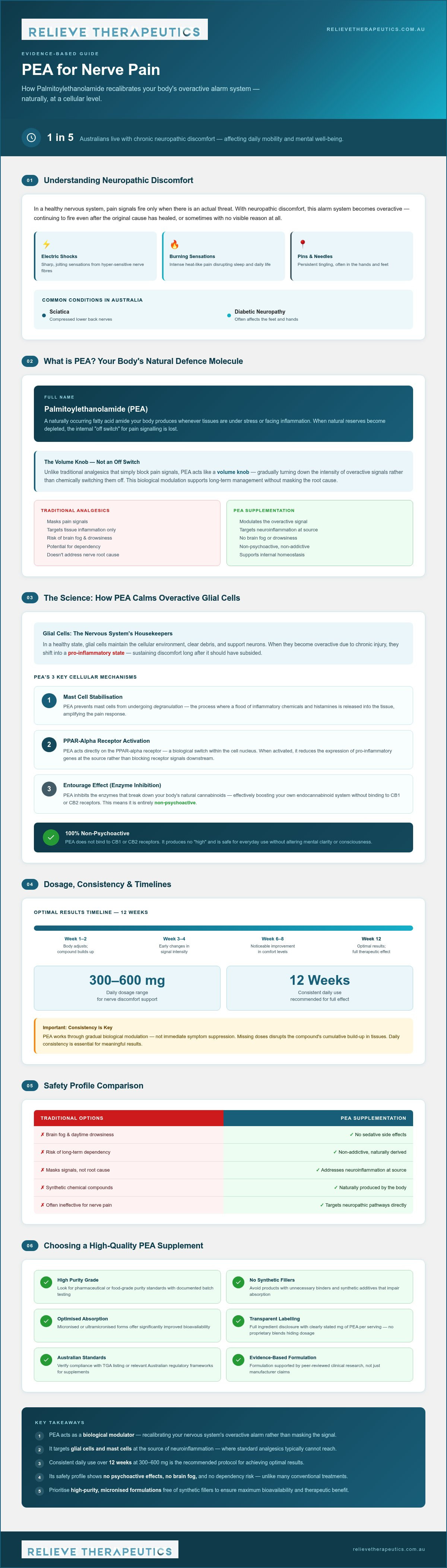
Successful management with pea for nerve pain requires a shift in mindset. Unlike traditional analgesics that you might take only when discomfort spikes, this compound relies on a cumulative effect. It's a biological modulator that must build up within your tissues to effectively calm overactive glial cells. Consistency is the foundation of this process. If doses are missed frequently, the body cannot maintain the steady levels needed to stabilise the inflammatory response. To ensure you stay on track, try integrating your capsules into an existing morning or evening ritual, such as keeping them next to your kettle or toothbrush.
Finding Your Optimal Dosage
Most clinical observations suggest a saturation phase is necessary to replenish depleted levels. A common starting protocol involves taking 1200mg per day, typically split into two 600mg doses. This morning and evening split helps maintain a consistent concentration in the bloodstream. After the initial phase, some individuals find they can transition to a lower maintenance dose, while others with more persistent discomfort continue at the higher level. For a more detailed breakdown of these protocols, you can consult our guide on PEA dosage for pain. Adjusting your intake should always be done based on your personal response and in consultation with your healthcare provider.
Managing Your Timeline: When to Expect Results
Patience is a prerequisite for success when utilising natural fatty acid amides. Because the compound works by recalibrating cellular gene expression, changes don't happen overnight. You can generally expect your journey to follow this trajectory:
- Two Weeks: Subtle shifts in the intensity of "pins and needles" or burning sensations may begin to appear.
- Six Weeks: Many users report more noticeable improvements in sleep quality and daily mobility as neuroinflammation recedes.
- Twelve Weeks: This is the gold standard for assessing efficacy. By this stage, the system has reached full saturation.
It's vital to commit to a three-month trial before deciding if the approach is right for you. For best practices on lifestyle integration, refer to our practical guide on how to take PEA for nerve pain. Given that this is a long-term management strategy, many Australians find that starting with a 180-capsule pack of PEA is the most efficient way to ensure they have an uninterrupted supply during the critical saturation phase.
Quality and Purity: Choosing the Right PEA Supplement in Australia
Selecting a supplement in Australia requires a discerning eye for detail. Many products on the shelf contain unnecessary fillers, binders, and synthetic additives that can inadvertently hinder the absorption of the active compound. When utilising pea for nerve pain, the physical state of the molecule is just as vital as its concentration. Synthetic binders can cause clumping, which effectively reverses the benefits of the micronisation process by reducing the surface area available for absorption. High-purity supplements that exclude these bulk agents allow the micronised particles to be processed more efficiently by your digestive system. Our direct-to-consumer model further supports this by providing fresher stock and eliminating the logistical delays associated with international orders.
The Relieve Therapeutics Standard
Relieve Therapeutics is an Australian-owned specialist committed to providing pure Palmitoylethanolamide without the clutter of additives. We recognise the significant impact that persistent discomfort has on your daily life, which is why we prioritise transparency and evidence-based quality. Our capsules are designed for individuals who value scientific rigour and natural origins. This disciplined approach ensures that you aren't consuming hidden flow agents that could interfere with bioavailability. Because we manage our operations locally, we can provide a level of professional care that feels personal and supportive. Fast shipping across Australia means your management plan remains uninterrupted.
Selecting Your Supply: 60, 120, or 180 Capsules
Identifying the correct volume is essential for maintaining the consistency required for cellular recalibration. A 60-capsule bottle is a suitable starting point for a preliminary trial. For a more sustained approach, our PEA 120 capsules serve as a strategic mid-range choice for those moving past the initial saturation phase. However, most clinical observations recommend a full three-month period to evaluate the compound's impact on your system. For this reason, the 180-capsule pack represents the best value and most effective way to manage the saturation phase. It provides the necessary supply to reach the twelve-week milestone without the risk of running out. Consulting with your healthcare professional before beginning a new supplement routine ensures it complements your broader health strategy.
Restoring Balance to Your Nervous System
Managing persistent discomfort requires a shift from temporary masking to long-term biological support. By addressing overactive signals at a cellular level, you provide your body with the essential tools to recalibrate its internal alarm system. Consistency is your most reliable ally; the process of stabilising glial cells and restoring homeostasis typically requires a dedicated twelve-week trial. Selecting a high-purity, micronised supplement ensures that your system absorbs the compound efficiently without the interference of synthetic binders or fillers.
Integrating pea for nerve pain into a structured daily routine offers a science-backed pathway toward improved sleep quality and restored mobility. As an Australian owned and operated specialist, we are dedicated to providing pure, micronised PEA that meets rigorous quality standards. Our direct-to-consumer model ensures you receive fresh stock with fast local shipping across Australia, avoiding the frustrations of international delays. Shop our range of high-quality Australian PEA capsules today to support your journey toward lasting comfort. You don't have to navigate this path alone; reclaim your vitality with a partner focused on your long-term outcomes.
Frequently Asked Questions
Is PEA safe to take with my other nerve pain medications?
PEA is generally considered safe to use alongside other medications because it has no known drug-to-drug interactions. It acts as a biological modulator rather than a traditional analgesic, meaning it doesn't interfere with how most pharmaceutical options are processed. It's a reliable ally for those seeking a multi-modal approach to their well-being. However, you should always consult your Australian GP before starting a new supplement routine while exploring pea for nerve pain.
How long does it take for PEA to start working for nerve pain?
Results from Palmitoylethanolamide are cumulative and typically require several weeks to become noticeable. While some individuals report subtle shifts within the first fortnight, the gold standard for assessing efficacy is a consistent twelve-week trial. This timeframe allows the compound to reach full saturation within your tissues and effectively calm overactive glial cells. Patience is essential, as the compound focuses on long-term cellular recalibration rather than providing an instant fix.
Are there any side effects associated with Palmitoylethanolamide?
Side effects associated with PEA are remarkably rare and usually mild when they do occur. Some users report minor gastrointestinal upset, such as nausea, or slight drowsiness. Because this molecule is naturally produced by your own body in response to tissue stress, it's highly tolerable for the vast majority of people. Unlike many traditional options, it doesn't cause cognitive fog or significant daytime fatigue, making it a sustainable choice for daily support.
Do I need a prescription to buy PEA in Australia?
You don't need a prescription to purchase PEA as a dietary supplement in Australia. It's a Therapeutic Goods Administration (TGA) recognised ingredient available through local retailers like Relieve Therapeutics. While certain therapeutic-grade compounded versions may require a script from a specialist, the high-quality capsules used for general wellness and support are accessible over the counter. This allows Australians to integrate natural support into their routines without the delays of clinical appointments.
What is the difference between standard PEA and micronised PEA?
The primary difference lies in particle size and how effectively your body can absorb the compound. Standard PEA consists of large particles that are difficult for the digestive system to break down, often leading to poor bioavailability. Micronisation reduces these particles to a microscopic size, significantly increasing the surface area. This specialised process ensures the active ingredient is absorbed into the bloodstream efficiently, which is critical for the success of pea for nerve pain.
Can I take PEA if I don’t have a diagnosed nerve condition?
PEA can be taken even if you haven't received a formal diagnosis for a specific nerve condition. Since it's a naturally occurring fatty acid amide that supports the body's response to inflammation and tissue stress, it's often used for general physiological balance. Many individuals utilise it to support recovery after physical exertion or to manage general discomfort. It functions as a protective molecule that helps maintain homeostasis within the nervous and immune systems.
Is PEA addictive or will it cause withdrawal symptoms?
Palmitoylethanolamide is entirely non-addictive and does not produce withdrawal symptoms when you stop taking it. It's a non-psychoactive lipid that works with your body's existing biological pathways rather than creating a chemical dependency. Because it doesn't bind directly to the receptors responsible for the "high" associated with other compounds, there is no risk of habit formation. It remains a safe, sustainable option for those seeking long-term support without the fear of dependency.