

You aren't just adding another chemical to your daily routine; you're reinforcing a molecule your body already knows how to produce. Managing chronic discomfort often feels like a delicate balancing act, especially when you're already juggling multiple prescriptions and worry about how they might interact. The most common question we hear from Australians is, "can I take PEA with other medications" without risking adverse effects?
It's a valid concern. With more than 60% of the population living with at least one chronic condition, finding safe, supportive options is essential. This guide reveals why Palmitoylethanolamide (PEA) is considered one of the most compatible supplements for those on existing medication. Because PEA acts as a biological partner rather than a chemical competitor, it offers a supportive role in your wellness journey. We will examine the 2026 TGA safety guidelines, explain how PEA functions alongside common treatments, and help you prepare for a productive discussion with your healthcare professional.
Key Takeaways
- Understand why PEA is recognised by your body as a natural fatty acid rather than a foreign chemical, ensuring a high safety profile and professional reliability.
- Find the definitive answer to "can I take PEA with other medications" and explore why it is often used as a biological partner to standard pharmacy items.
- Discover the "volume dial" mechanism that allows PEA to calm overactive nerve signals without disrupting the function of your current prescriptions.
- Gain a practical framework for safely introducing PEA into your daily routine, including the importance of patience and consistency for long-term results.
- Identify why product purity is essential when managing multiple medications and how to select high-quality, filler-free capsules from a trusted Australian source.
Understanding the Safety Profile of Palmitoylethanolamide (PEA)
Safety is the primary concern for anyone managing a complex health regimen. When you ask, "can I take PEA with other medications", you're looking for more than a simple yes or no; you're seeking a clinical explanation of how it interacts with your system. Palmitoylethanolamide (PEA) is an endogenous fatty acid amide, which means it is a substance your own cells produce naturally. Unlike synthetic drugs that your liver must work hard to process and eliminate, your body recognises PEA as a "self" molecule. This natural recognition is the foundation of its exceptional safety profile.
Clinical trials involving thousands of participants have consistently demonstrated high tolerability. Some people mistakenly believe that natural supplements are inherently weak or unregulated, but PEA defies this stereotype. It is a TGA-listed medicine in Australia, subject to strict quality standards that ensure purity and safety. It isn't a "weak" alternative; it's a precise biological tool that works with your body's existing pathways to restore balance.
The Biological Role of PEA in the Body
Your nervous system synthesises PEA "on-demand" to maintain cellular stability. When you experience physical stress or inflammation, your body increases its natural production to protect tissues and calm overactive signals. However, chronic conditions can sometimes deplete these stores faster than they can be replenished. Taking a high-quality supplement doesn't introduce a foreign agent; it simply tops up your body's natural reserves. This restorative approach helps maintain vitality without the "crash" often associated with pharmacological interventions.
Why PEA has No Known Major Drug Interactions
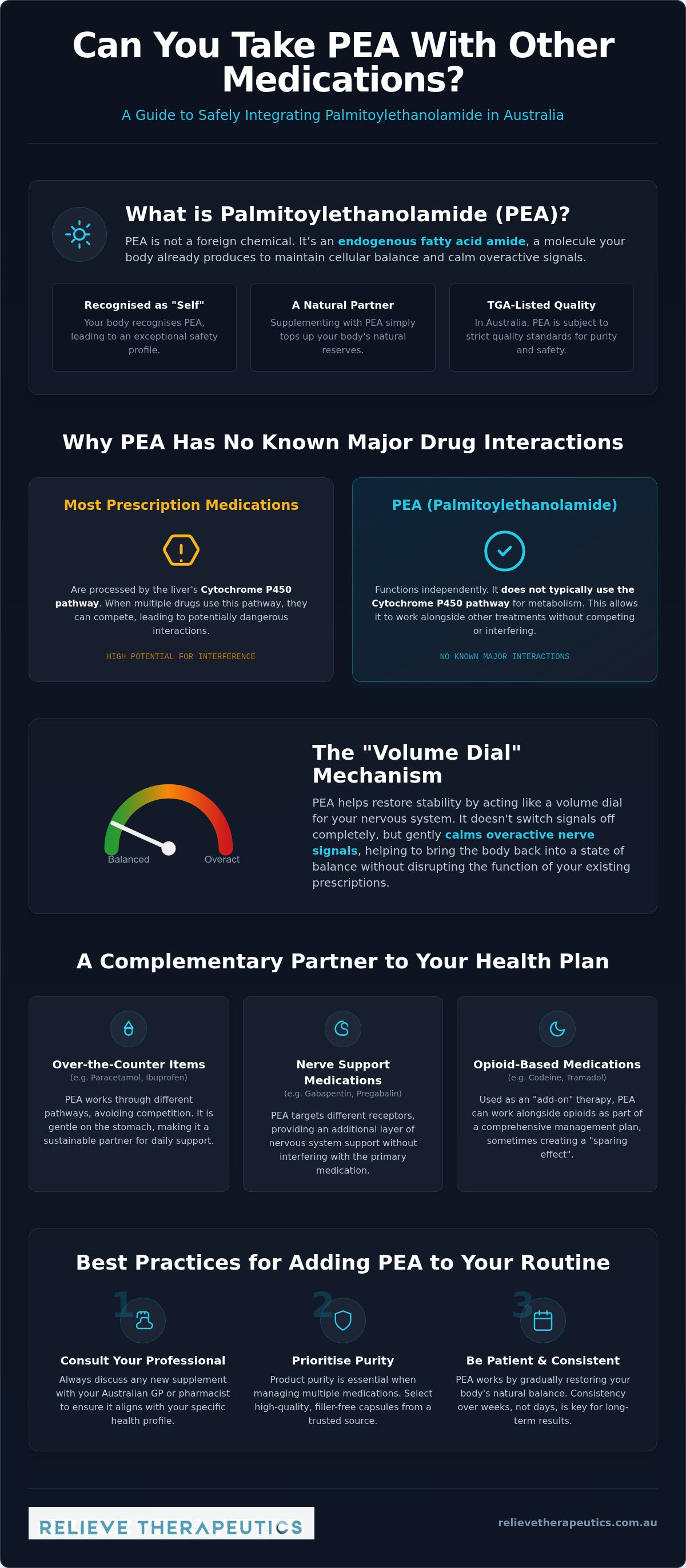
The technical reason behind PEA's compatibility lies in how it is metabolised. Most prescription drugs are processed through the Cytochrome P450 pathway in the liver. When multiple substances compete for this same pathway, dangerous interactions occur. PEA does not typically use this system. Unlike St John’s Wort, which is notorious for interfering with various medications, PEA has been studied alongside clinical treatments without reports of adverse interference. It functions independently, allowing it to support your wellness without disrupting your primary prescriptions.
Does PEA Interact with Common Australian Medications?
Finding a treatment that complements your existing healthcare plan is often a source of quiet frustration. Many Australians wonder, "can I take PEA with other medications without complicating my recovery?" Clinical evidence suggests that PEA is exceptionally versatile and safe. It is typically utilised as an "add-on" therapy, meaning it works alongside your current prescriptions rather than replacing them. This synergy is sometimes referred to as a "sparing effect," where PEA supports the body's response so effectively that other treatments may function more efficiently. Comprehensive research on PEA efficacy and safety indicates that no significant drug interactions have been documented to date. While this is reassuring, you should always discuss any new supplement with your Australian GP or pharmacist to ensure it aligns with your specific health profile.
PEA and Over-the-Counter Options (Paracetamol & NSAIDs)
Standard pharmacy items like paracetamol or ibuprofen are staples in many Australian households. PEA operates through different biological pathways, so there is no direct competition for absorption or liver processing. While Ibuprofen or Naproxen can be harsh on the stomach lining when used frequently, PEA is generally gentle. It supports the body's natural inflammatory response without the gastrointestinal distress often associated with long-term NSAID use. This makes it a sustainable partner for those who need daily support but want to reduce their reliance on traditional anti-inflammatories.
PEA and Prescription Nerve Support Medications
For those managing complex nerve sensitivity, medications like Gabapentin or Pregabalin are common prescriptions. Evidence shows PEA can be taken safely alongside these neuropathic treatments, providing an additional layer of support for the nervous system. Because PEA targets different receptors, it doesn't interfere with the primary function of these scripts. For those looking for a structured approach to integration, our guide on how to take PEA for nerve pain offers specific insights on timing and consistency.
PEA and Opioid-Based Medications
PEA is a non-opioid pain relief supplement that does not bind to opioid receptors. This distinction is critical; it means there is no known risk of respiratory depression or increased sedation when integrated into a multi-modal comfort plan. It provides a natural alternative that focuses on cellular stability rather than central nervous system suppression. For those managing long-term schedules, choosing a reliable source is essential. You can order pure PEA capsules directly from our Australian-based facility to ensure you receive a product free from unnecessary fillers or additives.
The Biological Advantage: Why PEA is Naturally Compatible
Understanding why PEA fits so seamlessly into a medication plan requires a look at its biological blueprint. While many synthetic drugs work by aggressively blocking specific receptors, PEA acts as a modulator. Think of it as a volume dial for your nervous system. When signals become too loud or sensitive, PEA helps turn that volume down to a manageable level. This subtle approach is why the question "can I take PEA with other medications" is met with such confidence by specialists. It doesn't force a physiological change; it supports a return to baseline.
This efficacy is driven largely by the PPAR-alpha receptor. As a natural anti-inflammatory agent, PEA binds to this receptor inside your cells to switch off the production of pro-inflammatory molecules. Because PEA is a lipid, or fat-like substance, it is metabolised differently than water-soluble drugs. It integrates into the cell membrane rather than floating freely in the bloodstream. This unique fatty-acid structure reduces the likelihood of interference with other pharmacological agents, providing a level of safety that is rare in the world of supplements.
Endocannabinoid System (ECS) Synergy
PEA is often described as a "cannabinoid-like" molecule. It works within the endocannabinoid system to enhance the body's own calming signals. While it shares some pathways with CBD, it is a distinct molecule with its own unique benefits. You can explore these biological differences in our PEA endocannabinoid supplement pillar. Importantly, PEA is non-psychoactive. It doesn't cause any "high" or cognitive impairment, making it a safe choice for those who need to remain sharp and focused during their daily activities.
Liver and Kidney Considerations
A major concern for Australians on multiple prescriptions is the cumulative strain on the liver and kidneys. Many medications rely on the liver’s detoxification pathways, which can become overwhelmed. PEA is different. It is broken down by specific enzymes found throughout the body's tissues, rather than placing an undue burden on the liver. When considering "can I take PEA with other medications", this metabolic path is a significant advantage. This makes it a preferred choice for older Australians who may already be managing complex pill schedules. Long-term clinical use has shown a remarkable safety record, reinforcing that you can integrate this supplement without overtaxing your vital organs.
Best Practices for Adding PEA to Your Daily Routine
Integrating a new supplement into an existing health routine requires an organised and transparent approach. While the biological evidence suggests high compatibility, the way you introduce it determines how effectively it supports your body's natural pathways. When you ask your doctor, "can I take PEA with other medications", you're taking a proactive step toward a more coordinated wellness plan. Success is built on three pillars: professional consultation, consistent application, and the use of high-purity ingredients that won't introduce hidden fillers into your system.
Step 1: Consult Your Healthcare Professional
Transparency with your medical team is vital for effective chronic management. Your GP or pharmacist can help you monitor your progress and ensure your supplement schedule aligns with your clinical requirements. To make the most of your appointment, consider asking these three specific questions:
- Based on my current prescription list, are there any specific timing concerns for introducing a fatty-acid supplement?
- What functional improvements, such as better sleep or morning mobility, should we track over the next month?
- Is my current medication schedule likely to benefit from the "sparing effect" often seen with PEA?
It's helpful to bring a print-out of our PEA dosage for pain guide so your doctor can review the typical intake levels used in clinical settings.
Step 2: The "Start Low and Slow" Approach
Patience is essential when starting PEA. Unlike some fast-acting pharmacy items, PEA works by gradually building up in your system to stabilise cellular signals. Most clinical benefits are observed after 4 to 8 weeks of consistent use. To optimise absorption, take your capsules with a meal containing healthy fats, such as eggs, avocado, or olive oil. This supports the transport of the lipid-like molecules into your cells. Starting with a standard dose and maintaining it for at least a month allows you to accurately assess how it complements your existing treatments.
Step 3: Monitor and Adjust
We recommend keeping a simple "comfort diary" during the first few weeks. Note subtle changes in your daily function, energy levels, and overall comfort. These observations provide valuable data for your next medical review. If you feel you need a higher dose, always discuss this with your GP first. Most importantly, never stop or alter your prescription medications without professional approval. PEA is designed to be a partner in your health journey, not a replacement for medical care. To ensure you're using the cleanest possible formula during this transition, you can purchase pure PEA capsules that are free from unnecessary additives and fillers.
Choosing High-Quality PEA for Your Health Journey
When you manage a complex medication schedule, the quality of your supplements is not a secondary concern; it is a fundamental safety requirement. If you are still asking, "can I take PEA with other medications", the answer often depends on what else is hidden inside the capsule. Pure Palmitoylethanolamide is highly compatible with the human body, but poor-quality fillers, undisclosed additives, or complex "proprietary blends" can introduce unnecessary variables into your recovery. Selecting a product with a transparent ingredient list ensures that you are supporting your body without complicating your existing clinical plan.
Why Purity is Paramount
Many mass-produced supplements utilise unnecessary binders or chemical flow agents to simplify the manufacturing process. These additional substances can occasionally trigger sensitivities or interfere with the steady absorption of your primary prescriptions. Relieve Therapeutics eliminates this risk by focusing solely on high-purity Palmitoylethanolamide capsules. By removing the fluff, we ensure that your system receives only the specific molecule it needs to restore cellular balance and calm overactive signals. In 2026, choosing Australian-sourced supplements remains the most reliable way to ensure your products meet the strict safety and quality standards set by the Therapeutic Goods Administration (TGA), providing a level of quality assurance that international imports often lack.
Selecting the Right Pack for Your Needs
We provide three distinct options designed to support different stages of your wellness journey. Each bottle is shipped directly from our Australian facility, which means you benefit from faster shipping, local customer support, and the peace of mind that comes with domestic quality control. We've structured our offerings to match your level of experience with the supplement:
- The 60-count bottle: This is the ideal starting point for those trialling PEA for the first time. It provides a sufficient supply to observe the initial "wash-in" period alongside your current medications without a long-term commitment.
- The 120 and 180-count bottles: These larger packs offer the best value for those who have confirmed that PEA supports their daily function. The 180-capsule pack is particularly suited for long-term supportive use, providing a consistent three-month supply that simplifies your monthly organisation and reduces the cost per dose.
By choosing a specialist Australian provider, you are not just buying a supplement; you are gaining a reliable partner in your health journey. Our focused product line is designed for those who value substance, transparency, and scientific rigour. View our range of high-quality PEA capsules and start your journey today.
Taking the Next Step in Your Wellness Journey
You've explored how Palmitoylethanolamide functions as a biological partner rather than a chemical interloper. Because it is a molecule your body already synthesises, it offers a level of compatibility that few other supplements can match. We've seen that the answer to "can I take PEA with other medications" is grounded in its unique metabolic path, which avoids the liver's primary detoxification channels. This makes it an ideal supportive option for those managing complex daily schedules.
By choosing a high-purity, filler-free formula, you ensure that your body receives only the specific support it requires. Relieve Therapeutics is a proudly Australian owned and operated specialist, providing pure PEA with local shipping and support. Whether you are starting with a 60-capsule trial or opting for the long-term value of our 120 or 180-capsule packs, you are choosing a path defined by scientific rigour and transparency.
Order your high-quality Australian PEA capsules from Relieve Therapeutics today.
Your path to restored comfort is built on informed choices and professional guidance. Take this information to your next GP appointment and move forward with the quiet confidence you deserve.
Frequently Asked Questions
Can I take PEA if I am already on blood thinners like Warfarin or Aspirin?
PEA is generally considered safe to take alongside blood thinners like Warfarin or Aspirin. Because it is a fatty acid amide rather than a salicylate or anticoagulant, it doesn't interfere with platelet aggregation or the body's clotting mechanisms. This makes it a preferred option for those who must avoid traditional anti-inflammatories due to bleeding risks. You should still notify your cardiologist or GP to ensure your regular blood tests remain consistent.
Does PEA interact with common antidepressants or anxiety medications?
There are no documented negative interactions between PEA and common antidepressants or anxiety medications. PEA operates via the PPAR-alpha receptor and the endocannabinoid system rather than directly altering serotonin or dopamine levels in the synaptic cleft. This distinct biological pathway allows it to support physical comfort without disrupting the efficacy of psychological treatments. It is a reliable biological partner for those managing both physical sensitivity and emotional wellbeing simultaneously.
Is it safe to take PEA with Gabapentin or Lyrica for nerve pain?
It is safe to take PEA alongside Gabapentin or Lyrica (Pregabalin) for nerve-related sensitivity. Clinical research suggests that these substances can work synergistically to calm overactive nerve signals. Many Australians find that adding PEA provides an extra layer of support for their nervous system stability. If you are wondering, "can I take PEA with other medications" like these, the evidence points to a high level of compatibility and potential for improved daily function.
Can I take PEA and Paracetamol at the same time?
You can take PEA and Paracetamol at the same time without any known conflict. Paracetamol is processed primarily by the liver to alter pain perception; meanwhile, PEA is a lipid that works at a cellular level to reduce inflammation-related signals. They don't compete for the same metabolic pathways. This allows you to use Paracetamol for acute needs while PEA provides the steady, long-term cellular support your body requires to maintain comfort.
Will PEA affect my blood pressure or heart rate medication?
PEA does not typically affect blood pressure or heart rate, making it compatible with most cardiovascular medications. It lacks the stimulant properties found in some other supplements and does not cause the fluid retention associated with certain anti-inflammatory drugs. This stability is a significant advantage for older Australians managing hypertension or other heart-related conditions. Always maintain your regular monitoring schedule with your medical team when introducing any new element to your daily routine.
What should I do if I think I am having a reaction between PEA and my medication?
If you suspect a reaction between PEA and your current medication, you should stop taking the supplement immediately and consult your GP or pharmacist. While adverse reactions are rare due to PEA’s endogenous nature, individual sensitivities can occur. Look for unusual symptoms such as skin rashes, digestive upset, or changes in the efficacy of your primary prescriptions. Providing your healthcare professional with the product label helps them assess the situation accurately and ensures your safety.
Can I take PEA with other natural supplements like Turmeric or Fish Oil?
PEA is highly compatible with other natural supplements like Turmeric or Fish Oil. In fact, taking PEA with healthy fats like Fish Oil can actually support its absorption. These substances target different aspects of the body's inflammatory and protective responses, often providing a more comprehensive approach to wellness when used together. If you're asking, "can I take PEA with other medications" and supplements, it's reassuring to know it integrates smoothly into a holistic health plan.
Is there anyone who should NOT take PEA alongside their medications?
While PEA has a high safety profile, it is generally not recommended for pregnant or breastfeeding women due to a lack of specific clinical data in these groups. Children should also avoid PEA unless specifically directed by a paediatrician. If you have a known allergy to any specific lipid-based substances, you should exercise caution. Most Australians can integrate PEA safely, but those with complex, multi-system health conditions should always seek professional clearance first.