

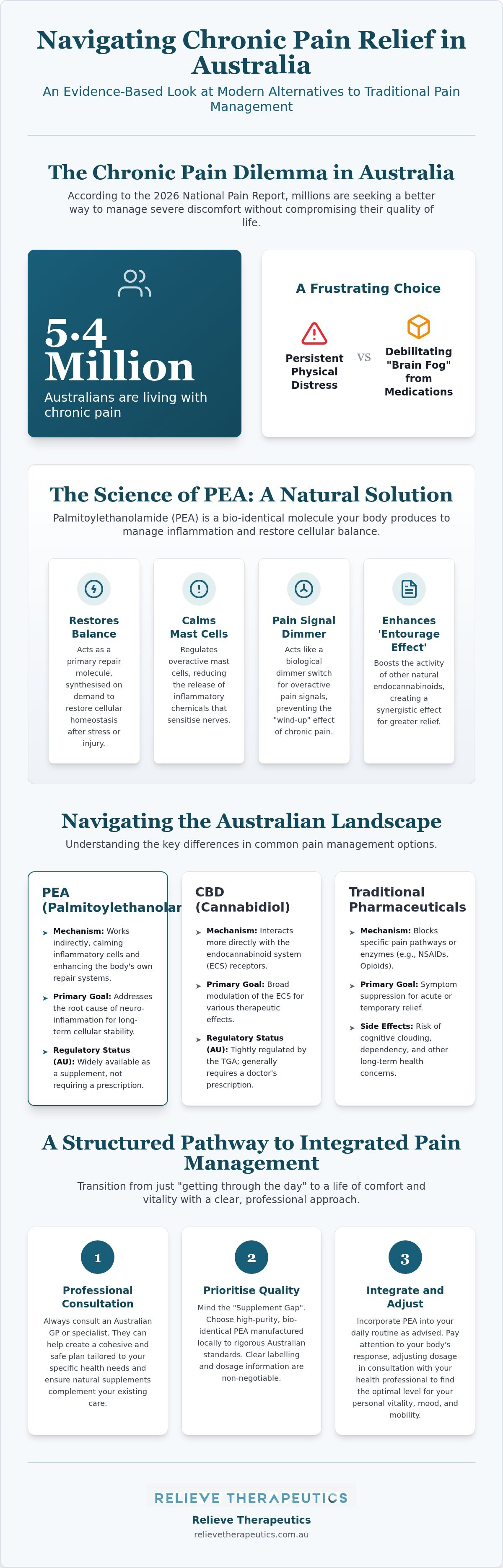
5.4 million Australians are currently living with chronic pain, according to the 2026 National Pain Report. If you are one of them, you likely know the heavy frustration of choosing between persistent physical distress and the debilitating "brain fog" often caused by traditional prescription medications. It is a exhausting cycle that leaves many searching for alternative severe pain relief that doesn't compromise mental clarity or long-term health. You might feel a natural scepticism toward "natural" options, especially if you have tried supplements in the past that lacked scientific backing or clinical rigour.
This article provides an evidence-based path toward managing discomfort with transparency and clinical precision. You will discover how Palmitoylethanolamide (PEA) acts as a natural regulator at the cellular level to address neuro-inflammation directly. We'll explore the current TGA landscape for 2026, explain how PEA fits into a professional pain management plan, and show you how to prioritise your mobility, mood, and daily vitality. By understanding the science of your body's own fatty acid amides, you can transition from simply "getting through the day" to a life defined by comfort, stability, and professional care.
Key Takeaways
- Learn why many Australians are transitioning toward alternative severe pain relief to avoid the side effects and "brain fog" associated with traditional medications.
- Understand how Palmitoylethanolamide (PEA) functions as a natural repair molecule to stabilise cellular responses and manage chronic discomfort.
- Compare the legal and biochemical profiles of PEA and CBD to navigate the Australian regulatory landscape with confidence.
- Recognise the "Supplement Gap" by learning how to identify high-purity capsules that meet rigorous local manufacturing and labelling standards.
- Establish a structured pathway for integrating natural supplements into your routine through professional consultation and personalised dosage adjustments.
Navigating the Landscape of Alternative Severe Pain Relief in Australia
Alternative severe pain relief is an integrative approach combining bio-mimetic supplements with lifestyle adjustments. For many Australians, this represents a departure from the traditional pharmaceutical model that has long prioritised symptom suppression over cellular restoration. By moving beyond a one-size-fits-all approach, patients can address the root causes of their discomfort while maintaining the mental clarity necessary for daily life.
The 2026 National Pain Report highlights that chronic pain affects 5.4 million Australians, many of whom are seeking pathways away from traditional pharmaceuticals. This shift is driven by "opioid fatigue," where patients prioritise long-term safety over temporary relief. They are increasingly wary of the cognitive clouding and dependency risks associated with heavy prescriptions. Instead, they are looking for reliable, non-addictive options that support daily function and emotional stability. Traditional Pain management strategies often rely on these heavy-duty medications, but the modern Australian patient is demanding a more sophisticated, lower-risk toolkit.
It's important to distinguish between acute aches and the complexity of severe chronic discomfort. Acute pain serves as a temporary biological alarm, typically resolving once an injury heals. In contrast, severe chronic discomfort is a complex physiological malfunction where the nervous system remains in a state of high alert. Managing this requires more than just masking symptoms; it demands a strategy that supports cellular repair and reduces neuro-inflammation directly at the source.
The Shift Toward Non-Opioid Solutions
By 2026, the Australian medical landscape has pivoted toward safer, long-term analgesia. Traditional anti-inflammatories like NSAIDs often fail to address severe nerve pain because they don't target the underlying neural pathways. This has led to a deeper investigation of the endocannabinoid system. This regulatory network acts as a biological thermostat, and supporting it naturally can help the body return to a state of homeostasis without the harsh side effects of synthetic compounds. This focus on "safer" analgesia is now a cornerstone of modern alternative severe pain relief.
Why "Natural" No Longer Means "Unscientific"
Natural medicine in Australia has matured into a disciplined, evidence-based field. We are seeing a surge in clinical trials for endogenous molecules, which are substances the body produces itself to manage stress and inflammation. This validation means that "natural" is no longer a synonym for "untested." When you choose high-quality supplements, you're using bio-identical tools that the body already recognises and can process efficiently. Always consult an Australian GP or specialist when integrating these options to ensure your plan is cohesive, safe, and tailored to your specific needs.
The Science of PEA: A Natural Molecule for Chronic Discomfort
Palmitoylethanolamide, commonly known as PEA, is a fatty acid amide that your body produces naturally in response to tissue stress or injury. It serves as a primary repair molecule, synthesised on demand to restore cellular balance. Unlike synthetic painkillers that block specific pathways, PEA works by enhancing the body's own regulatory systems. This provides a sophisticated form of alternative severe pain relief by addressing the underlying biological distress rather than merely masking the sensation.
One of the most compelling aspects of PEA is its role in the "Entourage Effect." It doesn't just work in isolation; it boosts the activity of other endocannabinoids, such as anandamide, by slowing their breakdown. This synergy leads to greater cellular stabilisation and a more robust response to chronic discomfort. PEA acts as a biological dimmer switch for overactive pain signals. By modulating the sensitivity of receptors, it helps prevent the "wind-up" effect that often characterises long-term suffering.
Much of the research on alternative medicine for pain in Australia focuses on how these natural molecules target neuro-inflammation. Specifically, PEA regulates overactive mast cells. These cells are responsible for releasing inflammatory chemicals that sensitise nerves. When mast cells are constantly firing, the result is persistent, severe pain. PEA calms these cells, providing a foundation for long-term recovery and improved daily function.
Targeting Glial Cells and Neuro-inflammation
Glial cells act as the immune system of the central nervous system. When these cells become chronically activated, they maintain a state of neuro-inflammation that amplifies pain signals. This process is often the driver behind difficult-to-treat conditions like sciatica and fibromyalgia. PEA helps return these glial cells to a resting state, effectively lowering the "volume" of the nervous system. This transition is essential for anyone seeking a sustainable path toward comfort without relying on heavy pharmaceuticals.
Bioavailability: Why Micronisation Matters
The effectiveness of PEA depends heavily on how well your body can absorb it. Standard PEA particles are relatively large and poorly soluble in water, which can limit their uptake in the gut. To overcome this, micronised palmitoylethanolamide is used to reduce the particle size. This process significantly improves bioavailability and therapeutic efficacy. If you're ready to explore high-quality options, you can view our range of specialist PEA capsules to start your journey toward better mobility and mood.
Comparing Natural Alternatives: PEA, CBD, and Holistic Therapies
When exploring alternative severe pain relief, it's essential to distinguish between physical interventions and biochemical support. While physical therapies like acupuncture or hydrotherapy provide valuable sensory input, they often work best when paired with internal molecules that stabilise the nervous system. This multimodal strategy ensures you're addressing the mechanical aspects of discomfort alongside the underlying inflammatory pathways. For instance, Painaustralia's guide to pain management therapies highlights how meditation and physiotherapy can reduce the psychological burden of chronic conditions, yet these methods don't directly modulate mast cell activation in the way a specialised supplement does.
Choosing the right path depends heavily on the specific nature of your discomfort. Nerve-related pain, such as sciatica, typically requires a strategy that calms overactive neural signalling. Muscle and joint issues may benefit more from a combination of physical mobilisation and biochemical support to reduce tissue inflammation. By integrating these different alternative methods, you create a comprehensive support system that targets pain from multiple angles simultaneously.
Palmitoylethanolamide vs CBD for Pain
The legal landscape in Australia creates a significant practical difference between these two options. PEA is classified as a complementary medicine and is readily available for purchase without a prescription. In contrast, CBD oil remains a Schedule 4 substance in 2026, meaning you must obtain a valid prescription from a registered medical practitioner. This makes PEA a more accessible first step for many Australians seeking alternative severe pain relief without the high consultation fees or regulatory hurdles associated with medicinal cannabis.
Beyond legality, these molecules target different biological systems. While CBD interacts with cannabinoid receptors, PEA focuses on the PPAR-alpha pathway and glial cell regulation. This distinction is vital for those who want to avoid the potential side effects or "brain fog" sometimes associated with cannabinoid use. For a detailed comparison of these mechanisms and how they fit into your routine, refer to our guide on palmitoylethanolamide vs CBD.
Integrative Approaches for Severe Cases
Effective management rarely relies on a single solution. For severe cases, combining biochemical support with Cognitive Behavioural Therapy (CBT) can help reframe the brain's perception of pain signals. This is particularly useful for nerve-related issues where the nervous system has become hypersensitive. Supporting this with an anti-inflammatory diet high in omega-3 fatty acids can further enhance the efficacy of PEA. By creating a personalised pain toolkit that includes supplements, relaxation techniques, and dietary adjustments, you can build a resilient strategy for managing flare-ups when they occur.
Implementing a Natural Strategy for Severe Pain Management
Transitioning to a natural management plan requires a structured and disciplined approach. While the science behind Palmitoylethanolamide is robust, its efficacy as an alternative severe pain relief option depends on how it is integrated into your daily routine. This is not about a quick fix but about building a sustainable foundation for cellular health. A successful strategy follows four distinct stages to ensure safety and effectiveness.
- Step 1: Professional Consultation. Begin with a baseline assessment from your healthcare provider. The Therapeutic Goods Administration (TGA) advises consulting a professional for PEA use exceeding 21 consecutive days to ensure it aligns with your broader health profile.
- Step 2: Dosage Calibration. Work toward finding your optimal PEA dosage for pain. This involves starting with a specific intake and adjusting based on your body's unique response.
- Step 3: The Loading Phase. Consistency is the foundation of success. PEA requires a "loading" period where the molecule accumulates in your tissues to provide maximum stabilisation.
- Step 4: Progress Monitoring. Track your mobility and mood over several weeks. This data helps you refine your alternative severe pain relief plan and identify which lifestyle factors, such as sleep or diet, are influencing your results.
Finding Your Optimal Daily Intake
The "Saturate and Maintain" strategy is the most effective way to introduce PEA to your system. Because PEA is a lipid that the body produces on demand, you must first replenish your internal stores to address chronic deficits. It often takes 2 to 4 weeks of consistent use to see significant changes in discomfort levels. This timeframe allows the molecule to effectively calm overactive mast cells and return glial cells to a resting state. PEA is generally well-tolerated with long-term use, making it a reliable partner for those managing persistent conditions without the risks of dependency.
How to Take PEA for Maximum Results
PEA is a fatty acid amide, so taking your capsules with a meal containing healthy fats can support absorption. Many users find that splitting their daily intake into two doses, morning and evening, provides more stable support throughout a 24-hour cycle. This prevents fluctuations in cellular stabilisation and ensures the "dimmer switch" effect remains active. For more detailed techniques on managing specific neural discomfort, you can read our guide on how to take PEA for nerve pain. If you are ready to begin this process, you can explore our range of specialist PEA capsules to support your long-term management plan.
Choosing High-Quality PEA: Why Purity and Local Sourcing Matter
The "Supplement Gap" describes the discrepancy between clinical-grade molecules and the low-cost, diluted alternatives often found on international marketplaces. When you're seeking alternative severe pain relief, the integrity of the molecule is as important as the dosage itself. Many generic products contain unnecessary synthetic fillers or are manufactured in facilities with relaxed quality controls, which can lead to inconsistent results and unexpected sensitivities. Choosing a high-purity supplement ensures that your body receives a bio-identical tool it can actually use for restoration.
Labels in Australia provide essential clues about a product's origin and quality. A transparent label should clearly state the absence of common allergens like gluten, dairy, and soy, as well as the exclusion of artificial colours or preservatives. Supporting Australian-owned health businesses also offers a layer of accountability that international sellers simply can't match. Local providers are bound by strict domestic standards, ensuring that what's listed on the bottle is exactly what's inside the capsule.
Sustainable management of chronic discomfort requires a consistent supply of high-quality supplements. To support this journey, it's practical to choose a pack size that aligns with your specific management phase. Whether you're starting with a 60-capsule bottle for a initial trial or moving to 120 or 180-capsule packs for long-term maintenance, having a reliable supply prevents interruptions in your loading phase. This consistency is vital for maintaining the cellular stabilisation required for effective alternative severe pain relief.
Identifying High-Quality PEA Capsules
Check for ultra-micronised status when evaluating any PEA supplement. As we've explored, particle size is the primary factor in how well your body absorbs the molecule. High-quality capsules prioritise this physical refinement to ensure maximum uptake in the gut. You should also be wary of products that use excessive flow agents like magnesium stearate, which can sometimes interfere with absorption in sensitive individuals. For more detailed red flags, read our Australian buyer’s guide for 2026 to ensure your investment in health is a sound one.
The Relieve Therapeutics Advantage
Relieve Therapeutics provides a specialist focus that generalist retailers cannot offer. By concentrating exclusively on PEA, we ensure our stock of 60, 120, and 180-capsule packs remains fresh and potent. Local Australian shipping means your supplements don't spend weeks in hot shipping containers, which preserves the molecular integrity of the fatty acid amides. We're committed to providing a science-backed PEA endocannabinoid supplement that integrates seamlessly into a professional pain management plan, giving you the confidence to focus on your recovery and daily vitality.
Reclaiming Your Daily Vitality with Evidence-Based Support
Embracing a lifestyle free from the constraints of chronic discomfort requires a transition from symptom management to cellular restoration. By integrating Palmitoylethanolamide into your routine, you choose a pathway that respects your body's biological intelligence without the "brain fog" of traditional meds. This evidence-based approach to alternative severe pain relief focuses on calming overactive mast cells and returning the nervous system to a state of balance. Success is built on consistency, particularly during the initial loading phase, and prioritising high-purity, micronised formulations that ensure maximum absorption.
Relieve Therapeutics is a specialised Australian PEA retailer providing science-backed natural support with fast local shipping across Australia. It's time to move beyond the limitations of persistent physical distress and rediscover the mobility and mood you deserve. Explore our range of high-quality PEA capsules at Relieve Therapeutics and begin your journey toward a more comfortable, vibrant future today.
Frequently Asked Questions
Is PEA a safe alternative for severe pain relief?
Yes, Palmitoylethanolamide is generally considered a safe and well-tolerated endogenous molecule for those seeking alternative severe pain relief. Because your body already produces this fatty acid amide to manage tissue stress, it doesn't carry the same dependency risks as synthetic opioids. Clinical research indicates that it has a high safety profile even with long-term use. You won't experience the cognitive clouding or "brain fog" often associated with heavy-duty pharmaceutical interventions.
How long does it take for PEA supplements to start working?
Most Australians notice a meaningful difference in their discomfort levels within 2 to 4 weeks of consistent daily use. Unlike acute painkillers that provide a temporary mask, PEA requires a loading phase to reach therapeutic levels in your tissues. This time allows the molecule to effectively stabilise mast cells and return overactive glial cells to a resting state. Patience is essential during this initial period to achieve sustainable, long-term cellular restoration.
Can I take PEA capsules alongside my current prescription medications?
PEA doesn't have any known negative drug-drug interactions, making it a versatile option for integrative care. However, you should always consult your Australian GP before adding any new supplement to your routine, especially if you're managing complex conditions. TGA guidelines for 2026 recommend professional oversight for use exceeding 21 consecutive days. This ensures your alternative severe pain relief strategy is safe and tailored to your specific medical history and current prescriptions.
What makes micronised PEA better than standard PEA?
Micronised PEA is superior because its reduced particle size allows for much better absorption in the digestive tract. Standard PEA particles are often too large and insoluble to be processed efficiently by the body. By using micronisation or ultra-micronisation, the surface area increases, which significantly boosts bioavailability. This means a higher percentage of the active molecule reaches your cells, leading to more consistent results and better value for your health investment.
Is PEA legal to buy over-the-counter in Australia?
Yes, PEA is fully legal to purchase over-the-counter as a complementary medicine in Australia without a prescription. It is regulated by the Therapeutic Goods Administration (TGA) as a listed dietary supplement rather than a scheduled drug. This makes it an accessible first step for those who want to avoid the high consultation fees and regulatory hurdles associated with medicinal cannabis. You can buy it easily from specialist local retailers like Relieve Therapeutics.
Are there any known side effects of taking Palmitoylethanolamide?
Side effects are exceptionally rare because PEA is a bio-identical substance that your body already recognises and synthesises on demand. In very few cases, individuals might experience mild digestive upset or nausea when first starting the supplement. These symptoms usually resolve quickly as the body adjusts to the increased intake. Unlike traditional analgesics, PEA doesn't cause gastric ulcers, kidney stress, or the debilitating lethargy often found with pharmaceutical pain management.
Can PEA help with nerve pain specifically?
Yes, PEA is specifically recognised for its ability to address the root causes of nerve-related discomfort and neuro-inflammation. It works by calming overactive glial cells and mast cells that otherwise amplify pain signals. This makes it a powerful tool for managing conditions like sciatica, carpal tunnel, and fibromyalgia. By lowering the "volume" of these neural pathways, it helps restore daily function and improves your overall quality of life without cognitive side effects.
How many PEA capsules should I take per day for chronic issues?
Most clinical trials for chronic discomfort utilise a daily intake of 1200mg, which is often split into two 600mg doses taken morning and night. Splitting the dose helps maintain stable cellular stabilisation throughout the 24-hour cycle. You should always follow the specific directions on your Relieve Therapeutics label for our 60, 120, or 180-capsule packs. This ensures you have a consistent supply to maintain your management plan and support long-term recovery.