

Imagine waking up and feeling as though your joints are made of rusted iron. For many Australians, the first few steps of the day are a slow, painful negotiation with a body that feels stiff and unyielding. You've likely felt the frustration of glucosamine supplements that don't quite deliver, or perhaps you're wary of the gastrointestinal toll taken by conventional painkillers. It's a common dilemma, but using palmitoylethanolamide for arthritis offers a sophisticated, natural alternative that works by modulating your body's own inflammatory pathways.
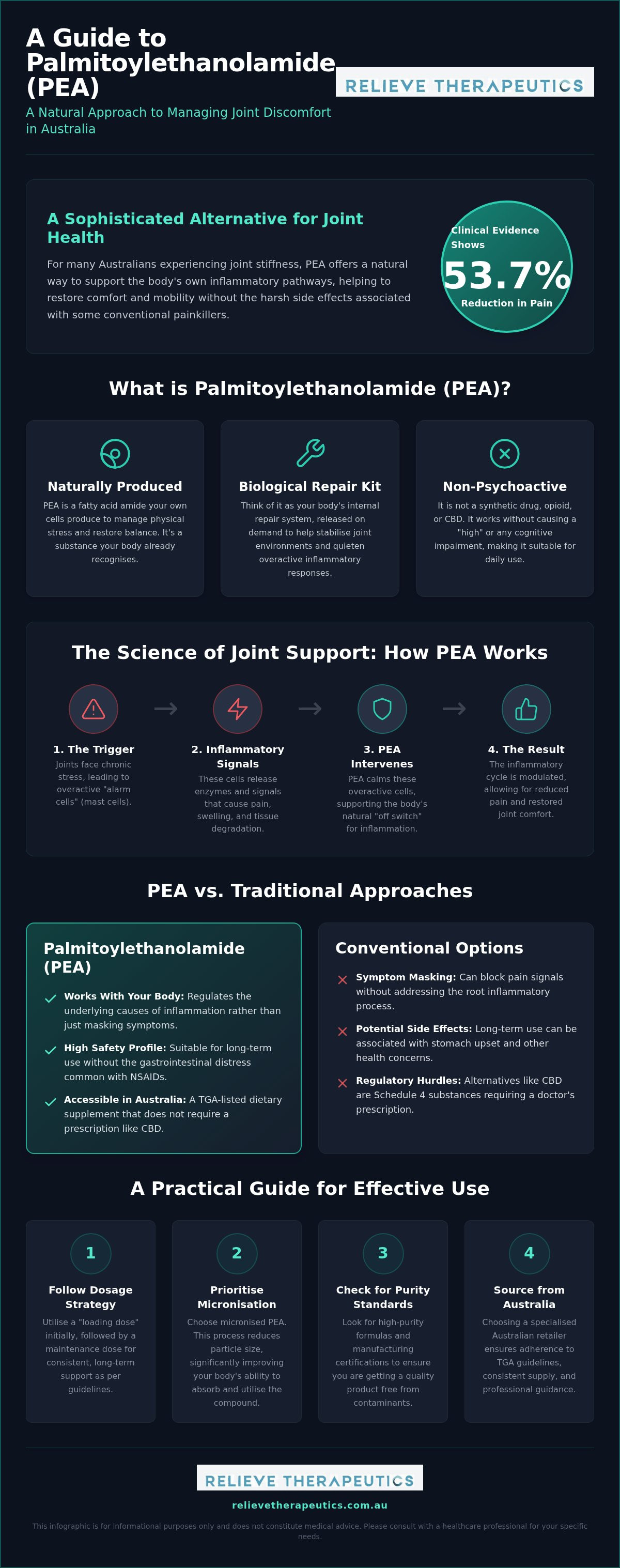
We believe that regaining your mobility shouldn't come at the cost of your digestive health. This guide promises to show you how this naturally occurring fatty acid amide supports joint integrity and reduces morning stiffness without harsh side effects. We'll examine the clinical evidence showing a 53.7% reduction in pain, explain the biological mechanisms of action, and provide a clear overview of the correct Australian dosage for consistent results. Whether you want to return to your garden or enjoy a morning walk, understanding this biological ally is the first step toward lasting comfort and daily vitality.
Key Takeaways
- Understand how PEA acts as a biological repair kit to stabilise inflammation, support joint function, and restore daily comfort.
- Learn why palmitoylethanolamide for arthritis often succeeds where glucosamine fails by regulating the underlying causes of joint discomfort.
- Discover the specific loading dose strategy and TGA guidelines that help Australians manage chronic stiffness safely and effectively.
- Gain clarity on the importance of micronisation, purity standards, and manufacturing certifications when selecting a supplement for long-term joint health.
- Find out why choosing a specialised Australian retailer ensures a consistent supply, professional guidance, and better value for managing persistent joint issues.
What is Palmitoylethanolamide (PEA) and How Does it Help Arthritis?
To understand What is Palmitoylethanolamide (PEA), one must first recognise it as a fatty acid amide that our own cells produce naturally. It isn't a synthetic lab creation or a foreign chemical; it's a lipid that your body synthesises on demand to manage physical stress and tissue damage. Think of it as a biological repair kit. When your joints face persistent strain or inflammation, your system releases PEA to help stabilise the environment and restore comfort. Because it's a substance your body already recognises, using palmitoylethanolamide for arthritis offers a way to support joint health that aligns with your existing physiology.
It's vital to clarify that PEA is a dietary supplement, not a synthetic drug or an opioid. It doesn't override your body's natural signals with harsh chemistry. Instead, it works behind the scenes to quieten overactive inflammatory responses. Unfortunately, our capacity to produce this protective molecule isn't infinite. As we age, or when we face the relentless pressure of chronic stress and long-term joint wear, our internal production often fails to keep pace with our needs. This deficit is where supplementation becomes a valuable tool for maintaining daily function.
The "Endocannabinoid-Like" Connection
PEA is frequently described as an endocannabinoid-like compound because it works alongside the body's endocannabinoid system (ECS). It doesn't bind directly to the main receptors that cause psychoactive effects, so there's no "high" or cognitive impairment involved. Instead, it enhances the levels of other beneficial fatty acids in a process known as the entourage effect. This synergy helps the body manage discomfort more efficiently. While many Australians are curious about CBD, it remains a Schedule 4 substance that requires a doctor's prescription. PEA offers a legal, TGA-listed, and accessible alternative for those seeking natural support without the regulatory hurdles.
Why Arthritis Sufferers are Turning to PEA
Many people find themselves at a crossroads when traditional options like NSAIDs begin to cause stomach upset or raise concerns about kidney health. The shift toward palmitoylethanolamide for arthritis reflects a growing desire within the Australian wellness community for sustainable, non-prescription support. Users are moving away from the "quick fix" mentality and toward long-term management strategies that respect the body's limits. Choosing PEA involves a different approach to wellness:
- It provides a high level of safety for long-term use.
- It avoids the gastrointestinal distress common with traditional painkillers.
- It supports the body's own ability to regulate inflammation rather than just masking the sensation.
The Science of Joint Support: How PEA Targets Inflammatory Pathways
Understanding the biological machinery behind joint discomfort is the first step toward effective management. At the heart of PEA’s efficacy is a mechanism known as Autacoid Local Inflammation Antagonism, or ALIA. This process involves the regulation of mast cells and glial cells, which act as the body's primary drivers of the inflammatory response. When these cells become overactive, they flood the joint with signals that cause swelling and pain. Using palmitoylethanolamide for arthritis helps to calm these alarm cells through three primary actions:
- Downregulating overactive mast cells within the joint tissue.
- Reducing the release of pro-inflammatory enzymes that degrade tissue.
- Supporting the body's natural off switch for chronic discomfort.
Research into PEA for Health Management confirms that this isn't about blocking a single pathway, but rather supporting the body’s innate ability to resolve inflammation. By effectively shutting the tap off on runaway inflammatory signals, PEA allows the body to focus on maintenance rather than constant defense.
Protecting the Cartilage and Synovium
The synovium is the thin membrane that lines the joint capsule and produces the lubricating fluid necessary for frictionless movement. Chronic inflammation creates a hostile environment that degrades this delicate lining and the surrounding cartilage over time. By modulating the inflammatory environment, PEA helps maintain a healthier synovial fluid balance. This protection is vital for anyone looking to preserve their mobility into later life. For those managing long-term conditions, our PEA 180 Capsules offer a sustainable way to provide this ongoing support.
Addressing the "Nerve" Component of Arthritis
It's common for arthritis sufferers to experience sensations beyond simple aching, such as burning, tingling, or sharp electric jolts. These symptoms often indicate that the nerves surrounding the joint have become sensitised by persistent inflammation. Using palmitoylethanolamide for arthritis is unique because it targets both the physical joint structures and the overactive glial cells within the nervous system. You can find more detail in our guide on how to take PEA for nerve pain. This comprehensive approach ensures that the nerve component of arthritis isn't ignored, providing a more complete sense of relief and daily function.
PEA vs. Glucosamine and Chondroitin: A Comparison for Australians
For decades, glucosamine and chondroitin have been the default recommendations for Australians managing joint issues. While these substances provide the structural building blocks for cartilage, they don't always address the underlying inflammatory signals that cause daily discomfort. Using palmitoylethanolamide for arthritis represents a shift from structural support to biological regulation. This scientific study on PEA's anti-inflammatory effects highlights how PEA acts as a modulator, rather than just a replacement part for worn joints. It's the difference between providing the bricks for a building and hiring a site manager to coordinate the repairs.
Many people find glucosamine ineffective because it relies on the body's ability to absorb and integrate large molecules into the joint matrix. If the primary issue is an overactive inflammatory response rather than just mechanical wear, structural supplements may offer limited relief. PEA bypasses this by targeting the signalling pathways that perpetuate the "fire" of inflammation. Additionally, PEA offers a superior safety profile for those with shellfish allergies or concerns regarding glucose metabolism. Because glucosamine is an amino sugar, it can occasionally impact blood sugar levels; PEA, as a fatty acid amide, carries no such risk.
Mechanism of Action Comparison
It's helpful to view these supplements as a team with different roles. Glucosamine and chondroitin focus on the physical integrity of the joint, aiming to support the cartilage that cushions your bones. In contrast, fish oil provides a broad, systemic anti-inflammatory effect through Omega-3 fatty acids. PEA is more localised and targeted. It specifically calms the mast cells and glial cells that have become sensitised within the joint itself. This precision makes palmitoylethanolamide for arthritis a powerful addition to a wellness routine, especially when used alongside structural supports to create a comprehensive management strategy.
Which Should You Choose First?
Your choice often depends on the nature of your symptoms. If you experience mechanical stiffness and "clicking" joints, structural building blocks are a logical starting point. However, if your days are marked by active inflammatory flares, heat, or persistent aching, PEA’s regulatory action is typically more appropriate. We suggest consulting an Australian GP to discuss your specific needs and ensure your supplement stack is personalised to your health history. Ensuring you use high quality PEA capsules is essential, as purity and manufacturing standards directly influence how well the compound is utilised by your system. Consistency is the key to seeing results with any natural protocol.
Practical Guide: Dosage, Micronisation, and Safety for Arthritis
Implementing palmitoylethanolamide for arthritis requires a shift in expectations compared to traditional over-the-counter painkillers. In Australian clinical settings, practitioners often recommend a "loading dose" strategy. This involves taking a higher amount initially to saturate the body's tissues and stabilise the inflammatory environment. Because PEA is a lipid that builds up in your system over several weeks, you won't experience its full potential within a few hours. Clinical trials often focus on an 8-week period to measure efficacy, where participants have reported significant reductions in stiffness and discomfort. Consistency is the foundation of success with this biological modulator.
The safety profile of PEA is one of its most compelling attributes. It's non-toxic, well-tolerated, and has no known drug interactions with common pharmaceutical options. This makes it an ideal companion for those already managing complex health regimes. However, current TGA guidelines suggest that you shouldn't use PEA for more than 21 consecutive days without consulting a healthcare provider to ensure it remains the right choice for your specific health journey. This professional oversight helps you transition from an initial loading phase to long-term maintenance safely.
Why Micronisation Matters
Standard PEA is naturally hydrophobic and possesses a large particle size, which makes it difficult for the human digestive tract to absorb effectively. Micronisation is a specialised manufacturing process that reduces these particles to a fraction of their original size, significantly increasing bioavailability. This ensures that the compound can actually enter the bloodstream and reach the affected joints. Ultra-micronised PEA is considered the gold standard for joint health because its superior absorption allows for more predictable and reliable results.
Finding Your Optimal Intake
For most Australians starting their journey, a typical range begins at 600mg taken twice daily during the initial phase. To aid absorption, always take your capsules with a meal containing healthy fats, such as avocado, olive oil, or eggs. For a more detailed schedule tailored to specific needs, you can refer to our guide on PEA dosage for pain. We also encourage you to keep a "joint diary" for the first 30 days to track subtle improvements in morning stiffness and daily mobility. If you're ready to begin your protocol, you can buy high-quality PEA capsules directly from our specialised Australian store.
Where to Buy High-Quality PEA Capsules in Australia
Sourcing palmitoylethanolamide for arthritis in the Australian market requires a discerning eye for quality and regulatory compliance. While international marketplaces offer a vast array of supplements, they often lack the oversight required to ensure purity and potency. Choosing a specialised Australian retailer provides peace of mind that your supplement has been vetted for the local community. Local sourcing also eliminates the long wait times and potential customs complications associated with overseas shipping. When you buy locally, you're supported by Australian-based customer care that understands the specific wellness landscape of our country.
A high-quality label should be transparent and precise. When evaluating your options, look for products that clearly state the absence of synthetic fillers, binders, or common allergens. Purity is paramount because unnecessary additives can interfere with the compound's delicate biological action. You should also ensure the dosage information is straightforward, allowing you to follow the loading and maintenance protocols discussed earlier without confusion. Reliability in your supply chain is the best way to maintain the consistency needed for long-term joint support.
Choosing the Right Supply Size
We provide several options to suit different stages of your health journey. For those who are new to the supplement and wish to trial its effects, we recommend PEA 60 capsules as an ideal starting point. This smaller count allows you to observe how your body responds during the first few weeks of use. If you've already established a routine and prefer a convenient two-month supply, we suggest PEA 120 capsules to maintain your momentum. For those managing chronic joint issues who want the best value, we highlight the PEA 180 capsules as the most cost-effective choice for sustained, long-term management of palmitoylethanolamide for arthritis.
The Relieve Therapeutics Difference
Relieve Therapeutics is committed to providing the Australian community with pure, effective Palmitoylethanolamide. Our focus remains on transparency and science-backed education rather than marketing hype. We act as your partner in health, ensuring that every bottle meets our rigorous standards for quality and integrity. By offering direct-to-door delivery across Australia, we make it simple to maintain your support regime without interruption. You can trust that our specialised focus on PEA means you're receiving a product designed for efficacy, safety, and daily vitality.
Empowering Your Journey Toward Lasting Joint Comfort
Managing joint health requires more than just masking symptoms; it demands a strategy that respects your body's biological rhythms. By choosing palmitoylethanolamide for arthritis, you're opting for a sophisticated lipid that regulates overactive inflammatory signals rather than simply providing structural building blocks. We've explored how micronisation ensures this fatty acid reaches your tissues effectively and why a consistent loading dose is vital for stabilising long-term discomfort. This natural approach offers a path toward improved mobility without the gastrointestinal concerns associated with traditional options.
As a trusted Australian specialist, Relieve Therapeutics is dedicated to providing the purity and education you need for a successful health transition. Our focused range of 60, 120, and 180-count value packs ensures you have a consistent supply for every stage of your recovery. With fast local shipping across the country, your next step toward vitality is closer than you think. Order your high-purity PEA capsules from Relieve Therapeutics today and rediscover the joy of moving with ease. You deserve a life defined by your passions, not your physical limits.
Frequently Asked Questions
Is palmitoylethanolamide safe to take with my existing arthritis medications?
PEA is generally considered safe to take alongside most arthritis medications because it is a naturally occurring fatty acid that doesn't interfere with typical pharmaceutical pathways. There are no known drug-drug interactions reported in clinical literature. However, we always recommend consulting your Australian GP before starting a new supplement regime to ensure it fits your specific health profile. This professional oversight is especially important if you are managing complex conditions or taking multiple prescriptions.
How long does it take for PEA to start working for joint stiffness?
You should expect a cumulative effect rather than an immediate result. While some people notice subtle changes within the first week, most clinical studies on palmitoylethanolamide for arthritis show significant improvements in joint stiffness after four to eight weeks of consistent use. This timeline allows the compound to build up in your tissues and stabilise overactive inflammatory signals. We suggest tracking your progress in a daily diary to monitor improvements in morning mobility.
Can I take PEA if I have a shellfish allergy?
Yes, you can safely take PEA if you have a shellfish allergy. Unlike glucosamine, which is frequently derived from the shells of crustaceans, palmitoylethanolamide is a fatty acid amide typically sourced from vegetable oils. This makes it an excellent alternative for Australians who need joint support but must avoid marine-based ingredients. Our capsules are formulated to be free from common allergens to ensure they are accessible to a wide range of users.
What is the difference between standard PEA and micronised PEA?
The primary difference lies in bioavailability and absorption. Standard PEA has large particles that are difficult for the human digestive system to process effectively because they don't dissolve easily in water. Micronisation reduces these particles to a much smaller size, significantly increasing the surface area for absorption. This ensures more of the active compound reaches your bloodstream and joints. Ultra-micronised versions are the gold standard for managing chronic inflammatory discomfort efficiently.
Are there any side effects I should be aware of when starting PEA?
Side effects are exceptionally rare because PEA is a substance your body already produces naturally. It is non-toxic and generally well-tolerated even at higher loading doses. A very small number of users might experience mild gastrointestinal heaviness if the supplement is taken on an empty stomach. To prevent this, we recommend taking your capsules with a meal containing healthy fats. This simple step aids both digestion and the absorption of the lipid into your system.
Do I need a prescription to buy PEA capsules in Australia?
No, you don't need a prescription to buy PEA capsules in Australia. It is currently available over-the-counter as a listed complementary medicine regulated by the Therapeutic Goods Administration (TGA). This allows you to purchase our 60, 120, or 180-count packs directly through our online store. While it is easily accessible, TGA guidelines suggest consulting a healthcare professional if you intend to use the supplement for more than 21 consecutive days to ensure it remains suitable for you.
Can PEA help with both osteoarthritis and rheumatoid arthritis?
Palmitoylethanolamide for arthritis is effective for both osteoarthritis and rheumatoid arthritis because it targets the underlying inflammatory pathways common to both conditions. In osteoarthritis, it helps manage the "wear and tear" inflammation, while in rheumatoid arthritis, it assists in modulating overactive immune signals. By calming the mast cells and glial cells within the joint environment, PEA supports the body’s innate ability to resolve discomfort regardless of the specific arthritic diagnosis or cause.
Is it better to take PEA in the morning or at night?
We generally recommend splitting your intake between the morning and the evening. Taking your capsules twice daily helps maintain a consistent level of the compound in your system throughout a 24-hour period. Many users find that a morning dose helps manage early stiffness, while an evening dose supports comfort during the night. Consistency is more important than the specific hour, so choose a time that aligns with your daily meal schedule to ensure you don't miss a dose.