

The vibrant yellow spice sitting in your pantry might be the most famous natural remedy in Australia, but for many, it remains the wrong tool for the job when comparing PEA vs turmeric for inflammation. You've likely tried various curcumin extracts only to find that persistent joint stiffness or sharp nerve discomfort hasn't shifted as expected. It's frustrating to invest in your wellbeing and wait weeks for results that never quite arrive, especially when you're simply trying to maintain your daily mobility and comfort.
This guide explores the essential biological differences between these two options to help you determine which molecule aligns with your body's specific needs. While turmeric is often celebrated for systemic support, Palmitoylethanolamide (PEA) acts as a targeted fatty acid that communicates directly with your nervous system. We will examine how these compounds differ in their absorption, their safety profiles according to recent TGA insights, and provide a clear framework for choosing the right support for your health journey.
Key Takeaways
- Understand the biological distinction between turmeric’s systemic enzyme inhibition and PEA’s targeted ALIA mechanism for glial cell and nerve health.
- Learn how to categorise your discomfort to accurately choose between PEA vs turmeric for inflammation, ensuring you use the most effective tool for your specific recovery needs.
- Discover the "Multi-Target" benefits of combining these natural compounds to address both joint stiffness and neurological signals simultaneously without receptor competition.
- Gain clarity on the TGA’s recent safety alerts regarding turmeric supplements and why high-purity PEA serves as a vital, science-backed foundation for long-term wellness.
- Develop a practical decision-making framework to help you navigate supplement bioavailability and restore your daily mobility with confidence.
Understanding Inflammation: The Biological Roles of PEA and Turmeric
Inflammation is essentially your body's innate response to physical injury, environmental toxins, or prolonged periods of chronic stress. It acts as a necessary biological signal, yet when this response remains active for too long, it leads to the persistent discomfort many Australians experience daily. Understanding the choice between PEA vs turmeric for inflammation requires looking at how these two substances interact with your internal systems. They are not interchangeable; they are different biological tools designed for different tasks.
Turmeric, or curcumin, is a systemic anti-inflammatory derived from the Curcuma longa root. It has been a staple of traditional wellness for centuries. In contrast, Palmitoylethanolamide (PEA) is a fatty acid amide that your own body produces in response to cellular stress. While both aim to restore comfort, they operate on entirely different biological tracks. This is why more people are investigating how does PEA work for pain as a sophisticated alternative to standard herbal remedies.
Turmeric: The Systemic Shield
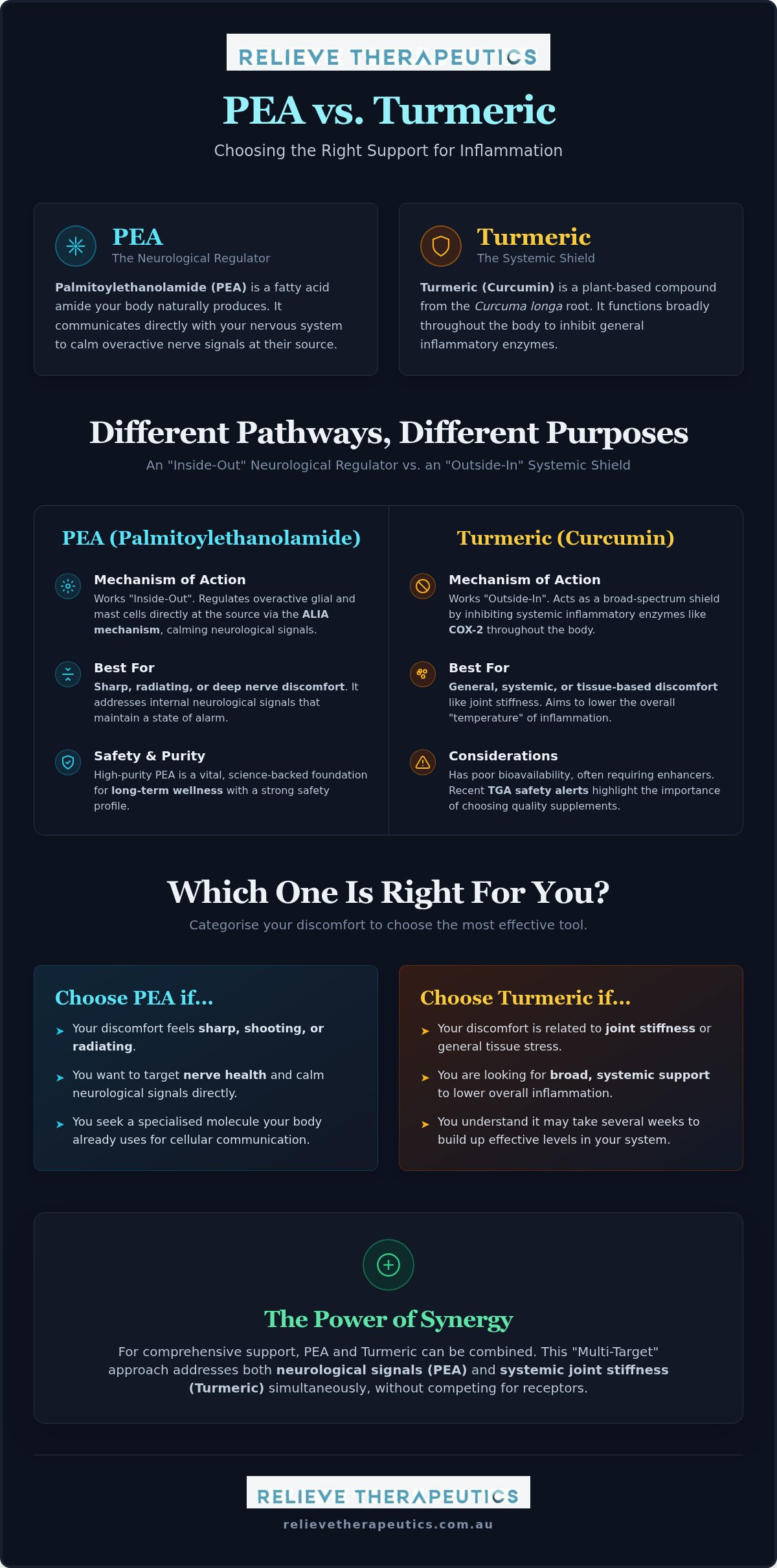
Turmeric functions as a broad-spectrum shield by inhibiting specific inflammatory enzymes, most notably COX-2. This mechanism is similar to how many over-the-counter options work, though turmeric achieves this through natural plant-based compounds. Its journey from ancient medicine to modern clinical use has focused heavily on curcuminoid concentration. For turmeric to be effective, it requires a high percentage of these active curcuminoids. Without proper concentration, the body often struggles to absorb enough of the spice to make a functional difference. It is particularly effective for general systemic issues where the goal is to lower the overall "temperature" of inflammation throughout the body.
PEA: The Neurological Regulator
PEA takes a more specialised path. It is often described as a PEA endocannabinoid supplement because it shares similar pathways with the body’s endocannabinoid system. Rather than just blocking enzymes, PEA regulates mast cells and glial cells. These are the "first responders" of your immune system that can become overactive during chronic discomfort. By stabilising these cells, PEA helps calm overactive nerves at their source. This makes it a vital tool for those whose discomfort feels sharp, radiating, or deeply embedded in the nervous system. When evaluating PEA vs turmeric for inflammation, the distinction lies here: turmeric manages the external symptoms of tissue stress, while PEA addresses the internal neurological signals that keep the body in a state of alarm.
Different Pathways: How PEA Targets Glial Cells vs Turmeric’s Enzyme Inhibition
The fundamental difference in how these two substances operate can be described as an "outside-in" versus "inside-out" approach. Turmeric works from the outside-in by targeting systemic signals and broad inflammatory pathways throughout the body. Conversely, PEA works from the inside-out by regulating your body's internal cellular responses at the source of the signal. This distinction is critical when deciding between PEA vs turmeric for inflammation, as it dictates which supplement will better address the specific nature of your discomfort.
Turmeric is frequently restricted by poor oral bioavailability. Without enhancers like piperine (black pepper) or lipid-based delivery systems, the active curcuminoids are often metabolised by the liver before they can reach the bloodstream in therapeutic amounts. Research from Johns Hopkins Medicine suggests that turmeric's anti-inflammatory properties are highly effective for tissue-based issues, yet the "slow burn" nature of the spice means it typically takes several weeks of consistent use to build up sufficient levels in your system.
In contrast, PEA employs a mechanism known as ALIA (Autacoid Local Inflammation Antagonism). This process allows the molecule to act locally on tissues and cells that have become over-stimulated or damaged. To ensure these molecules are effectively absorbed and utilised by the body, many Australians opt for micronised palmitoylethanolamide, which utilises smaller particle sizes to bridge the gap between ingestion and cellular uptake. You can find high-quality, pure formulations at Relieve Therapeutics to help manage your long-term wellness goals.
The Glial Cell Revolution in PEA Science
Glial cells were once thought to be simple structural "glue" for the nervous system, but we now know they play a primary role in chronic nerve discomfort. When these cells become hyper-active, they release a constant stream of pro-inflammatory chemicals that keep the body in a state of high alert. PEA acts as a biological dimmer switch, instructing these cells to stop producing inflammatory signals and return to a resting state. Neuro-inflammation is defined as a persistent, self-sustaining inflammatory response within the nervous system that often continues long after an initial injury has healed.
Turmeric and the Cytokine Storm
Turmeric excels at interfering with the NF-kB pathway, which acts as a "master switch" for the body's inflammatory response. By dampening this pathway, it reduces the production of systemic cytokines that contribute to joint swelling and oxidative stress. This broad approach is particularly effective for managing the general wear and tear associated with active lifestyles or age-related stiffness. While it lacks the specific neurological precision of PEA, its ability to calm the "cytokine storm" makes it a reliable choice for tissue-based recovery and protecting joints from oxidative damage.
Choosing Your Supplement: When to Reach for PEA or Turmeric
Deciding between PEA vs turmeric for inflammation often comes down to the specific nature of your discomfort rather than just the intensity of it. While both molecules offer natural support, they serve different masters within the body. Turmeric is your systemic generalist, while PEA acts as a specialist for the nervous system. Understanding this distinction allows you to choose a supplement that aligns with your specific biological needs rather than relying on a one-size-fits-all approach.
If you're dealing with issues like lower back discomfort that radiates down the leg, the palmitoylethanolamide sciatica connection is particularly relevant. This condition involves direct nerve pressure and irritation that standard herbal remedies often struggle to reach. Conversely, for those recovering from a weekend hike or managing age-related joint wear, turmeric remains a reliable ally. Research from Johns Hopkins Medicine on turmeric benefits highlights its efficacy in managing the systemic markers associated with arthritis and general tissue stress. However, recent safety alerts from the TGA regarding rare liver injury linked to certain high-dose turmeric supplements have prompted many Australians to consider PEA as a safer, long-term foundation for nerve health.
The Nerve vs. Joint Distinction
Identifying whether your discomfort is neurological or musculoskeletal is the first step toward relief. You can use this simple checklist to categorise your experience:
- Nerve discomfort: Sharp, shooting, electric, or tingling sensations that may travel along a limb or feel like a "burning" sensation.
- Joint discomfort: Dull, aching, stiffness, or localised throbbing often worse in the morning or after physical activity.
Nerve discomfort requires the glial-targeting power of PEA because these symptoms are driven by overactive immune cells in the nervous system. Turmeric is the primary choice for systemic inflammatory markers found in the blood and joint fluid, making it better suited for the "aching" side of the spectrum. When comparing PEA vs turmeric for inflammation, remember that nerve health requires a molecule that can cross the specific barriers of the nervous system.
Bioavailability: The Australian Buyer’s Dilemma
Many Australians find themselves frustrated with the slow onset of natural remedies, often due to poor bioavailability. Standard turmeric powder, while excellent for cooking, frequently fails to deliver clinical results because the active curcuminoids are poorly absorbed by the human gut. This is where sourcing high quality PEA capsules becomes essential. Unlike raw spices, high-purity PEA is engineered for better uptake. Particle size is the most critical factor in PEA efficacy, as smaller particles can more easily navigate the body's barriers to reach the site of inflammation. By choosing a refined formulation, you ensure that the active ingredients actually reach the tissues that need them most.
The Power of Synergy: Combining PEA and Turmeric for Enhanced Support
The debate of PEA vs turmeric for inflammation often suggests you must choose one over the other, but a "Multi-Target" approach frequently yields more comprehensive results. By utilising both molecules, you address discomfort through separate biological channels. Turmeric focuses on systemic enzyme inhibition, while PEA stabilises the overactive glial cells discussed in previous sections. Because they don't compete for the same receptors, they can work in parallel to provide a broader spectrum of support than either could achieve in isolation.
This dual-action strategy is particularly effective for those who experience both joint stiffness and radiating nerve discomfort. While turmeric manages the external tissue stress, PEA addresses the internal neurological signals. You can browse our range of high-purity PEA capsules to find the right foundation for this synergistic approach.
1 + 1 = 3: The Entourage Effect
When you reduce the systemic inflammatory load using turmeric, it effectively "lowers the volume" of the body's background noise. This creates a clearer environment for PEA to target specific neurological signals. This synergy is often referred to as the entourage effect, where the combined impact is greater than the sum of its parts. Many Australians find success by establishing a baseline with pure PEA capsules and then introducing turmeric to manage broader joint stiffness. This staged approach allows you to monitor how your body responds to each individual compound. It also presents the potential for lower effective dosages of both supplements, as they are no longer working against a massive wave of unmanaged systemic stress.
Safety and Considerations for Australians
The safety profile for combining these natural options is generally excellent for long-term management. Neither molecule is known for major side effects when taken as directed, making them a sustainable choice for chronic health journeys. It's essential to consult your GP before starting any new regime, especially if you have pre-existing liver conditions or are taking other medications. This ensures your choices align with your overall health plan.
Choosing pure, high-quality formulations is vital to avoid the fillers found in some complex multi-ingredient blends. A "clean label" ensures you aren't consuming unnecessary additives that could interfere with absorption or cause digestive upset. Learning how to take PEA for nerve pain alongside other herbal supports involves timing your intake to ensure maximum cellular uptake throughout the day. By separating the dose of turmeric and PEA by a few hours, you allow each compound to be processed efficiently by your digestive system.
Quality Matters: Why Pure PEA is a Vital Foundation for Your Wellness Routine
While turmeric remains a staple generalist for managing systemic tissue stress, PEA stands as the essential specialist for neurological health. Success in your wellness journey depends on more than just choosing the right molecule; it requires a commitment to purity and evidence-based sourcing. When weighing PEA vs turmeric for inflammation, the quality of the raw material determines the efficacy of the biological response. Relieve Therapeutics operates as a dedicated specialist, ensuring that every capsule provides the high-purity environment your nervous system requires to return to a state of balance.
Sourcing PEA in Australia
Choosing a local provider offers distinct advantages for Australians, from reliable shipping to accessible customer support tailored to our specific regulatory environment. Managing chronic discomfort is a long-term commitment, which is why bulk options like our PEA 180 Capsules are ideal for established routines. These larger quantities provide consistency, value, and peace of mind. We maintain a rigorous commitment to transparency throughout our manufacturing process, focusing on technical absorption and clinical standards. This discipline ensures you receive a product that values substance over marketing fluff, positioning us as a reliable partner in your personal health journey.
For those beginning to explore the synergy between these two natural anti-inflammatories, the PEA 120 capsules offer a strategic middle ground. This quantity allows you to test the "Multi-Target" approach over several months, providing enough time to observe how your body responds to the combination. A methodical approach to wellness prioritises data and personal observation over quick fixes, ensuring your routine is both sustainable and effective.
Taking the Next Step Toward Comfort
The journey to natural restoration is rarely a straight line, but having the right tools makes the path clearer. The core takeaway remains simple: use turmeric for systemic joint stiffness, PEA for targeted nerve support, and consider both for total inflammatory management. This framework empowers you to make informed decisions based on the specific signals your body is sending. We invite you to explore the full range of PEA capsules at Relieve Therapeutics, where science-backed purity meets empathetic care. You don't have to navigate this journey alone; we are here to support your return to daily mobility and lasting comfort.
Restoring Your Daily Mobility with Evidence-Based Support
Deciding between PEA vs turmeric for inflammation doesn't have to be a choice between two competing remedies; it's about selecting the right biological tool for your specific discomfort. You now understand that while turmeric acts as a systemic shield for joint stiffness, PEA serves as a specialist for the intricate pathways of the nervous system. Integrating both can create a powerful synergy that addresses your wellbeing from the inside out, provided you prioritises purity and technical absorption.
As an Australian-owned and operated specialist, Relieve Therapeutics is dedicated to providing high-purity PEA capsules that meet rigorous clinical standards. We offer fast local shipping across Australia to ensure your routine remains consistent and reliable. Explore our range of high-purity PEA capsules and start your journey to natural relief today. You deserve a lifestyle defined by vitality and daily function rather than the limitations of persistent discomfort. We are here to partner with you as you take these confident steps toward lasting comfort and natural restoration.
Frequently Asked Questions
Is PEA better than Turmeric for chronic nerve pain?
PEA is specifically suited for neurological discomfort because it regulates glial cells and mast cells within the nervous system. While turmeric serves as an excellent systemic generalist for joint stiffness, it often lacks the precision required to calm overactive nerve signals. For those dealing with sharp or radiating sensations, PEA offers a targeted mechanism that turmeric simply cannot replicate, making it the superior choice for nerve-specific health journeys.
Can I take PEA and Turmeric together safely?
Yes, you can take these supplements together to achieve a comprehensive "Multi-Target" approach to your wellbeing. Because they operate through different biological pathways, they don't compete for the same receptors in your body. Combining them allows you to address systemic tissue stress and neurological signals simultaneously. Many Australians find this combination provides a more robust level of support than using either supplement in isolation for long-term management.
How long does it take for PEA to start working compared to Turmeric?
Both substances typically require a "loading period" to reach therapeutic levels in your system. You might notice subtle changes within the first two weeks, but full results for both often take between four to six weeks of consistent use. When comparing PEA vs turmeric for inflammation, PEA must build up in your fatty tissues to effectively regulate cellular responses, while turmeric requires time to consistently inhibit systemic inflammatory enzymes.
Are there any side effects when taking PEA for inflammation?
PEA is exceptionally well-tolerated because it's a fatty acid amide that your body already produces naturally in response to stress. Clinical trials haven't identified any major side effects, which gives it a high safety profile for long-term use. In contrast, some high-dose turmeric extracts have recently been linked by the TGA to rare instances of liver injury. This makes pure PEA a reliable and safe foundation for your daily wellness routine.
Why should I choose PEA capsules over Turmeric for sciatica?
Sciatica is primarily a neurological issue caused by nerve compression or irritation, which falls directly into the specialist category of PEA. While turmeric helps reduce general swelling in the surrounding tissues, PEA addresses the neuro-inflammation occurring within the nerve sheath itself. By stabilising the glial cells that keep the sciatic nerve in a state of high alert, PEA provides the specific biological support that broad-spectrum herbal spices often miss.
What is the recommended dosage for PEA when managing inflammation?
A standard clinical dosage for managing persistent discomfort typically ranges from 600mg to 1200mg per day. It's often most effective when split into two doses, taken morning and night, to maintain steady levels in your system. Consistency is the most vital factor in achieving results. Starting with a 60-count bottle allows you to establish your baseline, while larger quantities are better suited for maintaining your comfort once the loading phase is complete.
Do I need a prescription to buy PEA capsules in Australia?
No, you don't require a prescription to purchase PEA capsules in Australia. They are classified as a dietary supplement and are readily available for direct purchase. Relieve Therapeutics provides high-purity PEA directly to consumers, offering an accessible path to natural support without the need for clinical therapy appointments. This allows you to take control of your health journey with a science-backed molecule that is recognised for its safety and efficacy.
How does micronised PEA improve absorption compared to standard Turmeric?
Micronisation reduces the particle size of PEA, which significantly enhances its ability to be absorbed by your digestive system and reach your nerves. Standard turmeric powder is notoriously difficult for the body to utilise and often requires black pepper or fats to be effective at all. When evaluating PEA vs turmeric for inflammation, the superior bioavailability of micronised PEA ensures that the active molecules actually reach the cellular targets that require restoration.