

What if the electric-shock pain radiating down your leg isn't just a structural pinch, but a cellular signal that your body's internal calming mechanism is simply overwhelmed? For many of the four million Australians living with back problems, the reality of sciatica is a debilitating cycle of disturbed sleep, throbbing discomfort, and limited mobility. You've likely felt the frustration of relying on heavy prescriptions while searching for a way to restore your daily function. You deserve a reliable path forward.
This guide examines how Palmitoylethanolamide (PEA) provides targeted support by speaking the body's own chemical language. We will explore the clinical science behind using PEA for back pain, the latest TGA regulatory updates regarding its use, and how this natural compound helps manage persistent nerve flares. By understanding how PEA works at a cellular level to calm overactive signals, you can decide if this non-addictive tool is the right addition to your health journey. We'll cover everything from absorption purity to practical management steps for improved sitting comfort and lasting vitality.
Key Takeaways
- Understand why the sciatic nerve is uniquely prone to irritation and how to distinguish between dull gluteal aches and 'electric' nerve signals.
- Discover how PEA for back pain works by modulating glial cells, effectively 'turning down the volume' on overactive nerve signals at a cellular level.
- Learn why PEA is often preferred for long-term support compared to traditional anti-inflammatories that target tissue rather than nerve-specific irritation.
- Identify the critical role of the initial 4-8 week loading phase and how split dosing can help maintain consistent support for your daily mobility.
- Recognise the importance of supplement purity and why sourcing from an Australian-owned specialist ensures both high quality and reliable local delivery.
Understanding Sciatica and the Search for Natural Nerve Support
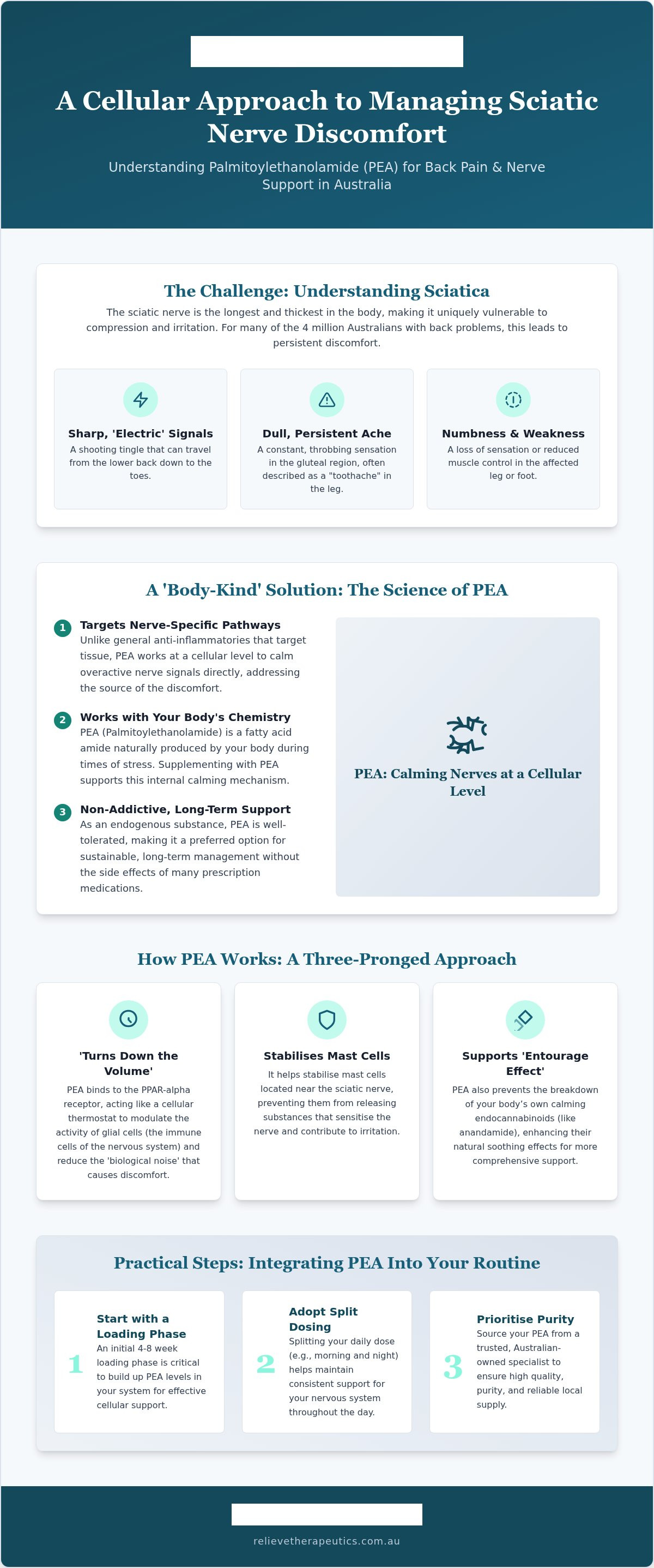
The sciatic nerve is the longest and thickest nerve in the human body. It originates in the lower back, travels through the hips and buttocks, and branches down each leg to the feet. Due to its significant size and the narrow spaces it must navigate through the spine and pelvis, it's exceptionally vulnerable to compression and irritation. While many health resources suggest that sciatica resolves within weeks, a significant number of Australians find themselves dealing with chronic, recurring sensitivity that disrupts their ability to work and rest.
Symptoms of sciatic nerve irritation are rarely uniform. They can range from a persistent, dull ache in the gluteal region to a sharp, electric tingle that shoots down to the toes. You might experience:
- Numbness or muscle weakness in the leg or foot.
- A constant throbbing sensation, often described as a "toothache" in the leg.
- Sharp pain that intensifies when sitting, coughing, or sneezing.
Traditional treatments often focus on general tissue inflammation. However, when the nerve itself is the source of the discomfort, standard anti-inflammatories may miss the mark. This gap in care has led many to explore how Palmitoylethanolamide (PEA) works to support the nervous system from within.
The Reality of Living with Chronic Nerve Sensitivity
Living with sciatica affects every facet of daily movement. Sitting at a desk for work or driving the car can become endurance tests. For the 16% of Australians currently living with back problems, the burden isn't just physical. There's a profound psychological toll that comes with "waiting for the next flare." This state of constant hyper-vigilance can actually increase nerve sensitivity over time. Validating this experience is the first step toward a multi-modal recovery plan that prioritises long-term nerve health over temporary fixes.
Why Natural Alternatives are Gaining Traction in Australia
There is a clear shift in Australian wellness toward non-addictive, evidence-based support. Many individuals are looking to reduce their reliance on heavy prescription painkillers that often come with a list of undesirable side effects. Using PEA for back pain has gained popularity because it aligns with the body's natural chemistry. As a fatty acid amide, it focuses on the pathways that regulate nerve signals rather than just masking the sensation. Integrating these natural compounds into a holistic management plan provides a sustainable way to support daily mobility and comfort.
The Science of PEA: How It Modulates Sciatic Nerve Discomfort
Palmitoylethanolamide (PEA) is a bioactive fatty acid amide naturally produced in your body. It acts as a protective lipid, appearing in higher concentrations when your tissues face stress or irritation. Because it's an endogenous substance, your system recognises the molecule immediately. This biological familiarity makes it a 'body-kind' option for those wary of synthetic additives. When you use PEA for back pain, you aren't introducing a foreign chemical; you're simply supporting a natural pathway that's currently under-resourced.
The efficacy of PEA lies in its ability to target the PPAR-alpha receptor. Think of this receptor as a cellular thermostat that regulates the inflammatory response. In chronic sciatica, the 'volume' of nerve signalling is often stuck on high. PEA binds to these receptors to help modulate the activity of glial cells, which are the immune cells of the nervous system. By calming these overactive cells, PEA helps to reduce the biological noise that translates into persistent discomfort.
Calming the 'Biological Noise' of Sciatica
Irritation often stems from mast cells located near the sciatic nerve. When these cells become unstable, they release substances that further sensitise the nerve. PEA assists by stabilising these mast cells and preventing the release of unnecessary irritants. PEA also supports the 'Entourage Effect' by preventing the breakdown of your body's own calming endocannabinoids, such as anandamide. This dual action focuses on supporting cellular balance and nerve function rather than simply masking the sensation of pain.
Clinical Insights into PEA and Nerve Pathways
Research into this molecule has provided significant evidence for its role in nerve health. A notable case series on PEA for neuropathic pain highlighted how patients with various nerve concerns experienced improved comfort levels over time. It's important to understand that consistency is vital with this specific molecule. Unlike fast-acting pharmacy options, PEA for back pain builds its effect within your system over several weeks. For a deeper look at the technical processes involved, you can read more about how does PEA work for pain on our dedicated science page. Choosing a high-purity PEA supplement is often the first practical step toward reclaiming your daily mobility.
Comparing PEA with Conventional Sciatica Management
Many Australians reach for Non-Steroidal Anti-Inflammatory Drugs (NSAIDs) like ibuprofen or aspirin at the first sign of a flare. While these are effective for acute tissue swelling, they often provide limited relief for the deep, radiating discomfort of sciatica. Using PEA for back pain offers a different mechanism of action. Instead of merely blocking enzymes that cause general inflammation, PEA works with the nervous system to address the underlying cellular sensitivity. This distinction is critical for those who find that standard pharmacy options don't quite reach the source of their leg pain.
Why Standard Anti-Inflammatories Often Struggle with Sciatica
The primary limitation of standard anti-inflammatories is their focus on structural inflammation rather than nerve-specific signalling. Sciatica is frequently a result of nerve compression or chemical irritation, which requires a more targeted approach to cellular stabilisation. Additionally, long-term use of NSAIDs can lead to significant gastric upset, particularly in older adults. For those seeking a sustainable path, exploring non-opioid pain relief supplements can provide a more balanced strategy for chronic management without the digestive strain.
The Safety Profile of Palmitoylethanolamide
Reliability and safety are paramount when managing long-term discomfort. A comprehensive Systematic Review and Meta-Analysis has demonstrated that PEA maintains a high level of tolerability across various clinical settings. Unlike many prescription nerve blocks or heavy medications, PEA doesn't carry risks of addiction or severe withdrawal symptoms. It's an endogenous molecule, meaning your body is already equipped to process it efficiently. This biological familiarity is why it's increasingly favoured in Australian clinical practice as a gentle yet effective support tool.
One of the most common questions from our community is whether you can use PEA for back pain alongside existing treatments. Current clinical literature hasn't identified significant drug interactions, making it a versatile tool for complementary care. It can often be integrated into a broader programme that includes physiotherapy and traditional pharmacy support. However, it's essential to always consult your GP before starting a new supplement programme. They can help you coordinate your approach to ensure it aligns with your specific medical history and existing prescriptions.
Practical Steps: Integrating PEA into Your Sciatica Routine
Integrating PEA for back pain into your daily life requires a shift in mindset from seeking instant relief to building cumulative support. Nerves are sensitive. They respond best to a steady, predictable environment. By spacing your intake between morning and evening, you provide your nervous system with a consistent supply of this protective lipid throughout the day and night. This split dosing rhythm helps to maintain cellular balance and prevents the peaks and troughs often associated with single-dose supplements. Consistency is the primary driver of success when managing chronic nerve pathways.
Most individuals find that the first 4 to 8 weeks represent a critical loading phase. During this time, your body works to restore depleted levels of Palmitoylethanolamide and stabilise overactive glial cells. It is a gradual process of biological recalibration. While it might be tempting to stop if you don't feel a change in the first few days, the clinical evidence suggests that the most significant mobility improvements occur after the molecule has had time to build up in your system. This period of patience allows the nervous system to move away from a state of high alert.
Dosage Considerations for Sciatica Support
Standard starting doses in Australian clinical settings often range between 600mg and 1200mg per day, depending on the intensity of the nerve flare. PEA levels build up in the system over time as cellular balance is gradually restored. Be mindful that the Therapeutic Goods Administration (TGA) currently advises that PEA should not be used for more than 21 consecutive days without consulting a healthcare provider for chronic management. For a complete breakdown of how to structure your intake, refer to our guide on PEA dosage for pain.
Lifestyle Habits to Support the Sciatic Nerve
Nerve health is best managed through a multi-modal approach. Gentle movement is essential; specialised nerve flossing exercises can help the sciatic nerve glide more freely through the surrounding tissues. You should also evaluate your Australian home-office setup. Ensure your chair provides adequate lumbar support and consider a standing desk to reduce the prolonged pressure on your lower spine. Managing stress is equally vital, as high cortisol levels can increase your central nervous system's threat perception, making nerve signals feel more intense.
Finally, consider tracking your progress with a simple pain diary. Note your ability to sit for longer periods, the quality of your sleep, and any reduction in the frequency of electric-shock sensations. These subtle markers of progress are often more telling than a single pain scale number. If you are ready to start your loading phase, you can order high-quality PEA capsules directly from our Australian-owned warehouse for fast local delivery. Using PEA for back pain as part of a structured routine provides a sustainable foundation for long-term comfort.
When selecting a supplement, purity should be your primary consideration. Sciatic nerves are already in a state of hyper-sensitivity; introducing artificial colours, synthetic fillers, or unnecessary binding agents can be counterproductive. High-quality PEA for back pain should be clean and focused on the active molecule. By choosing a pure formulation, you ensure that your body receives exactly what it needs for cellular stabilisation without the metabolic burden of processing unnecessary additives. This focused approach supports the restoration of nerve health without compromise.
Buying from a local Australian retailer provides more than just faster shipping. It offers the reassurance of local standards and the ease of accessible, empathetic support. When you're in the midst of a nerve flare, waiting weeks for an international delivery isn't practical. Local distribution ensures that your support arrives when it's most needed, typically within a few business days for major Australian cities like Sydney, Melbourne, and Brisbane.
Choosing Your Supply: 60, 120, or 180 Capsules?
The journey to nerve health is personal, and your supply should reflect your current stage of management. We provide three distinct options to suit your needs:
- The 60-Count Starter: This is an ideal choice for those new to the molecule. It allows you to test your initial response and establish a routine without a long-term commitment.
- The 120-Count Standard: A balanced option for those who have completed their loading phase and are moving into a steady maintenance rhythm.
- The 180-Count Management Pack: This is the strategic choice for sustained, long-term sciatica support. It provides a cost-effective way to ensure you never miss a dose during critical periods of recovery.
You can view our bulk saving options and a detailed breakdown of these choices in our guide to PEA 180 capsules.
The Trustworthy Specialist: Why Relieve Therapeutics?
At Relieve Therapeutics, we have chosen to specialise exclusively in Palmitoylethanolamide. This singular focus allows us to maintain the highest standards of retail purity and clinical transparency. We aren't a generalist health store; we're a dedicated partner for the Australian chronic pain and sciatica community. Our team understands the physical and emotional toll of persistent discomfort, and we're committed to providing the education and high-quality tools you need for a better quality of life.
Our capsules are designed for those who value substance and scientific rigour. We believe that by providing a reliable, non-addictive tool like PEA for back pain, we can help you navigate your recovery with confidence and dignity. If you're ready to take the next step in your nerve health journey, you can browse our range of high-quality PEA capsules here and experience the difference that specialist care makes.
Empowering Your Recovery with Natural Nerve Support
Managing the radiating discomfort of sciatica requires a shift from temporary masking to long-term cellular support. We've explored how Palmitoylethanolamide addresses the root of nerve sensitivity by stabilising overactive glial cells and modulating the body's internal inflammatory response. This targeted mechanism is why many Australians are turning to PEA for back pain as a reliable, non-addictive alternative to traditional pharmacy options. Success is built on clinical consistency, a dedicated loading phase, and the use of high-purity formulations.
As an Australian owned and operated specialist, we provide pure PEA capsules without unnecessary fillers or artificial colours. We ensure your path to comfort is supported by transparent education and discreet local shipping across Australia. By choosing a partner that prioritises scientific rigour and manufacturing excellence, you can focus on reclaiming your mobility and daily vitality. You don't have to navigate persistent discomfort alone.
Support your nerve health with Relieve Therapeutics PEA Capsules
Reclaiming your quality of life is a steady process that deserves the highest standard of care and patience.
Frequently Asked Questions
How long does it take for PEA to work for sciatica?
PEA usually requires a consistent loading phase of 4 to 8 weeks before the most significant improvements in mobility and comfort are observed. Because it works by restoring cellular balance rather than temporarily blocking pain receptors, the effect is cumulative. Many individuals notice subtle changes in their sleep quality or the frequency of nerve flares during the first month. Patience is essential as your nervous system recalibrates and overactive glial cells begin to stabilise.
Can I take PEA with my current sciatica medications?
Clinical literature suggests that PEA has a high safety profile with no significant drug interactions reported to date. This makes it a versatile tool for those already using standard pharmacy options or physical therapy. It's vital to consult your GP before adding any supplement to your regime. They can ensure your approach is coordinated and safe; especially if you're managing complex nerve concerns or taking prescription nerve blocks.
Are there any side effects of taking PEA for nerve pain?
PEA is an endogenous molecule already produced by your body, which contributes to its exceptional tolerability and lack of severe side effects. Unlike many prescription alternatives, it doesn't carry risks of addiction, cognitive fog, or withdrawal symptoms. While rare, some individuals might experience mild gastrointestinal upset. Because it's a "body-kind" lipid, most Australians find it a gentle and sustainable choice for long-term daily support without the metabolic strain of synthetic chemicals.
Is PEA a natural alternative to prescription nerve tablets?
Many Australians use PEA for back pain as a natural, non-addictive alternative to standard nerve medications. It's a bioactive fatty acid amide that supports the body's internal calming pathways rather than relying on synthetic compounds. While it doesn't replace the need for professional medical diagnosis, it provides a biological way to manage the "electric" sensations of sciatica by speaking the body's own chemical language and supporting cellular health.
What is the recommended daily dose of PEA for sciatica?
A standard daily dose typically ranges between 600mg and 1200mg, often split into two doses for consistent support. This split rhythm helps maintain stable levels within your system throughout the day and night. It's important to follow the Therapeutic Goods Administration (TGA) guidelines, which suggest not exceeding 21 consecutive days of use without consulting a healthcare professional. Your practitioner can help tailor the duration and dosage to your specific recovery needs.
Does PEA help with the inflammation causing my sciatica?
PEA addresses the specific type of neuro-inflammation associated with nerve irritation rather than just general tissue swelling. It works by modulating glial cells and stabilising mast cells that cluster around the sciatic nerve. By "turning down the volume" on these overactive immune signals, it helps reduce the chemical irritation that causes radiating leg pain. This cellular approach provides a more targeted form of support for those whose discomfort stems from nerve sensitivity.
Why is PEA becoming popular in Australia for nerve support?
The popularity of PEA for back pain is driven by a growing demand for non-opioid options and "clean label" supplements. With 16% of the population living with back problems, there is a significant need for evidence-based tools that avoid the side effects of traditional painkillers. Its status as a TGA-listed medicine provides a level of quality assurance that resonates with health-conscious Australians looking for transparent, laboratory-tested solutions for persistent nerve discomfort.
Can I take PEA capsules on an empty stomach?
You can take PEA capsules on an empty stomach, but taking them with a meal that contains healthy fats may enhance absorption. Since PEA is a lipid-based molecule, its bioavailability is often supported by the presence of dietary fats. Establishing a routine around breakfast and dinner is a practical way to ensure consistency. This simple adjustment helps you maintain the steady cellular environment necessary for the loading phase and long-term nerve support.