

Could the most effective ally in your post-operative recovery already be residing within your own cells? The days following a surgical procedure are often defined by a difficult trio of physical discomfort, restricted mobility, and a lingering anxiety regarding the long-term use of heavy pain medications. It's natural to feel frustrated when your body’s healing pace doesn't match your desire to return to daily life, especially when concerns about internal adhesions and nerve sensitivity around the incision site begin to mount.
Palmitoylethanolamide, or PEA, offers a scientifically grounded path to support your body’s natural inflammatory response during this vital transition. By utilising PEA for post-surgery recovery support, you can help calm overactive nerve signals and encourage a more efficient healing process from within. This guide explores how this naturally occurring fatty acid amide functions as a recovery modulator, its role in protecting nerve health, and the practical steps for integrating it into your Australian healthcare routine according to current TGA standards.
Key Takeaways
- Understand how Palmitoylethanolamide acts as a biological repairman to stabilise your system’s response to surgical trauma and physical stress.
- Learn how to utilise PEA for post-surgery recovery support to modulate inflammatory genes and reduce swelling without the long-term risks associated with traditional NSAIDs.
- Discover the specific mechanism of PPAR-alpha activation that helps protect nerve health and reduces the likelihood of internal adhesions around the incision site.
- Identify the cumulative nature of PEA and why a consistent two to four-week routine is essential for achieving optimal restorative results.
- Recognise the value of high-purity, specialist-formulated supplements in bridging the gap between clinical science and your personal wellness goals.
Understanding the Role of PEA in Post-Surgery Recovery Support
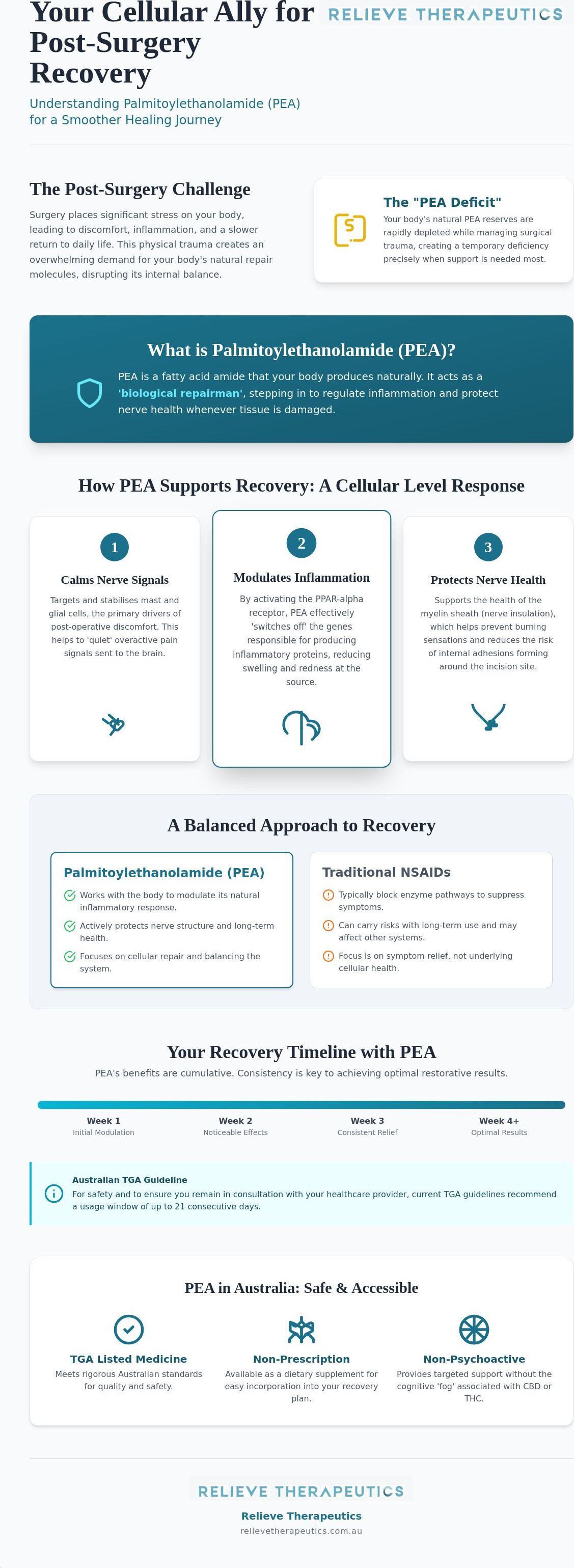
At its core, Palmitoylethanolamide (PEA) is a fatty acid amide that your body produces naturally to maintain internal balance. It functions as a biological repairman, stepping in to regulate inflammation and protect nerve health whenever tissue damage occurs. Under normal conditions, your body maintains a steady supply of this molecule. However, significant physical stress, such as a surgical procedure, creates an immediate and overwhelming demand that often outstrips your natural production capacity. This leads to a temporary deficiency at the very moment your tissues require the most assistance.
When you undergo an operation, your system enters a state of high alert. This creates a "PEA deficit" where your natural reserves are depleted while trying to manage the trauma of the intervention. Utilising PEA for post-surgery recovery support helps bridge this gap. By providing a supplemental source of this endogenous lipid, you're essentially restocking your body’s toolkit, allowing it to address the acute inflammatory spike more effectively. It’s a sophisticated way to support the body’s own healing intelligence without introducing foreign synthetic compounds into your system.
Why Surgery Triggers the Need for Extra Support
Surgical incisions are more than just surface-level wounds; they disrupt delicate local nerve endings and surrounding tissues. This disruption triggers an immediate "alarm" from the immune system, leading to the release of inflammatory markers that cause swelling and sensitivity. PEA works by "quieting" these overactive signals. It specifically targets mast cells and glial cells, which are the primary drivers of the discomfort you feel in the days following a procedure. By stabilising these cells, PEA helps to dampen the "volume" of pain signals sent to the brain, which is particularly beneficial as you transition from the theatre recovery room to your home environment. It supports a calmer, more controlled healing environment where the body can focus on structural repair rather than constant alarm.
The Legal and Safety Status of PEA in Australia
In the Australian healthcare landscape, PEA is classified as a listed medicine by the Therapeutic Goods Administration (TGA). This is an important distinction for patients, as it confirms the substance meets rigorous safety and quality standards for consumer sale. It's available as a non-prescription dietary supplement, making it an accessible addition to your recovery plan. Crucially, PEA is entirely non-psychoactive. It doesn't interact with the central nervous system in the same way as medicinal cannabis, so there's no risk of the "fog" or cognitive impairment often associated with CBD or THC products. It simply provides targeted, physiological support for nerve health and inflammation. While it's highly effective, current 2026 TGA guidelines recommend a usage window of up to 21 consecutive days, ensuring you remain in regular consultation with your healthcare provider during your recovery journey.
The Science of Healing: How PEA Modulates Inflammation and Adhesions
The biological efficacy of PEA rests on its ability to interact with a specific nuclear receptor called PPAR-alpha. Think of PPAR-alpha as a master control switch located deep within your cells. When you use PEA for post-surgery recovery support, the molecule binds to this receptor and effectively "switches off" the genes responsible for persistent inflammation. This process doesn't just mask the physical sensation of discomfort. It actually instructs the cell to stop producing the proteins that drive swelling, redness, and heat around your incision site.
Beyond managing inflammation, PEA plays a critical role in protecting the structural integrity of your nervous system. Surgical procedures often bruise or sever local nerves, leading to a breakdown of the myelin sheath, the protective insulation that allows nerve signals to travel correctly. PEA supports the biological environment needed for this insulation to remain healthy. By maintaining this protective layer, you can help prevent the "electric shock" sensations or burning feelings that often characterise post-operative nerve sensitivity. It facilitates a smoother, more predictable recovery of the sensory pathways.
Taming the Cytokine Storm Post-Op
Following an operation, your body releases a flood of chemical messengers called cytokines. These proteins are designed to recruit immune cells to the site of injury, but an oversupply can lead to a "cytokine storm" that causes excessive swelling and lingering discomfort. PEA acts as a natural brake on mast cell activation, which are the primary cells responsible for releasing these inflammatory chemicals. This targeted approach is central to how does PEA work for pain, as it calms the cellular environment before the distress signals become chronic. It's a precise, methodical way to manage the body's overreaction to surgical trauma.
Reducing Internal Scarring and Adhesions
One of the most significant yet overlooked challenges of recovery is the formation of post-operative adhesions. These occur when internal tissues stick together as they heal, creating bands of tough scar tissue that can cause long-term pain or restricted movement. Recent research suggests that PEA may suppress the specific TGF-beta signals that tell the body to produce excessive, "sticky" scar tissue. By modulating these signals, PEA encourages "cleaner" healing from the inside out. This prevents the internal environment from becoming cluttered with unnecessary adhesions. Choosing a high-purity supplement from Relieve Therapeutics ensures your body has the exact tools it needs for this delicate internal work, supporting a recovery that is as functional as it is comfortable.
PEA vs. Traditional Post-Operative Support: A Balanced View
Traditional post-operative protocols often rely on non-steroidal anti-inflammatory drugs (NSAIDs) or paracetamol to manage the initial wave of discomfort. While these options provide necessary, immediate relief, they aren't without physiological costs. Prolonged NSAID use is frequently linked to gastric irritation, gut microbiome disruption, and potential kidney strain, which can complicate the recovery journey for many Australians. In contrast, utilising PEA for post-surgery recovery support offers a restorative path rather than a suppressive one. It focuses on modulating the underlying inflammatory environment rather than simply masking the symptoms.
It is essential to view PEA as a "marathon" supplement. Unlike acute analgesics that provide an instant, short-lived effect, PEA works through a cumulative process. It requires time to build up within the cellular tissues to reach therapeutic levels, typically over a period of two to four weeks. This steady approach makes it an ideal partner for standard post-operative care, providing a stable foundation for healing while other medications handle the acute, high-intensity pain spikes in the days immediately following theatre.
The Advantage of a Natural Fatty Acid
Because PEA is a fatty acid amide already produced by your own cells, the body recognises and metabolises it with remarkable efficiency. This high level of biocompatibility means it generally lacks the "brain fog," lethargy, or digestive upset often associated with stronger post-operative medications. It offers a clean profile for those seeking a non-opioid pain relief supplement that supports daily function. This allows you to remain present and active in your rehabilitation exercises, which are crucial for regaining mobility and preventing stiffness after surgery.
When to Use Each: A Multi-Modal Approach
Modern surgical recovery is increasingly moving toward a "multi-modal" framework. This strategy involves using different tools to target different types of pain simultaneously. In this context, PEA serves as the "background" support, calming overactive nerve signals and managing the inflammatory baseline. Meanwhile, traditional medications can be reserved for breakthrough discomfort. This combination can lead to a more comfortable recovery and may reduce the total duration of reliance on stronger synthetic drugs. Always consult your GP or surgeon before adjusting your post-operative protocol to ensure your chosen approach is perfectly tailored to your specific procedure and medical history. Your specialist can help you organise a schedule that maximises the synergy between natural support and clinical intervention.
How to Incorporate PEA into Your Post-Surgery Routine
Integrating a new supplement into your recovery plan requires a methodical approach. For the best results, you should consider a two-stage timeline. If your procedure is scheduled in advance, a "loading phase" starting two weeks prior can help prime your system. If you've already had your operation, starting as soon as possible is key. Consistency is the most important factor. Because PEA works through a cumulative effect, skipping doses can disrupt the steady-state levels needed in your blood to maintain its anti-inflammatory influence. Using PEA for post-surgery recovery support works best when the molecule is consistently available to your cellular receptors.
Practicality matters during recovery. You should take your capsules with a full glass of water, ideally during a meal. Since PEA is a fatty acid amide, the presence of healthy fats in your food can support better absorption. This simple habit ensures you're getting the most out of every dose as you navigate the early stages of healing. It also helps to organise your intake at the same time each day, such as with breakfast and dinner, to maintain a stable physiological presence.
Finding the Right Dosage for Recovery
In clinical settings, a higher initial intake is often used to quickly address acute inflammation. A common strategy involves a "loading phase" of 1200mg per day, typically split into two doses. This higher amount is maintained for the first few weeks to saturate the tissues before transitioning to a lower maintenance dose. For a detailed breakdown of how to structure your daily routine, you can refer to our guide on PEA dosage for pain. Most Australians find that 600mg twice daily provides the necessary coverage during the high-demand period of post-op healing.
Patience and Persistence in Healing
It's vital to remember that PEA is not a 20-minute "headache pill." It functions more like a slow-release repair kit. While some patients report a noticeable reduction in sensitivity within the first few days, others may require three to six weeks of consistent use to feel the full benefit. Don't be discouraged if the changes feel subtle at first. We recommend tracking specific recovery milestones to gauge your progress. You might notice your sleep quality improving, your ability to perform physiotherapy exercises increasing, or a reduction in the "tightness" around your incision site. Under current Australian guidelines, you should use the supplement for up to 21 consecutive days before consulting with your healthcare provider to review your ongoing recovery progress. These small wins indicate that the supplement is successfully modulating your internal environment. To ensure you have a consistent supply for this critical window, you can order PEA capsules directly to support your transition back to daily activity.
Why Relieve Therapeutics PEA is the Choice for Your Recovery Journey
Choosing the right PEA for post-surgery recovery support involves more than just finding a bottle on a shelf; it requires a commitment to purity, transparency, and scientific rigor. Relieve Therapeutics operates as a specialist Australian provider, ensuring that every capsule meets the high expectations of patients navigating the delicate post-operative window. We understand the physical and emotional toll of recovery. Our goal is to provide a reliable, evidence-based tool that simplifies your path back to vitality. We act as a knowledgeable guide, bridging the gap between complex laboratory science and your daily comfort.
The convenience of local Australian shipping is particularly valuable when your mobility is limited after theatre. We deliver directly to your door, providing a high-quality dietary supplement without the hurdle of a prescription or the need for a trip to a specialist pharmacy. Our commitment to quality, honesty, and long-term outcomes makes us a trusted ally in your healing process. We speak with the quiet confidence of an expert, offering a steady, hopeful, and dignified presence throughout your health journey.
Australian Quality Standards and Purity
Buying local isn't just about supporting Australian business; it's about ensuring the freshness and integrity of your supplements. Products shipped from overseas often endure long transit times and fluctuating temperatures, which can compromise the stability of the active ingredients. Our capsules are produced under strict regulatory oversight, adhering to the high quality PEA capsules criteria that discerning Australian buyers expect. We eliminate unnecessary fillers, artificial colours, and marketing fluff, focusing entirely on the purity of the Palmitoylethanolamide itself. This disciplined approach ensures you receive a clean, potent product that integrates naturally with your body’s own restorative processes.
Choosing the Right Supply for Your Recovery
As established earlier, the benefits of PEA are cumulative and typically reach their peak efficacy between four to six weeks of consistent use. Running out of supply during this critical first month can stall your progress and disrupt the steady-state levels your nerves require for restoration. For most patients, starting with PEA 120 capsules or our 180-count bottles provides the most strategic advantage. These larger counts ensure you have a continuous supply through both the loading and maintenance phases without the stress of reordering mid-recovery. It’s a practical, methodical way to ensure your body has the tools it needs for long-term success. Take the next step in your restorative journey and order your PEA recovery support today to experience the quiet confidence of specialist-grade care.
Empowering Your Post-Operative Healing Journey
Recovery after surgery is a methodical process that requires patience, discipline, and the right physiological tools. By understanding the science of PPAR-alpha activation and the cumulative benefits of fatty acid amides, you can take an active role in managing your body’s inflammatory response. Using PEA for post-surgery recovery support provides a steady foundation for nerve health while helping to minimise the long-term impact of internal adhesions. Healing takes time. This natural approach allows you to focus on your rehabilitation with greater comfort, vitality, and daily function.
As a specialist Australian retailer, we are committed to providing high-purity dietary supplements that bridge the gap between clinical science and your personal wellness. Our fast local shipping ensures that your recovery routine remains uninterrupted during this critical window. You deserve a partner that values integrity, transparency, and professional care. Support your surgical recovery with high-quality PEA capsules from Relieve Therapeutics and embrace a more restorative path to daily activity. We are proud to be a reliable ally in your journey toward lasting comfort.
Frequently Asked Questions
Is PEA safe to take alongside my post-surgery painkillers?
Yes, PEA is generally considered safe to use alongside standard post-operative analgesics. Because it is a naturally occurring fatty acid amide already present in your body, it doesn't typically interfere with synthetic pain medications. However, you should always consult your surgeon or GP to ensure your specific recovery protocol is balanced and safe for your unique medical history. This multi-modal approach often provides the most comprehensive support for your healing tissues.
How soon after my operation can I start taking PEA capsules?
You can usually begin taking PEA capsules as soon as you are cleared to consume fluids and solids following your procedure. Starting early allows the molecule to begin addressing the acute inflammatory spike the moment it occurs. Consistent intake in the days following theatre helps your body maintain the necessary levels for effective tissue and nerve support during the most critical phase of your initial healing journey.
Can PEA help with the "electric shock" sensations I feel around my surgical scar?
Yes, PEA is specifically recognised for its ability to calm overactive nerve signals that cause sharp, electric shock sensations. These feelings are often the result of bruised or severed nerves near the incision site. By stabilising the surrounding glial cells and supporting the health of the myelin sheath, PEA helps to reduce the intensity and frequency of these distressing sensory signals as your nerves begin to repair.
Will PEA help reduce the swelling and bruising after my surgery?
Utilising PEA for post-surgery recovery support is highly effective for managing the inflammatory response that leads to excessive swelling and bruising. It acts as a natural brake on mast cell activation, which are the primary cells that release inflammatory chemicals into the tissue. By modulating this process, PEA encourages a more controlled inflammatory environment, supporting a smoother and faster return to normal tissue appearance and function.
Is it better to start taking PEA a few weeks before my scheduled surgery?
Yes, initiating a "loading phase" approximately two weeks before your scheduled procedure is often a strategic choice. This proactive approach ensures your cellular tissues are saturated with PEA before the surgical trauma occurs. By priming your system in advance, you help prevent the natural PEA deficit that typically follows an operation, which may lead to a more manageable and stable recovery period from the very first day.
Are there any known side effects of PEA when used for post-op recovery?
PEA has an excellent safety profile with very few reported side effects. Because it is a substance your body already produces, it is remarkably well-tolerated by most Australians. Unlike some stronger post-operative medications, it doesn't cause common issues like constipation, nausea, or cognitive "fog." This high level of biocompatibility makes it a reliable choice for those prioritising a clean and functional healing journey without unnecessary systemic stress.
How long should I continue taking PEA after I feel fully recovered?
Current TGA guidelines in Australia recommend using PEA for up to 21 consecutive days before consulting with your healthcare provider. Even if you feel significantly better within the first fortnight, completing this initial window helps ensure that the internal inflammatory processes are fully stabilised. For any lingering sensitivity beyond this period, your GP can help you organise a sustainable maintenance schedule tailored to your specific long-term recovery needs.
Can PEA help with the sleep disturbances common after a major operation?
Yes, PEA can indirectly support better sleep quality by reducing the overall volume of physical discomfort that often keeps patients awake at night. When persistent nerve signals are calmed, the body can more easily transition into a restorative sleep state. This is crucial for your healing, as the most intensive tissue repair occurs while you rest. Improved sleep is often one of the first milestones reported by patients using PEA.