

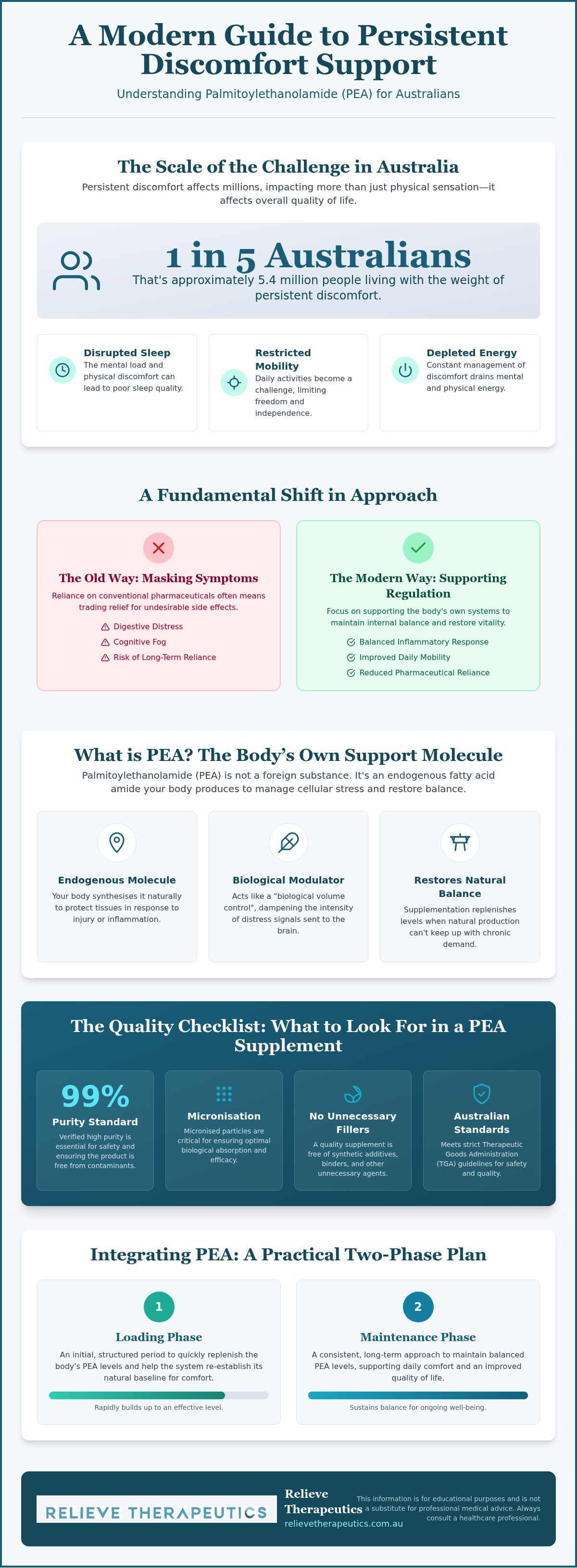
Did you know that one in five Australians, roughly 5.4 million people, currently live with the weight of persistent discomfort? For many, the daily reality involves more than just physical sensation; it's the mental load of managing long-term health and the frustration of side effects from traditional medications. If you've found your sleep disrupted, your mobility restricted, or your energy depleted, you aren't alone in seeking a more sustainable path. Finding an effective natural supplement for chronic pain often feels like a cycle of trial and error, yet modern research points towards molecules your body already produces.
We understand that you're looking for more than a temporary fix; you're looking for a way to support your body's internal systems, restore your vitality, and reclaim your daily comfort. This guide explores the science behind Palmitoylethanolamide (PEA), a fatty acid amide that acts as a biological modulator to regulate your inflammatory response. We'll examine the 2026 Australian TGA guidelines, the importance of high purity standards, and how this evidence-based approach can help reduce your reliance on heavy pharmaceuticals. You'll gain a clear understanding of how to integrate PEA into your routine to improve your long-term quality of life.
Key Takeaways
- Understand the fundamental shift from simply masking symptoms to supporting physiological regulation through the body's own endogenous molecules.
- Discover why PEA is a highly specialised natural supplement for chronic pain compared to turmeric or fish oil, particularly regarding its unique interaction with the endocannabinoid system.
- Identify critical quality benchmarks, such as micronisation and 99% purity, that are essential for ensuring optimal biological absorption and efficacy.
- Learn how to structure a practical management plan, including the necessary loading phase and long-term maintenance strategies for consistent, daily comfort.
- Navigate the 2026 Australian regulatory landscape to ensure your chosen support meets the strict TGA standards for safety and laboratory-verified quality.
The Landscape of Natural Supplements for Chronic Pain in Australia
With one in five Australians living with persistent discomfort, the search for a reliable natural supplement for chronic pain has moved from the fringes of wellness into the clinical mainstream. Many individuals find that while traditional pharmaceuticals provide necessary relief, they often carry a heavy burden of side effects like digestive distress or cognitive fog. This shift isn't just about avoiding synthetic chemicals; it's about a fundamental change in philosophy. Rather than simply masking symptoms with numbing agents, modern support focuses on physiological regulation. This involves using molecules like Palmitoylethanolamide (PEA), which is a naturally occurring fatty acid amide that helps the body maintain internal balance and support its own recovery mechanisms.
The Shift Away from Conventional Pharmaceutical Reliance
Long-term reliance on conventional medication can feel like a compromise between comfort and quality of life. Many Australians report frustration with the mental load of managing complex prescriptions and the subsequent sleep disruption caused by lingering discomfort. A natural supplement for chronic pain can serve as a sophisticated ally in a broader management plan. By integrating evidence-based supplements with lifestyle adjustments, you can often achieve:
- Reduced reliance on high-dose pharmaceuticals.
- Improved daily mobility and functional comfort.
- A more balanced internal inflammatory response.
We act as a knowledgeable guide to help you move past the frustration of trial and error. Our focus is on providing the clarity needed to choose options that are biologically compatible and clinically supported, ensuring your path to restoration is both safe and effective.
Defining Natural Pain Support for the Modern Era
The modern era of wellness has moved beyond simple home remedies to embrace laboratory-standardised molecules. In Australia, the Therapeutic Goods Administration (TGA) ensures that "natural" doesn't mean unregulated. For a supplement to be effective, it must meet rigorous criteria for purity, safety, and manufacturing quality. We prioritise transparency because we believe you deserve to know exactly what is entering your system. This means looking for products with:
- Verified purity levels of at least 99%.
- Absence of unnecessary fillers and synthetic additives.
- Strict adherence to Australian manufacturing standards.
By choosing supplements that align with these standards, you're investing in a professional-grade solution designed for long-term restoration. This disciplined approach to quality ensures that the support you receive is as reliable as it is natural, providing a steady foundation for your personal health journey.
Understanding PEA: The Body’s Own Natural Support Molecule
PEA is a fatty acid amide produced in response to cellular stress. Unlike many external remedies, this molecule is endogenous, meaning your body synthesises it naturally to protect tissues and restore balance. When your system faces injury or chronic inflammation, it produces PEA to dampen the intensity of the distress signals being sent to your brain. It essentially acts as a biological volume control. For those seeking a natural supplement for chronic pain, understanding this internal mechanism is vital; you aren't introducing a foreign chemical, but rather reinforcing your body’s own defensive toolkit.
When the body is under persistent physical strain, its natural production of PEA can sometimes struggle to keep pace with the demand. This depletion often leads to a state where pain signals remain "switched on" long after the initial injury has passed. Supplementation serves to replenish these levels, allowing your system to resume its regulatory functions. This isn't about overriding your biology. It's about providing the specific building blocks your cells need to manage discomfort more efficiently.
How PEA Works Within the Endocannabinoid System
PEA belongs to a family of molecules that interact closely with the endocannabinoid system (ECS), a complex network responsible for maintaining internal homeostasis. While it doesn't bind directly to the primary cannabinoid receptors in the same way plant-derived compounds do, it performs a crucial role through the "entourage effect." By inhibiting the breakdown of other beneficial endocannabinoids, PEA helps sustain their presence in your system. This process is detailed further in our PEA Endocannabinoid Supplement: A Comprehensive Australian Reference Guide for 2026. Peer-reviewed research into how PEA works for pain suggests that this indirect activation is what makes it such a stable and well-tolerated option for long-term use.
Targeting Nerve and Joint Discomfort at the Source
The true efficacy of PEA lies in its ability to regulate mast cells and glial cells. These cells are often the primary drivers of neuropathic discomfort; when they become overactive, they release inflammatory substances that sensitise nerves and prolong the sensation of pain. PEA helps to calm these "first responders," which is why it is particularly effective for nerve-related and joint concerns. To dive deeper into the biochemical pathways involved, you may wish to read our article on How Does PEA Work for Pain? The Science of Natural Relief in 2026. By addressing the source of the irritation rather than just the symptoms, this natural supplement for chronic pain offers a more sophisticated approach to restoration. If you are ready to begin your journey toward better mobility, viewing our range of high-purity PEA capsules is an excellent starting point.
Comparing Natural Supplements: PEA vs CBD, Turmeric, and Fish Oil
Selecting a natural supplement for chronic pain often involves weighing popular staples like turmeric and fish oil against more specialised molecules. Turmeric and fish oil are widely recognised for their ability to manage systemic inflammation and general joint stiffness. While these are valuable tools for overall health, they primarily target pathways that may not fully address the complexities of nerve-related discomfort. PEA offers a more targeted mechanism by interacting with the body's endocannabinoid system to regulate the specific cellular responses that traditional herbal remedies might miss.
The comparison between PEA and CBD is particularly relevant within the Australian regulatory environment. As of late 2026, CBD remains a prescription-only medicine in Australia, requiring a consultation with a registered medical practitioner to access. In contrast, PEA is classified as a Listed Medicine by the TGA, making it available over-the-counter for those seeking immediate, evidence-based support. Beyond legality, PEA is an endogenous molecule already produced by your own cells. This biological familiarity often leads to a high level of tolerability and makes it a sophisticated choice for those who prefer to support their body's existing regulatory systems.
The Case for Palmitoylethanolamide in Nerve-Related Discomfort
For individuals dealing with sciatica or neuropathy, the biological "volume control" provided by PEA is essential. Traditional anti-inflammatories often struggle to penetrate the specific pathways associated with nerve irritation and sensitivity. PEA serves as a versatile, non-opioid natural support option that focuses on stabilising the mast cells and glial cells responsible for overactive pain signals. You can explore these specific mechanisms further in our guide on Choosing the Best Supplement for Neuropathy in Australia: A Science-Based Guide.
Combining Supplements for a Multi-Faceted Approach
You don't necessarily have to choose just one natural supplement for chronic pain to see results. Many Australians find success by "stacking" supplements to address different aspects of their physical wellbeing. For example, you might combine fish oil for joint lubrication with PEA for nerve regulation to create a more comprehensive support strategy. This multi-faceted approach works best when maintained with discipline. Consistency allows these molecules to build up in your system, eventually reaching a steady state that supports long-term restoration, improved mobility, and daily comfort.
Selecting a High-Quality Natural Supplement for Chronic Pain
When searching for a natural supplement for chronic pain, the technical specifications on the label are just as important as the active ingredient itself. Many generic products contain unnecessary fillers, synthetic binders, or additives that can interfere with the purity of the molecule. We recommend prioritising transparency by selecting products that provide laboratory-verified purity of at least 99%. This ensures you are receiving a potent, clean dose without the metabolic clutter that can sometimes accompany lower-grade alternatives. High standards in sourcing reflect a commitment to your long-term health outcomes rather than just short-term convenience.
Biological efficacy depends entirely on how well your body can process the supplement once it's ingested. Standard PEA is poorly absorbed unless micronised to increase surface area. Because PEA is a lipid-like substance, large particles don't dissolve easily in the watery environment of the digestive tract. Without this specific manufacturing process, these large particles often pass through your system without reaching the bloodstream in meaningful amounts. Investing in a product that has been physically refined for better absorption is essential for achieving the restorative results you expect.
Micronisation: The Key to Bioavailability
Micronised PEA refers to a specialised process where the particle size is reduced to between 2 and 10 micrometres. This reduction significantly enhances the bioavailability of the molecule, allowing for more efficient uptake by your cells. High-quality capsules use this technology to ensure that every dose provides maximum support for your internal regulatory systems. Choosing a micronised option is the difference between a supplement that simply sits in your system and one that actively contributes to your daily comfort and mobility. This level of scientific rigour is what distinguishes a professional-grade supplement from a standard retail product.
Vetting Your Supplement Source in Australia
Sourcing your natural supplement for chronic pain from an Australian-owned specialist provides several practical and safety advantages. Local brands are held to the strict manufacturing standards mandated by the TGA for 2026, which ensures every batch is tested for safety and reliability. Additionally, buying within Australia ensures faster shipping times and access to dedicated local customer support who understand the domestic regulatory environment. For a deeper look at the specific criteria you should check before making a purchase, consult our High Quality PEA Capsules: An Australian Buyer’s Guide for 2026.
If you're ready to experience the benefits of laboratory-standardised support, you can order high-purity PEA capsules directly from our Australian store. By choosing a specialist, you are ensuring that your path to restoration is supported by products designed for efficacy and integrity.
Practical Steps: Integrating PEA into Your Pain Management Plan
Successfully incorporating a natural supplement for chronic pain into your daily routine requires more than just occasional use; it demands a disciplined, methodical approach. Unlike fast-acting synthetic options, PEA works by gradually modulating your body's inflammatory pathways and restoring cellular balance. Most users find that a loading phase is the most effective way to begin. This involves a higher daily intake for the first few weeks to saturate the tissues, followed by a lower maintenance dose once the desired level of comfort is achieved. This steady progression ensures that your system has a consistent supply of molecules to support its internal regulatory functions.
Tracking your progress is essential during the initial 4-8 weeks of supplementation. Changes may be subtle at first, so we recommend observing three key areas: your quality of sleep, your ease of movement during morning routines, and the overall mental load of managing your health. Because PEA targets the source of the discomfort rather than just the symptoms, the restoration of function often happens incrementally. By maintaining a simple daily log, you can identify patterns and adjust your intake based on your body's unique response to the support.
How to Take PEA for Optimal Results
To maximise the absorption of your capsules, it is generally recommended to take them with a meal containing healthy fats. Since PEA is a lipid-based molecule, the presence of dietary fats can assist the micronised particles in crossing the digestive barrier more effectively. For a detailed breakdown of specific intake protocols, you can consult our PEA Dosage for Pain: A Comprehensive Australian Guide to Optimal Intake. Patience is a vital component of this journey; natural support takes time to build in the system, and the most significant benefits are often reported after the second month of consistent use.
Long-Term Management and Value
For those committed to a long-term restoration journey, choosing the right quantity of capsules is a strategic decision. We provide three flexible options to suit different stages of management:
- 60 Capsules: Ideal for an initial trial or for those with intermittent needs.
- 120 Capsules: A balanced choice for sustained monthly support.
- 180 Capsules: The most cost-effective and strategic choice for chronic management.
Maintaining a consistent supply is vital to avoid gaps in your support, as interruptions can lead to a temporary resurgence of discomfort. Our PEA 120 Capsules: The Strategic Buyer’s Guide to Sustained Natural Support provides further insights into how to organise your long-term plan efficiently. By securing a larger pack, you ensure that your body remains in a state of physiological balance without the stress of frequent reordering. This disciplined approach to your health allows you to focus on restoration and daily vitality.
Empowering Your Path to Physical Restoration
Selecting a natural supplement for chronic pain is a pivotal step toward reclaiming your daily independence. Throughout this guide, we've examined how Palmitoylethanolamide (PEA) serves as a sophisticated, endogenous regulator that calms overactive cellular responses. By choosing a micronised formula with laboratory-verified purity, you provide your body with the specific tools it needs for effective biological absorption. Success in managing persistent discomfort is rarely about a quick fix; it's about the disciplined, long-term support of your system's own defensive mechanisms.
Relieve Therapeutics is a dedicated Australian owned and operated specialist focused on the integrity of every capsule. We offer flexible 60, 120, and 180-capsule packs to suit your specific management stage and ensure you never face a gap in your support. Browse our range of high-quality Australian PEA capsules to support your journey back to comfort.
Your journey toward improved mobility and reduced pharmaceutical reliance is achievable with the right scientific foundation. We're here to provide the reliable, expert-grade support you need to move forward with confidence and hope.
Frequently Asked Questions
Is PEA a safe natural supplement for chronic pain?
PEA is considered a safe natural supplement for chronic pain because it is a molecule your body already produces to manage cellular stress. Extensive clinical research indicates it is well-tolerated with no known drug interactions. Unlike synthetic options, it does not cause the common side effects associated with traditional relief. However, the TGA recommends consulting a healthcare professional for use exceeding 21 days to ensure it aligns with your specific health requirements.
Can I take PEA supplements alongside my current prescription medication?
Research generally shows that PEA does not interfere with standard prescription medications, making it a versatile choice for those already managing a complex healthcare routine. This lack of interaction is due to its status as an endogenous fatty acid amide rather than a foreign chemical. While it is often used to complement existing management plans, you should always speak with your GP or specialist before starting any new supplement to ensure your integrated approach is monitored.
How long does it take for a natural supplement like PEA to start working?
Most individuals begin to notice subtle changes within the first four weeks of consistent use. Because PEA works by modulating cellular responses rather than providing an immediate numbing effect, it takes time to reach a steady state in your system. We recommend allowing a full eight weeks to evaluate the supplement's efficacy. During this period, your body is gradually restoring its internal balance and regulating overactive inflammatory pathways for long-term comfort.
What is the recommended daily dosage of PEA for persistent discomfort?
A common starting protocol for adults is 1200mg per day, typically split into two 600mg doses. This amount is often maintained for the first few weeks as a loading phase to saturate the body's tissues. Once you achieve a level of sustained comfort, some users choose to reduce this to a maintenance dose. Always follow the specific instructions on your product label and adjust based on your healthcare provider's advice to find your optimal intake level.
Are there any known side effects of Palmitoylethanolamide?
Palmitoylethanolamide is exceptionally well-tolerated, with most clinical trials reporting no significant side effects. Because it is a fatty acid amide that exists naturally in human cells, the body identifies and processes it efficiently. In very rare instances, some users might experience mild digestive upset if taken on an empty stomach. Taking your capsules with food containing healthy fats can further minimise the risk of any minor gastrointestinal discomfort and support better absorption.
Why should I choose micronised PEA over standard versions?
Micronisation is critical for ensuring that this natural supplement for chronic pain is actually absorbed by your system. Standard PEA consists of large particles that do not dissolve easily in the digestive tract, leading to poor bioavailability. By reducing the particle size to between 2 and 10 micrometres, the surface area increases significantly. This physical refinement allows the molecule to enter your bloodstream more effectively, providing the biological support your cells require for restoration.
Is PEA legal to purchase as a dietary supplement in Australia?
Yes, PEA is legal and regulated as a Listed Medicine by the Therapeutic Goods Administration (TGA) in Australia. This means it is available for purchase over-the-counter without the requirement of a prescription from a doctor. All products must meet strict Australian safety and quality standards to be sold domestically. Choosing an Australian-owned specialist ensures that your supplements comply with the rigorous 2026 guidelines for purity, safety, and manufacturing excellence.
Can PEA help with both nerve pain and joint inflammation?
PEA is unique because its mechanism of action addresses the source of both neuropathic and inflammatory discomfort. It works by regulating mast cells and glial cells, which are the primary drivers of nerve sensitivity and joint irritation. This dual-action approach makes it a highly effective option for those dealing with sciatica, neuropathy, or persistent joint stiffness. By calming these overactive cells, PEA helps to reduce the underlying drivers of discomfort while supporting daily mobility.