

The medicine cabinet staple you rely on for quick relief might actually be the very thing hindering your long-term recovery. While most Australians reach for a packet of ibuprofen as a reflex, the recurring cycle of gastric reflux, stomach irritation, and diminishing results often leaves you searching for a more sustainable path. When weighing the benefits of palmitoylethanolamide vs ibuprofen, it is essential to understand that managing chronic discomfort requires a strategy that goes beyond simple symptom suppression.
It is exhausting to manage persistent nerve pain that traditional pills don't seem to touch, especially when you are concerned about the internal toll of daily pharmaceutical use. We promise to clarify how the fatty acid amide PEA compares to common NSAIDs for supporting long-term comfort and healthy inflammation levels. You will discover the physiological differences between these compounds, the clinical evidence supporting the safety profile of PEA, and how to reduce your reliance on temporary fixes. This guide provides a methodical look at the latest research to help you organise a management plan that focuses on restoration, stability, and daily function.
Key Takeaways
- Distinguish between the "top-down" symptom suppression of synthetic NSAIDs and the "bottom-up" cellular support provided by naturally occurring fatty acid amides.
- Evaluate the clinical evidence of palmitoylethanolamide vs ibuprofen to see why PEA is increasingly favoured for managing persistent nerve and inflammatory discomfort.
- Review the results of a 2012 study where PEA outperformed traditional medication in reducing pain scores for inflammatory jaw conditions after just two weeks.
- Uncover the physiological costs of long-term ibuprofen use, including kidney strain and gastric reflux, contrasted with the high safety profile of pure PEA.
- Gain the confidence to shift from reactive, short-term relief to a proactive strategy that supports your body’s internal mechanisms for lasting comfort.
What are Palmitoylethanolamide and Ibuprofen?
Understanding the fundamental differences in a comparison of palmitoylethanolamide vs ibuprofen requires looking past the chemist shelf and into the body's internal chemistry. While both substances are used to manage discomfort, they operate on entirely different biological planes. One acts as an external disruptor to block pain signals; the other serves as a natural regulator to restore cellular harmony. This distinction is vital for Australians seeking a sustainable approach to their physical wellbeing. It marks the difference between a temporary fix and a long-term strategy.
The Role of NSAIDs in Modern Medicine
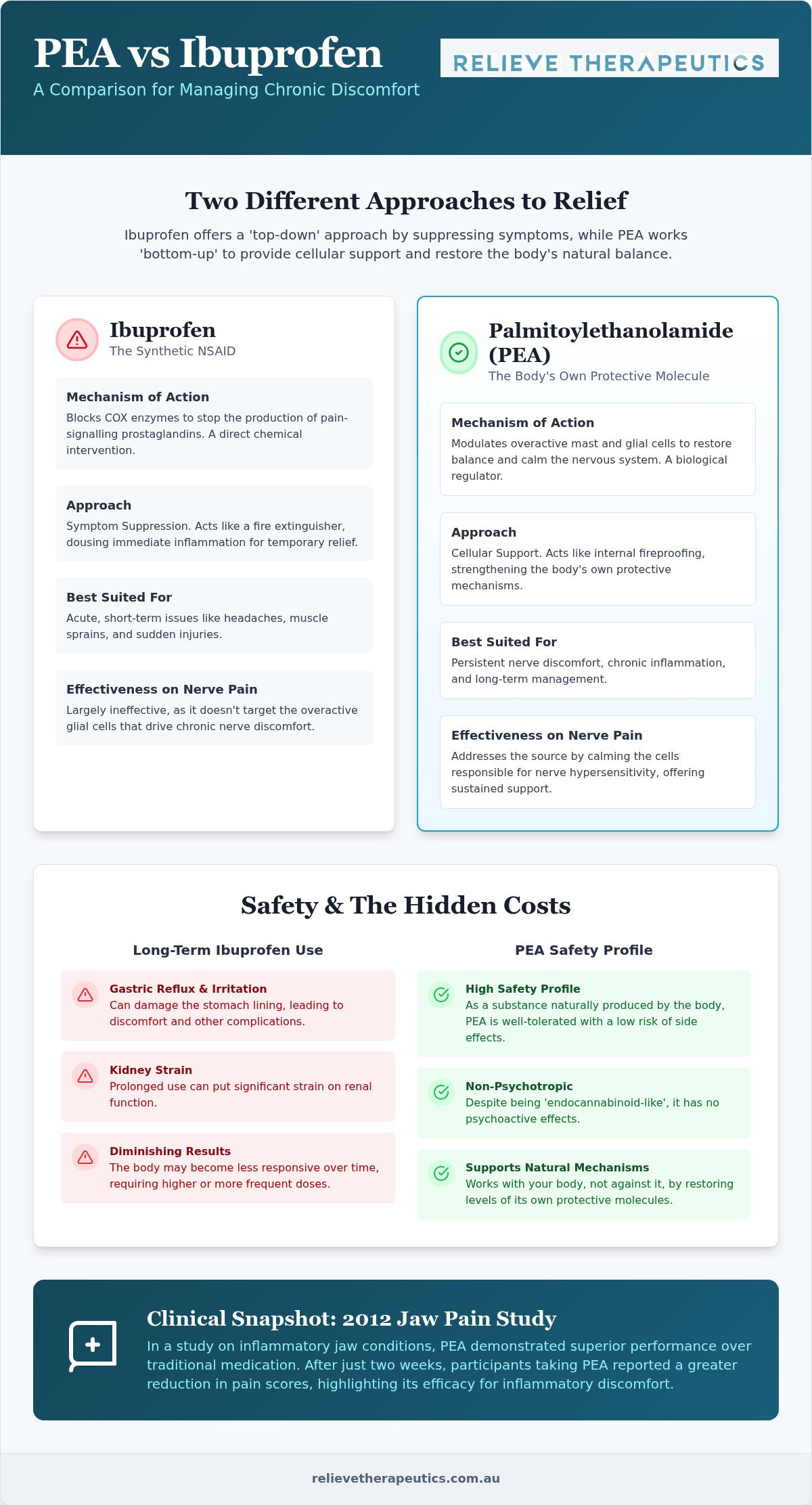
Ibuprofen is a synthetic Non-Steroidal Anti-Inflammatory Drug (NSAID) designed for rapid, temporary relief. It works by targeting the COX-1 and COX-2 enzymes. These enzymes are responsible for producing prostaglandins, the chemicals that signal pain and trigger inflammation. When you experience a sudden headache or a sprained ankle, ibuprofen effectively "turns off" these signals. It is highly efficient for acute injuries. However, these synthetic inhibitors were never intended for months or years of continuous use. Relying on chemical inhibition for long-term management often leads to systemic strain. The body wasn't designed to have its enzyme pathways blocked indefinitely.
PEA: The Body’s Own Protective Molecule
Palmitoylethanolamide (PEA) is a bioactive fatty acid amide produced naturally within our own cells. It is often described as "endocannabinoid-like" because it interacts with the system that regulates pain and inflammation. Unlike certain plant-based compounds, PEA is entirely non-psychotropic and occurs naturally in foods like eggs and soy. In a healthy state, your body produces enough PEA to maintain balance. During chronic inflammation or prolonged stress, these levels often drop significantly. This creates a state where the body's natural "firewall" against pain is compromised. Supplementing with PEA aims to "top up" these natural reserves to restore that protection.
Unlike the chemical inhibition of ibuprofen, PEA works through biological modulation. It calms overactive mast cells and glial cells, essentially acting as a volume knob for the nervous system. In the Australian context, we see a clear divide in use-cases. Ibuprofen remains the choice for a quick fix after an acute injury. Conversely, the comparison of palmitoylethanolamide vs ibuprofen highlights PEA as the preferred option for sustained, long-term nerve support and cellular restoration. It represents a shift from suppressing symptoms to supporting the body's own protective mechanisms through natural, bio-identical pathways.
How They Work: COX Inhibition vs. Glial Modulation
The physiological debate of palmitoylethanolamide vs ibuprofen is best understood through the lens of a "top-down" versus a "bottom-up" approach. Ibuprofen acts as a chemical disruptor. It intervenes at the end of the pain signalling chain to provide immediate, albeit temporary, relief. In contrast, PEA provides cellular support that addresses the underlying sensitivity of the nervous system. This fundamental difference determines whether you are simply masking a symptom or supporting the body's natural restorative processes.
The Ibuprofen Mechanism: Blocking the Signal
NSAIDs provide rapid action by shutting down the production of inflammatory chemicals. They act like a fire extinguisher, dousing the immediate flames of an acute injury. While this provides fast relief, the effect is strictly temporary. The relief wears off as the drug is metabolised, necessitating frequent redosing to maintain comfort. Because ibuprofen blocks prostaglandins systemically, it affects tissues throughout the entire body. This broad, non-specific action is why it often fails for nerve pain (neuropathy). Nerve pain is typically driven by overactive glial cells rather than simple tissue swelling, making the COX-inhibition of ibuprofen largely ineffective for chronic conditions.
The PEA Mechanism: Addressing the Source
PEA functions as the body's internal fireproofing. Rather than just putting out the fire, it works to stabilise the cells that are prone to "catching light." To understand the pharmacology of palmitoylethanolamide, we must look at mast cells and glial cells. These act as the "volume knobs" of the nervous system. When these cells are overactive, they keep the body in a state of high-alert and chronic discomfort.
PEA binds to the PPAR-alpha receptor, which helps "cool" these overactive nerves and reduces the release of inflammatory markers. For a deeper look at this process, you can explore how does PEA work for pain through cellular modulation. A primary difference in the comparison of palmitoylethanolamide vs ibuprofen lies in the timeline of efficacy. PEA is a cumulative process. Unlike the immediate hit of an NSAID, PEA typically requires 2 to 4 weeks of consistent use to reach therapeutic levels in the tissues. This steady accumulation allows the body to restore its own protective barriers. If you are looking to move away from daily NSAID use, starting a consistent routine with PEA capsules may provide the sustained support your system requires.
Efficacy Comparison: What the Clinical Research Says
Moving from theory to clinical evidence provides the clarity many Australians need when deciding between palmitoylethanolamide vs ibuprofen. While laboratory models explain the "how," human trials reveal the practical outcomes of these two approaches. The most revealing data often comes from head-to-head comparisons where researchers measure pain intensity and physical function over several weeks. This evidence helps shift the conversation from marketing claims to proven biological responses.
Head-to-Head: The TMJ Study Results
A landmark 2012 study published in the Journal of Orofacial Pain and Headache compared the two substances in patients with inflammatory jaw conditions (TMJ). Participants were split into two groups: one receiving 600mg of PEA daily, and the other receiving 1800mg of ibuprofen daily. After just two weeks, the group using PEA reported significantly lower pain scores than those on the high-dose NSAID regimen. This result challenged the assumption that synthetic drugs are always more powerful than natural compounds.
The trial also measured functional recovery, such as the ability to open the mouth without discomfort. The PEA group showed a marked improvement in joint range of motion compared to the ibuprofen group. "Clinical trials suggest that for specific inflammatory conditions, PEA may provide superior long-term relief compared to high-dose ibuprofen without the associated toxicity." This result is particularly significant given that the ibuprofen dosage was three times higher than the PEA dosage used in the study.
The primary trade-off involves the onset of action. Ibuprofen provides relief within 30 minutes by blocking active signals. PEA, however, requires time to build up in the tissues. Most users notice the shift after several days or weeks as cellular balance is restored. This makes ibuprofen suitable for a "sprint," while PEA is the clear winner for the "marathon" of chronic management.
Beyond the Study: Nerve and Joint Health
These clinical findings extend beyond jaw pain to other complex conditions. For example, research into palmitoylethanolamide sciatica support shows that stabilising the nerves can lead to more consistent outcomes than simply masking the pain with daily pills. Australians managing lower back issues often find that the cumulative effect of PEA leads to fewer "bad days" overall because it addresses the underlying glial sensitivity.
To achieve these results, adhering to a precise PEA dosage for pain is essential. Consistency is the key to cellular modulation. While you must remain aware of Ibuprofen safety and side effects when using NSAIDs for acute flares, the comparison of palmitoylethanolamide vs ibuprofen suggests that PEA offers a more sustainable path for those living with persistent discomfort. It provides a way to reclaim physical function without the systemic burden of long-term pharmaceutical use.
Safety and Side Effects: The Hidden Cost of NSAIDs
While efficacy dictates the initial choice of a supplement, safety determines its longevity. The comparison of palmitoylethanolamide vs ibuprofen often reveals a stark difference in how these compounds treat the body over time. Long-term ibuprofen use carries well-documented risks. These include stomach ulcers, kidney strain, and increased cardiovascular risk. For many Australians, the physical toll of managing chronic discomfort with NSAIDs becomes as burdensome as the original pain itself. Choosing a path forward requires balancing the need for relief with the necessity of systemic health.
The term "natural" is often misunderstood in the wellness industry. In the case of PEA, it refers to biocompatibility. Because PEA is an endogenous molecule, your cells already possess the biological machinery to process it. This makes it a reliable option for elderly patients or those on multiple medications. It lacks the drug-drug interactions common with synthetic alternatives, providing a sense of professional care and safety for those with complex health profiles. It is a strategy grounded in transparency and biological logic.
The Gastric Barrier: Why Ibuprofen Can Be Harsh
NSAIDs reduce the prostaglandins that maintain the stomach's protective lining. This depletion is why gastric reflux and indigestion are such common complaints at the local chemist. While taking pills with food can offer a slight buffer, it doesn't address the underlying biochemical depletion of the gastric wall. PEA avoids this entirely. As a bioactive fatty acid amide, it is digested as a lipid. It passes through the digestive tract without irritating the stomach lining or causing the acidity associated with traditional over-the-counter pills.
Transitioning Safely: A Roadmap
Moving away from daily NSAID use requires a methodical roadmap. We recommend introducing PEA while gradually tapering off ibuprofen under the guidance of your GP. PEA is frequently utilised as a non-opioid pain relief supplement to provide a foundation for cellular health. Patience is essential during this shift. The first 30 days are a period of restoration where the body "tops up" its natural reserves. If you are ready to support your body without the gastric cost, consider starting your journey with our PEA 180 capsules for consistent, long-term management.
Choosing the Right Path for Your Health Journey
Deciding between palmitoylethanolamide vs ibuprofen is not a matter of choosing one "better" drug, but rather selecting the correct tool for your physiological needs. It's the difference between a sprint and a marathon. Ibuprofen is an effective sprinter; it provides a fast, chemical response to sudden trauma. PEA is the marathon runner; it works steadily to restore cellular balance and support long-term comfort. Identifying the nature of your discomfort is the first step toward restoration. Acute pain serves as a warning signal; it's loud, sharp, and usually tied to a specific event. Chronic pain, however, is often a result of maladaptive signalling where the nerves remain in a state of high-alert long after the initial injury has healed. In the comparison of palmitoylethanolamide vs ibuprofen, PEA excels in this latter category by calming the very cells responsible for this persistent sensitivity. It represents a shift from reactive suppression to proactive modulation.
When to Reach for Ibuprofen
There are specific instances where synthetic NSAIDs remain appropriate. Acute injuries, high fevers, or post-surgical dental work often require the rapid suppression of prostaglandins that only ibuprofen can provide. In these cases, the clinical goal is to use the lowest effective dose for the shortest possible duration. Problems arise when the "ibuprofen habit" takes hold. If you find yourself reaching for the packet every morning to manage recurring nerve or joint issues, you've moved past acute relief and into a cycle of long-term risk. Recognising this transition is vital for protecting your gastric and renal health over the coming years.
Why Relieve Therapeutics PEA is the Logical Step
For those ready to move away from daily pharmaceutical reliance, purity and consistency are paramount. We focus on providing high quality PEA capsules that are free from unnecessary fillers. Because PEA requires a loading period of 2 to 3 months to achieve full therapeutic levels, we offer 60, 120, and 180-count options to suit every stage of your journey. The 180-capsule pack is particularly valued by Australians committed to a thorough trial period. It ensures a consistent supply from our Australian-based dispatch centre, allowing you to maintain your routine without interruption. When evaluating palmitoylethanolamide vs ibuprofen for chronic management, the logical step is to support your body's own protective mechanisms. View our range of PEA capsules and start your journey toward sustainable comfort today.
Embracing a Sustainable Strategy for Long-Term Comfort
Choosing between palmitoylethanolamide vs ibuprofen is ultimately a decision about matching the right tool to the duration of your discomfort. While synthetic NSAIDs are efficient for acute flares, PEA offers the biological modulation required for sustained, chronic support. You can reclaim your daily function without the hidden costs of gastric reflux or renal strain. It's a shift from merely suppressing a pain signal to actively restoring your body's internal protective mechanisms.
As a trusted Australian supplier of pure PEA capsules, we provide the evidence-based tools necessary for this transition. Our comprehensive 180-count value packs are specifically designed for those committed to a long-term management strategy. With fast, local shipping across Australia, you can maintain a consistent supply as you move toward a more biocompatible path. Explore our PEA Capsule range and find the right fit for your needs. We are here to act as your partner in every step toward a more comfortable and vital future.
Frequently Asked Questions
Can I take palmitoylethanolamide and ibuprofen together?
Yes, you can generally take both together because they use different biological pathways. Ibuprofen provides a quick response to acute flares, while PEA works in the background to stabilise overactive nerves. This dual approach is common for those transitioning away from heavy NSAID use. However, it's essential to discuss your specific medication plan with a GP to ensure it's appropriate for your health history and current prescriptions.
How long does it take for PEA to work compared to ibuprofen?
Ibuprofen provides rapid relief within 30 to 60 minutes, but its effects are short-lived. In contrast, the timeline for palmitoylethanolamide vs ibuprofen is much longer. PEA is a lipid that must accumulate in your tissues to be effective. Most Australians notice a significant shift in their baseline comfort after two to four weeks of consistent daily use. It is a slow-acting restorative process rather than an immediate chemical block.
Is PEA safer for my stomach than Nurofen or other ibuprofen brands?
PEA is significantly gentler on the digestive system than Nurofen or generic ibuprofen brands. Traditional NSAIDs work by inhibiting prostaglandins, which unfortunately also protect your stomach lining. This often leads to gastric reflux or even ulcers with long-term use. Because PEA is a naturally occurring fatty acid amide, it is digested as a lipid. It doesn't interfere with the stomach's protective barriers, making it a safer option for those with sensitive guts.
Does PEA have any side effects like traditional pain killers?
PEA is remarkably well-tolerated and lacks the systemic side effects associated with traditional painkillers. In a 2025 meta-analysis involving 1,196 patients, researchers confirmed that PEA reduced pain scores with no major adverse events reported. Traditional medications can cause kidney strain, cardiovascular risks, or cognitive fog. PEA is a bio-identical molecule that your body already knows how to process, resulting in a safety profile that is superior to most synthetic alternatives.
Can PEA help with nerve pain that ibuprofen doesn’t touch?
PEA is specifically effective for nerve pain because it targets glial cells and mast cells. Ibuprofen is designed to stop tissue inflammation through COX inhibition, which is why it often fails to touch pins and needles or burning sensations. By modulating the cells that control the nervous system's sensitivity, PEA can calm the overactive signalling found in neuropathy. It addresses the biological source of nerve discomfort rather than just masking the symptoms.
Is PEA legal and TGA-compliant in Australia?
Yes, PEA is legal and widely available across Australia. It is classified as a dietary supplement rather than a prescription drug. While it is not an FDA-approved medication in the same way ibuprofen is, it must still meet strict Australian manufacturing standards for purity and safety. We ensure our capsules are free from unnecessary pharmaceutical fillers, providing a clean and reliable source of support for the local Australian market.
What is the recommended daily dose of PEA for chronic issues?
For chronic management, the most common clinical dosage is between 600mg and 1200mg per day. Many users find success by splitting this into two doses, taking one capsule in the morning and one at night. This helps maintain consistent levels in your system. When comparing palmitoylethanolamide vs ibuprofen, remember that consistency is more important than a single high dose. Sticking to a daily routine allows the compound to build up effectively.
Do I need a prescription for palmitoylethanolamide in Australia?
You do not require a prescription to purchase palmitoylethanolamide in Australia. It is available as a high-quality dietary supplement from specialist providers. This accessibility makes it a practical choice for individuals who want to take a proactive role in their wellness journey without the need for constant clinical appointments. While it is sold over-the-counter, we still encourage you to inform your healthcare professional about any new supplements you include in your routine.