

Why does your recovery often feel like a "two steps forward, one step back" struggle despite following your exercise programme to the letter? It's a common frustration to experience sharp pain flare-ups after a session or to feel that your progress has stalled while you manage the side effects of long-term pharmaceutical anti-inflammatories. You deserve a recovery process that feels steady, predictable, and sustainable. Finding effective natural pain relief to complement physiotherapy is a vital step for anyone looking to address the underlying neuroinflammation that often makes movement feel like a chore.
This guide will show you how integrating science-backed biochemical support can enhance your clinical outcomes and accelerate your journey back to comfortable activity. We will examine the latest 2026 research on Palmitoylethanolamide (PEA), explain the importance of the TGA’s 21-day consultation guideline, and provide a clear framework for combining supplementation with movement. By supporting your nervous system at a cellular level, you can reduce discomfort, improve your range of motion, and finally see the results your hard work deserves.
Key Takeaways
- Identify why neuroinflammation causes recovery plateaus and how to overcome "physio-fatigue" through targeted biological support.
- Understand the science of Palmitoylethanolamide (PEA), a naturally occurring fatty acid amide that regulates your body’s response to tissue stress.
- Discover how natural pain relief to complement physiotherapy can widen your "therapeutic window," allowing you to perform rehabilitation exercises with greater ease.
- Learn the practicalities of a supplement routine, including the importance of a loading period and optimal timing relative to your clinical appointments.
- Explore how to choose high-purity, Australian-sourced PEA that meets rigorous quality standards for your long-term health journey.
Beyond the Treatment Table: Why Movement Needs Biological Support
Physiotherapy is the cornerstone of physical rehabilitation. It provides the necessary mechanical input to mobilise joints, strengthen muscles, and correct postural imbalances. However, many Australians find that despite diligent adherence to their exercise programme, progress remains frustratingly slow. This plateau often occurs because the body’s internal environment isn't yet primed for the stress of rehabilitation. To achieve the best results, you must address both the mechanics of the joint and the biology of the nervous system. Integrating natural pain relief to complement physiotherapy ensures that your cells are as ready for recovery as your muscles are for movement.
When you're caught in a "movement-pain cycle," inflammation prevents the very exercises you need to get better. It's a frustrating paradox. You need to move to heal, but the pain of moving makes the exercises feel impossible. This is where a multi-modal approach becomes essential. While your physiotherapist focuses on the external mechanics, natural biochemical support works internally to prepare the tissues for the load. This partnership between manual therapy and nutritional biology creates a comprehensive foundation for lasting recovery.
The Barrier of Chronic Neuroinflammation
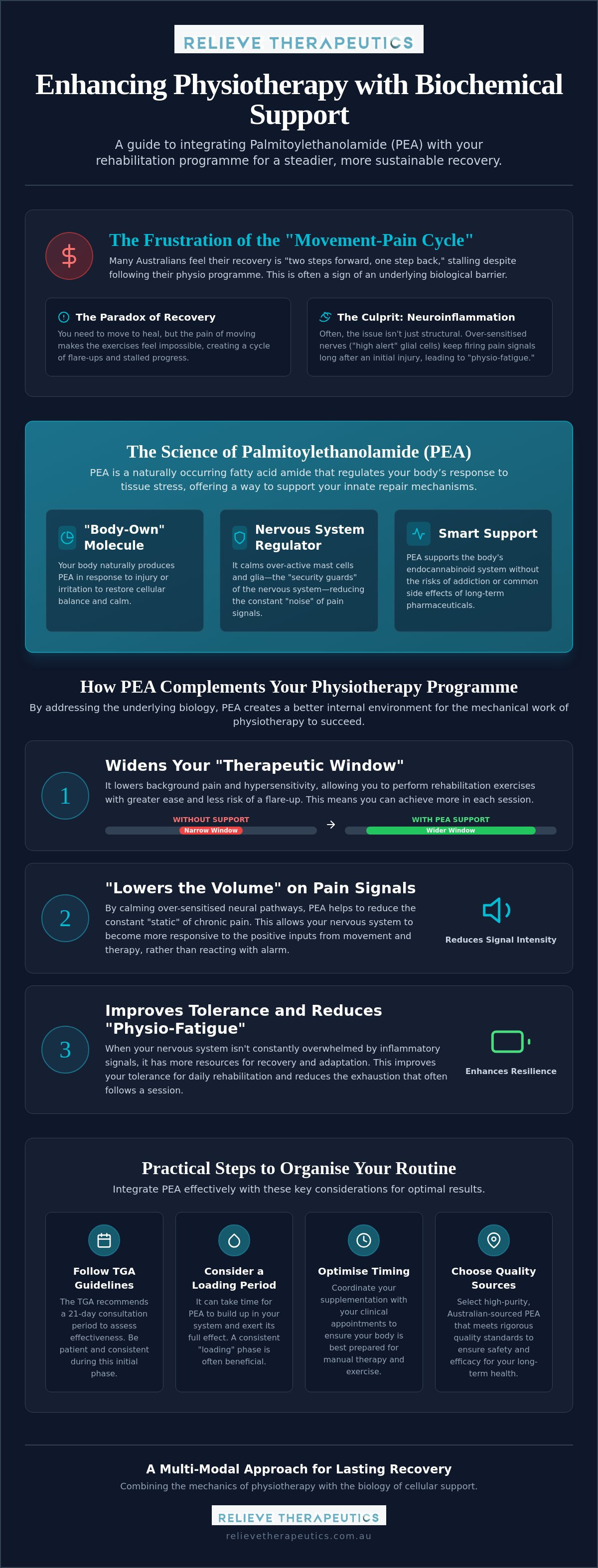
Chronic discomfort is rarely just about structural damage. In many cases of persistent back, neck, or nerve pain, the culprit is neuroinflammation. This is a state where the glial cells in your nervous system remain in a "high alert" mode, releasing inflammatory chemicals that keep pain signals firing long after the initial injury has begun to heal. When these nerves are over-sensitised, even a standard, low-impact physio session can trigger a significant flare-up that leaves you feeling exhausted. This "physio-fatigue" is a sign that your nervous system is overwhelmed. By utilising compounds like Palmitoylethanolamide (PEA), you can support the body’s innate ability to resolve this underlying irritation. Natural biochemical support helps to quieten these hypersensitive signals, which significantly improves your tolerance for daily rehabilitation exercises.
Why 'Pushing Through' Isn't Always the Answer
The traditional Australian "tough it out" mentality is often a hindrance during the recovery process. While discipline is necessary for rehab, "pushing through" sharp or burning pain can increase cellular stress and delay vital tissue remodelling. For your body to repair itself effectively, it needs a calm environment, reduced oxidative stress, and stable nerve signalling. Using natural adjuncts allows you to "lower the volume" on pain without the systemic side effects often associated with long-term pharmaceutical anti-inflammatories. This balanced approach creates a safer, more sustainable path toward functional restoration and daily comfort.
The Science of Palmitoylethanolamide (PEA) in Pain Management
Palmitoylethanolamide (PEA) is a bioactive fatty acid amide that plays a critical role in the way our bodies process discomfort. Unlike synthetic compounds, PEA is a "body-own" molecule. This means your system naturally produces it in response to tissue stress, injury, or chronic irritation. It acts as a biological mediator, working to restore balance when your internal environment is compromised. For those seeking natural pain relief to complement physiotherapy, understanding this molecule is the first step toward a more efficient recovery. It offers a sophisticated way to support your body's innate repair mechanisms without the risk of addiction or the common side effects associated with pharmaceutical anti-inflammatories.
The primary function of PEA is to regulate the "security guards" of your nervous system: mast cells and glia. When these cells become over-active, they drive the persistent inflammatory state that makes movement difficult. PEA helps to calm these cells, effectively reducing the noise of pain signals. This clinical approach allows you to focus on your rehabilitation with a clearer, more responsive nervous system.
How PEA Works for Pain: The Biological Mechanism
The efficacy of PEA is largely attributed to what scientists call the "Entourage Effect." By supporting the body's endocannabinoid system, PEA enhances the activity of other natural pain-regulating compounds. It down-regulates the inflammatory response at a cellular level, preventing the "fire" of inflammation from spreading through your neural pathways. To dive deeper into the clinical data, you can read our detailed guide on How Does PEA Work for Pain? The Science of Natural Relief in 2026. This cellular support is what makes physical therapy more effective; it prepares the biological "soil" so that the "seeds" of movement can take root. If you are ready to support your recovery, exploring high-quality PEA options is a practical next step.
Micronisation: Ensuring the Molecule Reaches the Target
Bioavailability is the most significant challenge when using natural fatty acids. In its standard state, PEA has a large particle size that the body finds difficult to absorb, especially in the context of the varied Australian climate and diet. This is why micronisation is essential. By reducing the compound to ultra-fine particles, we significantly increase the surface area for absorption. This ensures the molecule can actually reach the over-stimulated nerves it is meant to calm. Effective absorption is the absolute key to efficacy in natural pain relief. Without proper micronisation, the majority of the compound may simply pass through your system without providing the intended support for your physiotherapy sessions.
Three Ways PEA Complements Your Physiotherapy Programme
The synergy between physical manipulation and biochemical support is where true recovery acceleration happens. While your therapist works on joint mobility and muscle activation, your body needs the right internal tools to process these changes. Integrating natural pain relief to complement physiotherapy allows you to address the discomfort that often arises from the "good stress" of rehabilitation. By managing this response, you can move through your recovery phases with greater consistency and less downtime. Here are three primary ways this combination supports your journey:
- Resolving post-session inflammation: Physical therapy often involves challenging tissues to stimulate growth and repair. PEA helps your body resolve the resulting inflammatory response more efficiently, preventing the multi-day "crash" that some patients experience after a session.
- Widening the therapeutic window: When pain levels are high, performing prescribed movements correctly is nearly impossible. By lowering the baseline of neural sensitivity, PEA allows you to execute exercises with better form and a higher repetition count.
- Reducing reliance on NSAIDs: Many Australians rely on non-steroidal anti-inflammatory drugs (NSAIDs) to get through their rehab, which can lead to gastric irritation or kidney stress. PEA offers a natural, body-own alternative that supports tissue health without these systemic risks.
Improving Exercise Tolerance and Compliance
The success of any physiotherapy plan depends on your "homework"—the exercises you do between appointments. If these movements cause sharp flare-ups, adherence naturally drops. Reducing cellular discomfort makes these daily tasks feel manageable rather than daunting. This is particularly relevant for complex nerve issues; for instance, using palmitoylethanolamide for sciatica can help settle the radiating pain that often prevents essential neural gliding exercises. When you see faster progress in your strength and mobility, the psychological boost further reinforces your commitment to the programme.
A Natural Partner for Manual Therapy
Hands-on therapy, such as deep tissue massage or joint mobilisation, is vital for restoring function but can be intense for a sensitised nervous system. "Pre-loading" your body’s natural anti-inflammatory response with consistent PEA use can make these sessions significantly more comfortable. It prepares the tissues to receive manual input without an exaggerated pain response. It's essential to discuss all supplements with your treating physiotherapist or GP to ensure your entire care team is aligned with your recovery strategy. This transparent, collaborative approach ensures that every tool in your kit—both mechanical and biological—is working toward the same goal of restored movement.
Practical Steps to Organise Your Natural Pain Relief Routine
Integrating natural pain relief to complement physiotherapy requires a structured approach to be truly effective. It isn't simply about taking a supplement when discomfort peaks; it's about building a consistent biological foundation that supports your physical recovery. To get the most out of your clinical sessions, you should align your supplementation with your overall treatment schedule. Most users find that taking PEA consistently, regardless of whether it's a "physio day" or a rest day, creates the steady-state levels needed to quieten over-active nerves. This consistency ensures your nervous system remains supported throughout the entire remodeling process.
Tracking your progress is an essential part of a science-based recovery. We suggest keeping a simple diary to note your morning stiffness, your ability to complete home exercises, and your recovery time after a clinic visit. This data helps you and your therapist adjust your programme based on real-world feedback rather than memory. You must also ensure your GP and physiotherapist are "in the loop" regarding your supplement routine. Open communication ensures your care is safe, coordinated, and tailored to your specific health history.
Finding the Right PEA Dosage for Pain
While individual requirements vary based on the intensity of the condition, many clinical studies utilise a starting protocol of 1200mg daily. For more detailed guidance on how to structure your intake, consult our resource on PEA Dosage for Pain: A Comprehensive Australian Guide to Optimal Intake. We often recommend divided doses, such as 600mg in the morning and 600mg in the evening. This approach provides sustained support throughout the day and night, helping to manage the natural fluctuations in inflammation. If you are ready to begin, you can browse our range of high-purity PEA capsules to support your clinical rehabilitation.
Monitoring the 'Physio-Plus' Effect
Natural support is a marathon, not a sprint. You should look for subtle shifts in your daily function rather than expecting an overnight transformation. You might notice that you wake up with less "start-up" pain or that you have more "good" days between your scheduled appointments. It's vital to continue your prescribed exercises even as your discomfort levels begin to drop. Reducing pain is merely the first step; building strength and resilience through movement is what prevents the issue from returning. Stay disciplined, stay consistent, and give your body the biological time it needs to remodel and repair.
The Relieve Therapeutics Approach to Quality Support
Relieve Therapeutics stands as a specialist Australian provider dedicated to delivering clinical-grade Palmitoylethanolamide (PEA). We understand that the Australian community requires transparent, science-backed solutions to navigate the complexities of chronic discomfort. Our mission is to bridge the gap between laboratory rigor and daily wellness. By providing a high-purity formulation, we ensure that your body receives exactly what it needs to support neural health without unnecessary additives. Whether you are in the early stages of a rehabilitation programme or maintaining long-term mobility, we offer supply options of 60, 120, and 180 capsules to suit your specific timeline. Choosing a targeted approach to natural pain relief to complement physiotherapy ensures that your biological support is as precise as your clinical exercises.
Our commitment to quality manufacturing means every batch is produced to meet rigorous standards. We believe that transparency is the foundation of professional care. By providing clear information and reliable products, we act as a disciplined partner in your health journey. This focus on substance over style ensures that you can trust the integrity of what you are putting into your body, allowing you to focus entirely on your recovery goals.
Why Purity Matters in Pain Support
In the supplement industry, many products are diluted with "filler-heavy" ingredients that offer no therapeutic benefit and may even interfere with absorption. We intentionally avoid these shortcuts. By focusing on a single, proven molecule, we maintain a level of quality control that multi-ingredient formulas often lack. Buying from a local specialist ensures you are receiving a product designed for the specific needs of the Australian market. For a deeper understanding of what to look for in a clinical-grade supplement, see our High Quality PEA Capsules: An Australian Buyer's Guide for 2026. Purity is not just a marketing claim; it is a biological necessity for effective nerve support.
Starting Your Journey with Confidence
For those new to biological adjuncts, our PEA 60 Capsules serve as an ideal entry point. This initial supply allows you to experience the "physio-plus" effect firsthand during a standard loading phase. We encourage a holistic view of health that combines consistent movement, targeted biology, and professional clinical guidance. You are the most important member of your recovery team. By taking an active role in your biochemical health, you empower yourself to achieve a faster, more sustainable return to the activities you love. Your journey toward comfortable movement is a partnership, and we are here to provide the reliable, evidence-based support you deserve.
Enhancing Your Path to Restored Movement
Achieving a full recovery requires more than just clinical appointments; it demands a synergy between physical mechanics and internal biology. By addressing the cellular neuroinflammation that often hinders your progress, you can break the "movement-pain cycle" and perform your rehabilitation exercises with greater ease and consistency. Integrating natural pain relief to complement physiotherapy ensures your nervous system is as prepared for recovery as your muscles are for movement. This disciplined, science-based approach allows you to move beyond temporary relief toward lasting functional restoration.
Relieve Therapeutics is a specialist Australian retailer dedicated to providing the high-purity, ultra-micronised formulations your body needs for optimal absorption. Whether you are just beginning your journey or require long-term support, we offer flexible supply options in 60, 120, and 180-count capsules to suit your specific rehabilitation timeline. Explore our range of high-purity PEA capsules to support your recovery and take an active role in your health journey today. You don't have to navigate your recovery alone; with the right biological support and professional guidance, a return to comfortable daily activity is well within your reach.
Frequently Asked Questions
Can I take PEA supplements while I am currently seeing a physiotherapist?
Yes, you can certainly take PEA while undergoing active treatment. Many patients find that using PEA as a biological adjunct helps to lower their baseline neural sensitivity, which allows them to perform their rehabilitation exercises with greater ease. It works alongside the mechanical improvements made during your sessions to support a more comprehensive recovery process.
Is Palmitoylethanolamide considered a natural pain relief option in Australia?
Palmitoylethanolamide is indeed classified as a natural therapeutic substance. It is a "body-own" fatty acid amide that your system produces naturally in response to tissue stress or injury. Because it is endogenous to the human body, it is a preferred choice for those seeking evidence-based alternatives to synthetic pharmaceutical anti-inflammatories.
How long does it take for PEA to start working alongside my rehab programme?
PEA generally requires a "loading" period to reach effective levels within your system. While some individuals notice subtle shifts earlier, most users report significant improvements in comfort and mobility after two to four weeks of consistent daily use. This gradual onset reflects the biological nature of the compound as it works to resolve underlying neuroinflammation.
Are there any side effects when combining natural supplements with physical therapy?
PEA is exceptionally well-tolerated because it is a molecule your body already recognises and produces. It does not carry the common gastrointestinal or renal risks associated with long-term NSAID use. While it is highly compatible with physical therapy, you should always monitor your individual response and discuss any new supplements with your healthcare team.
Do I need a prescription to buy PEA capsules in Australia?
No, you don't need a prescription to purchase PEA in Australia. It is available as an over-the-counter supplement through specialised retailers like Relieve Therapeutics. This accessibility allows you to integrate high-purity, clinical-grade support into your recovery routine immediately without the need for a formal script from your GP or specialist.
Can PEA help with the 'flare-ups' I get after my physio exercises?
Yes, PEA is particularly effective at managing post-session irritation. By regulating the mast cells and glia that drive inflammatory responses, it acts as an ideal natural pain relief to complement physiotherapy sessions. This support helps to reduce the intensity of flare-ups, ensuring that the "good stress" of rehabilitation doesn't lead to a multi-day recovery crash.
Is PEA safe to take long-term for chronic pain management?
PEA has a documented history of safety for long-term use in chronic conditions. However, the Therapeutic Goods Administration (TGA) in Australia advises that you should consult a healthcare professional if you intend to use PEA for more than 21 consecutive days. This ensures that your progress is being monitored correctly as part of a broader clinical management plan.
Should I tell my physiotherapist that I am taking PEA capsules?
You should always keep your physiotherapist informed about any supplements you are taking. When your therapist understands the biochemical support you are using, they can more accurately interpret your progress and recovery rates. This transparency allows for a safer, more coordinated approach to your care, ensuring your exercise programme is perfectly tailored to your changing needs.