

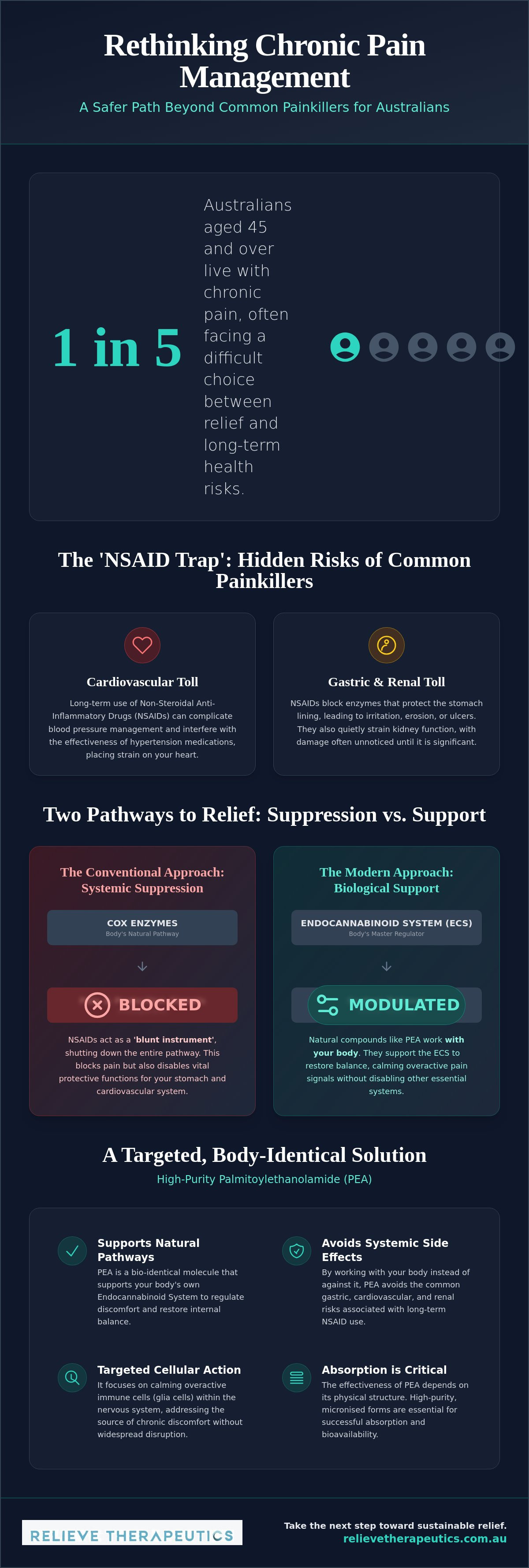
1 in 5 Australians aged 45 and over are currently living with chronic pain, yet many feel forced to choose between managing discomfort and protecting their long-term health. Finding a safe alternative to NSAIDs for pain is a priority when you are met with nagging stomach irritation, cardiovascular concerns, or the simple failure of paracetamol to address nerve-related issues. It's exhausting to remain stuck in a cycle of pharmaceutical reliance that prioritises short-term relief over your systemic wellbeing.
This guide reveals how you can manage discomfort effectively by supporting your body's natural regulatory pathways. You can achieve relief without the typical risks to your stomach or heart. We will explore the latest TGA-regulated options for 2026, the science of micronised PEA, and how to build a sustainable management plan for improved daily mobility and comfort.
Key Takeaways
- Understand why common over-the-counter medications carry hidden risks for your heart and stomach when used for long-term management.
- Identify a safe alternative to NSAIDs for pain by evaluating the science and bioavailability of natural compounds like PEA and curcumin.
- Learn how to transition from pharmaceutical reliance to natural support using a structured "Stepped Care" approach.
- Discover how to professionally discuss non-opioid supplements with your GP to ensure your pain management plan is both safe and effective.
- Explore the benefits of high-purity Palmitoylethanolamide (PEA) and why its physical structure is critical for successful absorption.
Beyond the Chemist Shelf: Why Australians Seek a Safe Alternative to NSAIDs
For many Australians, a trip to the local chemist for a packet of ibuprofen or naproxen feels like a routine response to back pain or joint stiffness. However, the accessibility of Nonsteroidal anti-inflammatory drugs (NSAIDs) often masks the significant physiological toll they can exert on the body. While these medications are effective for acute injury, their long-term use has contributed to a hidden prevalence of hospitalisations across Australian emergency departments. Relying on these "blunt instruments" creates what we call the NSAID trap: a cycle where temporary relief leads to chronic physiological stress on your vital systems.
This reality is driving a national shift toward finding a safe alternative to NSAIDs for pain that supports rather than suppresses the body's natural functions. The problem is particularly acute for the 61% of Australians living with at least one chronic condition. When managing multiple health issues, the systemic impact of pharmaceutical anti-inflammatories becomes harder to ignore. "Over-the-counter" does not equate to "risk-free". Long-term management requires a more nuanced approach that respects the delicate balance of your cardiovascular health, gastric lining, and renal function.
The Cardiovascular and Gastric Toll
Regular use of ibuprofen can complicate blood pressure management for many Australians, as these drugs often interfere with the efficacy of hypertension medications. The gastric system is equally vulnerable. NSAIDs work by inhibiting enzymes that produce prostaglandins, which are responsible for both pain signals and the maintenance of your stomach's protective lining. When this lining thins, you experience the characteristic "burn" of gastric erosion or, in severe cases, ulceration. Renal strain is particularly insidious because kidney function often deteriorates quietly without presenting obvious symptoms until significant damage has occurred.
When Paracetamol Isn’t Enough
Paracetamol is a staple in Australian medicine cabinets, but it often lacks the anti-inflammatory power needed for complex joint or nerve-related issues. Many people find themselves swapping one risk for another by increasing their paracetamol dosage, which places undue stress on liver health. It's a trade-off that rarely provides the comprehensive relief needed for chronic discomfort.
In 2026, the Australian healthcare landscape is evolving. There is a growing demand for bio-identical, natural support molecules that mimic the body's own regulatory processes. Seeking a safe alternative to NSAIDs for pain is no longer just about avoiding side effects; it's about choosing a sustainable path toward long-term comfort and systemic health. This movement reflects a broader commitment to quality of life that doesn't compromise your future vitality.
This commitment to systemic health is shared by other Australian wellness leaders; for instance, Ninja Mama provides curated recovery bundles that help new mothers navigate postpartum discomfort without relying on synthetic alternatives.
The Science of Discomfort: How NSAIDs Work vs. Your Body’s Natural Pathways
Understanding why many Australians search for a safe alternative to NSAIDs for pain requires a look at how these common medications interact with our biology. Non-steroidal anti-inflammatory drugs (NSAIDs) function by targeting specific enzymes known as cyclooxygenase, or COX enzymes. While these enzymes are responsible for producing the prostaglandins that signal pain and inflammation, they also play a vital role in protecting your stomach lining and supporting kidney function. This is why we often refer to NSAIDs as a "blunt instrument". They don't just target the source of your discomfort; they shut down essential protective mechanisms throughout your entire system.
In contrast, your body possesses a sophisticated internal regulatory network called the Endocannabinoid System (ECS). Think of the ECS as a natural volume knob for discomfort. Rather than abruptly cutting the wires like a pharmaceutical blocker, the ECS works to restore balance and harmony. For the 1.6 million Australians living with chronic pain, supporting this system offers a more nuanced and sustainable approach to long-term management. When you choose a safe alternative to NSAIDs for pain, you are moving away from systemic suppression and toward biological support.
Enzymatic Inhibition vs. Cellular Modulation
The COX enzyme pathway is like a factory production line. NSAIDs effectively turn off the power to the whole factory just to stop one faulty machine. This leads to the gastric and cardiovascular complications discussed earlier. Conversely, learning how does PEA work for pain reveals a process of cellular modulation. It focuses on calming overactive glia cells, which are the immune cells in your nervous system that can become "stuck" in a pro-inflammatory state. By engaging with PPAR-alpha receptors, this approach maintains cellular harmony without disrupting the "good" prostaglandins your body needs.
PEA: The Endogenous Advantage
Palmitoylethanolamide (PEA) is a fatty acid amide that your body already produces. It's considered bio-identical, meaning your system recognises it as a familiar tool for restoration. Under normal conditions, your body creates enough PEA to manage minor stress. However, the "depletion theory" suggests that chronic discomfort can exhaust your natural reserves, leaving your nervous system over-sensitised. Supplementing with a high-purity source helps replenish these levels, providing a foundation for recovery that feels natural rather than forced. Because the molecule is one your body already produces, it maintains an exceptional safety profile even for long-term use.
As you evaluate different pain management options, it's worth considering how a bio-identical approach fits into your lifestyle. You might explore high-purity PEA capsules as a foundational step toward reducing your reliance on pharmaceutical blockers and reclaiming your daily mobility.
Comparing Natural Anti-Inflammatories: PEA, Curcumin, and Fish Oil
Selecting a safe alternative to NSAIDs for pain involves more than just swapping a blue packet for a green one; it requires a precise understanding of how different natural compounds target specific pathways. In the Australian wellness market, three options dominate the conversation: Palmitoylethanolamide (PEA), curcumin, and fish oil. Each offers unique benefits, yet their efficacy is often dictated by their physical structure and manufacturing quality. While many Aussies are familiar with fish oil for heart health, the emergence of PEA has provided a more targeted approach for those dealing with persistent nerve and joint sensitivity.
When seeking Heart-safer NSAID alternatives, it is essential to match the supplement to the specific nature of your discomfort. Curcumin is widely celebrated for its systemic anti-inflammatory properties, but it often requires additives like black pepper for absorption. Fish oil provides the essential fatty acids needed for long-term cellular health. PEA stands apart because it acts as a signalling molecule that directly modulates the internal "volume" of your nervous system. This specialised action makes it a sophisticated choice for those who find traditional options insufficient.
Micronisation: The Key to Absorption
The physical size of a supplement particle determines how well your body can use it. Standard PEA particles are often too large to be effectively processed by the digestive tract, leading to poor systemic uptake. To solve this, high-quality formulations undergo micronisation, a process that breaks down the particles into microscopic sizes. This enhances bioavailability and ensures the molecule reaches the cells that need it most. You can learn more about these manufacturing standards in our guide on high quality PEA capsules.
Choosing Your Support Protocol
A structured approach to natural support often yields the best results. Curcumin is excellent for general systemic flare-ups, while PEA is frequently preferred for targeted nerve and joint support. Fish oil plays a supporting role by maintaining cardiovascular health and providing a foundation for overall wellbeing. For individuals with sensitive stomachs or "leaky gut" concerns, PEA offers a distinct advantage as it is typically very well-tolerated and does not irritate the gastric lining.
Combining these natural options can often create a synergistic effect. Many Australians find that using fish oil as a daily foundation, supplemented by PEA for targeted regulation, provides a more comprehensive management plan than any single pharmaceutical could offer. This multi-layered strategy allows you to address discomfort from several biological angles at once, promoting restoration rather than just temporary suppression.
In addition to these common supplements, some people explore the wider world of botanical wellness, where specialists like Kratom Goat provide access to premium products designed for those seeking natural support for their wellbeing.
A Practical Guide to Managing Chronic Pain Without Regular NSAID Use
Transitioning from a daily pharmaceutical routine to a natural support system requires a methodical approach. It's not about an overnight switch but rather a structured "Stepped Care" strategy. When you decide to integrate a safe alternative to NSAIDs for pain, you're choosing to work with your biology rather than against it. This process involves patience, as natural molecules like PEA function differently than the immediate "off switch" provided by traditional drugs. Managing your expectations is the first step toward a sustainable, long-term management plan.
The Transition Phase
Successful management starts with a gradual reduction of NSAID reliance while simultaneously introducing high-purity support. During this time, it's helpful to track your "Comfort Score" on a scale of 1 to 10 over a 30-day period. This data provides a clear picture of your progress as the natural compounds reach therapeutic levels in your system. Consistency in your PEA dosage for pain is vital during this initial loading period, which typically takes two to four weeks to yield optimal results. Stick to the plan even if the changes feel subtle at first.
Questions for Your Australian Healthcare Provider
Discussing non-opioid pain relief supplements with your GP ensures your plan is safe and integrated. You might ask: "How will these specific ingredients interact with my current blood pressure medication?" or "Can we monitor my renal function through blood tests as I reduce my ibuprofen intake?" It's also helpful to understand that the Therapeutic Goods Administration (TGA) regulates these as listed medicines in Australia, meaning they meet strict safety and manufacturing standards. Requesting regular blood tests to monitor kidney function is a proactive step during any transition away from long-term pharmaceutical use.
Complementing your supplement protocol with lifestyle adjuncts can accelerate your recovery. In Australia, we often advocate for the "Sun and Salt" approach, which involves gentle movement in natural light and salt-water recovery where possible. This holistic focus on vitality supports the cellular modulation provided by PEA. If you're ready to begin your transition, you can purchase high-purity PEA capsules directly from our Australian dispatch centre to ensure a consistent and reliable supply for your journey.
High-Purity PEA: A Trusted Australian Solution
Relieve Therapeutics provides a dedicated pathway for those seeking a safe alternative to NSAIDs for pain. We focus exclusively on high-purity Palmitoylethanolamide because we believe in the efficacy of a single, well-refined molecule over cluttered formulations. By maintaining a local Australian dispatch centre, we ensure that your supply remains consistent and your support is grounded in our local regulatory environment. This commitment to transparency and clinical grounding allows you to focus on your recovery with total peace of mind. Finding a safe alternative to NSAIDs for pain is a journey that requires both the right molecule and the right partner.
Choosing the right volume is an essential part of your management strategy. We offer a range of sizes, from initial trial packs to comprehensive long-term solutions. Our goal is to act as your partner in health, providing the tools you need to move away from systemic pharmaceutical suppression and toward biological restoration. We provide the scientific context you need to understand your own biology without the noise of hyperbolic marketing.
Purity and Sourcing Standards
Quality in the supplement industry is often compromised by the inclusion of unnecessary fillers, binders, or common allergens. At Relieve Therapeutics, we avoid these additives to ensure our formulations are as clean and bio-available as possible. Every batch undergoes rigorous testing to meet the expectations of the Australian consumer. For those managing persistent conditions, our PEA 180 Capsules provide a bulk option that supports long-term affordability. This ensures that your commitment to a natural management plan remains sustainable and cost-effective over many months.
Start Your Journey with Confidence
We acknowledge the emotional and physical toll that long-term discomfort takes on your daily life. Seeking a safer path to comfort is a significant step toward reclaiming your vitality. If you are new to the concept of natural modulation, the PEA 60 capsules starter pack offers an ideal entry point. It allows you to experience the loading phase and begin monitoring your comfort score without a large initial commitment.
Our "Trustworthy Specialist" approach means we are here to provide education and care throughout your journey. We understand that your health is personal, and your path to comfort should be supported by evidence and integrity. By choosing a high-purity, Australian-sourced solution, you are investing in a future defined by mobility, comfort, and systemic safety. We invite you to explore our range and take the first step toward a more sustainable way of living.
Reclaiming Your Vitality with Evidence-Based Support
Transitioning from traditional pharmaceutical blockers to endogenous molecules like PEA allows you to protect your gastric and cardiovascular health while addressing discomfort at its source. By choosing a safe alternative to NSAIDs for pain, you are prioritising long-term systemic harmony over temporary suppression. Success in this journey depends on three pillars: clinical purity, consistent dosing, and a patient approach to the initial loading period.
Relieve Therapeutics is dedicated to being your partner in this restorative process. We provide pure Palmitoylethanolamide with no unnecessary fillers or allergens, ensuring your management plan is as clean as it is effective. As a proudly Australian owned and operated business, we dispatch all orders locally to ensure fast, reliable delivery across the country.
Explore our range of high-purity PEA capsules and start your journey to safer support today.
Reclaiming your daily mobility is a deliberate choice. With the right biological support, you can look forward to a future defined by comfort and lasting wellbeing.
Frequently Asked Questions
Is PEA really a safe alternative to NSAIDs for long-term use?
Yes, Palmitoylethanolamide (PEA) is considered a safe alternative to NSAIDs for pain because it is a bio-identical molecule that your body already produces. Unlike traditional anti-inflammatories, it does not inhibit the enzymes responsible for protecting your stomach lining or supporting kidney function. This allows for sustained use without the gastric or cardiovascular risks associated with pharmaceutical blockers.
Can I take PEA capsules if I am already on blood pressure medication?
PEA generally maintains a high safety profile and does not typically interfere with hypertension medications. While NSAIDs are known to complicate blood pressure management, PEA works through different cellular pathways that do not exert the same physiological stress. You should always consult your GP before starting any new supplement to ensure your management plan is fully integrated.
How long does it take for natural alternatives like PEA to start working?
Most users notice significant improvements after a loading period of two to four weeks. Because natural molecules like PEA work by modulating overactive glia cells rather than providing an immediate chemical "off switch", the effects are cumulative. Consistency is vital during this initial phase to allow the compound to reach therapeutic levels within your system.
Does PEA cause the same stomach upset as ibuprofen or aspirin?
No, PEA does not cause gastric irritation or the "burn" often felt with ibuprofen or aspirin. It is an excellent option for Australians with sensitive stomachs or a history of gastric erosion. Because it avoids the COX enzyme pathway, it leaves your stomach's protective lining intact while it focuses on calming the signals of discomfort.
What is the difference between standard and micronised PEA?
The difference lies entirely in particle size and bioavailability. Standard PEA particles are often too large for the digestive tract to absorb effectively, leading to poor systemic uptake. Micronised and ultra-micronised formulations break these particles into microscopic sizes, ensuring the molecule is successfully absorbed into the bloodstream to reach the cells that require support.
Can I use PEA for nerve pain specifically, like sciatica or neuropathy?
Yes, PEA is particularly well-suited for nerve-related issues such as sciatica or neuropathy. It functions by calming the glia cells that surround your nerves, which are often the source of persistent sensitivity. While many find paracetamol ineffective for these specific conditions, PEA provides a targeted mechanism that addresses the underlying cellular overactivity.
Are there any known side effects of Palmitoylethanolamide supplements?
Palmitoylethanolamide is exceptionally well-tolerated and has no documented severe side effects in clinical literature. Because it is a molecule your body already recognises and produces, it is processed efficiently without the systemic toxicity often seen in synthetic drugs. Very rare reports of mild digestive changes usually resolve quickly as the body adjusts to the supplement.
Do I need a prescription from my GP to order PEA capsules in Australia?
No, you do not require a prescription to purchase PEA capsules in Australia. The Therapeutic Goods Administration (TGA) regulates PEA as a listed medicine, making it available for direct purchase as a complementary supplement. While a script is not necessary, we always encourage you to discuss its use with your healthcare provider as part of a professional management plan.