

What if the choice between PEA and alpha-lipoic acid isn't a competition, but a biological partnership you've been missing? Many Australians living with persistent burning or tingling sensations feel trapped in a cycle of trial and error. It's frustrating to manage the side effects of traditional medications while searching for a natural alternative that actually works for your specific discomfort. When researching PEA vs alpha-lipoic acid for nerve support, it's easy to get lost in technical jargon and conflicting advice.
You deserve a clear, science-backed regime that restores your daily mobility and function without the guesswork. This article breaks down the distinct biological roles of Palmitoylethanolamide (PEA) and Alpha-Lipoic Acid (ALA), showing how they target different pathways like inflammation and oxidative stress. We'll explore why these two nutrients are often more effective when used together and how you can organise a protocol that fits your lifestyle. By understanding the specific mechanisms of each, you can move toward a life defined by comfort rather than constant distraction.
Key Takeaways
- Understand how PEA acts as a foundational fatty acid to calm overactive nerve signals by targeting mast cells and neuroinflammation.
- Discover the antioxidant power of Alpha-Lipoic Acid and its specific role in protecting nerve fibres from oxidative stress and metabolic damage.
- Compare the distinct biological pathways of PEA vs alpha-lipoic acid for nerve support to determine which mechanism aligns with your symptoms.
- Learn why combining these two nutrients can create a synergistic effect for more comprehensive management of persistent tingling or burning.
- Identify clinical dosage standards and the importance of maintaining a consistent protocol for at least two to three months to achieve optimal results.
Understanding Nerve Support: The Roles of PEA and Alpha-Lipoic Acid
True nerve support requires looking beneath the surface of the skin. It isn't enough to simply dull a sensation; we need to address why the nerves are firing incorrectly in the first place. This is where the discussion of PEA vs alpha-lipoic acid for nerve support begins. Both substances occur naturally within the human body, yet they occupy very different biological niches. Understanding these roles is the first step in moving from daily frustration to a structured plan for restoration.
Nerve discomfort is rarely caused by a single factor. It's often a combination of physical compression, chemical irritation, and metabolic stress. Masking these signals with traditional options might provide temporary relief, but it doesn't support the underlying health of the nerve fibre. By taking a specialist's approach, we can identify which biological pathway needs the most assistance, whether it's calming an overactive immune response or shielding cells from oxidative damage.
What is Palmitoylethanolamide (PEA)?
Palmitoylethanolamide (PEA) is a fatty acid amide that your body produces in response to tissue stress or injury. It functions as a biological "modulator" within the endocannabinoid system. Its primary job is to calm overactive nerves by regulating the activity of mast cells and glial cells. When these cells are constantly "on," they create a cycle of neuroinflammation that leads to the burning and tingling sensations associated with sciatica or peripheral neuropathy.
One of the most significant advantages of PEA is its safety profile. It's non-psychoactive, doesn't cause grogginess, and is well-tolerated for long-term use. Because the body already knows how to process this fatty acid, it integrates naturally into your existing physiology. For Australians seeking high-purity options, micronised PEA is often preferred because the smaller particle size allows for better absorption into the system.
What is Alpha-Lipoic Acid (ALA)?
Alpha-Lipoic Acid (ALA) is often described as the "universal antioxidant" because of its unique dual solubility. It can dissolve in both water and fat, which allows it to travel through every part of a nerve cell, from the watery interior to the fatty outer membrane. This reach is vital for neutralising free radicals that cause oxidative stress, a leading cause of nerve degradation.
Beyond its role as a shield, ALA is deeply involved in energy metabolism. It helps the body turn glucose into fuel, which is why it's a common choice for supporting nerve health related to metabolic or blood sugar concerns. When weighing up PEA vs alpha-lipoic acid for nerve support, you're essentially choosing between a focus on "calming" inflammation and a focus on "protecting" through antioxidant action. Both are essential, but they serve different masters within your nervous system.
Mechanisms of Action: How They Support Your Nervous System
To understand the debate of PEA vs alpha-lipoic acid for nerve support, we must look at how these molecules manage cellular stress. They are not competing for the same job; they are addressing different aspects of nerve dysfunction. PEA acts primarily as a regulator of the immune response, while ALA functions as a protective shield and metabolic fuel. When the body is under persistent physiological stress, these two pathways often become overwhelmed, leading to the familiar sensations of burning or tingling.
Nerve fibres are delicate structures that require a stable environment to function correctly. While PEA works to quiet the "noise" of overactive immune cells, ALA ensures the cells have the energy and antioxidant protection to resist damage. This dual approach is essential for anyone seeking a comprehensive strategy rather than a temporary fix. By addressing both neuroinflammation and oxidative stress, you provide the nervous system with the best possible conditions for restoration.
PEA: The Biological Fire Extinguisher
The science of how PEA works for pain centres on its ability to regulate mast cells and glial cells. These cells are the immune system's first responders. In healthy states, they protect us, but in chronic conditions, they can trigger a self-sustaining cycle of neuroinflammation. PEA steps in to "turn off" these inflammatory signals, effectively acting as a biological fire extinguisher for irritated nerves.
Bioavailability is a common hurdle for fatty acids, which is why the particle size matters. Choosing micronised palmitoylethanolamide is vital for effective absorption, as smaller particles are more easily processed by the digestive system. Furthermore, PEA supports the "Entourage Effect" by inhibiting the breakdown of your body's own natural endocannabinoids, which helps prolong their calming influence on the nervous system.
ALA: The Mitochondrial Powerhouse
While PEA douses the flames of inflammation, ALA focuses on the engine of the nerve cell: the mitochondria. Extensive research into Alpha-Lipoic Acid for neuropathic pain highlights its role in combating oxidative stress. This stress occurs when free radicals damage cellular components, leading to weakened nerve signals. ALA is unique because it can regenerate other vital antioxidants like Vitamin C and E, recycling them to keep your cellular defences active.
Beyond its role as a shield, ALA is a critical player in energy production. It supports healthy glucose metabolism, ensuring that nerve cells receive a steady supply of fuel. This metabolic support is particularly important for Australians managing nerve health related to blood sugar imbalances. When the nerves have sufficient energy and are protected from oxidative damage, they are better equipped to maintain their structural integrity. For those beginning a long-term protocol, choosing a high-purity PEA supplement can provide the foundational support needed to complement these antioxidant benefits.
PEA vs Alpha-Lipoic Acid: A Side-by-Side Comparison
When Australians begin investigating natural options, the most common question is whether they must choose just one. The reality is that choosing between PEA vs alpha-lipoic acid for nerve support depends entirely on your primary symptoms and health history. While they both offer significant benefits, they operate in different biological lanes. One focuses on the "fire" of inflammation, while the other focuses on the "rust" of oxidative stress. Understanding this distinction allows you to build a more targeted and effective protocol.
For many, the choice isn't binary. If you're managing persistent discomfort that feels like a sharp, shooting sensation, you might lean toward one. If your concerns are more metabolic or related to long-term nerve protection, you might lean toward the other. Below is a structured framework to help you distinguish between these two potent allies.
Comparison Table: PEA vs ALA
| Feature | PEA (Palmitoylethanolamide) | ALA (Alpha-Lipoic Acid) |
|---|---|---|
| Mechanism | Anti-inflammatory modulator | Universal antioxidant |
| Primary Benefit | Calms overactive nerve signals | Protects nerve cell structure |
| Best For | Sciatica, Fibromyalgia, Chronic Discomfort | Metabolic support, Oxidative stress |
| Safety Profile | Excellent; naturally produced by the body | Good; monitor if on blood sugar medication |
The Synergy: Why Many Australians Use Both
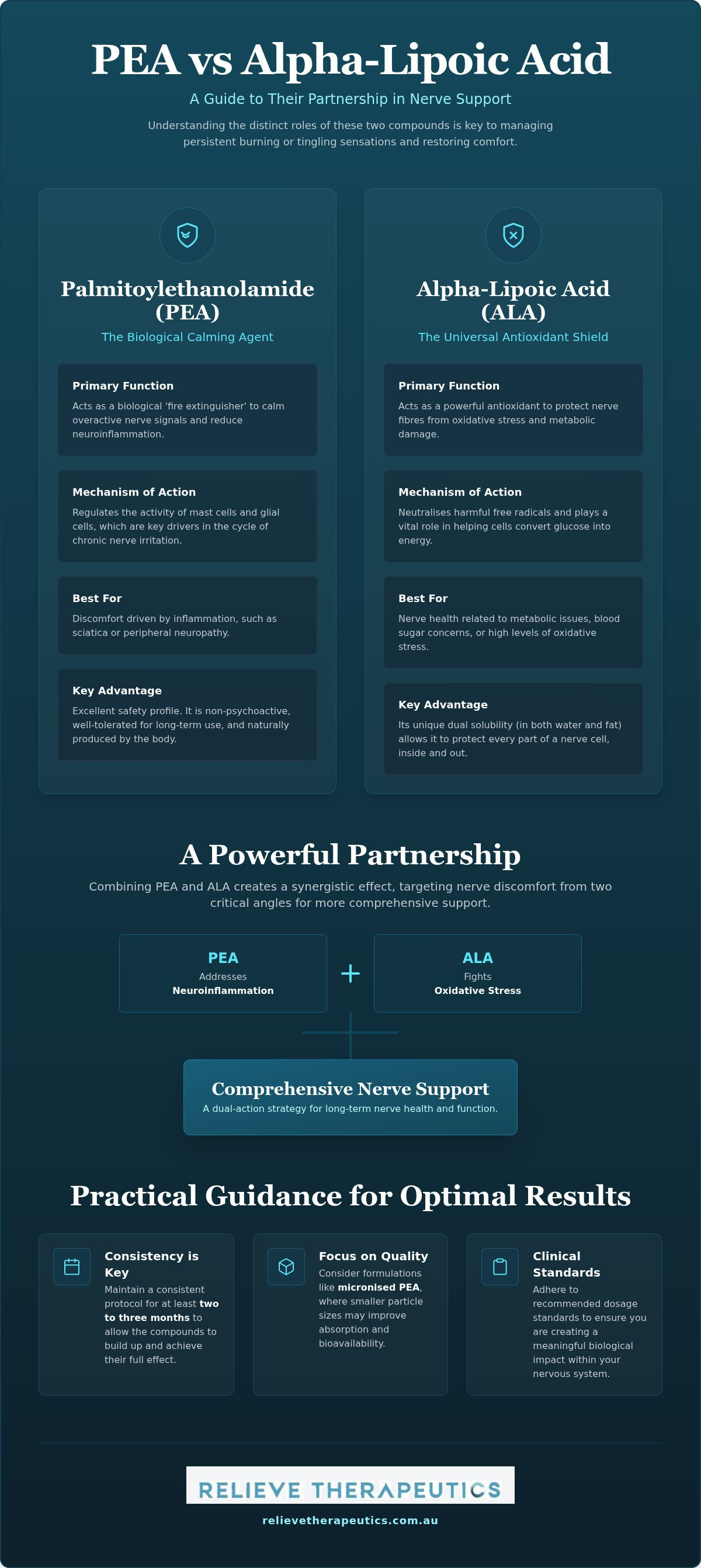
Nerve issues are rarely one-dimensional. Inflammation and oxidative stress often occur simultaneously, creating a feedback loop that makes discomfort harder to manage. This is why a "pincer movement" approach is frequently the most successful strategy. By using PEA to address neuroinflammation and ALA to neutralise free radicals, you're supporting the nerve from two different angles. A recent study on PEA and ALA combination therapy showed that using them together can be more effective for certain types of nerve health than using either in isolation.
This combined approach is particularly relevant for those searching for a supplement for neuropathy Australia wide, where lifestyle factors and metabolic health play a significant role. Using both supplements doesn't just double the pills; it broadens the scope of your recovery plan. PEA settles the immediate "noise" of the nerves, while ALA works in the background to maintain mitochondrial health and energy production. When combined, they provide a comprehensive foundation for long-term daily function and comfort.
Practical Guidance: Dosage, Timing, and Quality Standards
Consistency transforms a supplement protocol into a restorative programme. When evaluating PEA vs alpha-lipoic acid for nerve support, the results you achieve are directly linked to your daily adherence and the quality of the ingredients you select. These molecules don't work overnight. They require a "loading phase" where levels gradually build up in your tissues to reach a therapeutic threshold. This process typically takes between six and twelve weeks of uninterrupted use.
The PEA dosage for pain most frequently observed in clinical settings is 1200mg per day, often split into two 600mg doses to maintain steady levels. For ALA, the standard therapeutic range is usually between 300mg and 600mg daily. If you are embarking on a combined protocol, staying within these ranges ensures you are providing sufficient biological support without overwhelming your system. Always start at the lower end of the range to assess your individual tolerance.
Use this five-step checklist to organise your new regime:
- Consult your GP to ensure no interactions with current medications, especially for blood sugar.
- Select a high-purity, micronised PEA to ensure the particles are small enough for absorption.
- Establish a consistent daily schedule to avoid missed doses.
- Keep a simple symptom diary to track changes in comfort and mobility over time.
- Commit to a 90-day trial period before making a final assessment of efficacy.
How to Take Your Supplements for Maximum Absorption
Absorption is the bridge between taking a capsule and feeling the benefit. Because PEA is a fatty acid, it's best absorbed when taken with a meal that contains healthy fats, such as avocado, eggs, or olive oil. In contrast, ALA is often most effective when taken on an empty stomach, roughly 30 minutes before eating. However, if you find that ALA causes mild gastric upset, taking it with a small amount of food is a sensible compromise. Patience is your greatest ally; don't expect significant shifts until you've maintained the protocol for at least two months.
What to Look for in a Quality Supplement
The Australian market offers many options, but purity varies significantly between brands. You should prioritise high quality PEA capsules that are specifically labelled as micronised. This process is critical because raw PEA has naturally poor solubility; micronisation reduces the particle size to enhance uptake. Always check for transparent ingredient lists and ensure the product is free from unnecessary fillers or artificial colours. For those ready to begin a structured protocol, you can browse high-purity micronised PEA capsules to ensure you are starting your journey with professional-grade support.
Conclusion: Building Your Personal Nerve Support Protocol
Deciding between PEA vs alpha-lipoic acid for nerve support is less about finding a superior supplement and more about understanding your body's specific biological requirements. We have explored how Palmitoylethanolamide (PEA) acts as a foundational regulator to quieten neuroinflammation, while Alpha-Lipoic Acid (ALA) provides the antioxidant shield and mitochondrial fuel necessary for cellular protection. They are distinct, complementary, and highly effective when integrated into a structured health plan. By addressing both the inflammatory signals and the oxidative stress that drive nerve discomfort, you create a comprehensive environment for restoration and daily function.
Before you begin any new regime, it is essential to consult with your GP or a qualified healthcare professional. This is particularly important if you are currently taking prescription medications for nerve health or managing conditions that affect your blood sugar. Because ALA can influence glucose metabolism, professional oversight ensures your protocol remains safe, effective, and tailored to your unique clinical needs. A specialist's guidance provides the transparency and safety required for long-term success.
Your journey toward better mobility and comfort is a marathon rather than a sprint. Nerve tissue requires time to respond to nutritional support, which is why consistency is the most critical factor in your success. Whether you choose to start with a single targeted supplement or a synergistic combination, committing to a daily routine allows these molecules to reach the therapeutic levels your nervous system demands. With a clear plan and high-purity ingredients, you can move forward with the confidence that you are supporting your body's natural pathways to wellness.
The Relieve Therapeutics Difference
Relieve Therapeutics serves as a dedicated specialist for Australians seeking high-purity, micronised Palmitoylethanolamide. We understand that chronic management requires a reliable and sustained supply, which is why we offer PEA 180 capsules. This bulk option is specifically designed for those embarking on a three-month protocol, ensuring you have the necessary volume to see your journey through to the assessment phase without interruption.
Our commitment to quality is grounded in three core pillars: clinical-grade purity, optimal absorption through micronisation, and efficient Australian-based shipping. By focusing exclusively on PEA, we provide a level of expertise and transparency that helps you simplify complex biological choices. We invite you to explore our range of natural support options and take the first step toward a more comfortable, active lifestyle. Your health deserves a partner that values scientific rigour, personal integrity, and long-term outcomes.
Take the Next Step Toward Lasting Comfort
Understanding the distinction between PEA and Alpha-Lipoic Acid allows you to move beyond temporary fixes toward a science-backed protocol. While PEA regulates neuroinflammation, ALA shields your nerve cells from oxidative damage. Combining these two potent allies often provides the comprehensive support your nervous system needs to restore daily function. When weighing up PEA vs alpha-lipoic acid for nerve support, remember that consistency is your most vital tool; biological shifts require a dedicated loading phase and high-purity ingredients to take full effect.
As a specialised Australian retailer, Relieve Therapeutics provides micronised PEA for superior cellular absorption and offers fast local shipping to ensure your routine remains uninterrupted. This professional-grade focus ensures you receive the transparency and quality required for long-term management. Browse our high-purity PEA 180 Capsules for long-term nerve support and give your body the sustained care it deserves. You don't have to navigate this journey alone; reliable, evidence-based support is ready when you are.
Frequently Asked Questions
Can I take PEA and Alpha-Lipoic Acid together?
Yes, you can safely take PEA and Alpha-Lipoic Acid together to support your nervous system. These two substances target different biological pathways, with PEA focusing on neuroinflammation and ALA addressing oxidative stress. Using them in tandem often creates a synergistic effect that provides more comprehensive support than using either supplement in isolation. This combined approach is a common strategy for Australians seeking to manage persistent nerve-related discomfort.
Which is better for sciatica, PEA or ALA?
PEA is generally considered the more appropriate choice for sciatica due to its specific anti-inflammatory properties. Sciatica typically involves the irritation or compression of the sciatic nerve, which triggers a cycle of inflammation. PEA works by calming the mast cells and glial cells responsible for these inflammatory signals. While ALA provides excellent long-term nerve protection, PEA's ability to modulate the immediate inflammatory response makes it a foundational tool for sciatic discomfort.
Are there any side effects when combining PEA and ALA?
Most individuals find the combination of PEA and ALA to be very well-tolerated with a high safety profile. PEA is a fatty acid produced naturally in the body and is not associated with significant adverse effects. Alpha-Lipoic Acid can occasionally cause mild digestive upset or a skin rash in sensitive users. Taking your supplements with a small amount of food can often prevent these minor gastric issues and improve overall comfort.
How long does it take for Alpha-Lipoic Acid to help with nerve pain?
You should expect to maintain a consistent protocol for 6 to 12 weeks before evaluating the full benefits of Alpha-Lipoic Acid. Nerve tissue requires a significant amount of time to respond to antioxidant support and metabolic changes. When weighing up PEA vs alpha-lipoic acid for nerve support, it is important to remember that both nutrients require a loading phase to reach therapeutic levels within your cells.
Does PEA interact with common nerve medications?
PEA does not have any known documented drug interactions with common nerve medications or traditional pain therapies. Its natural mechanism of action within the endocannabinoid system makes it a versatile option for those already following a clinical treatment plan. Despite its excellent safety record, you should always consult your GP before starting a new supplement. This ensures your regime is tailored correctly to your health history and current medications.
Is Alpha-Lipoic Acid safe for people with diabetes?
Alpha-Lipoic Acid is frequently used by people with diabetes because it supports healthy glucose metabolism and protects nerves from oxidative damage. However, because ALA can improve insulin sensitivity, it may lead to a reduction in blood sugar levels. It is vital to monitor your glucose closely and work with your healthcare provider to adjust any existing medications. This professional guidance ensures you can safely integrate ALA into your metabolic health routine.
What is the recommended daily dose of PEA for nerve support in Australia?
The most common daily dose used in clinical observations for PEA vs alpha-lipoic acid for nerve support is 1200mg. For optimal absorption, this is typically split into two 600mg doses taken morning and night with a meal containing healthy fats. Using a micronised form of PEA is essential, as the smaller particle size allows the body to process the fatty acid more efficiently. Consistency at this dosage level is the key to achieving long-term results.