

What if the key to managing your chronic pelvic discomfort isn't found on a prescription pad, but within your own body's natural inflammatory response? For many Australians, living with persistent pelvic pain feels like a private battle against an invisible force that traditional NSAIDs often fail to resolve. You've likely felt the frustration of being unheard or the exhaustion of brain fog from medications that only seem to mask the symptoms. Exploring palmitoylethanolamide for pelvic pain offers a different way forward, focusing on the neuro-inflammatory roots that standard treatments frequently overlook.
Discovering a sustainable path forward requires looking beyond temporary fixes. This guide explores how this fatty acid amide provides a science-backed, natural alternative to help you regain mobility and comfort during your monthly cycles. We'll examine the clinical evidence behind its role in calming overactive mast cells and how a reliable, ultra-micronised, Australian-sourced supplement can support your long-term health journey without the side effects of traditional interventions. By understanding the biology of your discomfort, you can move toward a life defined by vitality and daily function.
Key Takeaways
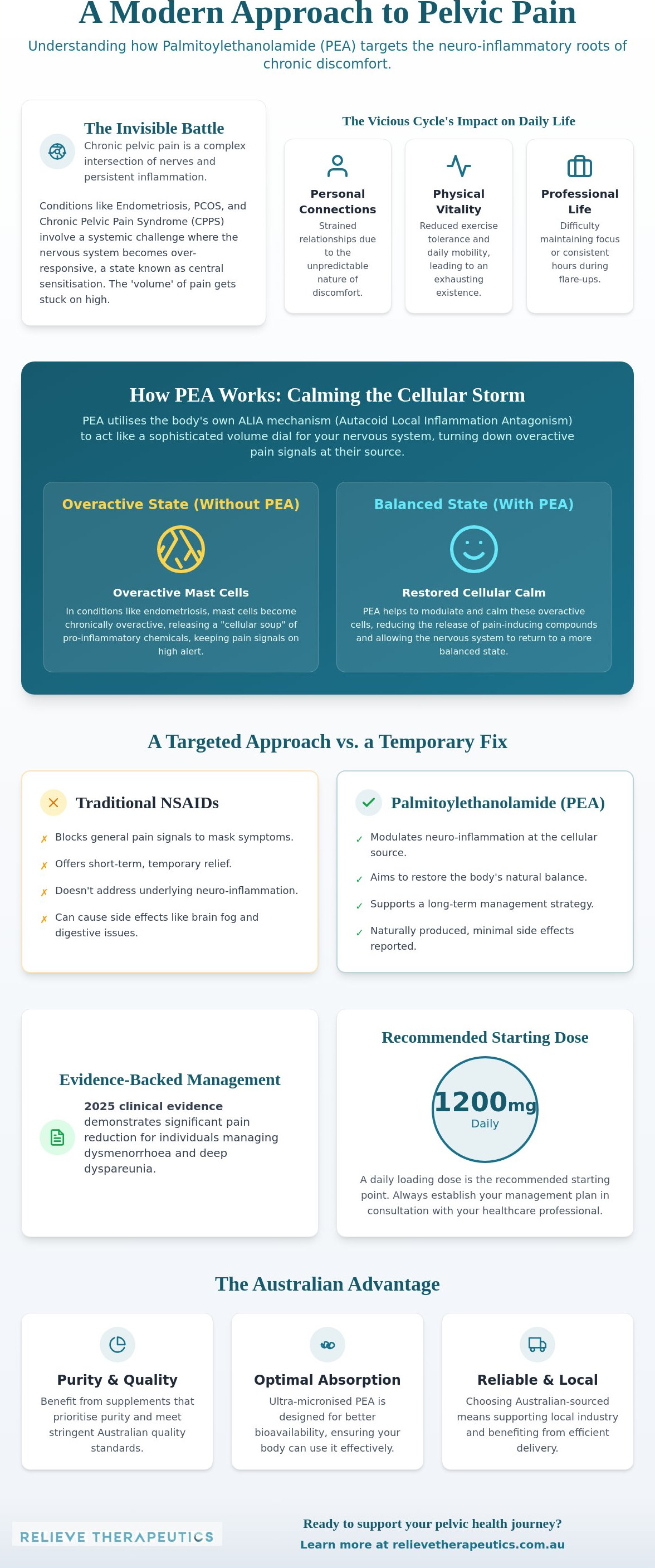
- Identify the complex intersection of nerves and inflammation that characterises chronic conditions such as endometriosis, PCOS, and CPPS.
- Examine the ALIA mechanism, which explains how palmitoylethanolamide for pelvic pain calms the cellular storm to reduce overactive pain signals.
- Review the 2025 clinical evidence demonstrating significant pain reduction for those managing dysmenorrhoea and deep dyspareunia.
- Establish a clear management plan starting with a 1200mg daily loading dose supported by professional healthcare consultation.
- Benefit from the reliability of Australian-sourced supplements that prioritise purity, absorption, and efficient local delivery.
Beyond the Surface: Understanding the Complexity of Pelvic Pain
Pelvic pain is rarely a straightforward issue. It is a complex intersection where nerves, persistent inflammation, and cellular signaling meet. For many Australians, receiving a diagnosis like endometriosis, polycystic ovary syndrome (PCOS), or chronic pelvic pain syndrome (CPPS) is only the beginning of a long journey. These conditions involve more than just localised discomfort; they represent a systemic challenge that can feel invisible to the outside world. Validation is the first step toward recovery, acknowledging that your experience is documented, real, and biologically driven.
While standard chemist-bought painkillers provide temporary relief for some, they often fail to address the underlying mechanisms of chronic distress. These treatments typically target acute symptoms rather than the neuro-inflammatory roots of the problem. Over time, the nervous system can become over-responsive, a state known as central sensitisation. In this state, the body’s pain receptors remain on high alert, even when a direct injury isn't present. The "volume" of pain is essentially stuck on high, making daily life an exhausting exercise in endurance. This is where exploring the role of Palmitoylethanolamide (PEA) becomes a vital part of the clinical conversation.
The Role of Inflammation in Pelvic Health
Chronic inflammation in the pelvic bowl creates a self-perpetuating feedback loop. This "invisible" inflammation is particularly frustrating because it often doesn't appear on standard scans or blood tests, leaving many feeling unheard by the medical system. This cycle doesn't just stay in the body; it spills over into every facet of life. The impact is often profound, affecting several key areas:
- Professional Life: Difficulty maintaining focus or consistent hours during flare-ups.
- Personal Connections: Strained relationships due to the unpredictable nature of discomfort.
- Physical Vitality: A significant reduction in exercise tolerance and daily mobility.
Why Natural Support is Gaining Ground in Australia
By 2026, there has been a significant shift in how we manage long-term discomfort. More Australians are moving away from a heavy reliance on opioids or NSAIDs, seeking management strategies that support the body's innate regulatory processes. Using palmitoylethanolamide for pelvic pain fits into a sophisticated, multi-modal plan organised alongside your GP. PEA is a fatty acid amide naturally produced by your own body in response to cellular stress. It acts as a biological regulator, helping to restore balance when the system is overwhelmed. This natural approach offers a way to manage pain intensity without the brain fog or digestive issues often associated with traditional pharmaceutical paths.
How Palmitoylethanolamide (PEA) Works: Calming the Cellular Storm
To understand how palmitoylethanolamide for pelvic pain functions, we must look at a biological process known as ALIA. This stands for Autacoid Local Inflammation Antagonism. In simpler terms, PEA acts as a sophisticated volume dial for your nervous system. When the body is trapped in a cycle of chronic discomfort, pain signals are essentially turned up too high. PEA steps in to modulate these signals, bringing the intensity back down to a manageable level by addressing the cellular sources of the distress.
Unlike standard medication that often aims to mask symptoms, PEA focuses on the underlying "cellular storm" that triggers flare-ups. It targets specific cells that have become overactive due to persistent stress or injury. By restoring a sense of calm at the microscopic level, it allows the body to return to a more balanced state. This mechanism is especially relevant for those who find that traditional painkillers no longer provide the relief they once did. A Clinical trial on PEA for inflammatory pain highlights the importance of these pathways in managing long-term health outcomes.
Targeting Mast Cells and Glial Cells
Mast cells are the body's primary first responders. In the pelvic lining, these cells are responsible for releasing a "cellular soup" of pro-inflammatory chemicals when they perceive a threat. In conditions like endometriosis or CPPS, these mast cells can become chronically overactive, releasing pain-inducing compounds even when no new injury has occurred. PEA works by "down-regulating" these cells, effectively telling them to stop the unnecessary release of inflammatory markers. For a deeper technical breakdown of this process, you can explore our guide on how does PEA work for pain.
The Endocannabinoid Connection
PEA is an endocannabinoid-like molecule, but it is important to clarify that it is entirely non-psychoactive. It works alongside the body's endocannabinoid system to support "tonal" balance, or homeostasis, within the reproductive and urinary tracts. While standard pharmaceutical interventions often disrupt natural cycles or cause significant side effects, PEA supports the body's innate ability to heal and regulate itself. It acts as a protective shield for the nerves, ensuring that the communication between the pelvic organs and the brain remains clear and calm. Restoring this internal equilibrium is a vital step toward long-term comfort. Choosing a high-quality, pure PEA supplement can be a transformative addition to your daily wellness routine.
PEA for Endometriosis and Menstrual Support: Clinical Evidence
Clinical evidence for palmitoylethanolamide for pelvic pain has reached a significant milestone with a 2025 Australian study. This research highlighted substantial reductions in Numerical Rating Scale (NRS) pain scores among participants dealing with chronic pelvic conditions. The data suggests that PEA is particularly effective for managing dysmenorrhoea, commonly known as painful periods, and deep dyspareunia. These findings provide a sense of hope and validation for those who have long felt that their symptoms were unmanageable through traditional means alone.
One of the most encouraging aspects of the clinical data is the "analgesic sparing" effect. When PEA is taken consistently, many patients find they can reduce their reliance on traditional chemist-bought painkillers or stronger prescription medications. It's important to remember that PEA is a marathon, not a sprint. While some people notice a difference relatively quickly, the primary goal is long-term cellular modulation. Consistent daily use allows the body to build up its natural defences and reset the overactive signaling pathways that drive persistent discomfort.
Endometriosis: A Case for PEA
Research specifically focusing on endometriosis shows that PEA can influence the behaviour of endometriotic lesions and the associated nerve growth that causes so much distress. By interrupting the "nerve-mast cell" crosstalk, PEA helps to lower the overall baseline of chronic sensitivity in the pelvic bowl. This targeted approach addresses the biological drivers of the condition rather than just masking the output of pain. For a more detailed look at these biological pathways, you can refer to our PEA endocannabinoid supplement guide, which provides a comprehensive reference for Australian users.
Acute vs. Chronic Pelvic Support
Understanding the difference between acute flare-up support and daily maintenance is key to a successful management plan. While PEA can be helpful during sudden peaks of discomfort, specialists often recommend a dedicated "loading" phase. This usually involves taking a higher dose, such as 1200mg daily, for the first few weeks to saturate the tissues and stabilise cellular activity. A significant advantage of this approach is the lack of "rebound" pain. Unlike some traditional medications that can leave the nervous system more sensitive once they wear off, PEA works to support the body's tonal balance, providing a steady foundation for daily life.
Practical Implementation: Dosage and Quality Standards
Implementing a new management strategy for chronic discomfort requires a methodical approach. Transitioning from clinical understanding to daily practice ensures that your body has the best opportunity to respond to the supplement's protective properties. When using palmitoylethanolamide for pelvic pain, consistency is the foundation of success. By following a structured plan, you can monitor your progress and make informed adjustments alongside your healthcare team.
To achieve the best results, we recommend a clear four-step process:
- Step 1: Professional Consultation. Always consult with your GP or specialist to ensure that PEA aligns with your broader health plan and any existing medications.
- Step 2: The Loading Phase. Start with a standard loading dose, typically 1200mg daily, for the first four to six weeks. This period allows the fatty acid amide to reach therapeutic levels within your tissues.
- Step 3: Monitor Progress. Use a pain diary to track your cycle, daily comfort levels, and mobility. This subjective data is invaluable for assessing efficacy.
- Step 4: Maintenance. Once you achieve a stable reduction in discomfort, you can transition to a maintenance dose based on your individual response and professional guidance.
Finding Your Optimal Intake
In Australia, PEA is commonly available in 300mg to 600mg capsule formats. For many, split dosing is the most effective way to maintain stable plasma levels throughout the day. Taking one dose in the morning and another at night ensures that the "volume dial" on your pain signals remains consistently modulated. For specific calculations tailored to your weight and symptoms, refer to our PEA dosage for pain reference guide.
Why Quality and Purity Matter
Not all supplements are created equal. It's vital to avoid filler-heavy products that lack the necessary concentration or purity for effective pelvic support. Low-quality options may contain additives that interfere with absorption, rendering the supplement less effective. When selecting a product, look for ultra-micronised formulas that prioritise bioavailability. You can find more details in our high quality PEA capsules buyer's guide. Sourcing your supplements from a reputable, Australian-owned business like Relieve Therapeutics ensures you receive a product held to rigorous standards. For consistent, long-term support, you can order high-purity PEA capsules directly from our local facility.
Supporting Your Pelvic Health Journey with Relieve Therapeutics
At Relieve Therapeutics, our philosophy is built upon a foundation of science-backed support delivered with genuine empathy. We recognise that managing long-term discomfort requires more than just a product; it requires a reliable partner who understands the physical and emotional toll of persistent pain. By focusing on high-purity formulations, we aim to provide Australians with the tools they need to reclaim their daily vitality and function. Choosing palmitoylethanolamide for pelvic pain is a significant step toward a more balanced life, and we are committed to supporting you at every stage of that transition.
Consistency is the most critical factor in achieving successful outcomes with PEA. To facilitate this, we prioritised the convenience of local Australian shipping, ensuring that your supply remains uninterrupted. A focused product range allows for easy daily integration, removing the complexity often found in broader supplement regimens. By providing a clean, ultra-micronised fatty acid amide, we ensure that your body receives the targeted support it needs without the interference of unnecessary additives or fillers. This disciplined approach to quality reflects our commitment to your long-term health outcomes.
Choosing Your Supply: 60, 120, or 180 Capsules
Selecting the right quantity is an essential part of organising your management plan. For those who are new to this natural approach, we recommend the PEA 60 capsules as an ideal starter pack. This allows you to begin the loading phase and monitor your initial response. For established users, the PEA 120 capsules provide a strategic two-month supply, ensuring you have enough on hand to maintain stable cellular modulation. If you are managing a chronic condition and require the most cost-effective solution, our PEA 180 capsules offer the best value for sustained, long-term support.
The Relieve Therapeutics Difference
Our commitment to purity is what sets us apart within the Australian wellness community. We avoid the complex additives that can often clutter supplement labels, focusing instead on the integrity of the active ingredient. This transparency creates an atmosphere of safety and professional care, positioning us as a trusted ally in your personal health journey. We believe that everyone deserves to feel heard and supported when navigating chronic discomfort. We invite you to take the first step toward restoration and comfort today. View our full range of PEA capsules and begin your support journey today.
Taking the Next Step Toward Pelvic Wellness
Managing chronic pelvic discomfort requires a shift from chasing surface-level symptoms to supporting genuine cellular balance. By targeting the overactive mast cells and nerve signaling pathways that drive persistent distress, PEA offers a sustainable, biology-based alternative to traditional interventions. Success with this approach is grounded in consistency, particularly during the initial loading phase where tissue saturation is critical for achieving long-term results.
Relieve Therapeutics is a proudly Australian owned and operated specialist, dedicated to providing high-purity, ultra-micronised formulations. Our direct-to-consumer local shipping ensures your management plan remains uninterrupted, allowing you to focus on your restoration and daily vitality. If you're ready to explore the science-backed benefits of palmitoylethanolamide for pelvic pain, we're here to act as your reliable partner in health.
Order your high-quality PEA capsules from Relieve Therapeutics today.
You deserve to feel heard, validated, and empowered as you move toward a more comfortable and balanced life.
Frequently Asked Questions
Can I take Palmitoylethanolamide for period pain specifically?
Yes, you can use palmitoylethanolamide for pelvic pain specifically related to your menstrual cycle. It works by down-regulating the mast cells in the uterine lining that release pro-inflammatory chemicals during your period. This targeted action helps reduce the intensity of cramps and associated lower back discomfort. Unlike some chemist-bought options, PEA doesn't disrupt your natural hormonal balance, making it a reliable choice for long-term menstrual support.
How long does it take for PEA to start working for pelvic pain?
Most people notice a significant improvement within four to eight weeks of consistent daily use. Because PEA works by modulating cellular pathways rather than just masking symptoms, it requires a loading phase to reach therapeutic levels in your system. We typically recommend starting with 1200mg daily for the first month. Patience is key, as the cumulative effect on your nervous system provides more stable relief over time than acute treatments.
Are there any side effects when using PEA for endometriosis?
Clinical trials and real-world studies generally report that PEA is well-tolerated with minimal side effects. The most common issue noted is a mild upset stomach, which can often be managed by taking the capsules with food. Because PEA is a fatty acid amide naturally produced by your own body, it lacks the heavy side-effect profile associated with long-term NSAID use, such as gastric ulcers or kidney strain.
Can I take PEA alongside my prescription hormonal treatments?
Yes, PEA can generally be taken alongside prescription hormonal treatments as it has no known drug-drug interactions. It acts on different biological pathways, focusing on neuro-inflammation and mast cell activity rather than hormone regulation. This makes it an excellent complementary support for those already using the pill or other therapies. It's always best practice to organise a chat with your GP to ensure it fits your specific plan.
Is PEA safe to take if I am trying to conceive?
While PEA is a naturally occurring molecule in the human body, clinical data specifically regarding its use during pregnancy or while trying to conceive is currently limited. Most specialists suggest a cautious approach. If you are planning to start a family, it is essential to consult with your fertility specialist or obstetrician before starting any new supplement. They can help you weigh the benefits for your pelvic health against your reproductive goals.
Why is PEA becoming popular among Australian pelvic pain specialists?
Australian specialists are increasingly recommending PEA because it addresses the neuro-inflammatory roots of chronic pain that traditional medications often overlook. It offers a non-opioid, non-addictive alternative for managing complex conditions like endometriosis and CPPS. The growing body of clinical evidence, including the 2025 Australian research, provides the scientific rigor that medical professionals require to confidently integrate PEA into a multi-modal pain management strategy.
What is the difference between micronised and standard PEA for absorption?
Micronised PEA has a much smaller particle size than standard powder, which significantly enhances its absorption and bioavailability. Because PEA is a fat-soluble substance, large particles are difficult for the body to process efficiently. Micronisation increases the surface area of the molecule, allowing it to enter the bloodstream more effectively. This ensures that a higher percentage of the active ingredient reaches the targeted cells in your pelvic bowl.
How many PEA capsules should I take daily for chronic pelvic discomfort?
For chronic pelvic discomfort, we generally recommend a loading dose of two 600mg capsules daily, taken as one in the morning and one at night. This 1200mg total helps stabilise cellular activity during the first few weeks of use. Once you feel your symptoms have reached a manageable level, you may choose to transition to a maintenance dose of one 600mg capsule daily to sustain your long-term comfort and mobility.