

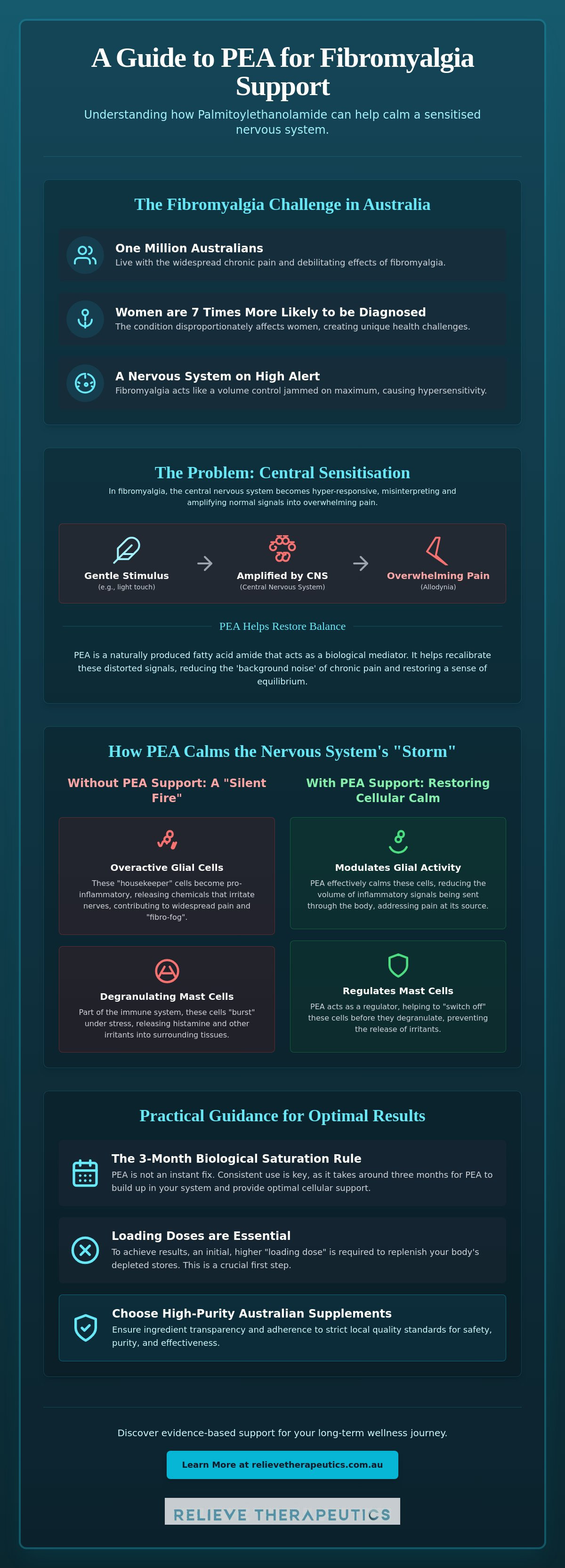
With as many as one million Australians currently navigating the complexities of fibromyalgia, the search for relief often feels like an uphill battle against one's own nervous system. For the significant majority of those affected, particularly women who are seven times more likely to be diagnosed, the condition behaves like a volume control dial that has been jammed in the maximum position.
We understand the frustration of balancing widespread chronic pain and debilitating fibro-fog against the undesirable side effects of many prescription therapies. You're likely looking for a way to support your body's natural resilience without the heavy-headedness that can accompany standard pharmaceutical options. This guide demonstrates how the fatty acid amide known as palmitoylethanolamide fibromyalgia support can help modulate overactive glial cells and calm central sensitisation. By understanding the biological mechanism of this naturally occurring molecule, you can discover a path toward reduced pain scores and restored sleep quality. We will explore the latest clinical insights into PEA and how it acts as a gentle, evidence-based ally for your long-term wellness journey.
Key Takeaways
- Understand fibromyalgia as a disorder of central sensitisation and how PEA acts as a natural modulator for an overactive nervous system.
- Discover how palmitoylethanolamide fibromyalgia support targets overactive glial cells to help manage both widespread physical discomfort and the cognitive effects of fibro-fog.
- Learn why clinical evidence suggests that PEA serves as an effective add-on therapy to enhance the results of your current management plan.
- Identify the importance of the three-month biological saturation rule and the specific loading doses required to achieve optimal cellular support.
- Recognise the benefits of choosing high-purity, Australian-sourced supplements that ensure ingredient transparency and adhere to strict quality standards.
Understanding Fibromyalgia and the Role of Palmitoylethanolamide
Fibromyalgia is not simply a matter of muscle ache or persistent fatigue. It is a complex disorder of central sensitisation where the brain and spinal cord become hyper-responsive to stimuli that would typically be considered harmless. For those living with the condition, the central nervous system remains locked in a high-alert state. This persistent hypersensitivity creates a cycle of discomfort that traditional methods often fail to break. This is where the relationship between palmitoylethanolamide fibromyalgia management becomes vital. By addressing the underlying chemical imbalances in the nervous system, we can move beyond surface-level symptom relief toward genuine biological support.
What is Central Sensitisation?
When your nervous system is stuck on high alert, even the gentlest touch can feel overwhelming. This phenomenon, known as allodynia, occurs because the neural pathways responsible for processing pain have become distorted. Instead of filtering out minor signals, the brain amplifies them; it distorts them; and it perceives them as threats. Palmitoylethanolamide (PEA) acts as a biological mediator in this process. It supports the nervous system in recalibrating these signals. This molecule helps reduce the background noise of chronic pain and assists the body in regaining a sense of physical equilibrium.
The Biological Origin of PEA
PEA is a fatty acid amide that our bodies produce naturally as a protective response to stress or injury. While trace amounts are found in common foods like egg yolks, soy lecithin, and peanuts, these dietary sources are rarely sufficient to address clinical needs. Under normal conditions, your cells synthesise PEA to protect tissues from damage and resolve inflammation. However, chronic conditions like fibromyalgia can exhaust these natural stores. When production can no longer keep pace with the demand for neuroprotection, supplemental PEA provides the necessary resources to support the body's internal repair mechanisms.
Researchers have proposed that chronic pain states might be linked to a PEA deficiency. Much like a vitamin deficiency, a lack of available PEA leaves the nervous system vulnerable to over-excitation. By reintroducing this molecule, we aren't introducing a foreign chemical. We are replenishing a natural component that the body already recognises and utilises. This approach aligns with a modern understanding of restorative health. It focuses on precision, safety, and the restoration of natural function. For many Australians, using palmitoylethanolamide fibromyalgia support provides a way to work with the body's own chemistry to restore balance and improve daily vitality.
How PEA Works: Calming the "Storm" in the Nervous System
To understand why traditional pain relief often falls short, we must look beyond the nerves and focus on the cells that support them. Glial cells are the essential "housekeepers" of your central nervous system. They manage waste, provide nutrients, and maintain the delicate balance required for healthy neural function. In a healthy state, these cells are quiet and protective. However, in cases of palmitoylethanolamide fibromyalgia distress, these housekeepers become over-vigilant. They transform into pro-inflammatory agents, releasing a cascade of chemicals that irritate the very nerves they are meant to support.
The Glial Cell Connection
This overactivity creates what researchers often describe as a "silent fire" within the brain and spinal cord. When glia are perpetually activated, they release inflammatory cytokines that contribute to the widespread pain and the cognitive clouding known as "fibro-fog." PEA works by effectively calming these cells. By modulating glial activity, it reduces the volume of inflammatory signals being sent through the body. This mechanism is a cornerstone of How PEA Works in the Nervous System to restore a state of calm. It doesn't just mask the sensation; it addresses the cellular environment that generates the pain in the first place.
Beyond glial cells, PEA also targets mast cells, which are part of your immune system. These cells often "degranulate" or burst open during periods of stress, releasing histamine and other irritants into the tissues. PEA acts as a regulator that helps "switch off" these mast cells before they can contribute to the systemic inflammation common in fibromyalgia patients. Managing this cellular storm is essential for long-term comfort, which is why many Australians choose to buy PEA capsules to support their daily routine.
PEA and the Endocannabinoid System
While often discussed alongside CBD, PEA is a distinct "sister molecule" with a unique mode of action. It is technically an autocoid that works within the broader endocannabinoid system. Unlike certain cannabinoids, PEA does not bind directly to the CB1 or CB2 receptors. This means it provides support without any psychoactive effects or "headiness." Instead, it performs a vital role through the "entourage effect." It inhibits the breakdown of your body's own natural cannabinoids, such as anandamide, effectively boosting your internal ability to manage discomfort and stress.
By preventing the premature degradation of these compounds, PEA allows your body's natural chemistry to work more efficiently for longer periods. This synergy is a primary reason why it is considered a premier PEA endocannabinoid supplement. It empowers the nervous system to return to a state of homeostasis. This gentle yet profound modulation is key to managing the complex, multi-layered symptoms that define the palmitoylethanolamide fibromyalgia experience. It provides a sophisticated, biological solution for those seeking to regain control over their daily function.
PEA as an Add-On Therapy for Fibromyalgia Management
Many Australians living with fibromyalgia find that standard pharmaceutical interventions, while helpful for some, often leave significant gaps in their daily comfort. It is a common frustration: you follow your prescribed regime, yet the sudden "flares" and persistent aches remain. It's common for first-line medications like amitriptyline or duloxetine to provide only partial relief; this leaves patients to manage difficult breakthrough pain on their own. This is where the strategic use of palmitoylethanolamide fibromyalgia support becomes a valuable asset. Rather than acting as a total replacement for existing treatments, PEA functions as a potent synergistic partner that works alongside your current medications to create a more robust layer of protection.
Clinical evidence suggests that when PEA is integrated into a standard management plan, patients often report improved daily function and lower overall pain scores compared to using pharmaceuticals alone. Because PEA is an endogenous substance, it rarely interferes with the metabolic pathways of common fibromyalgia drugs. It is generally well-tolerated. This allows for a smoother integration into a multifaceted care programme without the risk of traditional drug-to-drug interactions. By lowering the baseline of sensitivity in the nervous system, PEA can help reduce the frequency and intensity of those breakthrough episodes that often disrupt your work and social life.
Standard Meds vs. Natural Support
Traditional nerve medications primarily work by altering neurotransmitter levels or blocking electrical signals. While effective, these pathways often come with side effects like drowsiness, weight gain, or heightened "brain fog." In contrast, non-opioid pain relief supplements like PEA offer a distinct biological route to comfort. By targeting glial inflammation, PEA addresses the root cause of the neural "storm" rather than just masking the sensation. This targeted approach typically lacks the cognitive side effects associated with standard pharmaceuticals, making it an attractive baseline support for long-term use.
Talking to Your Aussie GP
Maintaining transparency with your GP is a critical step in managing a complex condition. When discussing palmitoylethanolamide fibromyalgia options, it helps to use clear, clinical language. You might describe PEA as an "endogenous fatty acid amide used for glial cell modulation and neuroprotection." This helps your doctor understand that you are adding a natural molecule already present in the body to support nerve stability. A comprehensive approach including gentle exercise, pacing, and psychological support remains the gold standard for success. By combining these strategies, you create a robust framework for recovery that addresses both the physical and neurological aspects of your health.
Practical Dosing and Expectations for Fibromyalgia Patients
Implementing a new supplement into your routine requires a shift in mindset, particularly when moving from fast-acting pharmaceuticals to biological modulators. Unlike traditional analgesics that offer a temporary block of pain signals, palmitoylethanolamide fibromyalgia support works by gradually stabilising the cellular environment. This process is not instantaneous. It requires a consistent daily intake to allow the molecule to reach therapeutic levels within the tissues and the central nervous system. Success with PEA is built on a foundation of patience and precise application.
Finding Your Optimal Intake
Clinical studies investigating the efficacy of PEA for central sensitisation often utilise a "loading dose" to initiate the saturation process. A common approach involves taking 1200mg per day, typically split into two or three doses, for the first few weeks. This higher initial intake helps to rapidly replenish the body's exhausted natural stores. Once a baseline of comfort is established, many individuals transition to a maintenance dose of 400mg to 800mg daily. For a detailed breakdown of these requirements, you can consult our PEA dosage for pain guide.
While PEA is exceptionally well-tolerated, we suggest a "slow and steady" introduction for those with sensitive digestive systems. Taking your capsules with a meal containing healthy fats, such as avocado or olive oil, can significantly assist the absorption of this lipophilic molecule. Consistency is far more important than the specific hour of the day you choose. By maintaining a steady level of PEA in your system, you provide your glial cells with the constant support they need to remain in a calm, non-inflammatory state. To begin your loading phase with a reliable supply, you can order high-purity PEA capsules directly from our Australian store.
Why Patience is Paramount
The "three-month rule" is a critical concept for anyone starting palmitoylethanolamide fibromyalgia therapy. Because PEA works on a cellular level to modulate gene expression and stabilise mast cells, the benefits often accrue subtly over time. You might notice slight improvements in your "fibro-fog" or morning stiffness by the four-week mark, but the most significant support typically manifests between eight and twelve weeks of consistent use. This is the period required for biological saturation.
We encourage patients to keep a simple daily diary to track their progress. Rather than looking for a total disappearance of symptoms overnight, look for small, meaningful changes in your daily life. Are you recovering faster after gentle exercise? Is your sleep quality becoming more restorative? Is the "volume" of your widespread pain slightly lower than last month? These incremental gains are the hallmarks of a system that is successfully recalibrating. By sticking with the protocol through the initial 90 days, you give your nervous system the best possible chance to move out of a high-alert state and back toward a state of functional balance.
Choosing Quality: Australian-Sourced PEA for Long-Term Support
Selecting a supplement for long-term health requires more than a cursory glance at a label. It demands a commitment to purity, transparency, and scientific rigour. When managing the complexities of palmitoylethanolamide fibromyalgia support, the quality of the molecule is as important as the consistency of the dosage. Many generic options are cluttered with unnecessary fillers or manufactured in facilities with lax quality controls. Choosing an Australian-sourced product ensures that you receive a clean, high-purity supplement designed for optimal cellular absorption. Local sourcing also provides the benefit of faster shipping and clear accountability, ensuring your protocol is never interrupted by international logistics delays.
The Relieve Therapeutics Difference
At Relieve Therapeutics, we avoid the distractions of hyperbolic marketing fluff. We focus on substance. Our range is structured to support every stage of your recovery journey with three distinct tiers:
- PEA 60 Capsules: Ideal for those beginning their initial introduction to the molecule.
- PEA 120 Capsules: Designed for individuals observing steady progress and entering the second month of support.
- PEA 180 Capsules: Our most efficient option for sustained, long-term management and biological saturation.
We position ourselves as a trustworthy specialist in the Australian wellness space. We understand that fibromyalgia management is a marathon, not a sprint. By offering larger quantities like our 180-capsule bottle, we help you adhere to the three-month rule essential for recalibrating the nervous system. This ensures you have a reliable, uninterrupted supply of the high-purity PEA your glial cells require to maintain a state of calm.
Taking the Next Step
Your path toward managing central sensitisation is a partnership with your own biology. It's about giving your nervous system the precise tools it needs to restore its own balance. Natural support through high-quality PEA is a science-backed, dignified choice for those seeking to reclaim their daily vitality without the burden of heavy side effects. It provides a way to support your body's internal repair mechanisms while you continue with your broader multidisciplinary care plan.
We invite you to view our complete range and select the supply size that best fits your current goals. Whether you are just starting or are ready to commit to long-term maintenance, our palmitoylethanolamide fibromyalgia solutions provide the reliability you deserve. Visit our product page today to choose your PEA capsules and begin the next chapter of your health journey.
Restoring Balance to Your Nervous System
Managing the complexities of fibromyalgia requires a transition from simply masking symptoms to supporting the nervous system's internal architecture. By modulating glial cell activity and addressing the root of central sensitisation, you can help your body regain its natural equilibrium. This science-backed approach offers a path toward reduced pain scores, improved sleep quality, and a clearer mind without the heavy side effects often associated with traditional nerve medications.
Consistency is your greatest ally in this journey. Whether you're starting with a loading dose or maintaining long-term progress, choosing high-purity, Australian-sourced supplements ensures your body receives the exact support it needs. As an Australian owned and operated specialist, Relieve Therapeutics is dedicated to providing pure PEA capsules with discreet and fast local shipping across the country. We invite you to explore our range of high-quality PEA capsules and start your journey toward natural support today.
Embracing palmitoylethanolamide fibromyalgia support means choosing a reliable partner in your long-term wellness. You don't have to navigate this path alone. With the right biological tools and a commitment to quality, a more comfortable and vibrant daily life is within your reach.
Frequently Asked Questions
Is Palmitoylethanolamide safe to take with my current fibromyalgia medication?
PEA is generally safe to integrate with your existing fibromyalgia medications. Because it is an endogenous molecule already present in your body, it doesn't typically interfere with the metabolic pathways of common prescriptions like amitriptyline or duloxetine. We always recommend informing your GP of any new supplements to ensure your management plan remains coordinated and safe.
How long does it take for PEA to start working for fibromyalgia pain?
Most individuals observe subtle improvements within the first four weeks of consistent use. However, achieving biological saturation and significant symptom support usually requires a period of eight to twelve weeks. This "three-month rule" allows the molecule to effectively modulate glial cell activity and stabilise the nervous system on a cellular level.
Does PEA have any common side effects for people with sensitive systems?
PEA is exceptionally well-tolerated and lacks the "headiness" or cognitive side effects common with standard nerve medications. In rare instances, some individuals with highly sensitive systems might experience mild digestive upset. Taking your capsules with a meal containing healthy fats often resolves this issue and assists with the absorption of the supplement.
Can I take PEA if I also suffer from chronic fatigue syndrome alongside fibromyalgia?
You can certainly utilise PEA if you manage both chronic fatigue syndrome and fibromyalgia. These conditions often share the underlying mechanism of central sensitisation and neuroinflammation. By supporting the nervous system's resilience, PEA may help address the overlapping symptoms of widespread pain and persistent exhaustion that define these complex disorders.
Why haven’t I heard about PEA from my regular chemist or GP yet?
While PEA is a listed medicine with the TGA, it is not yet featured in the 2017 Australian clinical guidelines for fibromyalgia. Many healthcare providers focus primarily on PBS-subsidised pharmaceuticals. However, as research into glial cell modulation grows, more Australian practitioners are recognising palmitoylethanolamide fibromyalgia support as a valid, evidence-based addition to multidisciplinary care.
Is there a specific time of day that is best to take PEA capsules?
There is no specific "best" hour of the day, but consistency is vital for maintaining steady tissue levels. We recommend splitting your daily intake into two doses, such as morning and evening, to provide round-the-clock support. Taking your capsules with food is more important than the exact clock time, as dietary fats aid in the transport of the molecule.
Can PEA help with the "fibro-fog" and cognitive issues associated with the condition?
PEA can be a valuable tool for managing the cognitive issues known as "fibro-fog." This clouding is often linked to overactive glial cells in the central nervous system that release inflammatory cytokines. By calming these cells and reducing neuroinflammation, palmitoylethanolamide fibromyalgia support helps clear the biological "noise" that interferes with concentration and mental clarity.
Do I need a prescription to buy PEA capsules in Australia?
You don't need a prescription to purchase PEA capsules in Australia. The Therapeutic Goods Administration (TGA) classifies PEA as a listed medicine or dietary supplement, allowing it to be sold legally over-the-counter. This accessibility makes it a convenient option for those seeking to enhance their standard therapies with a natural, science-backed molecule.