

You might assume that the golden glow of turmeric is the only natural answer to chronic inflammation, but for many Australians, the most effective solution isn't found in a spice rack. It's exhausting to wait weeks for results that never quite arrive, especially when you're also managing digestive sensitivity or the messy reality of yellow-stained surfaces. You deserve a strategy that addresses the root of your discomfort without the guesswork.
Choosing between PEA vs turmeric for inflammation Australia requires a clear, evidence-based understanding of how your body processes these distinct compounds. This guide provides a clinical yet empathetic comparison to help you decide whether the traditional golden spice or a body-identical fatty acid is the right fit for your recovery. We'll examine how each supplement interacts with your nervous system, why recent TGA label changes for curcumin matter for your safety, and how to organise a daily routine that prioritises both comfort and long-term vitality.
Key Takeaways
- Distinguish between turmeric’s broad systemic action and PEA’s precision cell regulation to identify which mechanism best supports your specific recovery goals.
- Compare PEA vs turmeric for inflammation Australia to understand why body-identical fatty acids offer a more targeted approach for nerve-related discomfort.
- Understand the latest TGA safety requirements for curcumin and why PEA’s superior tolerability makes it a reliable alternative for those with sensitive digestion.
- Explore the clinical benefits of combining both supplements to address systemic joint stiffness alongside localised nerve sensitivity for a comprehensive wellness strategy.
- Learn how to organise a sustainable supplement routine and why starting with a smaller capsule count allows you to monitor your body's response effectively.
Understanding Natural Inflammation Support: PEA and Turmeric Defined
Australians are increasingly seeking evidence-based alternatives to traditional pharmacological interventions. This shift has placed two distinct compounds at the forefront of the natural health conversation. Comparing PEA vs turmeric for inflammation Australia reveals a choice between a botanical powerhouse and a precision biological molecule. While both offer significant support, they function through entirely different pathways within the human body. Understanding these differences is the first step toward reclaiming your daily comfort and vitality.
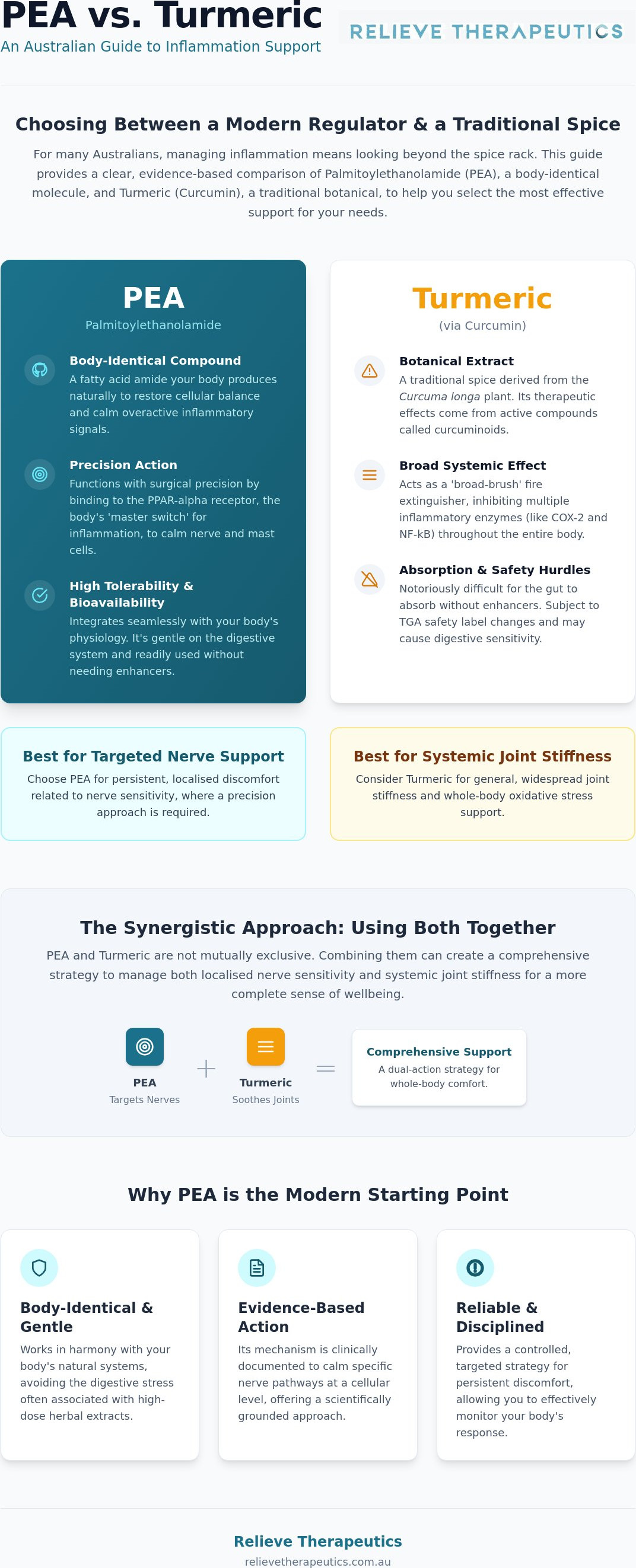
The choice between these two supplements often comes down to the nature of the discomfort. Turmeric provides a systemic approach, acting like a broad-brush fire extinguisher for general joint heat and stiffness. In contrast, PEA offers a targeted mechanism. It focuses on the cellular level to calm overactive nerves and stabilise the body's internal regulatory systems. Recognising whether your needs are systemic or targeted will help you organise a more effective daily supplement routine.
The Golden Spice: Turmeric’s Traditional Role
Turmeric is a bright yellow spice derived from the Curcuma longa plant. It has served as a cornerstone of traditional medicine for centuries, primarily used to manage general oxidative stress and joint stiffness. The therapeutic power of turmeric is driven by curcumin, a botanical polyphenol with well-documented anti-inflammatory properties. Despite its popularity, curcumin faces a significant physiological hurdle. It is notoriously difficult for the human gut to absorb efficiently. This lack of bioavailability means that standard turmeric powder often falls short of clinical expectations, requiring Australians to seek out specialised formulations that include piperine or lipid-based delivery systems to ensure the active ingredients actually reach the bloodstream.
The Biological Breakthrough: Why PEA is Different
Unlike turmeric, which is an external plant extract, Palmitoylethanolamide (PEA) is a body-identical fatty acid amide. Your body produces this molecule "on demand" as a natural protective response to tissue injury, chronic stress, or cellular imbalance. It acts as a biological regulator that works to restore homeostasis when inflammatory signals become overactive. Because it is endogenous, PEA integrates seamlessly with your existing physiology without the digestive upset often associated with high-dose herbal extracts.
It plays a critical role within the PEA endocannabinoid supplement framework. By interacting with specific receptors, it helps to switch off mast cell activation and soothe overstimulated nerves. This makes it a disciplined, evidence-based choice for those who find that traditional herbal remedies don't quite reach the source of their nerve-related discomfort. It is a modern solution grounded in human biology rather than botanical tradition.
Mechanisms of Action: How They Calm Inflammatory Pathways
To truly understand the choice between PEA vs turmeric for inflammation Australia, you must look at how these substances communicate with your cells. Turmeric functions through a broad-brush approach. It targets multiple pathways simultaneously, primarily by inhibiting the NF-kB and COX-2 enzymes that trigger systemic heat and swelling. This wide-reaching action makes it a powerful general-purpose tool for the whole body. It's often the first port of call for those dealing with general stiffness that feels spread across multiple joints.
PEA operates with surgical precision. Instead of a generic effect, it binds specifically to the PPAR-alpha receptor. The PPAR-alpha receptor is the body’s "master switch" for inflammation. By activating this switch, PEA effectively turns off mast cell activation and calms the glial cells that surround your nerves. These documented anti-inflammatory and analgesic effects highlight why PEA is often the preferred choice for persistent, nerve-related signals that turmeric might miss. It's a sophisticated way to address the root cause of discomfort at a cellular level, providing a level of control that botanical extracts often cannot match.
Turmeric and Systemic Cooling
Turmeric acts as a systemic fire extinguisher. It circulates through the entire body to address general metabolic inflammation and support gut health. Many Australians begin their journey here because turmeric is excellent for the broad, dull aches associated with lifestyle stress or dietary triggers. It provides a foundational level of cooling that benefits the whole system. This botanical approach is ideal for those experiencing general joint stiffness rather than sharp, localised nerve issues. It's a reliable, traditional method for maintaining overall wellness and reducing the oxidative stress that accumulates from daily activity. For many, it remains a staple in a well-rounded health regime.
PEA and Nerve-Specific Support
PEA is uniquely equipped to talk to the nervous system. While turmeric cools the fire, PEA dampens the alarm signals themselves. It focuses on the glial cells, which are the immune cells of the brain and spinal cord. When these cells become overactive, they create a cycle of chronic discomfort that can feel impossible to break. This precision makes PEA particularly effective for targeted issues like palmitoylethanolamide sciatica or neuropathy. It addresses the electrical side of discomfort rather than just the structural side. Consider these key differences in their focus:
- Turmeric: Targets systemic enzymes to reduce swelling and heat.
- PEA: Stabilises mast cells and glial cells to calm nerve sensitivity.
- Primary Benefit: Turmeric supports joint mobility; PEA supports nerve comfort.
If you're looking for a more direct way to manage nerve sensitivity, exploring a high-quality PEA supplement might be the next logical step in your routine. It offers a disciplined, evidence-based alternative for those who haven't found relief through traditional herbal options.
PEA vs Turmeric: The Australian Comparison Matrix
Deciding on the most effective path involves more than just comparing active ingredients. When evaluating PEA vs turmeric for inflammation Australia, practical factors like absorption rates, safety profiles, and daily convenience play a significant role in long-term success. While turmeric and its active compound, curcumin, are widely recognised for their systemic benefits, the physical experience of taking each supplement differs greatly. One is a botanical extract that often requires chemical assistance to be absorbed, while the other is a body-identical lipid that relies on physical processing for efficacy.
Bioavailability remains the primary hurdle for both. Turmeric typically requires the addition of piperine, a black pepper extract, to bypass the liver's rapid metabolism. Without it, most curcumin is simply excreted. PEA doesn't need chemical additives; instead, it relies on micronisation. This process reduces the particle size of the fatty acid, allowing it to be absorbed directly by your cells. This distinction is vital for those who prefer a "cleaner" supplement profile without unnecessary digestive stimulants.
Safety and tolerability also set these two apart. As of March 2025, the TGA requires a mandatory warning on oral curcumin medicines regarding rare risks of liver injury. While still considered safe for most, this regulatory shift highlights the importance of professional oversight. Turmeric is also known to cause gastric upset or reflux in sensitive individuals. PEA, conversely, maintains an excellent safety profile with no known drug interactions and high gastric tolerability. It's a disciplined choice for those managing complex health needs or sensitive digestion.
- Onset of Action: Turmeric can offer quicker relief for acute joint flares; PEA typically requires 4 to 8 weeks for its cumulative cellular repair effects to become fully evident.
- The Stain Factor: Turmeric powder is notorious for staining countertops, teeth, and clothing a stubborn yellow. PEA capsules are clean, white, and far easier to manage in a busy household.
- Dosing: Turmeric often requires large capsules or multiple doses; PEA is highly efficient in smaller, concentrated servings.
Which Should You Choose for Joint Stiffness?
If your primary concern is general age-related wear and tear or post-exercise soreness, turmeric is a logical starting point. Its ability to cool systemic heat makes it ideal for broad joint support. However, you should consider switching to high quality PEA capsules if your stiffness is accompanied by "shooting," "tingling," or "electric" sensations. These symptoms suggest nerve involvement that requires the targeted, glial-cell regulation that only PEA provides.
Which is Better for Nerve-Related Discomfort?
PEA is the clear specialist for neuropathic pathways. While turmeric is excellent for the "structural" side of inflammation, it often fails to reach the deep nerve signals that drive chronic sensitivity. For Australians dealing with persistent nerve issues, choosing the best supplement for neuropathy in Australia usually leads to PEA. It dampens the overactive alarm signals within the nervous system, providing a level of relief that botanical fire extinguishers simply cannot achieve on their own.
The Synergistic Approach: Can You Take PEA and Turmeric Together?
Many Australians find that their recovery journey doesn't require a strict choice between these two powerful compounds. Stacking supplements has become a common practice; it allows individuals to address multiple inflammatory pathways simultaneously. When you evaluate PEA vs turmeric for inflammation Australia, you'll find that they often perform better as a team. Turmeric acts as the systemic "fire extinguisher" for general swelling and joint heat, while PEA serves as the "nerve-calmer" that targets overactive pain signals at the cellular level.
This dual-action approach is increasingly reflected in high-end Australian formulations. By combining the botanical strength of curcumin with the biological precision of PEA, you can create a more comprehensive support system. It's a disciplined strategy that addresses both the structural and electrical aspects of discomfort. You should always organise your supplement routine under the guidance of a qualified Australian healthcare professional to ensure the combination is appropriate for your specific health history.
Maximising Absorption
Both curcumin and PEA are lipid-soluble, meaning they require fat to be effectively absorbed by the body. To improve uptake, try taking your supplements alongside a healthy fat source such as avocado, olive oil, or a handful of nuts. This simple adjustment ensures the active ingredients bypass the digestive process and reach your cells where they're needed most. Consistency is more important than specific dose timing. Your goal is to maintain steady levels in your system over time. We recommend keeping a daily symptom log for 30 days when starting a combined protocol. This allows you to track subtle shifts in your mobility and comfort levels as the cumulative effects of the supplements begin to take hold.
Safety and Australian Standards
Purity is paramount when managing long-term health. You should always verify that your supplements contain TGA-listed ingredients, which ensures they meet strict Australian safety and quality benchmarks. Choosing an Australian-owned and operated business like Relieve Therapeutics provides an extra layer of reassurance. It guarantees that the products are subject to local quality control and fast, reliable shipping. This commitment to transparency is essential for those seeking non-opioid pain relief supplements that align with a natural, evidence-based lifestyle.
If you're ready to experience the targeted benefits of a professional-grade formulation, you can browse our range of high-purity PEA capsules to find the right fit for your daily routine.
Choosing Your Starting Point: Why PEA is the Modern Choice
The regulatory landscape for supplements in Australia continues to evolve, making transparency more important than ever. In 2026, the TGA maintains strict oversight of both botanical and endogenous compounds, ensuring that your health choices are grounded in safety. When you weigh up PEA vs turmeric for inflammation Australia, the evidence suggests that PEA is the superior modern choice for precision. It is body-identical. It is nerve-targeted. It maintains a high safety profile. While turmeric offers broad systemic cooling, PEA provides the specific cellular instructions needed to calm overactive pathways and restore biological balance.
Deciding where to begin shouldn't be overwhelming. We recommend starting with a PEA 60 capsules pack to assess your body's unique response to this fatty acid amide. This initial phase allows you to monitor subtle improvements in mobility and nerve sensitivity. For those committed to long-term inflammatory support, our 180-capsule bulk packs provide a sustainable and cost-effective way to maintain a consistent routine. Natural support is not about a quick fix; it's about giving your body the right tools to organise its own healing and recovery process.
Finding Your Optimal Routine
Consistency is the foundation of any successful supplement protocol. A standard PEA dosage for pain is typically 1200mg daily, often split into two doses for steady absorption. You must remain patient as you begin this journey. Cellular modulation takes time to manifest as physical comfort; it's a gradual process of dampening overactive signals rather than an immediate mask. Ordering your supply online is simple, and our fast local shipping ensures that your recovery routine remains uninterrupted, regardless of where you are in the country.
The Relieve Therapeutics Commitment
Our focus remains fixed on providing pure, high-quality PEA without unnecessary fillers or synthetic additives. We believe in substance over style, ensuring that every capsule provides the targeted support your nervous system requires. We understand the daily toll of chronic discomfort and offer empathetic, expert-led support to help you make informed decisions. If you're looking for a long-term strategy, you can browse PEA 120 capsules to find the strategic volume that aligns with your wellness goals. We're here to act as a reliable partner in your personal health journey, providing the scientific rigour and care you deserve.
Empowering Your Path to Natural Recovery
Navigating the choice between PEA vs turmeric for inflammation Australia involves balancing traditional botanical wisdom with modern biological precision. While turmeric remains a reliable foundation for cooling systemic joint heat, PEA provides the targeted cellular support required to calm persistent nerve signals. Recognising these distinct roles allows you to organise a supplement routine that addresses your specific needs with clarity and confidence.
Relieve Therapeutics is Australian-owned and operated, ensuring local peace of mind through pure PEA formulations with no hidden nasties. We provide fast, reliable shipping to all Australian states and territories, making professional-grade support accessible wherever you are. You deserve a partner that values transparency and scientific rigour as much as you value your long-term comfort.
Restoring your daily vitality is a journey of patience and informed choices. We're here to help you take that first step toward a more comfortable future.
Frequently Asked Questions
Is PEA or turmeric better for sciatica in Australia?
PEA is generally the more effective choice for sciatica because it specifically regulates the glial cells and mast cells surrounding overstimulated nerves. While turmeric addresses systemic joint heat, sciatica is a neuropathic issue that requires the precision of a body-identical lipid. This makes PEA a disciplined alternative for Australians seeking to dampen the "shooting" or "electric" signals associated with persistent nerve compression.
Can I take PEA if I am already taking a turmeric supplement?
You can safely take PEA while already using a turmeric supplement to address different inflammatory pathways simultaneously. This synergistic approach allows turmeric to manage systemic joint stiffness while PEA focuses on calming the nervous system. When comparing PEA vs turmeric for inflammation Australia, many users find that combining both provides a more comprehensive wellness strategy that supports both structural and electrical comfort.
Does PEA have fewer side effects than high-dose curcumin?
PEA typically has a superior safety profile compared to high-dose curcumin, which is known to cause gastric upset or reflux in sensitive individuals. As of March 2025, the TGA requires mandatory warnings on curcumin labels regarding rare risks of liver injury. PEA is an endogenous molecule already produced by your body, meaning it is usually well-tolerated without the digestive sensitivity or staining often associated with botanical extracts.
How long does it take for PEA to work compared to turmeric?
Turmeric often provides quicker relief for acute joint flares, whereas PEA requires a cumulative approach over four to eight weeks to manifest full benefits. Because PEA works by modulating cellular receptors and repairing tissues at a biological level, its effects manifest gradually as levels build in your system. Patience is essential when integrating PEA into your routine, as your body needs time to restore its internal regulatory balance.
Do I need a prescription for PEA capsules in Australia?
You don't need a prescription for PEA capsules in Australia as they are regulated as complementary medicines by the Therapeutic Goods Administration (TGA). They are available as listed medicines for purchase through specialist retailers like Relieve Therapeutics and various health practitioners. This accessibility allows you to manage your wellness journey independently while still adhering to the high quality standards enforced by Australian regulatory frameworks.
Is PEA safe to take with blood-thinning medications often used in Australia?
PEA has no known drug interactions and is generally considered safe to take alongside common medications, including blood thinners. In contrast, turmeric and curcumin can have anti-platelet effects that may interfere with certain medical treatments. It's vital to discuss your specific supplement routine with a GP or specialist to ensure that your choice of PEA vs turmeric for inflammation Australia doesn't conflict with your existing medical plan.
Why is PEA called an "endocannabinoid-like" supplement?
PEA is described as an endocannabinoid-like supplement because it interacts with the endocannabinoid system (ECS) to regulate cell stress and discomfort. Although it's not derived from hemp, it works through similar biological pathways to stabilise mast cells and reduce nerve sensitivity. This allows it to support the body's internal balancing mechanisms without the regulatory complexities or psychoactive concerns associated with other substances that target the ECS.
Can I give PEA or turmeric to my pets for inflammation?
Both PEA and turmeric are frequently used in veterinary medicine to support joint and nerve health in dogs and cats. PEA is particularly valued for its excellent safety profile in animals dealing with chronic discomfort or skin sensitivities. You must seek professional veterinary advice before administering these supplements to your pets, as appropriate dosages and formulations differ significantly from those designed for human consumption.