

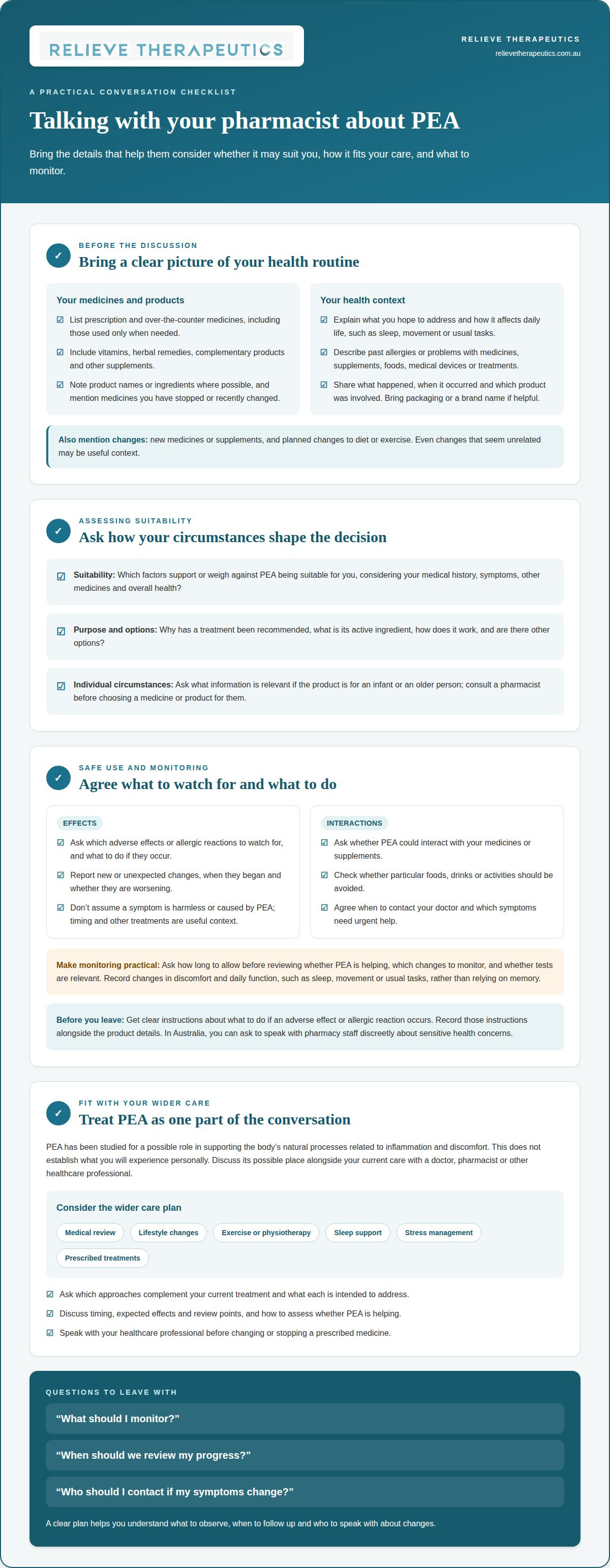
A useful conversation about PEA goes beyond whether to take a supplement. Knowing how to talk to your pharmacist about PEA means discussing whether it may suit your health, how it fits alongside your current treatment, and what side effects or interactions to watch for. Bring a list of your medicines and supplements, along with relevant health concerns, so the pharmacist can consider your circumstances.
It’s sensible to seek professional advice before starting a new supplement, particularly when you already use medicines or have questions about ongoing discomfort. This guide explains what information to bring, what to ask about PEA’s possible role and safe use, and how to find further information. You’ll also learn which questions can help clarify side effects, when to seek help, and whether PEA belongs in your overall treatment approach. A clear, open discussion can help you make a more informed decision and understand the next steps for your care.
Key Takeaways
- Prepare a clear record of your medicines, supplements and any past reactions to help your pharmacist assess whether PEA may suit you.
- Ask how PEA could fit alongside your existing care, and what factors may shape its role in your treatment approach.
- Discuss possible side effects, interactions and what to do if you notice a change in how you feel.
- Before you leave, make sure you know where to find reliable information and which questions to raise at your next appointment.
Understanding side effects and when to seek help
A pharmacist can help you understand what changes to watch for while using PEA. Ask what to do if you notice an adverse effect or unexpected reaction.
Recognising adverse and unusual effects
Ask which adverse effects or allergic reactions to watch for, and what to do if they occur. Describe any new or unexpected change after starting PEA, including when it began and whether it is worsening. Don’t assume a symptom is harmless or caused by PEA. Its timing and your other treatments are useful context, helping the pharmacist respond to your concern.
Before starting, ask how long to allow before reviewing whether PEA is helping and which changes to monitor. Responses vary, so agree on a practical way to record changes in discomfort and daily function. For example, note changes in sleep, movement or usual tasks instead of relying on memory. Ask whether tests are relevant and, if so, when they may be needed.
Considering risks and interactions
Ask whether PEA could interact with medicines or supplements you use, and whether to avoid particular foods, drinks or activities. Give the pharmacist a current list, including over-the-counter and complementary products. Mention recent changes, including medicines you’ve stopped, so the discussion reflects your full routine and clarifies which potential risks need attention.
Agree on when to contact your doctor and which symptoms require urgent help. If you experience an adverse effect or allergic reaction, ask the pharmacist what to do next. Get clear instructions before you leave, and record them alongside the product details in case symptoms change. In Australia, you can ask to speak with pharmacy staff discreetly about sensitive health concerns.
Using PEA as part of an overall treatment approach
Consider PEA as part of your wider care, not a replacement for an established treatment plan. Speak with a doctor, pharmacist or other healthcare professional before starting it. Explain what you hope to address, such as discomfort affecting sleep or movement. This gives the conversation a practical focus and helps the pharmacist consider how PEA may fit your circumstances.
PEA has been studied for its possible role in supporting the body’s natural processes related to inflammation and discomfort. That context doesn’t establish what you’ll experience personally. Ask the pharmacist what role PEA could have alongside your current care and how to review whether it is helping. Individual responses differ, so discuss which changes matter in your daily routine.
A broader care plan can include medical review, lifestyle changes, exercise or physiotherapy, sleep support, stress management and prescribed treatments. These approaches address different aspects of wellbeing. For example, discuss how a movement plan or sleep support could sit alongside prescribed care, rather than treating PEA as the whole plan. Ask which approaches complement your current treatment and what each is intended to address.
Discuss decisions about prescribed treatments with your healthcare professional. If you’re considering changing or stopping a medicine, ask first how that could affect your plan. A pharmacist can help clarify how to use medicines safely and effectively. Bring questions about timing, expected effects and review points so the conversation leads to clear next steps, not assumptions.
To make the conversation useful, ask: “What should I monitor?”, “When should we review my progress?” and “Who should I contact if my symptoms change?” You can also explore information about PEA capsules as background for your discussion. Keep the focus on how PEA fits your overall care, with your health professional helping you interpret the information alongside your treatment goals.
Assessing whether PEA is suitable
Assessing whether PEA may suit you starts with your health context, not a general answer. A pharmacist can consider your medical history, symptoms, other medicines and overall health. Explain what you hope to address and how it affects daily life, such as discomfort limiting sleep or a usual activity. These details make the discussion more relevant.
Bring a current record of everything you use, including prescription and over-the-counter medicines, vitamins, herbal products and other supplements. Note product names or ingredients where possible. This gives the pharmacist a clearer picture of your routine and helps identify details relevant to discussing whether PEA may suit you.
- List medicines you take regularly and those used only when needed.
- Include vitamins, herbal remedies and other complementary products.
- Record any medicine, supplement or treatment that caused a reaction or problem.
Past reactions matter. Tell the pharmacist about allergies or other problems involving medicines, supplements, food, medical devices or treatments. Describe what happened, when it occurred and which product was involved. If you can’t remember an ingredient, bring the packaging or write down the brand name. This information helps the pharmacist consider your circumstances.
Changes to your routine matter too. Mention a new medicine or supplement, or a planned change to your diet or exercise routine. For example, starting a new training plan may be relevant when discussing a supplement as part of your wider health plans. Share changes clearly, even if they seem unrelated to PEA.
Ask the pharmacist which factors support or weigh against PEA being suitable for you. You can also ask why a treatment has been recommended, how it works, what its active ingredient is, and whether other options exist. South Australia’s SA Health recommends discussing offered medicines with your health care team to help you make the choice that best suits you.
For an infant or an older person, consult a pharmacist before choosing a medicine or product. Their health circumstances deserve careful consideration. Ask what information would help the pharmacist assess suitability, then take time to understand the advice before deciding on a next step.
What are the side effects, risks, and interactions of PEA?
Ask a pharmacist which side effects or allergic reactions to watch for with PEA, and what to do if they occur. Don’t assume a supplement will affect you in a particular way. Tell the pharmacist about any change you notice after starting it, including when it began and whether it is worsening. These details can help guide the next step.
Interactions are another important topic. Ask whether you need to avoid any medicines, supplements, drinks, foods, activities or other products while using PEA. Include prescription and over-the-counter medicines, vitamins, herbal products and other supplements in your account. Mention recent changes too, such as a medicine you’ve stopped or a new supplement you’ve begun.
- Ask which side effects or allergic reactions need attention.
- Find out what action to take if a reaction occurs.
- Discuss whether medicines, foods, drinks or activities could affect safe use.
Bring the product packaging or ingredient details to make the conversation specific. Ask the pharmacist to explain any ingredient or interaction concern in plain language. If you use several products, discuss them together rather than considering PEA in isolation. This can help identify questions about your full routine and the information to keep for later.
Before you finish, clarify whom to contact if a reaction develops and when to seek further help. Ask what information to record, such as when you used the product and when symptoms appeared. If you’re unsure whether a change matters, describe it rather than deciding it’s unrelated. Follow the pharmacist’s advice about your next step.
For further background before a pharmacist discussion, read more about PEA. Use that information to prepare questions, not as a substitute for personalised advice. Your medicines, health history and the nature of any reaction all matter when discussing safe use.
Potential concerns include side effects or allergic reactions, as well as interactions with medicines, supplements, foods, drinks, activities or other products. Ask a pharmacist to consider these in light of your health history and full routine, and explain what to do if a reaction occurs.
Relieve Therapeutics
Relieve Therapeutics offers PEA capsules for people considering this supplement as part of their care. The range includes PEA 60 Capsules, PEA 120 Capsules and PEA 180 Capsules, so you can review the available formats while considering your needs. Discuss suitability, possible interactions and safe use with your pharmacist before deciding whether PEA fits your treatment approach. Product information can support that conversation, but it doesn’t replace personalised advice from a health professional. If you’re still weighing up your next step, take time to consider the questions raised in this guide alongside your pharmacist’s advice. For information about the available PEA capsules, contact Relieve Therapeutics.
Take your next step with confidence
Focus the conversation on the main decision you need help with: whether PEA may suit you, how it could fit your care, or what to watch for. Thinking through how to talk to your pharmacist about PEA can help you discuss your priorities and understand the advice. Write down follow-up questions too, so your next conversation stays clear and useful.
Keep your health professional involved as you consider your options. If you’d like information about PEA capsules, contact Relieve Therapeutics with your questions. Take the process at a pace that feels right, and use the information you gather to make your next step a considered one.
Frequently Asked Questions
How Is PEA Used?
PEA is taken as a dietary supplement, following the product label and professional advice. Ask your pharmacist how to take the particular product you’re considering, whether food matters, and what to do if you miss a dose. Knowing how to talk to your pharmacist about PEA can help you prepare focused questions. Bring the packaging or ingredient list so you can discuss the directions and your circumstances.
What Is PEA?
PEA, short for palmitoylethanolamide, is a fatty acid compound naturally present in the body and found in small amounts in some foods. It’s also available as a supplement. The name describes an ingredient, not a specific treatment plan. If comparing products, check that the label identifies palmitoylethanolamide and ask a pharmacist about any ingredients you don’t recognise.
What is PEA (palmitoylethanolamide) and what is it used for?
Palmitoylethanolamide is the full name of PEA, a compound studied for its possible role in supporting the body’s natural processes related to inflammation and discomfort. It doesn’t replace assessing the cause of symptoms. If discomfort is new or changing, discuss it with a healthcare professional rather than relying on a supplement alone.
Is PEA available as a medicine or supplement in Australia?
PEA is available in Australia as a dietary supplement, including capsules from Relieve Therapeutics. PEA is a supplement, not a prescription medication. It shouldn’t be treated as a prescribed medicine or as a replacement for care you already receive. Ask a pharmacist how it may fit alongside your existing treatment and health needs.
Can Australian pharmacists recommend or dispense PEA?
Australian pharmacists can help people use medicines safely and effectively, and you can ask them to discuss whether PEA may suit you. If you’re unsure how to talk to your pharmacist about PEA, start by describing the product you’re considering and the medicines you use. PEA supplements aren’t prescription medicines, so advice about using one is distinct from dispensing a prescription.
What evidence supports PEA for pain or inflammation?
PEA has been studied for its role in supporting natural processes involved in inflammation and discomfort. Relieve Therapeutics cites 600+ clinical studies and 600+ peer-reviewed studies on PEA. Those figures describe a body of research, not proof that every person will benefit. Study findings depend on the condition and study design, so discuss how relevant the evidence is to your situation with a health professional.