

A pain score is more useful when it shows a pattern, not just how difficult one day feels. For tracking pain levels while on PEA, record your low back pain intensity on a visual analogue scale (VAS), alongside where you feel it and how it feels. A low back pain pilot study collected 280 pain-score measurements and illustrated scores over 24 weeks for groups receiving tapentadol alone and tapentadol with PEA.
Pain can change with movement, rest and daily demands, so keeping a consistent record makes those changes easier to spot. It also gives you clearer information to discuss when considering how you feel while taking PEA.
This guide explains how to rate pain with a VAS, record its location and quality, and compare entries over time. You’ll also learn which other symptoms and side effects to note for a more complete picture of change.
Key Takeaways
- Use the same rating approach each time and note what you were doing, so day-to-day scores are easier to interpret.
- Describe whether pain stays in one area or spreads, and choose clear words for its quality.
- Look for patterns across your entries rather than judging change from a single difficult or easier day.
- Record other symptoms and any digestive discomfort alongside pain, giving you a fuller picture to discuss with a health professional.
Tracking low back pain with a visual analogue scale
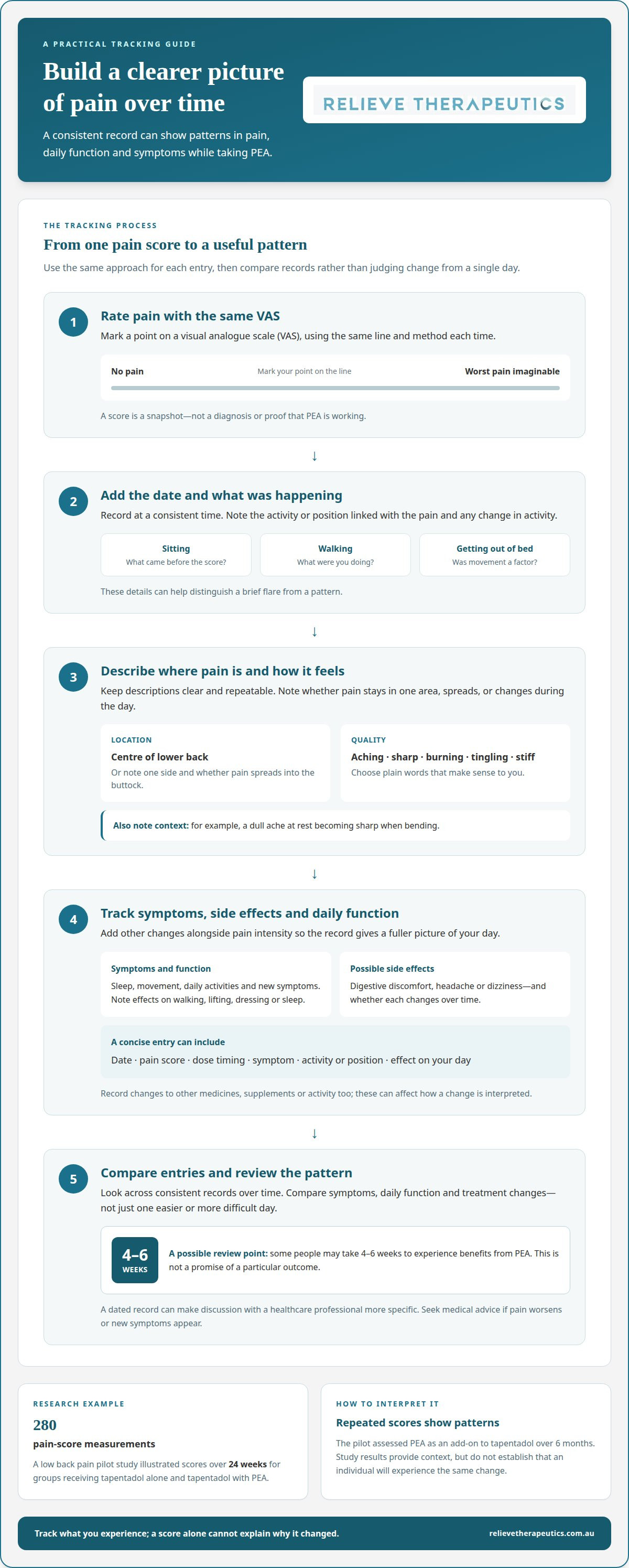
A visual analogue scale (VAS) turns a personal pain experience into a score you can compare over time. Mark a point on a line between “no pain” and “worst pain imaginable”, then record the result. Use the same line and method each time. A score is a snapshot, not a diagnosis or proof that palmitoylethanolamide (PEA) is working.
For useful tracking, make each entry at a consistent time and note what was happening. For example, record whether pain followed sitting, walking or getting out of bed. Include the date, VAS mark and any change in activity. These details can help distinguish a brief flare from a pattern in chronic pain, making comparisons more meaningful than isolated scores.
A low back pain pilot study used a VAS to measure pain intensity. It collected 280 pain-score measurements and illustrated scores over 24 weeks for groups receiving tapentadol alone and tapentadol with PEA. The pilot assessed PEA as an add-on to tapentadol over 6 months. These study details show how repeated scoring can support comparison, but they don’t establish that an individual will experience the same change.
How effective is PEA for different types of pain, according to clinical studies? Studies have examined palmitoylethanolamide for chronic and neuropathic pain, using different conditions and measures. A 2017 systematic review assessed 28 clinical trials, while a separate meta-analysis examined 11 studies involving 774 patients. Their scope shows why efficacy should be considered by pain type and study design, rather than assumed from one result.
What are the risks, side effects, and interactions of PEA? PEA is generally well tolerated, though mild digestive discomfort can occur when starting it. Speak with a healthcare professional before taking PEA or changing a treatment plan, particularly if you use other pain medicines or supplements.
Where can people in Australia get advice about PEA and pain tracking? Discuss your pain record and supplement use with a healthcare professional, who can consider your symptoms, medicines and daily function. Consistent entries make that conversation more specific.
Tracking pain changes while taking PEA
Compare consistent pain records over time, noting treatment changes and daily function. PEA research uses varied methods, so interpret personal trends and clinical trial results carefully.
Symptoms and side effects to record
Record pain intensity, sleep, movement, daily activities and new symptoms alongside PEA use. Note any digestive discomfort, headache or dizziness and whether it changes over time. These details can help distinguish a possible side effect from a change related to chronic pain or another treatment. A concise entry can include the date, dose timing, symptom and its effect on your day.
Timing a pain reassessment
A reassessment is a planned comparison of symptoms after taking PEA consistently. Some people may take 4-6 weeks to experience benefits from PEA supplementation, so compare entries across that period rather than relying on one day. Keep other treatment changes in the record, because they can affect interpretation. This timing offers a useful review point, not a promise of a particular outcome.
Clinical trials provide context, not a personal forecast. A knee osteoarthritis study compared 300 mg and 600 mg daily doses with placebo over 8 weeks; reported pain reductions differed between groups. Other trials examine PEA for different pain conditions, including neuropathic pain. Differences in condition, dose, study design and measurement matter when interpreting evidence. Randomised, controlled studies can help assess efficacy, but results don’t show precisely how an individual will respond.
PEA is an endogenous fatty acid amide. The endocannabinoid system has two known cannabinoid receptors, CB1 and CB2; recording symptoms cannot establish whether immune or receptor pathways explain a change. Track what you experience, rather than trying to infer a biological mechanism from a score. A dated record of symptoms and treatment can make a health professional’s review more specific.
How long may PEA take to affect pain, and when should I reassess? Some people may take 4-6 weeks to experience benefits, making that a practical point to review your record with a healthcare professional. Seek medical advice if pain worsens or new symptoms appear, so their cause and your treatment can be considered. A record of dose timing and symptoms can also support your review of PEA supplement information.
Pain location and quality
Record where low back pain occurs as well as its intensity. Use a simple body outline or a consistent written description, such as “centre of lower back” or “right side, spreading into the buttock”. Note whether the area changes between entries. A clear location record helps distinguish local discomfort from pain that travels elsewhere.
Describe pain quality with plain, repeatable words. For example, note whether it feels aching, sharp, burning, tingling or stiff. If it changes during the day, record the shift, such as a dull ache at rest becoming sharp when bending. These descriptions capture details a single score cannot, including features sometimes associated with neuropathic pain.
- Location: Mark the central lower back, one side, or an area where pain spreads.
- Quality: Choose a word such as aching, burning or tingling.
- Context: Record the movement or position linked with the change.
Include the effect on daily function. “Stiff after sitting, easier to walk after standing” gives more context than “back hurts”. Note whether pain affects sleep, dressing, lifting or walking. These practical examples show how symptoms relate to daily life without treating a diary entry as a clinical diagnosis.
Keep other details consistent, too. Record changes to medicines or supplements, activity, rest and relevant meals or nutrients if they seem connected to symptoms. This helps you and a health professional consider possible influences on your response instead of attributing every change to PEA. Don’t change prescribed medication based on a pain description.
Clinical research assesses pain using different methods, including placebo comparisons and systematic reviews of trial findings. A personal record serves another purpose: it describes your experience across ordinary days. The endocannabinoid system is relevant to PEA research, but a diary cannot identify a biological mechanism. It can show whether pain location, quality or function changes alongside your scores.
What symptoms and side effects should I record while taking PEA?
A useful record covers more than pain intensity. Note changes in movement, sleep, mood and digestion while taking PEA. Entries can help you describe what changed, when it began and whether it affected everyday activities. They cannot identify the cause on their own, so record observations without assuming PEA or another treatment is responsible.
Include the date, time, PEA dose timing and any changes to medicines or supplements. For example, write “new digestive discomfort after starting PEA” rather than simply “felt unwell”. Describe whether it eased, continued or affected eating and daily tasks. Mild side effects, including gastrointestinal discomfort, headache or dizziness, can occur. A clear timeline helps a health professional consider the symptom alongside other possible influences.
- Pain and movement: Note whether pain interfered with walking, bending, sitting or sleep.
- Other symptoms: Record new or changing sensations, and when they occur.
- Possible side effects: Describe digestive discomfort or another unwanted change, including its effect on your routine.
- Treatment context: Note changes to PEA use, medicines, supplements or activity.
Keep descriptions specific and neutral. “Woke during the night because my back hurt” gives more context than “poor sleep”. Likewise, “nausea began after breakfast” records timing without proving a connection. A consistent format makes patterns easier to discuss and reduces reliance on memory during an appointment.
Share your record with a healthcare professional if symptoms worsen, new effects concern you, or you’re considering changing a treatment plan involving PEA and other pain medicines. Discussing all your medicines and supplements helps them consider possible interactions and a safe next step. Don’t stop or alter prescribed medication based only on a diary entry.
If you’re considering PEA as part of your supplement routine, explore PEA capsule options and discuss their suitability with a healthcare professional before use.
Some treatment details may also matter when reviewing symptom patterns: co-micronising PEA with antioxidants such as luteolin, polydatin, quercetin or silymarin is described as especially effective. In patients with Parkinson’s disease, adding PEA to standard treatment was associated with a progressive reduction in motor and non-motor symptoms over one year. For migraine, a further dose of PEA 2 hours after the initial migraine dose is described if needed.
Relieve Therapeutics
Relieve Therapeutics offers PEA capsules in 60, 120 and 180 capsule supplies for people considering PEA as part of their supplement routine. Choosing a supply size doesn’t determine whether PEA will reduce pain, so keep using your pain record to note changes in intensity, location, quality and daily function over time.
Before starting PEA, discuss your symptoms, medicines and supplement use with a healthcare professional. Your record can help make that conversation specific, while the product options provide a straightforward way to choose a capsule supply that suits your plans.
For questions about PEA capsules, contact Relieve Therapeutics.
Make your next step informed
Use your record to guide a conversation about what matters most in your day, whether that’s getting through work, moving more comfortably or returning to a valued activity. Tracking pain levels while on PEA can help you describe your experience clearly, but consider it alongside your overall health and treatment plan.
Bring your observations and questions to a healthcare professional before starting PEA or changing how you manage pain. Their guidance can help you weigh potential benefits, possible side effects and other medicines or supplements in your routine. A considered decision is more useful than relying on a single score or general expectation.
If you’d like to discuss PEA capsules, contact Relieve Therapeutics. Keep asking questions and take each step with care.
Frequently Asked Questions
How can I track pain levels while taking PEA?
Use one consistent pain scale and record entries in a diary or phone note. For each entry, include the date, score and a brief note about unusual changes, such as a demanding day or disrupted sleep. Review the record with a healthcare professional when discussing PEA. Tracking pain levels while on PEA is most useful when your notes reveal a pattern rather than isolated highs and lows.
What pain scale is best for monitoring chronic pain at home?
A visual analogue scale is a practical option if marking a line feels straightforward; a numbered rating scale may be simpler to enter in a diary. Choose a format you can use consistently, then keep its instructions and endpoints the same. Switching scales makes comparisons less clear. The most useful home scale is one you understand and can apply reliably on both easier and more difficult days.