

Repetitive strain injury (RSI) is tissue damage that develops over time from repeated demands on muscles, tendons, nerves or ligaments, rather than from one sudden injury. It often affects the upper body and may cause aching or sharp pain, stiffness, weakness, tingling or numbness. If you’re considering PEA for repetitive strain injury (RSI), start by understanding the condition and what may contribute to it.
Discomfort that builds gradually and interferes with work, sport or everyday activities can be frustrating. This guide explains how RSI may feel, which repeated movements and working conditions can contribute, and why symptoms vary from person to person. It also explains where PEA fits into the discussion, without treating a supplement as a substitute for understanding the underlying strain.
Key Takeaways
- Notice how repeated movements, forceful tasks and awkward working positions may contribute to strain over time.
- Learn which people and activities may be associated with RSI, from repetitive work to sport and performing arts.
- Recognise possible signs such as aching, stiffness, weakness, tingling or numbness, which can develop gradually.
- Understand how RSI differs from a sudden injury and why identifying the repeated demands involved can help make sense of symptoms.
Occupational and activity-related risk factors
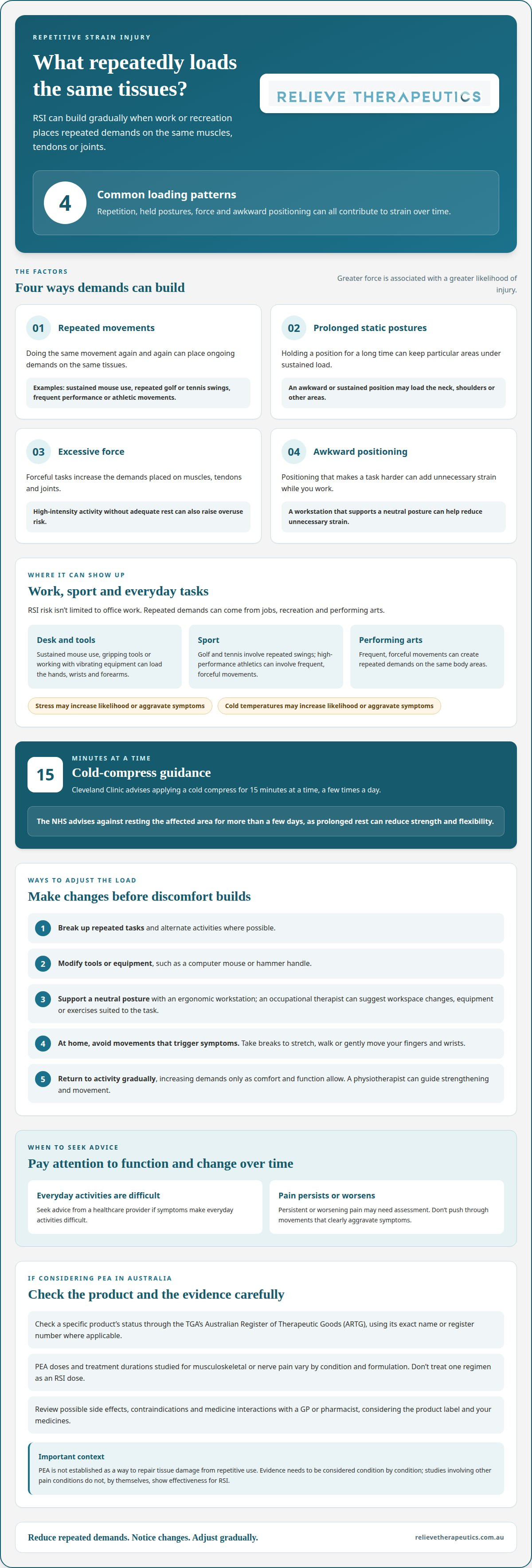
RSI can develop gradually when work or recreation repeatedly loads the same muscles, tendons or joints. Repetitive movements, prolonged static postures, excessive force and awkward positioning can all contribute. Sustained mouse use, gripping tools or working with vibrating equipment, for example, may place ongoing demands on the hands, wrists and forearms.
RSI risk isn’t limited to office work. Golf and tennis involve repeated swings, while high-performance athletics and performing arts can require frequent, forceful movements. Stress and cold temperatures may increase the likelihood of RSI or aggravate existing symptoms. High-intensity activity without adequate rest can also raise overuse risk, and greater force is associated with a greater likelihood of injury.
Adjust the demands before discomfort builds. Break up repeated tasks, alternate activities and modify tools or equipment, such as a computer mouse or hammer handle. An ergonomic workstation that supports a neutral posture can reduce unnecessary strain. An occupational therapist can suggest workspace changes, equipment or exercises suited to the task.
At home, avoid movements that trigger symptoms, and take breaks to stretch, walk or gently move your fingers and wrists. Cleveland Clinic advises applying a cold compress for 15 minutes at a time, a few times a day. The NHS advises against resting the affected area for more than a few days, as prolonged rest can reduce strength and flexibility.
Return to activity gradually, increasing demands only as comfort and function allow. If symptoms make everyday activities difficult, seek advice from a healthcare provider. Persistent or worsening pain may need assessment. A physiotherapist can guide strengthening and movement as you resume work, sport or other activities.
In Australia, check a specific product’s status through the TGA’s Australian Register of Therapeutic Goods (ARTG), using its exact name or register number where applicable. PEA doses and treatment durations studied for musculoskeletal or nerve pain vary by condition and formulation, so don’t treat one regimen as an RSI dose. Review possible side effects, contraindications and medicine interactions with a GP or pharmacist, considering the product label and your medicines.
What is a repetitive strain injury?
Repetitive strain injury describes tissue problems linked to repeated demands over time, rather than one sudden trauma. The term covers different conditions, so the affected movement and body area matter.
Defining Repetitive Strain Injury
RSI is an umbrella term for damage or irritation involving muscles, tendons, nerves or ligaments after repeated use. Repeated motion, or movement performed with poor technique, can place ongoing demands on the same tissues. People whose work or activities involve frequent repetition, including athletes and performing artists, may be at risk. Recognising the pattern helps distinguish cumulative overuse from a single injury and informs assessment and recovery.
Common RSI Conditions
Tennis elbow and computer elbow are names sometimes used for RSI affecting the elbow, reflecting activities associated with symptoms. The label can also describe broader overuse problems involving the forearm, wrist or hand. Carpal tunnel syndrome and tendon pain are discussed in relation to repetitive use, but symptoms alone don’t confirm a diagnosis. A clinical assessment can help identify the structures involved and guide appropriate care.
Commonly Affected Body Areas
RSI commonly affects the upper body, including the fingers, hands, wrists, forearms, elbows, neck and shoulders. The location partly depends on which tissues receive repeated demands. Frequent hand movements, for example, may involve the wrist or forearm, while sustained positioning can load the neck or shoulder. Similar discomfort can therefore arise in different areas and may call for different assessments.
Palmitoylethanolamide (PEA) is a fatty-acid compound used in dietary supplements and studied in relation to pain. If you’re considering PEA for repetitive strain injury (RSI), understand that it isn’t established as a way to repair tissue damage from repetitive use.
Evidence about PEA for repetitive strain injury (RSI), tendon pain, carpal tunnel syndrome or other repetitive-use injuries needs to be considered condition by condition. Studies involving other pain conditions cannot, by themselves, show that PEA is effective for these specific problems.
Symptoms of repetitive strain injury
RSI symptoms often begin gradually. Discomfort may appear during repeated activity or linger afterwards. Early signs can be mild and easy to overlook. For example, aching around the wrist after typing may later be accompanied by stiffness, weakness or a weaker grip. Symptoms can fluctuate with activity and affect one or several areas.
The experience varies. Pain may feel burning, aching or sharp, and tenderness can occur around muscles or tendons. Other signs include swelling, throbbing, muscle cramps, tingling or numbness. Weakness may make it harder to hold a tool, type comfortably or use the affected area for long periods. These symptoms don’t identify the cause on their own.
R.I.C.E. describes four home-care measures: rest, ice, compression and elevation. It offers a simple framework for responding to discomfort, but it doesn’t establish a diagnosis or explain why symptoms began. Note which activities bring on pain, whether swelling or altered sensation occurs, and how symptoms affect daily tasks. These details can help you describe the problem during an assessment.
Typing with poor posture, gripping equipment or repeating a movement may make discomfort more noticeable during a task. Symptoms can also interfere with sleep, work or exercise if pain persists after the activity ends. Avoid pushing through movements that clearly aggravate symptoms. A physiotherapist can advise on suitable exercises and ways to restore strength and movement.
Arrange a healthcare assessment if symptoms make everyday activities difficult or continue to worsen. Seek emergency care for extreme pain, worsening swelling, discolouration or inability to move a body part normally. Persistent symptoms can become chronic, so changes in sensation, grip or movement deserve attention rather than being dismissed as ordinary tiredness.
Definition of repetitive strain injury
Repetitive strain injury (RSI) is tissue damage caused by repeated demands over time, rather than one sudden traumatic event. It is an umbrella description, not a single diagnosis, and can involve muscles, tendons, nerves or ligaments. The distinction matters: the name alone doesn’t identify which tissue is affected or what care may be appropriate.
A repeated task can gradually overload tissues when movement, force, technique and recovery are out of balance. Frequent gripping or working in an awkward position, for example, may repeatedly load the same area. Symptoms can emerge slowly, so the activity linked to discomfort may seem routine. Considering the pattern, including when symptoms appear and what eases them, helps clarify what needs assessment.
RSI isn’t a synonym for every sore arm or wrist. Tennis elbow, sometimes called computer elbow, describes an elbow-related problem associated with particular activities. Other complaints may involve the forearm, wrist or hand, but similar pain can have different causes. A healthcare assessment considers the affected area, symptoms and repeated demands before identifying a condition.
Care depends on the assessment and severity of symptoms. Activity modification and physical therapy may help address newer symptoms, while a physiotherapist can guide movement and strengthening. Some cases may need further treatment, such as injections; surgery is rarely needed for very severe RSI. Treatment varies from person to person, and rest alone may not restore comfortable function.
The practical takeaway is to treat RSI as a signal to examine repeated demands, not as a precise diagnosis. Record which movements bring on symptoms and how they affect daily function, then discuss persistent or limiting problems with a healthcare provider. Compression may be used as part of symptom management, but it doesn’t identify the underlying tissue problem. A clear assessment can help guide a suitable return to work or activity.
Relieve Therapeutics
Relieve Therapeutics offers PEA capsules for people exploring PEA as part of their approach to discomfort. Its range includes PEA 60 Capsules, PEA 120 Capsules and PEA 180 Capsules. These are dietary supplements, not a diagnosis or a treatment plan for repetitive strain injury.
Because evidence specific to RSI remains limited, PEA shouldn’t replace assessment or activity changes that address repeated strain. If symptoms affect daily tasks, worsen or include concerning changes, seek guidance from a healthcare professional. A GP or pharmacist can also help you consider a supplement in light of your health needs and medicines.
To learn more about Relieve Therapeutics’ PEA capsule options, explore the available products.
Choose your next step with care
If you’re weighing PEA for repetitive strain injury (RSI), consider it as part of a wider discussion about your health, current medicines and priorities. A GP or pharmacist can help you consider whether a supplement is suitable for you, while a clear description of your symptoms can guide what support to explore next.
PEA isn’t a substitute for assessing persistent or limiting symptoms, and evidence for its use specifically in RSI remains limited. A considered approach looks at the whole picture rather than relying on a supplement alone. Take the time you need to choose what feels appropriate for your circumstances.
For questions about PEA options, contact Relieve Therapeutics. A thoughtful next step can help you move forward with greater clarity and confidence.
Frequently Asked Questions
How soon after treatment will I feel better?
For PEA, reported onset varies: some users notice benefits within a few days, while others need several weeks of consistent use. This timing isn’t an RSI healing timeline, and symptom changes don’t establish that an injury has resolved. Keep track of pain, function and any unwanted effects, and discuss starting a supplement with a health professional, especially if you take medicines.
So, how long does it take to heal?
Recovery depends on injury severity and whether the aggravating demands can be changed. Mild RSI may take 2-6 weeks to recover from, while moderate cases may take 6-12 weeks. Severe or chronic problems can take several months or longer. If symptoms persist or limit daily activities, seek assessment rather than relying on a general timeframe to judge your progress.
What is RSI & Why Does it Happen?
RSI is a broad term for tissue problems associated with repeated use, rather than a single accident. It may develop when work or sport repeatedly loads tissues, particularly with force, awkward technique or limited recovery. The label doesn’t identify the precise condition. Persistent hand, wrist, forearm or elbow symptoms may need assessment to distinguish causes, including tendon problems and nerve compression.
What questions should I ask my doctor?
Describe when symptoms began, which tasks bring them on and how they affect work or sleep. Ask what diagnosis could explain the pattern, whether further assessment is appropriate and which activities to modify while recovering. If you’re considering PEA, mention your medicines, supplements and health conditions, and ask whether it’s suitable alongside your current care.
When should I see my healthcare provider?
Arrange an assessment if RSI symptoms make everyday activities difficult or keep worsening. Seek emergency care for extreme pain, worsening swelling, discolouration or difficulty moving a body part normally. Bring a brief record of affected activities and symptom changes to help explain what has changed and when. Prompt assessment is especially important when symptoms interfere with usual function.
Which RSI treatment should you choose?
Choose care according to the affected area, suspected cause and impact on daily function. For symptoms less than six to eight weeks old, activity modification and physical therapy are suggested starting points. A clinician can tailor care after assessment. If you’re considering PEA as a supplement, discuss it alongside your treatment plan rather than using it instead of changes that address the repeated strain.