

A gout flare can turn a joint suddenly painful, hot and swollen. Starting treatment within the first 24 hours may lessen its length and severity, while PEA for gout pain management is a separate question: PEA may help regulate pain and inflammation, but acute gout flares are commonly treated with anti-inflammatory medicines or colchicine.
During a gout flare, it’s understandable to look for relief and ask which options may help. Gout often affects the big toe, but it can also involve joints in the feet, ankles, knees, hands, wrists or elbows.
This article explains what gout is, how acute flares are treated and which medicines may ease pain and inflammation. It also covers PEA, its potential role in pain and inflammation, and what to consider before using a supplement alongside gout treatment.
Key Takeaways
- Recognising a flare early matters: starting treatment within the first 24 hours may help reduce its length and severity.
- Anti-inflammatory medicines and colchicine are common flare treatments, but health conditions and side effects can affect which option is suitable.
- PEA is a naturally occurring fatty acid amide that may help regulate pain and inflammation; it isn’t a substitute for acute gout treatment.
- Learn what to consider about PEA forms and dosage, and how Relieve Therapeutics’ capsule options fit into the discussion.
1. Acute gout flare treatment
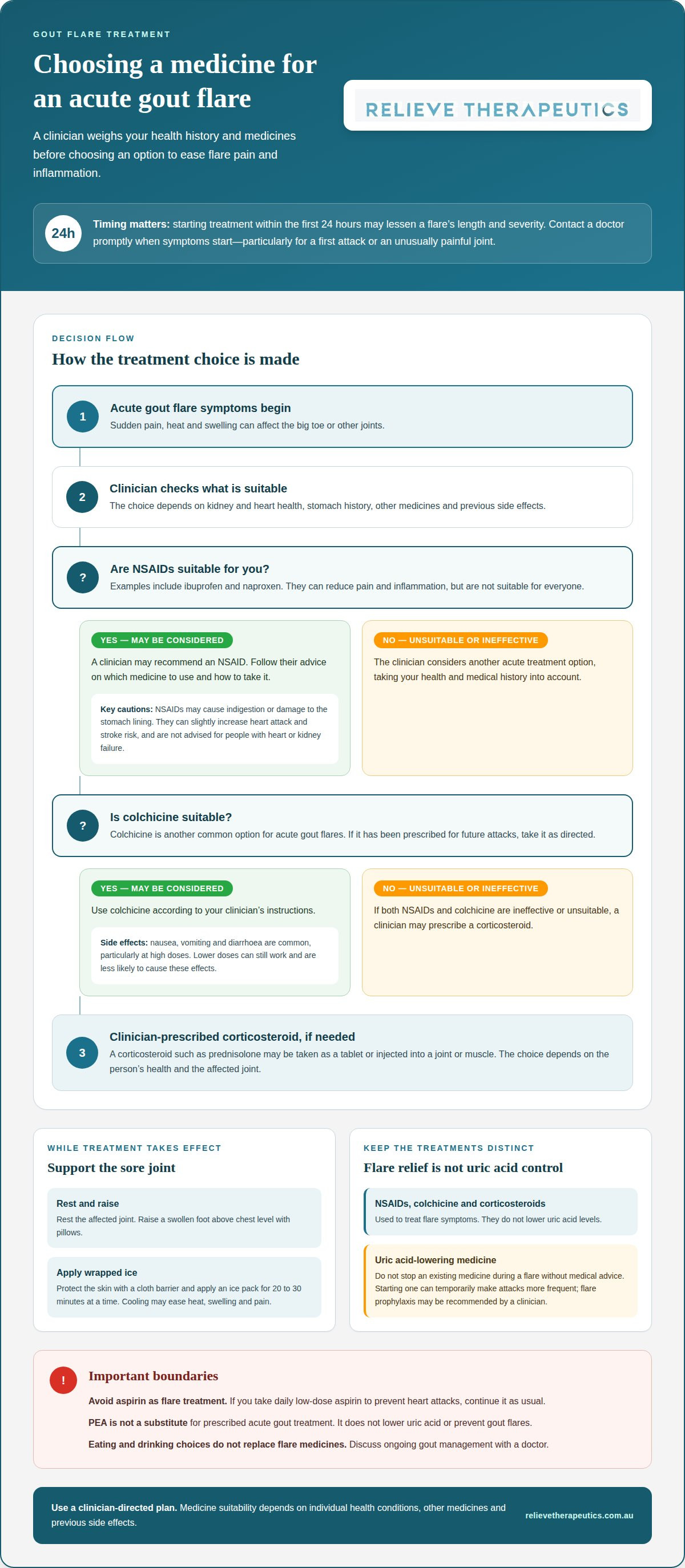
A gout attack can begin overnight, causing sudden, severe pain, heat and swelling, often in the big toe. Contact a doctor promptly when symptoms start, particularly if this is your first attack or the joint is unusually painful. Starting treatment within the first 24 hours may lessen the flare’s length and severity. Early recognition helps patients use their prescribed treatment promptly, rather than waiting for symptoms to escalate.
Acute attacks are commonly treated with an anti-inflammatory medicine or colchicine until pain and inflammation settle. Ibuprofen or naproxen may help, but they aren’t suitable for everyone, including some people with kidney disease or stomach ulcers. Follow a clinician’s advice on medicine choice and use. If colchicine has been prescribed for future attacks, take it as directed. Don’t stop an existing uric acid-lowering medicine during a flare without medical advice. Avoid aspirin as flare treatment. If you take daily low-dose aspirin to prevent heart attacks, continue it as usual.
While treatment takes effect, rest the affected joint and raise a swollen foot above chest level with pillows. Wrap an ice pack to protect the skin and apply it for 20 to 30 minutes at a time. These steps may help ease heat, swelling and pain. Eating and drinking choices don’t replace flare medicines, so discuss ongoing gout management with a doctor.
In Australia, ARTG status applies to individual therapeutic goods, not to PEA as a general ingredient. Check the status of the specific product rather than assuming all PEA supplements have the same listing.
PEA is sold in supplement forms such as capsules and powder. Australian purchase options include supplement retailers; prices vary by product and pack size, so there’s no single cost for PEA.
Some people experience mild digestive discomfort when starting PEA. Discuss supplement use with a doctor or pharmacist, especially if you take medicines or have an existing health condition.
PEA may be used alongside CBD, NSAIDs or prescription pain relievers, but it doesn’t replace acute gout treatment. Ask a doctor before changing your treatment plan or combining supplements and medicines.
2. Medications for gout flare pain and inflammation
Gout flare medicines target inflammatory pain and swelling, while uric acid-lowering treatment addresses the cause of recurring attacks. NSAIDs, colchicine and corticosteroids are common acute options. The suitable choice depends on kidney and heart health, stomach history, other medicines and previous side effects.
NSAIDs can reduce pain and inflammation, but may cause indigestion or damage to the stomach lining. They can also slightly increase the risk of heart attack and stroke. They aren’t advised for people with heart or kidney failure and require caution when cardiovascular risk is elevated. Colchicine is another option; nausea, vomiting and diarrhoea are common side effects, particularly at high doses. Lower doses can still work and are less likely to cause these effects.
If NSAIDs and colchicine are ineffective or unsuitable, a clinician may prescribe a corticosteroid such as prednisolone. Steroids may be taken as tablets or injected into a joint or muscle. The choice depends on the person’s health and the affected joint. These medicines treat flare symptoms, but don’t lower uric acid levels.
PEA is not a substitute for colchicine, NSAIDs or corticosteroids during an acute gout flare. These medicines are used to treat gout attacks, while PEA is discussed for its potential influence on pain and inflammation. PEA does not lower uric acid and should not be relied on to prevent gout flares.
Starting allopurinol or another uric acid-lowering medicine can temporarily make attacks more frequent. Flare prophylaxis with colchicine or an NSAID can reduce this risk. Prophylaxis is recommended for at least six months when urate-lowering therapy starts. For patients without tophi, it should continue for at least three months after reaching the serum urate target. These measures help manage the transition as uric acid levels fall, but don’t replace ongoing gout treatment.
3. What PEA is and how it may influence inflammation and pain
Palmitoylethanolamide (PEA) is a naturally occurring fatty acid amide. It may help regulate pain and inflammation, which is why it’s discussed for ongoing discomfort. That potential role is different from addressing uric acid crystals, which trigger gout symptoms. During a flare, inflammation can cause joint heat, swelling and painful movement. PEA is best understood as a possible supplement for pain management, not a replacement for medicines used to settle acute attacks.
Evidence on PEA for gout pain management hasn’t established it as a clinically proven gout treatment. Evidence that a substance may affect pain doesn’t, by itself, show that it treats urate-crystal arthritis or prevents flares. Colchicine and NSAIDs remain options for acute gout treatment; PEA shouldn’t replace prescribed flare medicine.
For a painful joint, apply a wrapped ice pack for 20 to 30 minutes at a time. The cloth barrier helps protect skin from direct contact, while cooling may ease heat, swelling and pain. Repeat this measure several times a day as a practical addition to a clinician-directed plan. Resting the affected joint can also reduce pressure during movement.
NSAIDs such as ibuprofen and naproxen can reduce pain and inflammation during a gout attack. However, kidney disease and stomach ulcers can make these medicines unsuitable, and some patients need another option. A clinician considers medical history and other medicines when choosing treatment. Don’t add an NSAID to colchicine or another medicine without advice on safe use.
When considering PEA for gout pain management, distinguish its potential role from uric acid control. PEA doesn’t lower uric acid or prevent gout attacks. A purine-aware eating plan may be part of broader gout care, but it can’t replace acute flare treatment. Cooling may ease local symptoms, while prescribed medicines address the flare.
4. PEA dosage and forms
PEA is available as capsules or powder, but there’s no established gout-specific dose in the information covered here. A dosage range of 300 to 1200 mg per day is suggested for nerve pain, not as a prescription for gout. Don’t assume that a dose used for another condition has the same effect on gout pain or joint inflammation.
People may notice improvements after 2 to 8 weeks of consistent PEA use. This timeframe describes reported experiences with PEA, not a guaranteed response or evidence that it treats the crystals causing gout. Acute gout symptoms need their own treatment plan. If a flare begins, follow the instructions for prescribed medicines rather than waiting for a supplement to take effect.
Studies of PEA for pain don’t establish a dose for gout or show that it lowers uric acid. A rheumatology clinician can consider your gout history, other conditions and current medicines when discussing supplement use. This is especially important if you take a prescription for gout or use other treatments for painful joints. Keep the supplement label handy when discussing its dose and form with a health professional.
Capsules provide a measured serving, while powder is another available form. Whichever form you consider, follow its product directions and avoid increasing the amount simply because relief hasn’t appeared quickly. For gout, the key distinction is between a dosage discussed for nerve pain and a dose proven for gout, which the figures above do not provide. Explore PEA supplementation options as you consider how this supplement may fit alongside your existing care.
Relieve Therapeutics
Relieve Therapeutics offers PEA capsules for people considering this supplement as part of their approach to pain management. The range includes PEA 60 Capsules, PEA 120 Capsules and PEA 180 Capsules, giving readers different pack sizes to consider.
PEA may have a role in supporting pain and inflammation, but it doesn’t lower uric acid or replace prescribed treatment for an acute gout flare. If you’re considering PEA alongside gout care, discuss supplement use with a health professional, particularly if you take other medicines or have an existing health condition.
For information about the PEA capsule options, contact Relieve Therapeutics.
Make your next step informed
Before adding a supplement, write down what you want help with, such as pain between flares or day-to-day comfort. Share that goal, your current medicines and any previous reactions with a health professional. This can help you discuss whether PEA fits alongside your gout care and what changes to monitor.
A measured approach matters when considering PEA for gout pain management. Keep following your prescribed gout plan, and treat a new or severe flare promptly rather than waiting to see whether a supplement helps. If you decide to explore PEA, choose a product format that suits your routine and keep your health professional informed.
Relieve Therapeutics offers PEA capsules for people considering this option. Take the next step at your pace: contact Relieve Therapeutics to learn more about its PEA range and make an informed choice for your wellbeing.
Frequently Asked Questions
What Is Gout?
Gout is an inflammatory arthritis caused by urate crystals forming in a joint. These crystals can trigger sudden pain, warmth, swelling and tenderness, with the big toe commonly affected. A blood uric acid result alone doesn’t confirm that joint pain is gout. A healthcare professional can assess your symptoms and decide whether further examination or testing is needed.
What is Palmitoylethanolamide (PEA)?
PEA is a naturally occurring fatty acid amide that may play a role in pain and inflammation. It’s also found in foods such as lentils, egg yolk and soybeans. A supplement provides PEA in a concentrated form, but its presence in food doesn’t establish a particular dose or effect for gout. Follow the product directions before use.
When should I see my healthcare provider?
Seek medical advice for a first suspected gout attack, a severe flare or symptoms that differ from your usual pattern. Early assessment can distinguish gout from other causes of a painful, swollen joint and support timely treatment. If attacks recur, arrange a review of your overall gout plan, including medicines, flare frequency and uric acid monitoring.
Who Can Benefit from PEA?
PEA may interest people looking for a supplement to support pain management, but it hasn’t been established as a gout treatment. People with recurring gout need care that addresses uric acid and flare prevention, not just discomfort. If you’re considering PEA for ongoing pain, discuss your goals, health conditions and current medicines with a healthcare professional first.
What is palmitoylethanolamide (PEA) and how might it affect gout pain?
PEA may influence pain and inflammatory processes, so it’s sometimes considered for discomfort. However, this possible action doesn’t show that PEA treats gout or removes urate crystals from joints. Gout-specific clinical evidence hasn’t established PEA as a flare treatment. Treat a new attack according to your prescribed plan, rather than relying on PEA to manage the underlying condition.
Is PEA safe to take with allopurinol, colchicine, or other gout medicines?
PEA is generally well tolerated, but that doesn’t confirm safety for every combination or health condition. Before taking it with allopurinol, colchicine, NSAIDs or another medicine, discuss your full medication list with a healthcare professional or pharmacist. Don’t stop or change prescribed gout treatment to make room for a supplement.