

What if the relentless exhaustion sleep cannot relieve isn't a lack of energy, but an unaddressed inflammatory fire within the central nervous system? For thousands of Australians living with persistent physical depletion and debilitating brain fog, waking up exhausted is an isolating reality, too often compounded by clinical dismissal. If you are exploring PEA for chronic fatigue Australia is witnessing a decisive shift toward therapies that target the underlying cellular drivers of profound fatigue, rather than relying on short-term stimulants that inevitably trigger post-exertional crashes.
Rather than offering a fleeting lift, Palmitoylethanolamide addresses biological strain at the cellular level by regulating PPAR-alpha receptors and soothing hyperactive glial cells. This targeted mechanism helps shield mitochondrial energy production while easing persistent neuroinflammation. In this 2026 science guide, you will gain a clear comprehension of how neuroinflammation drives daily cognitive fatigue, a practical framework for evaluating bioavailable PEA capsules available in Australia, and a realistic pacing timeframe to measure meaningful functional improvements.
Key Takeaways
- Understand how persistent, low-grade neuroinflammation triggers hyperactive microglial cells, driving sustained physical exhaustion and brain fog.
- Discover how Palmitoylethanolamide acts via PPAR-alpha receptor pathways to downregulate inflammatory signalling and protect cellular energy metabolism.
- Learn how to evaluate high-purity PEA for chronic fatigue Australia wide, ensuring capsules are free from synthetic binders and unneeded fillers.
- Review evidence-based daily intake ranges between 600mg and 1200mg, including the necessity of co-administering PEA with dietary fats to optimise absorption.
- Develop a sensible, steady pacing framework to track functional cognitive and physical improvements over realistic therapeutic timeframes.
What Is the Link Between Neuroinflammation and Chronic Fatigue?
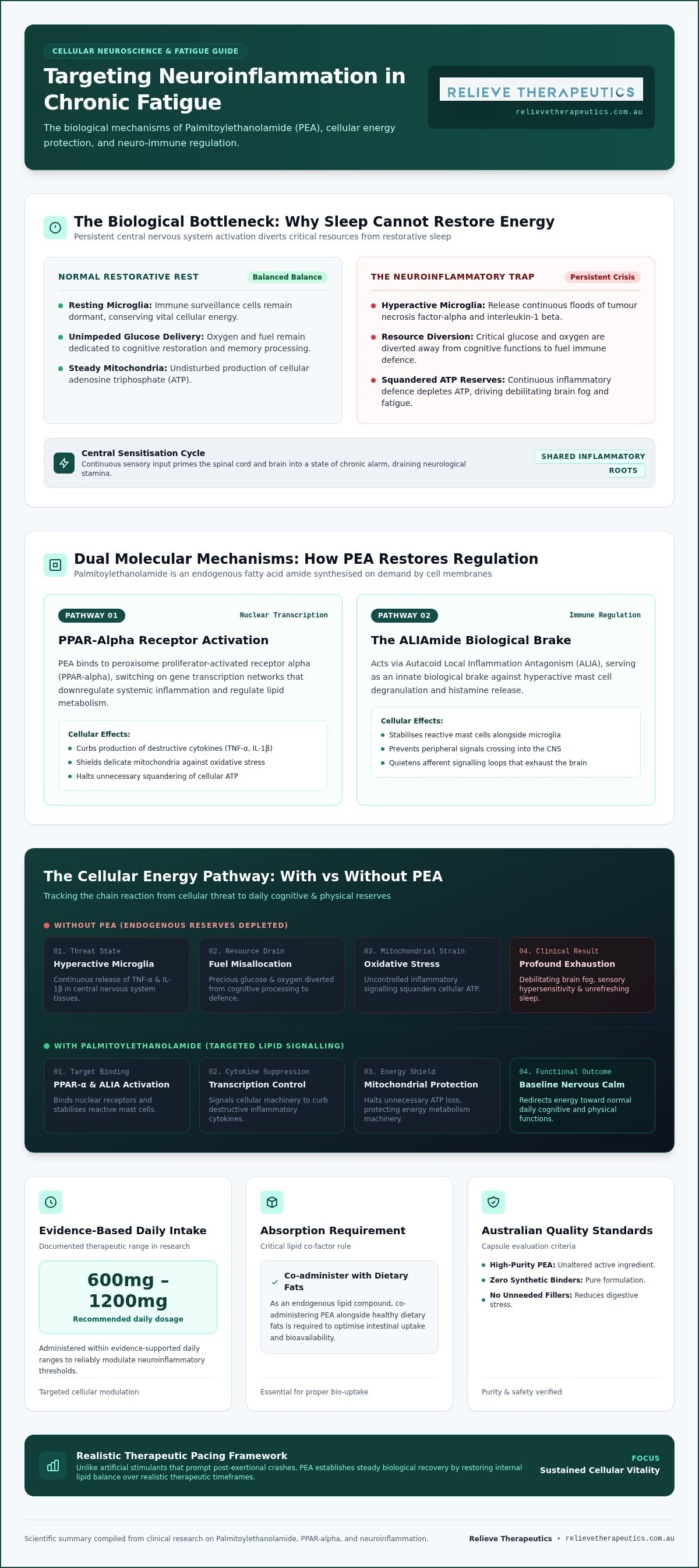
Neuroinflammation is not an acute, visible swelling like a sprained ankle. Instead, it operates as a persistent, low-grade immune activation within the central nervous system. When the brain senses prolonged physiological distress, post-viral disruption, or sustained tissue strain, its resident immune defenders shift into overdrive. Hyperactive microglia release a steady flood of inflammatory cytokines, including tumour necrosis factor-alpha and interleukin-1 beta. Rather than clearing quickly, these chemical messengers bathe delicate neural pathways in sustained cellular tension, systematically disabling regular metabolic function.
This biological bottleneck explains why conventional bed rest fails to restore vitality in those struggling with chronic fatigue. Sleep provides physical stillness, but it cannot replenish cellular energy when central nervous system tissues remain caught in active defence. Fortunately, the human body produces its own targeted responses. Endogenous lipid signalling serves as the internal mechanism designed to calm agitated neural structures. By examining how to support this system, researchers evaluating Palmitoylethanolamide (PEA) have illuminated how restoring lipid mediator levels helps re-establish baseline nervous system calm.
The Role of Microglia and Mast Cells in Energy Depletion
Activated glial cells demand substantial metabolic resources to sustain their defensive state. In doing so, they divert precious glucose and oxygen away from everyday cognitive processing, leaving the brain drained of fuel. Simultaneously, mast cells degranulate alongside these microglia, releasing histamine and secondary mediators that irritate nerve endings. This constant immune dialogue locks the central nervous system into hyper-reactivity, resulting in severe brain fog, sensory hypersensitivity, and completely unrefreshing sleep.
How Persistent Pain Amplifies Central Nervous System Fatigue
Central sensitisation occurs when continuous sensory input primes the spinal cord and brain into a state of chronic alarm. Every incoming signal gets magnified, placing high demands on cellular reserves and draining neurological stamina. Many Australians exploring pure PEA for chronic fatigue Australia wide discover that bodily discomfort and mental exhaustion share the exact same inflammatory roots. As detailed in our breakdown of how does PEA work for pain, calming baseline neuroinflammation quietens the afferent signalling loops that exhaust the brain, allowing deeper physiological recovery.
How Palmitoylethanolamide (PEA) Modulates Cellular Energy Pathways
Palmitoylethanolamide is an endogenous fatty acid amide synthesised on demand by cell membranes in direct response to physiological stress, tissue irritation, or immune activation. Under ordinary conditions, cells produce sufficient quantities to neutralise brief inflammatory threats. When biological strain becomes prolonged, these internal reserves deplete rapidly. The result is uninhibited inflammation that directly compromises cellular energy metabolism.
At the molecular level, PEA functions primarily by binding to and activating peroxisome proliferator-activated receptor alpha (PPAR-alpha). This nuclear receptor controls gene transcription networks that regulate both systemic inflammation and lipid metabolism. By switching on PPAR-alpha, PEA signals cellular machinery to curb the production of destructive cytokines. This regulatory action protects delicate mitochondria from oxidative stress, halts the unnecessary squandering of cellular adenosine triphosphate (ATP), and redirects essential energy toward normal physical and cognitive functions.
The ALIAmide Mechanism: Quieting Hyperactive Immune Defences
PEA acts via what scientists term the Autacoid Local Inflammation Antagonism (ALIA) mechanism. This serves as an innate biological brake against excessive mast cell activation. When mast cells degranulate unchecked, they release histamine and inflammatory compounds that disrupt tissue homeostasis. By stabilising these reactive immune cells, PEA prevents peripheral inflammatory signals from crossing into the central nervous system, helping re-establish steady neurological balance.
PEA as an Endogenous Neuroprotective Ally
Unlike pharmaceutical stimulants that force an artificial spike in alertness before causing a severe crash, PEA works in alignment with your existing neurochemistry. As detailed in our comprehensive guide to the PEA endocannabinoid supplement, it also supports the broader endocannabinoid system through the entourage effect, preventing the premature breakdown of calming signalling molecules. For individuals managing profound exhaustion, choosing pure PEA for chronic fatigue Australia wide offers a restorative strategy that rebuilds cellular resilience rather than pushing depleted reserves beyond their limits.
What Does the Research Say About PEA for Chronic Fatigue and ME/CFS?
Scientific exploration into Palmitoylethanolamide has shifted significantly from isolated pain models to systemic neuroinflammatory conditions. A 2012 meta-analysis encompassing 14 clinical trials with over 1,600 participants demonstrated substantial, consistent reductions in chronic pain endpoints compared to placebo. Building on this evidence, clinical investigations now track how calming central neuroinflammation directly eases secondary cognitive exhaustion. In another key study of 636 chronic pain patients, daily supplementation with 600mg of PEA for 21 days yielded marked improvements in general quality of life and reduced daily physical strain.
Standard approaches to severe fatigue often rely on graded exertion or synthetic stimulants. These methods attempt to override neurological exhaustion without addressing cellular pathology, frequently triggering debilitating setbacks. In contrast, targeted neuroinflammatory protocols seek to dial back baseline immune overactivation. For Australians assessing PEA for chronic fatigue Australia wide, the clinical focus centres on whether cellular lipid replenishment can raise the baseline threshold before post-exertional crashes take hold.
Clinical Insights from Fibromyalgia and Post-Viral Fatigue Cohorts
Trials involving fibromyalgia and post-viral cohorts offer compelling observations over 8 to 12-week monitoring periods. Participants taking therapeutic doses consistently report clearer mental processing, reduced peripheral tissue tenderness, and a noticeable blunting of post-exertional malaise severity. Documented safety profiles remain exceptionally clean across peer-reviewed publications. The compound shows no risk of motor impairment, psychological habituation, or the tolerance buildups characteristic of traditional pharmacological stimulants.
Realistic Expectations: Cumulative Support vs Instant Stimulants
Unlike rapid wakefulness agents, fatty acid amides don't manipulate neurotransmitter dumps to produce instant energy. They work through cumulative cellular saturation, progressively dampening glial activation over multiple weeks. Maintaining daily consistency is vital to evaluate true therapeutic responses.
| Timeline | Biological Activity | Observed Functional Outcomes |
|---|---|---|
| Weeks 1-2 | Tissue saturation initiates; PPAR-alpha binding begins downregulating cytokine transcription. | Subtle dampening of sensory hypersensitivity; modest easing of peripheral nerve irritation. |
| Weeks 3-4 | Mast cell degranulation stabilises; microglial hyperactivity reduces within neural tissues. | Initial improvements in cognitive clarity; reduced severity of afternoon mental crashes. |
| Weeks 6-8 | Cellular energy preservation takes effect as chronic inflammatory overhead drops. | Noticeable improvement in physical stamina; more predictable recovery following light daily tasks. |
| Weeks 10-12 | Steady-state neurological homeostasis achieved across target central receptor sites. | Consolidated functional daily pacing; meaningful reductions in long-term brain fog intensity. |
How to Choose Quality PEA Supplements in Australia
Selecting dietary supplements in Australia requires careful scrutiny, particularly when managing sensitive neuroimmune challenges. Palmitoylethanolamide is an insoluble lipid molecule. As a result, its biological utility depends heavily on processing methods, particle dispersion, and raw material purity. Unprocessed, large-crystal PEA particles struggle to navigate the gastrointestinal lining efficiently, passing through unabsorbed. Quality formulations prioritise optimised particle sizing to ensure effective systemic uptake.
When searching for reliable PEA for chronic fatigue Australia wide, look for products manufactured without questionable additives. Compromised immune systems often react poorly to synthetic flow agents, unnecessary artificial preservatives, or chemical coatings. A dependable supplement contains pure Palmitoylethanolamide housed in clean, plant-based capsules, ensuring every dose delivers targeted nutritional support without burdening your digestive tract.
Understanding Purity Standards and Quality Markers
Independent batch verification is essential for guaranteeing that supplements remain free from heavy metals, residual chemical solvents, and microbial contaminants. Clear, transparent labelling should outline the exact milligram strength of active Palmitoylethanolamide per capsule alongside all excipient materials. To explore how manufacturing controls and analytical standards protect consumer safety, review our detailed guide on high quality PEA capsules.
Selecting Capsule Quantities to Match Your Personal Plan
Because Palmitoylethanolamide works through gradual tissue saturation, structuring your trial period properly is vital for success. Matching your bottle size to your personal pacing schedule ensures consistent daily intake:
- PEA 60 Capsules: Ideal as an introductory supply to evaluate digestive compatibility and establish baseline tolerance over your initial two to four weeks.
- PEA 120 Capsules: Suited for a standard two-month evaluation window, allowing cellular concentrations to accumulate without risk of running out.
- PEA 180 Capsules: Recommended for sustained multi-month protocols, providing continuous daily coverage throughout the crucial 8 to 12-week therapeutic observation phase.
Sourcing your dietary supplements domestically prevents frustrating customs delays and keeps your routine steady. You can order pure PEA capsules online with direct Australian dispatch, guaranteeing dependable access to pure formulations tailored to your personal wellness routine.
Practical Dosage, Safety, and Integrating PEA into an Australian Daily Routine
Establishing an effective supplementation routine begins with understanding evidence-based intake ranges. Clinical literature examining neuroinflammatory fatigue states generally focuses on daily dosages between 600mg and 1200mg. Many individuals start with a higher loading intake of 1200mg daily across the first four to six weeks to replenish depleted lipid stores, subsequently moving to a steady 600mg maintenance dose. Because each nervous system responds uniquely, collaborating with your Australian general practitioner or integrative clinician ensures your approach aligns safely with your broader health profile.
Dosing Protocols and Timing Best Practices
Palmitoylethanolamide is a fat-soluble lipid, which means gastric uptake depends heavily on how you take it. Ingesting your capsules alongside meals containing beneficial dietary fats, such as avocado, eggs, or extra virgin olive oil, substantially improves absorption through the intestinal wall. Splitting your daily intake into two doses (one in the morning and one in the evening) helps sustain stable plasma concentrations across 24 hours. For an in-depth review of titration schedules, explore our guide to PEA dosage for pain. Given Australia's intense summer climate, remember to store your capsules in a dark, cool pantry below 25°C to protect fatty acid stability.
Holistic Energy Pacing and Sustainable Next Steps
Supplements work best when paired with disciplined energy envelope management. Calming microglial reactivity helps reduce the metabolic drag on your system, but it isn't a licence to push through physical limits immediately. By combining regular supplementation with heart-rate tracking and resting intervals, you protect newly preserved cellular energy from boom-and-bust cycles. Keep a simple weekly journal to note gradual changes in mental clarity, sensory tolerance, and the duration of post-activity fatigue.
When selecting targeted support, choosing reliable, filler-free PEA for chronic fatigue Australia wide provides a solid foundation. You can evaluate pure capsule batches directly through Relieve Therapeutics, giving your central nervous system the gentle, sustained reinforcement it needs to support long-term recovery.
Reclaiming Cellular Vitality Through Targeted Support
Persistent exhaustion isn't a personal failing or an imagined hurdle; it's a measurable physiological state driven by sustained central neuroinflammation. By activating PPAR-alpha pathways and easing chronic microglial strain, Palmitoylethanolamide works quietly to shield mitochondrial energy reserves. When evaluating PEA for chronic fatigue Australia offers an increasingly clear path forward: addressing underlying neuroimmune overactivation rather than pushing depleted reserves with temporary stimulants.
Rebuilding baseline stamina requires patience, disciplined pacing, and uncompromised ingredient purity. Relieve Therapeutics supplies pure Palmitoylethanolamide dietary capsules formulated without synthetic fillers or binders, available domestically in flexible 60, 120, and 180 quantities to match your personal pacing schedule. Backed by fast transit across Australia and dedicated local customer care focused on supplement transparency, you can support your nervous system with confidence. Explore pure Australian PEA capsules at Relieve Therapeutics and take a gentle, scientifically grounded step toward steady daily function.
Frequently Asked Questions
Can PEA help with chronic fatigue syndrome (ME/CFS)?
While Palmitoylethanolamide is not a cure for ME/CFS, it offers meaningful nutritional support by dampening underlying neuroinflammation. Emerging research shows that persistent immune activation within the central nervous system drains cellular resources. By targeting hyperactive microglia and stabilising mast cells, PEA helps reduce inflammatory cytokine release. This targeted action can ease secondary cognitive fog and assist the body in maintaining baseline cellular energy reserves.
How long does it take for PEA to show results for fatigue?
Most individuals observe initial shifts within two to four weeks, with full biological benefits taking between eight and twelve weeks. Because PEA functions via gradual cellular lipid saturation rather than synthetic stimulation, it rebuilds systemic balance over time. Tracking your personal symptoms in a journal allows you to monitor subtle milestones in mental clarity, sensory tolerance, and daily stamina throughout this observation period.
Is Palmitoylethanolamide legal and available over the counter in Australia?
Yes, Palmitoylethanolamide is legal and sold over the counter as a dietary supplement across Australia. It does not require a prescription from a doctor. Consumers can readily access clean formulations online without clinical appointments. Reputable retailers like Relieve Therapeutics dispatch pure PEA for chronic fatigue Australia wide in standard capsule bottles, ensuring consistent access to domestic supplies without international shipping holdups.
Can I take PEA alongside my existing medications or supplements?
PEA demonstrates an excellent safety profile and has no documented pharmacological interactions with standard prescription drugs. Because it is an endogenous fatty acid amide already produced within human tissues, the body metabolises it cleanly. Even so, individuals taking medications or managing complex autoimmune conditions should always consult their Australian general practitioner or integrative clinician before introducing new dietary supplements into their routine.
What is the optimal daily dose of PEA for exhaustion and brain fog?
Clinical trials typically investigate doses ranging from 600mg to 1200mg daily for persistent neuroinflammatory symptoms. A common protocol involves an initial loading intake of 1200mg per day, split into morning and evening doses, sustained over the first month. Once cellular levels stabilise, many step down to a daily 600mg maintenance dose. Ingesting capsules with dietary fats ensures optimal intestinal absorption.
Are there any known side effects when using PEA supplements?
Palmitoylethanolamide is exceptionally well tolerated, with clinical trials consistently noting an absence of serious adverse effects. A small percentage of users may occasionally notice mild digestive changes or transient nausea if taking high amounts on an empty stomach. Sourcing pure PEA for chronic fatigue Australia wide ensures capsules contain no synthetic fillers, binders, or common allergens that could provoke unnecessary systemic reactions.
Does PEA act as a stimulant like caffeine or prescription wakefulness agents?
No, Palmitoylethanolamide is completely non-stimulatory and does not manipulate central nervous system wakefulness pathways. It causes neither cardiovascular spikes nor the subsequent energy crashes typical of caffeine and pharmaceutical stimulants. Instead, PEA functions as a restorative lipid mediator. It preserves natural adenosine triphosphate levels by quieting chronic inflammatory overhead, fostering calm, steady stamina throughout the day.