

What if your body already possessed the biological blueprint to switch off persistent discomfort without the digestive upset of traditional medicine? You likely recognise that frustrating cycle where niggling inflammation affects your daily mobility, leading you to consider a PEA anti-inflammatory supplement to find lasting relief. It’s exhausting to manage systemic pain when the common solutions feel just as taxing as the physical toll itself.
By choosing this natural approach, you aren't introducing a foreign chemical to your system. Instead, you are supporting a fatty acid your body already produces to naturally regulate its inflammatory response and restore internal balance. This article will help you understand how Palmitoylethanolamide (PEA) acts as a precise biological regulator to support your long-term wellness journey. We will examine the clinical evidence regarding its safety, clarify why it is distinct from CBD, and show you how this Australian-sourced approach can help you regain comfort, improve daily function, and maintain your vitality. It is time to move beyond temporary fixes and embrace a more sustainable, evidence-based method for cooling inflammation.
Key Takeaways
- Explore the science of Palmitoylethanolamide as a naturally occurring fatty acid amide produced by the body to repair tissue and manage cellular stress.
- Understand the "master switch" mechanism where PEA binds to specific receptors to down-regulate pro-inflammatory genes and restore internal balance.
- Compare the clinical profile of a PEA anti-inflammatory supplement against traditional NSAIDs to achieve relief without the risk of stomach upset or renal strain.
- Identify how PEA supports joint health, eases persistent niggling inflammation, and enhances your overall daily mobility.
- Learn the importance of purity, transparency, and simple formulations when selecting an Australian-owned specialist for your health journey.
What is a PEA Anti-Inflammatory Supplement?
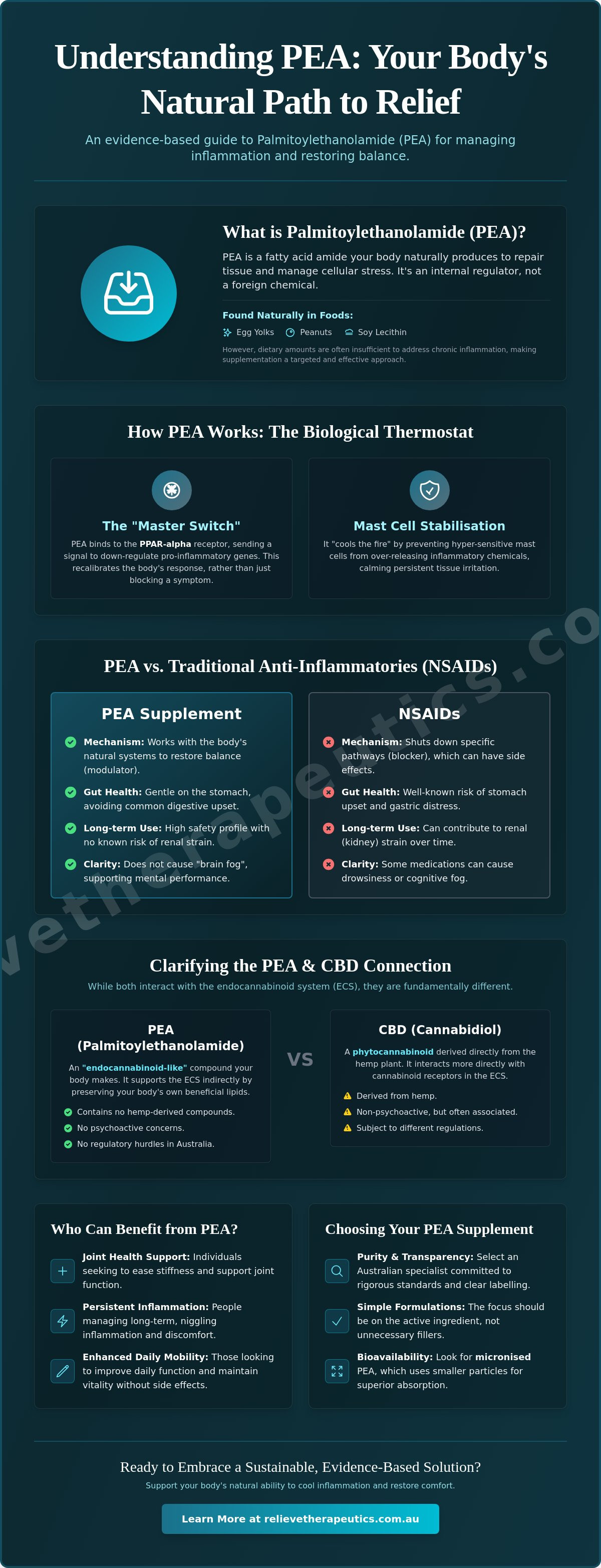
At its core, a PEA anti-inflammatory supplement represents a sophisticated bridge between biological necessity and nutritional support. Palmitoylethanolamide (PEA) is a naturally occurring fatty acid amide, a lipid molecule that your body synthesises on demand. First identified in the 1950s, this compound acts as a primary repair mechanism, produced in response to tissue stress, injury, or persistent cellular irritation. While your system is designed to manufacture this compound internally, chronic inflammation can often deplete your natural reserves. This leaves your body's "cooling system" overwhelmed and under-resourced.
You can find trace amounts of this molecule in common foods like egg yolks, peanuts, and soy lecithin. However, the concentrations present in a standard diet are rarely sufficient to address systemic issues or long-term discomfort. A concentrated supplement provides the precise, bioavailable dose required to support your system when natural levels are low. It is a targeted approach to restoration. Evidence-based. Natural. Effective.
The Endocannabinoid-Like Connection
Many Australians initially confuse PEA with CBD due to their similar biological pathways. While PEA is often described as "cannabinoid-like" because it interacts with the endocannabinoid system (ECS), it contains no hemp-derived compounds. Instead, it works by supporting the "entourage effect," which helps preserve your body’s own beneficial lipids, such as anandamide. It acts as a biological stabiliser. By inhibiting the breakdown of these internal compounds, a PEA anti-inflammatory supplement enhances your natural resilience without the regulatory hurdles or psychoactive concerns associated with other alternatives.
Why Australians are Turning to PEA in 2026
The Australian wellness landscape in 2026 shows a clear shift towards evidence-based, non-opioid options for managing discomfort. Local health seekers are increasingly moving away from synthetic medications that often bring unwanted side effects, such as gastric distress or the "brain fog" that can cloud daily productivity. There is a growing preference for natural solutions that support mobility while maintaining mental clarity. Sourcing high-quality PEA capsules from a local specialist ensures you receive a product that meets rigorous standards for purity, transparency, and scientific rigour. It's about choosing a partner in your health journey who values long-term outcomes over temporary masks.
How PEA Works: The Biological "Thermostat" for Inflammation
Understanding how a PEA anti-inflammatory supplement functions requires moving beyond the idea of a simple "blocker". Instead, consider it the biological thermostat of your system. While traditional medications often attempt to shut down specific pathways entirely, PEA works as a modulator. It helps the body "turn down the heat" of a chronic inflammatory response that has become stuck in the "on" position. This restoration of balance is vital for long-term comfort and sustained tissue health.
The primary mechanism involves the PPAR-alpha receptor, often described as the master switch for inflammation. When PEA binds to these receptors, it sends a clear signal to down-regulate pro-inflammatory genes. This isn't just masking a symptom; it's a fundamental recalibration of the body's defensive response. The scientific community continues to explore these pathways, as seen in current clinical trials on PEA, which examine its role in managing persistent discomfort. By addressing the root of the inflammatory cascade, PEA supports the body's natural ability to return to a state of equilibrium.
Mast Cell Stabilisation: Cooling the Fire
Mast cells are your body's first responders, tasked with releasing inflammatory chemicals at the first sign of trouble. However, in chronic conditions, these cells can become hyper-sensitive, leading to a constant state of "fire" and tissue irritation. PEA prevents this over-activation, a process known as degranulation, which helps to quieten the system. The ALIAmide mechanism defines the scientific basis for how PEA regulates these mast cells to prevent unnecessary and persistent tissue irritation.
The Science of Absorption and Bioavailability
Because PEA is a lipid-based molecule, its effectiveness depends heavily on particle size. Large particles are difficult for the digestive system to process, often leading to poor absorption and wasted potential. Micronisation reduces these particles to a microscopic level, significantly enhancing bioavailability and ensuring the compound reaches the cells that need it most. You can explore more about this process in our detailed guide on how does PEA work for pain. For those ready to support their internal regulation, the range at Relieve Therapeutics offers a high-purity solution designed for optimal uptake.
PEA vs. Traditional Anti-Inflammatories: A Comparison
For many Australians, the instinctive response to a flare-up involves reaching for a packet of ibuprofen or similar Non-Steroidal Anti-Inflammatory Drugs (NSAIDs). While these medications provide a swift reduction in symptoms, they often act as a temporary mask rather than a sustainable resolution. In contrast, a PEA anti-inflammatory supplement works with your body's existing chemistry to address the underlying inflammatory environment. It is a shift from suppression to support.
Traditional pills typically focus on blocking specific enzymes to stop the production of inflammatory chemicals. This process, while effective for acute relief, can lead to unintended consequences over time. Long-term NSAID use is frequently linked to gastrointestinal irritation, stomach ulcers, and potential renal strain. Because PEA is a non-opioid pain relief supplement that your body already recognises, it avoids these common pitfalls. It offers a reliable path for those seeking long-term support without the heavy toll on digestive or kidney health.
Safety Profile and Side Effects
The safety profile of PEA is one of its most compelling attributes. Because it is an endogenous substance, your system is already equipped to metabolise it efficiently. It is remarkably well-tolerated. A 2017 meta-analysis of 10 randomised clinical trials, involving 786 patients receiving doses between 300mg and 1200mg per day, found no adverse effects reported in the PEA-treated groups. While stomach upset is a frequent complaint with traditional anti-inflammatories, it remains a rarity with PEA. We always suggest consulting your healthcare professional before starting any new regime, particularly if you are currently managing other health conditions or taking prescribed medications.
Long-Term Support vs. Quick Fixes
The primary difference between these approaches lies in the timeline of efficacy. Traditional anti-inflammatories offer an immediate but short-lived effect, often wearing off within hours. PEA functions differently, building a cumulative effect over time. A 2025 meta-analysis published in the journal Nutrition Reviews concluded that significant benefits for comfort and quality of life are typically observed within a 4-6 week loading period. This requires a degree of patience and consistency. Rather than just blocking a signal, you are allowing the PEA anti-inflammatory supplement to support the underlying biological pathways, leading to more stable and enduring results for chronic discomfort.
Practical Applications: Who Benefits from PEA?
While the biological mechanisms of a PEA anti-inflammatory supplement are complex, its practical applications are grounded in everyday Australian life. This compound is not reserved solely for elite athletes or those with acute injuries. Instead, it serves as a reliable ally for anyone whose daily vitality is hindered by persistent, niggling discomfort. Whether you are managing the natural progression of age-related wear and tear or seeking to maintain an active lifestyle, PEA provides a foundation for sustained mobility and recovery.
The beauty of this fatty acid amide lies in its dual-action approach. It does not simply target a single symptom. It addresses the interconnected nature of tissue irritation and nervous system sensitivity. For the active Australian, this means quicker recovery times after a weekend of hiking or surfing, and a more resilient body that can handle the physical demands of a busy schedule. It is about restoring the freedom to move without the constant shadow of systemic inflammation.
Nerve Health and Neuropathy
Inflammation and nerve discomfort are rarely isolated issues. They are often deeply interlinked. When tissues remain in a chronic inflammatory state, the surrounding nerves can become sensitised or even damaged. PEA plays a critical role in supporting the myelin sheath, the protective coating that ensures nerve signals remain clear and efficient. By reducing "neuro-inflammation," it helps maintain signal integrity and eases the burning or tingling sensations often associated with nerve distress. If you are looking for specific dosage strategies, our comprehensive guide on how to take PEA for nerve pain offers practical advice tailored for the local market.
Joint Comfort and Mobility
Chronic joint inflammation can quickly turn a morning walk or a gardening session into a chore. Over time, these inflammatory signals in the joint tissues lead to stiffness and reduced range of motion. A PEA anti-inflammatory supplement helps "quiet" these signals at a cellular level, allowing for smoother, more comfortable movement. For the best outcomes, we suggest combining your supplement routine with gentle, low-impact exercise like swimming or yoga. This combination encourages blood flow and supports the long-term health of your cartilage and connective tissues.
Support for Sciatica and Lower Back Discomfort
Lower back tension and sciatic nerve pressure are among the most common physical complaints in Australia. These conditions are often driven by a combination of structural stress and neuro-inflammation. Utilising palmitoylethanolamide for sciatica can be a transformative step in managing this specific type of discomfort. By stabilising the mast cells around the affected area, PEA helps reduce the chemical irritation that exacerbates nerve pressure. To begin your journey toward better daily comfort, explore the high-purity range at Relieve Therapeutics and discover a natural approach to cooling inflammation.
Choosing Your PEA Supplement: The Relieve Therapeutics Difference
Selecting a PEA anti-inflammatory supplement requires a focus on three fundamental pillars: purity, transparency, and scientific rigour. At Relieve Therapeutics, we recognise that the effectiveness of Palmitoylethanolamide is deeply dependent on how it is formulated and processed. We favour a minimalist approach, ensuring our capsules are free from unnecessary fillers that might interfere with absorption. By specialising in ultra-micronised PEA with a precise 600mg serving, we provide a product that aligns with the latest clinical standards for bioavailability and cellular uptake.
As an Australian-owned specialist, we operate with the quiet confidence of an expert who understands the local wellness landscape. We don't rely on hyperbolic marketing; instead, we prioritise the integrity of our manufacturing and the long-term outcomes of our community. Choosing a local partner means you can rely on consistent quality standards and a clear chain of accountability. It's about finding a reliable ally who views your health journey as a collaborative partnership rather than a simple transaction.
Why Capsule Count Matters
We provide our range in specific quantities to match the different stages of your inflammatory management. For those just beginning to explore natural support, our PEA 60 capsules serve as the ideal entry point. This quantity allows you to complete the initial 4-week loading period and assess how your body responds to the biological regulator. Once you have established a baseline, the PEA 120 capsules offer a strategic balance of value and consistency for your daily routine. For those in the long-term management phase who have successfully cooled their systemic inflammation, our 180-count option provides the most sustainable and cost-effective path to maintaining vitality.
Navigating Your Natural Support Journey
Your next step involves a simple assessment of your current discomfort levels and mobility goals. Whether you are dealing with age-related wear and tear or specific nerve-related tension, the goal is to move toward a state of internal balance. We are here to act as your knowledgeable guide, simplifying the complex science of fatty acid amides without compromising on the technical details that matter. It's time to transition from temporary fixes to a more disciplined, evidence-based approach. To find the right fit for your needs, we invite you to view our range of high-quality PEA capsules and begin your journey toward lasting comfort and restoration.
Reclaiming Your Daily Vitality
Choosing a natural path to manage systemic inflammation is a commitment to your body's long-term resilience. We have explored how Palmitoylethanolamide functions as a biological thermostat, recalibrating your system's response rather than simply masking discomfort. Unlike traditional options that often lead to gastric distress, a PEA anti-inflammatory supplement offers a high-purity, non-opioid alternative that supports both joint mobility and nerve health. By understanding the necessity of the loading phase and prioritising Australian-sourced quality, you are taking a definitive step toward sustainable wellness and improved daily function.
Relieve Therapeutics is proud to be an Australian owned and operated specialist, dedicated to providing high-purity PEA tailored to your specific needs. Our range is designed to support every stage of your journey, with 60, 120, and 180-count bottles available for your convenience. We invite you to browse the Relieve Therapeutics range of PEA capsules today and discover the difference that clinical rigour and empathetic care can make. Restore your comfort, maintain your mobility, and embrace the activities you love with a partner you can trust.
Frequently Asked Questions
Is PEA a steroid or an NSAID?
PEA is neither a steroid nor a Non-Steroidal Anti-Inflammatory Drug (NSAID). It is an endogenous fatty acid amide that your body produces naturally to manage cellular stress and tissue repair. Unlike synthetic medications that block specific enzymes, PEA acts as a biological modulator to restore internal balance without the digestive or renal side effects often linked to long-term steroid or NSAID use.
How long does it take for a PEA anti-inflammatory supplement to work?
Most individuals observe significant benefits within a four to six-week loading period. Because a PEA anti-inflammatory supplement functions by building a cumulative effect in your system, consistency is vital for achieving optimal results. While some people notice subtle improvements in comfort earlier, the compound requires time to recalibrate your body's inflammatory pathways and stabilise mast cell activity effectively.
Can I take PEA with my other medications?
PEA is generally well-tolerated and can often be integrated with other medications because it is a substance your body already recognises. Clinical research has not identified significant drug-to-drug interactions to date. However, we always recommend consulting your healthcare professional before starting any new regime to ensure it is appropriate for your specific health profile and existing treatment plan.
Are there any common side effects of taking PEA capsules?
Adverse effects from taking high-purity PEA capsules are exceptionally rare and typically negligible. A 2017 meta-analysis of ten clinical trials confirmed that PEA-treated patients reported no significant side effects across doses ranging from 300mg to 1200mg per day. This makes it a reliable, gentle alternative for those who experience stomach upset or other sensitivities when using conventional anti-inflammatory options.
Why is PEA often called an "endocannabinoid-like" supplement?
PEA is described as "endocannabinoid-like" because it interacts with the endocannabinoid system to support your body's natural resilience. It helps preserve beneficial internal lipids like anandamide, which enhances the "entourage effect" for better biological stability. It is entirely distinct from CBD and contains no hemp-derived compounds, acting instead as a naturally occurring lipid that supports your system's existing chemistry.
Does PEA help with nerve-related inflammation specifically?
Yes, PEA is particularly effective for managing neuro-inflammation and supporting overall nerve health. It works by stabilising mast cells and protecting the myelin sheath, which is essential for maintaining clear and efficient nerve signal integrity. This targeted action helps quieten the chemical irritation and sensitisation often found in persistent nerve-related discomfort or chronic lower back tension.
What is the recommended daily dosage for PEA?
The standard dosage used in clinical research typically ranges from 300mg to 1200mg per day. Many users find that a 600mg serving, taken once or twice daily, provides the necessary concentration to support their wellness goals. Starting with a consistent daily dose allows the PEA anti-inflammatory supplement to accumulate in your tissues and reach its full therapeutic potential over the initial loading phase.
Is PEA safe for long-term use?
PEA is considered safe for long-term use because it is a natural component that your body is already equipped to metabolise. It does not carry the risk of dependency or the cumulative toxicity issues associated with some synthetic alternatives. This enduring safety profile makes it an excellent choice for individuals requiring sustained, ongoing support to maintain their daily mobility and systemic comfort.