

Did you know that 1 in 5 Australians are currently living with chronic pain? It is a staggering figure that often leads to a cycle of heavy pharmaceutical reliance. For many, the decision to transition away from conventional medication is met with a daunting question: how do you find reliable natural pain support after stopping painkillers without the fear of your symptoms returning in full force?
You've likely spent years managing discomfort with prescriptions, only to find yourself concerned about long-term side effects or the dreaded "rebound" effect. It's completely normal to feel anxious about withdrawal symptoms or skeptical of supplements that promise the world but deliver very little. This guide will show you how to navigate this transition safely by replenishing your body's own regulatory molecules. You'll discover the science of Palmitoylethanolamide (PEA), a fatty acid amide that works with your biology rather than just masking a signal. We will explore how this TGA-listed medicine provides a stable foundation for daily comfort, helps you regain your quality of life, and fits seamlessly into a modern lifestyle. By understanding the mechanisms of cellular support, you can move toward a future defined by vitality, stability, and professional care.
Key Takeaways
- Understand how to successfully navigate the transition and establish reliable natural pain support after stopping painkillers by focusing on cellular regulation.
- Discover the biological function of Palmitoylethanolamide (PEA), a fatty acid amide produced by your body to manage stress and discomfort internally.
- Learn why PEA provides a more targeted approach to nerve-related support compared to common Australian supplements like fish oil or turmeric.
- Implement a practical four-week routine designed to accommodate the saturation period required for natural support systems to take full effect.
- Identify the benefits of sourcing high-quality PEA from a dedicated Australian specialist to ensure product purity, reliability, and efficient local shipping.
Understanding the Transition: Natural Pain Support After Stopping Painkillers
Many Australians are reassessing their relationship with long-term medication. Seeking natural pain support after stopping painkillers is a logical step toward regaining autonomy over your health. This transition is not merely about removing a substance. It is about adopting a holistic approach that prioritises cellular health, internal balance, and long-term resilience. By focusing on restoration, you can bridge the gap between pharmaceutical reliance and sustainable wellness.
The shift toward natural maintenance requires a change in perspective. Conventional medications often work by aggressively blocking signals, but they don't always address the underlying physiological needs. In contrast, natural support focuses on replenishing the body's own regulatory systems. This process helps maintain comfort, restoration, and vitality. It avoids the heavy pharmaceutical burden that many find unsustainable over time. Finding natural pain support after stopping painkillers involves more than just a change in routine; it is a commitment to biological integrity.
The "Support Gap": Why Rebound Discomfort Occurs
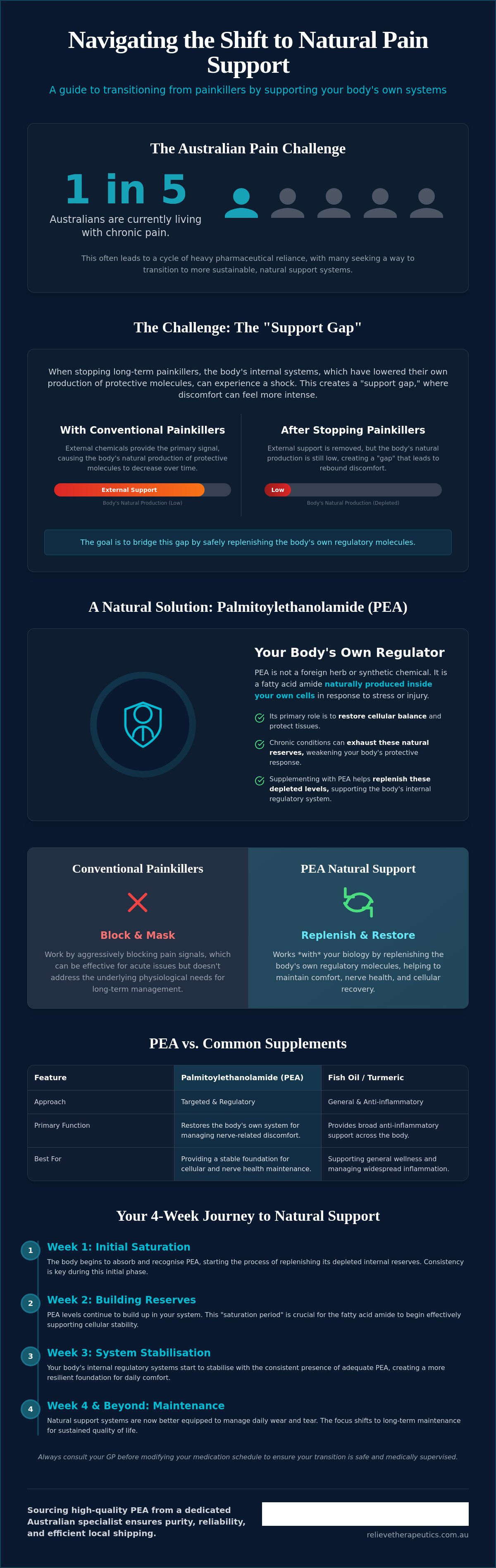
When you stop taking long-term painkillers, your body often experiences a physiological shock. Over months or years, your internal systems may have adjusted to external chemical signals. They effectively lower their own production of protective molecules. This creates a "support gap" where discomfort can feel more intense than usual. It is a period of recalibration that requires a disciplined approach to management.
The first 30 days are frequently the most challenging. During this window, your nervous system is attempting to find a new baseline. It is essential to manage this period with patience, consistency, and professional guidance. You shouldn't navigate this alone. Always consult your GP before modifying your medication schedule to ensure your transition is safe, structured, and medically supervised.
The Role of Dietary Supplements in Maintenance
Dietary supplements are intended for maintenance and biological support. They are not a direct replacement for acute medical intervention. The goal is to move away from "blocking" pain signals. Instead, you are supporting the pathways that manage inflammation, nerve health, and cellular recovery. This shift allows your body to regain its natural ability to regulate discomfort.
One of the most promising molecules for this bridge is Palmitoylethanolamide (PEA). This naturally occurring fatty acid amide helps stabilise the body's internal environment. By integrating such targeted support, you can create a more resilient foundation for daily function. For a broader look at how these options compare, you may find our non-opioid pain relief supplement guide helpful in identifying the right path for your specific needs.
The Science of PEA: Supporting Your Body’s Internal Systems
Palmitoylethanolamide, commonly known as PEA, is not a foreign herbal extract or a synthetic chemical. It is a fatty acid amide naturally produced within your own cells. This molecule acts as a biological responder; it is created "on-demand" whenever your body detects stress, injury, or physical discomfort. Its primary role is to restore balance and protect tissues from over-activity. For those seeking natural pain support after stopping painkillers, understanding this internal mechanism is the first step toward sustainable recovery.
Under normal conditions, your body maintains adequate levels of PEA to manage daily wear and tear. However, persistent or chronic issues can exhaust these natural reserves. When the demand for PEA exceeds your body's ability to produce it, the protective response weakens, which can lead to heightened sensitivity. Establishing natural pain support after stopping painkillers requires a reliable way to boost these depleted reserves. Because PEA is a substance your body already recognises, it possesses an excellent safety profile and is generally well-tolerated. A recent systematic review and meta-analysis has further validated its role in managing long-term discomfort without the common side effects associated with traditional pharmaceuticals.
PEA and the Endocannabinoid System (ECS)
The Endocannabinoid System, or ECS, is a vast regulatory network responsible for maintaining homeostasis. It oversees sleep, mood, and physical comfort. PEA does not bind directly to the main ECS receptors. Instead, it functions as an "entourage" molecule. It enhances the activity of other beneficial compounds, prolonging their effects and strengthening the body's natural resilience. You can explore the detailed science of how PEA works for pain to see how this synergy supports your nervous system.
Targeting Glial Cells and Neuroinflammation
Within your nervous system, glial cells act as the "conductors" of your response to discomfort. While they are essential for protection, they can become overactive in chronic states, leading to a cycle of persistent sensitivity. PEA works by calming these hyper-responsive cells, effectively "turning down the volume" on the signals they send. This targeted action addresses neuroinflammation. Neuroinflammation is the underlying driver of persistent discomfort that often lingers even after an initial injury has healed. If you are ready to support your body's internal systems, you might consider exploring high-purity PEA options to assist in your wellness journey.
Comparing Natural Support Options: Why PEA Stands Out
When exploring natural pain support after stopping painkillers, many Australians first turn to well-known options like turmeric or fish oil. While these supplements offer general anti-inflammatory benefits, they don't always address the specific needs of a sensitised nervous system. PEA is fundamentally different because it is an endogenous lipid, not a plant extract. It possesses a unique affinity for nerve-related support, acting directly on the pathways that govern persistent discomfort. This targeted biological action makes it a superior choice for natural pain support after stopping painkillers when compared to general-purpose anti-inflammatories.
The effectiveness of any supplement is ultimately determined by its bioavailability. If a compound cannot be efficiently absorbed and utilised by your cells, its potential benefits are lost. Many standard natural options suffer from poor solubility, meaning you have to consume vast quantities to see a result. PEA avoids this pitfall by working within the body's existing regulatory frameworks. Extensive research, including a comprehensive The Science of PEA for Pain, demonstrates that PEA provides a reliable, evidence-based alternative for those seeking long-term maintenance. It is a matter of choosing a molecule that speaks the same language as your biology.
PEA vs. Traditional Herbal Extracts
Traditional herbal remedies like curcumin or St John's Wort often come with a complex list of potential drug interactions. This can be particularly concerning for individuals transitioning away from intensive pharmaceutical routines. Because PEA is body-identical, it lacks these common interactions, making it a safer foundation for a new wellness programme. It doesn't rely on the same metabolic pathways as many herbs, which simplifies your routine and provides peace of mind. To ensure you are getting the most out of your transition, it's helpful to consult a PEA dosage for pain guide to understand the timing and intake levels required for your specific needs.
The Importance of Ultra-Micronisation
In its raw state, PEA exists as large, crystalline particles that the Australian gut finds difficult to process. High-quality supplements overcome this through a specialised process called ultra-micronisation. By reducing the particle size to a microscopic level, the surface area increases, allowing for significantly better absorption into the bloodstream. You should look for capsules that specifically use micronised or ultra-micronised PEA rather than standard, unrefined powders. The value of your supplement isn't just in the milligrams on the label; it's in the purity of the source and the precision of the manufacturing. This ensures the molecule actually reaches the cells that need support, providing a stable and efficient path toward daily comfort.
Practical Steps for Building a Natural Support Routine
Establishing a new wellness routine takes time, discipline, and a structured approach. Finding reliable natural pain support after stopping painkillers is a gradual process of biological replenishment. Unlike pharmaceutical interventions that provide immediate, temporary suppression, natural molecules like PEA require a consistent presence to restore your internal systems. To help you navigate this transition, we recommend a disciplined four-week integration plan.
- Week 1: Baseline and Introduction. Begin your supplement routine at a consistent time each day. Start a discomfort diary to record your baseline sensitivity levels, sleep quality, and daily function.
- Weeks 2-3: The Saturation Phase. Maintain your daily intake without interruption. During this period, your body is rebuilding its depleted PEA reserves. You may not feel a dramatic shift yet, but your cellular environment is stabilising.
- Week 4: Evaluation and Adjustment. Review your diary entries. Look for subtle improvements in your ability to perform daily tasks or changes in the "background noise" of your discomfort.
Tracking your progress is vital. A daily diary allows you to see patterns that might otherwise be missed. Record not just the intensity of discomfort, but also your mood and energy levels. This data provides a clear picture of how your body is responding to natural pain support after stopping painkillers, helping you and your healthcare provider make informed decisions about your long-term maintenance.
Managing Expectations: The Timeline of Natural Support
PEA is a "slow-build" supplement. It is not designed to be a "quick-fix" pill for acute episodes. Because it works by calming overactive glial cells and supporting the endocannabinoid system, the results are often cumulative. Consistency is far more important than a high initial dose. You must allow your body the necessary time to recalibrate its natural chemistry. Patience during these first few weeks is the key to achieving a stable, long-term outcome.
Complementary Australian Lifestyle Adjustments
To maximise the benefits of your routine, consider lifestyle factors that support a low-inflammation environment. In the Australian climate, staying hydrated is essential for maintaining muscle comfort and joint lubrication. Incorporating magnesium can also assist with muscle relaxation and better sleep quality. Focus on a diet rich in whole foods, such as oily fish, leafy greens, and seasonal fruits, which provide the antioxidants needed for cellular repair. Don't underestimate the power of social support and mental health care; connecting with others who understand your journey can significantly reduce the emotional burden of the transition.
If you are ready to begin your four-week plan, you can shop our range of PEA capsules to find the right size for your needs.
Sourcing Quality PEA: Your Journey with Relieve Therapeutics
Relieve Therapeutics is a dedicated Australian specialist, focusing exclusively on the purity and efficacy of Palmitoylethanolamide. Choosing a local provider is a vital decision when establishing natural pain support after stopping painkillers. It ensures that your supplements are dispatched quickly from within Australia, avoiding the long wait times and potential customs complications associated with international orders. Beyond logistical convenience, sourcing locally means you are supported by a team that understands the specific regulatory standards and health needs of the Australian community.
The transition to natural maintenance requires a reliable partner. When you are seeking natural pain support after stopping painkillers, the integrity of the molecule you ingest is paramount. We prioritise transparency, ensuring that our capsules contain high-purity PEA without unnecessary fillers or complex additives. This commitment to quality provides the stability your nervous system needs during the critical weeks of recalibration and beyond. Ordering online is a straightforward process, with delivery available to homes and businesses across the country.
Choosing Your Supply: 60, 120, or 180 Capsules?
Selecting the right quantity depends on where you are in your personal wellness journey. We offer three distinct sizes to accommodate your specific stage of transition:
- PEA 60 Capsules: This is the ideal starter pack for those new to natural support. It provides a one-month supply, allowing you to complete your initial baseline period and begin the saturation process.
- PEA 120 Capsules: We recommend this size for your second and third months. It offers the strategic value of 120 capsules, ensuring you have a consistent supply during the most important phase of biological replenishment.
- PEA 180 Capsules: This bulk option is designed for long-term maintenance. Once you have established your routine, the 180-capsule pack offers the best value and ensures you never run out of your daily support.
The Relieve Therapeutics Commitment to Quality
Our focus is on substance over style. We believe that professional care is built on a foundation of reliability and scientific rigor. Every batch of our PEA capsules is produced to meet high standards of purity, ensuring that you receive the exact molecular support your body requires. We don't rely on hyperbolic marketing; instead, we provide the clear, evidence-based information you need to make informed choices about your health. By choosing Relieve Therapeutics, you are choosing a partner dedicated to your long-term comfort and vitality.
Explore our range of PEA capsules to support your transition today.
Reclaiming Your Vitality Through Cellular Support
Transitioning away from conventional medication is a significant step toward long-term wellness. By understanding the role of Palmitoylethanolamide, you move from merely suppressing symptoms to actively supporting your body's internal regulatory systems. This guide has highlighted the importance of patience during the saturation period and the critical role of ultra-micronisation in ensuring your supplements are effectively absorbed. Finding reliable natural pain support after stopping painkillers is possible when you prioritise evidence-based cellular care over temporary fixes.
As a specialist Australian PEA retailer, Relieve Therapeutics provides high-purity capsules that are micronised for optimal absorption. Every order is dispatched locally for fast Australian delivery; this ensures your routine remains consistent and uninterrupted. By choosing a partner dedicated to scientific rigor and transparency, you can navigate your transition with confidence and professional support. It's time to move toward a future defined by restoration and daily comfort.
Begin your natural support journey with our PEA 180 Capsules for long-term value.
Take this opportunity to invest in your future comfort and regain the quality of life you deserve.
Frequently Asked Questions
Is it safe to take PEA immediately after stopping prescription painkillers?
Yes, Palmitoylethanolamide (PEA) is generally considered safe to integrate into your routine immediately. It is a fatty acid amide already produced by your cells; it does not typically interfere with the body's natural recovery process. However, we recommend consulting your GP before making any changes to your medication schedule to ensure your transition is safe, structured, and medically supervised.
How long does it take for PEA to start working for natural pain support?
PEA typically requires a saturation period of two to four weeks before the full benefits are felt. Unlike acute medications that provide immediate suppression, PEA works by gradually replenishing your natural reserves and stabilising overactive glial cells. Consistency during this initial month is the most important factor in achieving long-term natural pain support after stopping painkillers.
Can I take PEA alongside my other daily vitamins and supplements?
You can certainly take PEA alongside your daily vitamins and supplements, such as magnesium, fish oil, or multivitamins. There are no known negative interactions between PEA and common dietary supplements. Integrating PEA into your existing wellness routine is a straightforward way to provide comprehensive support for your nervous system and overall cellular health.
Are there any common side effects when starting a PEA supplement routine?
PEA is exceptionally well-tolerated, and common side effects are rare. Because the molecule is body-identical, it is easily recognised, processed, and utilised by your system. Some individuals may experience mild digestive adjustment in the first few days, but this typically resolves quickly. Its high safety profile makes it a reliable, evidence-based, and predictable option for managing daily discomfort.
Why is micronised PEA considered better than standard PEA powder?
Micronised PEA is superior because the reduced particle size significantly enhances absorption in the digestive tract. Standard PEA powder consists of large crystals that the body finds difficult to break down and utilise effectively. By increasing the surface area through ultra-micronisation, the molecule can reach your cells more efficiently, providing better value and more consistent results from each capsule.
Does PEA require a prescription from an Australian doctor?
No, you don't need a prescription from an Australian doctor to purchase PEA. It is available as a "listed medicine" and can be purchased over-the-counter or online. While it's accessible without a script, the TGA advises consulting a healthcare professional if you intend to use PEA for more than 21 consecutive days to ensure it remains the right fit for your health journey.
What happens if I miss a day of my PEA supplement routine?
If you miss a day, simply resume your normal routine the following day. There's no need to double the dose to make up for the missed capsules. While consistency is key to maintaining the saturation levels required for natural pain support after stopping painkillers, a single missed day won't reset your progress. Just return to your disciplined schedule as soon as you remember.
How many PEA capsules should I take daily for optimal maintenance?
For optimal maintenance, most individuals find that taking two to three capsules daily provides the necessary biological support. This routine helps maintain stable levels in your system, supporting daily function, comfort, and vitality. Our PEA 180 Capsules are specifically designed to provide a sustained, reliable, and cost-effective supply for this long-term maintenance phase.