

Natural approaches may help some older Australians manage nerve pain, but the right option depends on its cause and the person’s health. Gentle yoga, tai chi or Qigong, acupuncture, TENS and supplements such as PEA are among the approaches people consider for pain relief. Nerve pain can be linked to shingles, trapped nerves or spinal nerve compression.
Persistent pain can affect sleep, movement and confidence, so it’s understandable to seek options that feel manageable in everyday life. Natural pain relief for seniors in Australia is not one-size-fits-all. Understanding the likely cause and considering existing conditions and medicines can help people make safer choices.
This guide covers common causes and effects of pain in older adults, then explores nerve pain remedies, turmeric and curcumin, and boswellia. It also explains how these options may fit into a broader approach to managing discomfort.
Key Takeaways
- Nerve pain can have several causes, so identifying what may be driving it helps guide a suitable approach.
- Learn how turmeric’s curcumin is studied for inflammation and pain, and why supplement choices deserve careful consideration.
- Explore the evidence around boswellia for osteoarthritis-related pain and stiffness.
- Recognise how pain can affect sleep, movement and daily life, and why management may need to address more than one factor.
1. Are there natural remedies for nerve pain?
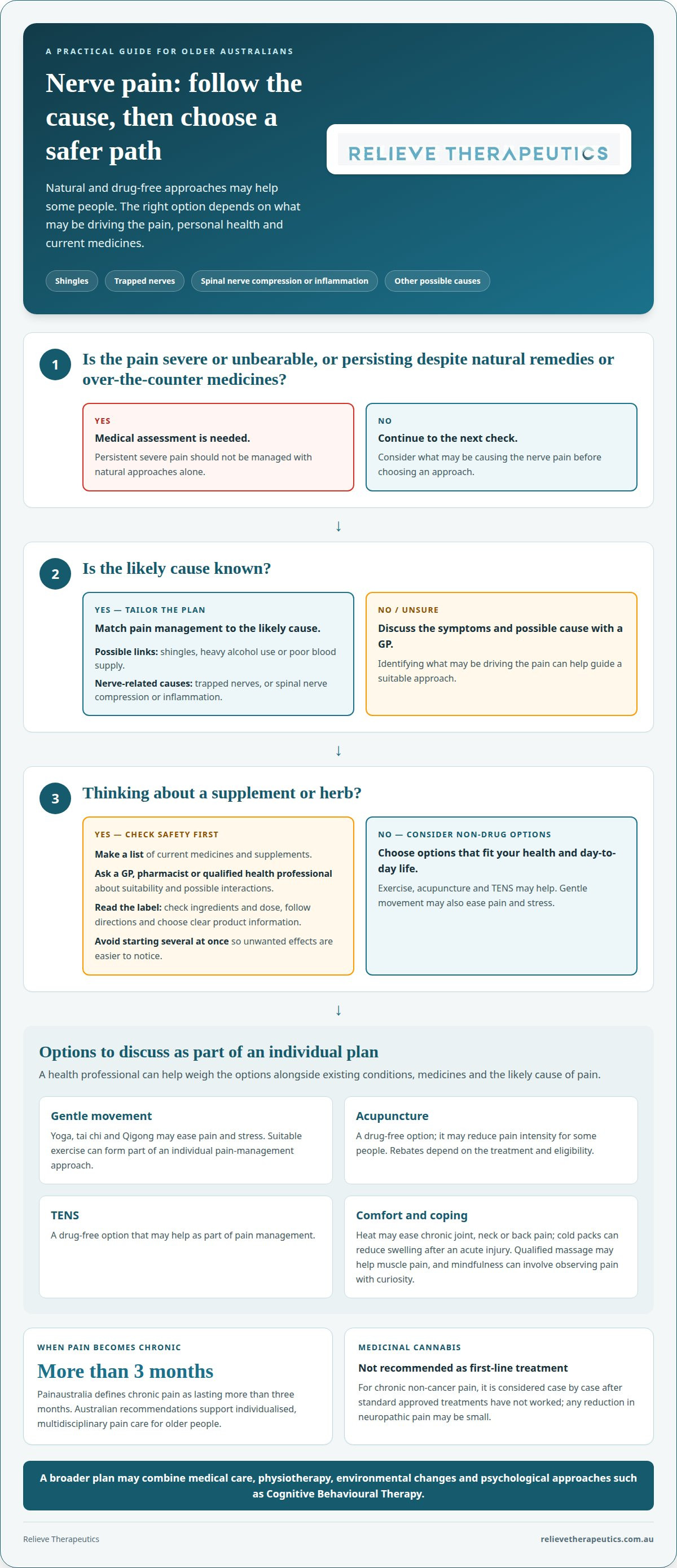
Yes. Gentle yoga, tai chi and Qigong may ease pain and stress. Acupuncture and TENS are other drug-free options; acupuncture may reduce pain intensity for some people. Nerve pain can be associated with shingles, heavy alcohol use, poor blood supply, trapped nerves, or spinal nerve compression or inflammation. Identifying the likely cause can help shape pain management.
Painaustralia defines chronic pain as lasting more than three months. Before adding a complementary medicine, list your current medicines and supplements, then discuss them with a GP, pharmacist or other qualified health professional. Herbs such as lavender, rosemary, peppermint, ginger and feverfew may have pain-relieving properties, but some can interact with medicines. Use them cautiously, preferably with professional guidance.
For supplement safety, check the ingredients and dose on the label, follow the directions, and choose a product with clear information. Don’t start several new supplements at once. This makes it easier to notice unwanted effects and discuss them with a health professional, especially if you manage other conditions or take regular medicines. PEA supplements may help with mild nerve pain and inflammation and support healthy nerve function.
Painaustralia states that medicinal cannabis isn’t recommended as a first-line treatment for any condition. For chronic non-cancer pain, it is considered case by case after standard approved treatments haven’t worked; any reduction in neuropathic pain may be small. Severe or unbearable pain that persists despite natural remedies or over-the-counter medicines needs medical assessment.
Medicare doesn’t automatically cover every non-drug treatment. Rebates depend on the treatment and eligibility, so ask a GP about the relevant pathway for physiotherapy or acupuncture. Australian recommendations support individualised, multidisciplinary pain care for older people. This may combine medical care, physiotherapy, environmental changes and psychological approaches such as Cognitive Behavioural Therapy. Exercise, acupuncture and TENS may help; heat can ease chronic joint, neck or back pain, while cold packs can reduce swelling after an acute injury. Qualified massage may help muscle pain, and mindfulness can involve observing pain with curiosity. Start by discussing options with a GP, who can guide referrals to a suitably qualified pain medicine specialist.
2. Turmeric and curcumin for inflammation and pain
Musculoskeletal problems account for 56% of chronic pain cases. Trauma, overuse, illness and arthritis can affect joints or muscle, bringing pain, stiffness and swelling. Inflammation is part of the body’s response to injury, but persistent symptoms can interfere with movement and daily tasks. Identifying whether pain is joint-related, muscular or linked to another cause helps shape a practical plan.
Turmeric contains curcumin, an antioxidant that helps protect cells from free radical molecules. Researchers have studied curcumin for its potential to ease swelling, inflammation and pain, particularly in bone-related conditions such as arthritis. Turmeric is also traditionally used in Chinese medicine for mild joint and muscle pain. These traditional uses and research findings don’t mean turmeric or curcumin will address every type of pain.
For adults, the stated curcumin dosage range is 90 mg-2 g/day. Supplement formulations differ, so compare the amount of curcumin per dose rather than relying on the word “turmeric” on the front label. Piperine, a compound found in black pepper, is often paired with turmeric supplements to increase curcumin absorption. Discuss supplements with a health professional before starting, particularly if you take regular medicine.
An anti-inflammatory eating pattern can complement other parts of a pain-management plan. Consider including foods such as ginger, garlic, turmeric, fatty fish, nuts, berries, broccoli, avocado and green tea in meals. For example, pair oily fish with broccoli and ingredients containing ginger or garlic. Food choices support overall wellbeing, but they don’t replace assessment of persistent pain or its cause. Acupuncture, which involves a practitioner inserting fine needles, is a separate complementary treatment, not a way to increase curcumin’s effects. Relaxation and suitable movement can also be part of an individual approach to chronic pain.
3. Boswellia for osteoarthritis pain and stiffness
Osteoarthritis can bring persistent joint pain and stiffness, making everyday tasks such as walking or dressing harder. Boswellia is a complementary option studied for these symptoms. The adult dosage range described for Boswellia is 100-250 mg/day. That range is not a personal dosing instruction: the product formulation, existing conditions and other medicines matter when considering a supplement.
A study involving 545 people found Boswellia to be an effective and safe treatment for osteoarthritis, easing pain and stiffness. This offers evidence for exploring the supplement as part of pain management, rather than treating it as a cure or a replacement for other care. Arthritis has different causes and can affect function in different ways, so symptoms and daily limitations are useful signals to discuss with a health professional.
Track how osteoarthritis affects movement before and after a change to your routine. Note, for example, whether getting out of a chair, using stairs or opening jars becomes easier or remains difficult. Exercise may improve pain, physical function and quality of life for adults with chronic pain. A suitable activity plan can complement a supplement while addressing strength and mobility as well as discomfort.
Before starting Boswellia, show a GP or pharmacist the product label and an up-to-date list of medicines and supplements. This helps them assess possible interactions and whether it suits your health circumstances. Don’t change prescribed arthritis treatment without discussing it with the prescriber. Stress and poor sleep can also affect how manageable pain feels, so include them in conversations about therapy and daily care. A clear record of joint symptoms, medicine use and activities provides a practical basis for reviewing your approach.
4. Common causes and impacts of pain
Pain is a protective response that alerts the body to possible injury or illness. It may follow tissue damage, overuse, arthritis, nerve injury or reduced blood supply. Musculoskeletal pain can limit movement and make walking, dressing or household tasks harder. Neuropathic pain, by contrast, can arise from damage or injury affecting nerves or the nervous system.
Chronic pain may continue even when the original tissue injury has healed, disrupting daily function and productivity. One in five Australians experience chronic pain. Almost 46 per cent of hospital patients aged 80 years or older report experiencing pain. These figures underline why pain deserves attention, rather than being dismissed as an inevitable part of ageing. Considering natural pain relief for seniors in Australia starts with recognising how pain affects each person’s routines.
Sleep and pain can influence each other. In a cited study of people with fibromyalgia, 90% experienced a sleep disorder correlated with their pain. Poor sleep can lower a person’s pain threshold, while pain may make rest difficult. Exercise may improve pain severity, physical function and quality of life for adults with chronic pain. Pacing activity and simplifying demanding tasks can also help older people conserve energy while staying involved in daily routines.
Start by describing the pain in the older person’s own words, including where it is, how intense it feels and how it affects movement. Self-report is the most reliable source of pain information, including for people with cognitive or communication impairments. With severe cognitive impairment or communication difficulties, consider reported pain alongside observed behaviour and involve family or carers where appropriate. A lack of visible physical or autonomic signs doesn’t mean pain is absent. Recording changes during activities such as standing or walking can show how pain affects ability and help guide an individualised plan for natural pain relief for seniors in Australia.
Relieve Therapeutics: PEA 60 Capsules
Relieve Therapeutics offers PEA 60 Capsules for people exploring palmitoylethanolamide as part of a considered approach to pain management. PEA supplements may help relieve mild nerve pain and inflammation and support healthy nerve function, but they aren’t a substitute for finding the cause of persistent pain or following a care plan.
Compare the available capsule formats: PEA 60 Capsules, PEA 120 Capsules and PEA 180 Capsules. Before adding PEA to your routine, discuss it with a qualified health professional, particularly if you have an underlying condition or take other medicines. They can consider your health circumstances and current treatment alongside the product label.
Explore Relieve Therapeutics’ PEA capsule options to see whether they may suit your needs.
Take the next step towards a considered pain plan
A useful next step is to choose a daily activity that pain makes difficult and note what changes it. This gives you and your healthcare professional a practical way to discuss priorities and review whether your approach supports everyday function. For seniors considering natural pain relief in Australia, personal health circumstances and existing medicines should inform supplement decisions.
PEA may be one option to discuss. A GP or pharmacist can consider it alongside current medicines, health conditions and other parts of a pain-management plan. Focus on informed choices that support comfort and daily life, rather than expecting one option to suit every cause of pain.
For information about PEA, contact Relieve Therapeutics today. A thoughtful next step can help you move forward with greater clarity and confidence.
Frequently Asked Questions
Are there natural remedies for nerve pain?
Yes, approaches such as gentle movement, acupuncture and TENS may help manage nerve pain. The most useful next step is to describe the sensation clearly: note whether it burns, tingles, shoots or feels numb, and where it occurs. Record what worsens or eases it, too. These details help a GP assess possible causes and consider options alongside your health conditions and medicines.
Can I use natural pain relief after surgery?
Some non-drug options, including acupuncture and transcutaneous electrical nerve stimulation (TENS), may help reduce pain after surgery. Ask your surgical team before starting either treatment, as timing and suitability depend on your operation, recovery and care plan. Follow your discharge instructions, and tell the team about any supplement or topical product you’re considering. Don’t replace prescribed post-operative care with a natural remedy.
How do you treat unbearable pain?
Seek medical care for unbearable pain, particularly if natural remedies or over-the-counter medicines haven’t relieved it. Explain when the pain began, where it is, how it feels and how it affects movement or sleep. Bring an up-to-date list of medicines and supplements, and describe what you’ve already tried. This information helps a clinician assess the situation and decide on appropriate next steps.
What natural pain relief options are available for seniors in Australia?
Options include appropriately tailored exercise, pacing activities, heat or cold for some types of pain, and complementary approaches such as acupuncture. A natural pain-relief plan for seniors in Australia may also include discussing supplements such as PEA with a qualified health professional. The right choice depends on the likely cause of pain, other health conditions and medicines. Focus on options that support daily activities and fit an individual care plan.
Are common herbal remedies and supplements safe for older Australians, and do they interact with medicines?
Some herbs and supplements can interact with medicines, so “natural” doesn’t automatically mean suitable for every older person. Before starting one, list all prescription medicines, pharmacy medicines and supplements, then show the list and product label to a GP or pharmacist. Introduce changes one at a time and note any new symptoms. This makes it easier to identify concerns and review the combination.
What are the risks of natural pain treatments for seniors with arthritis, osteoporosis, or other chronic conditions?
Risks depend on the treatment and the person’s health. A movement routine that doesn’t suit someone’s ability or balance may be difficult to follow safely, while supplements can interact with medicines or be unsuitable with some conditions. Before changing your exercise routine or starting a product, discuss the plan with a qualified health professional. Share relevant diagnoses, medicines and past reactions so they can assess the approach.