

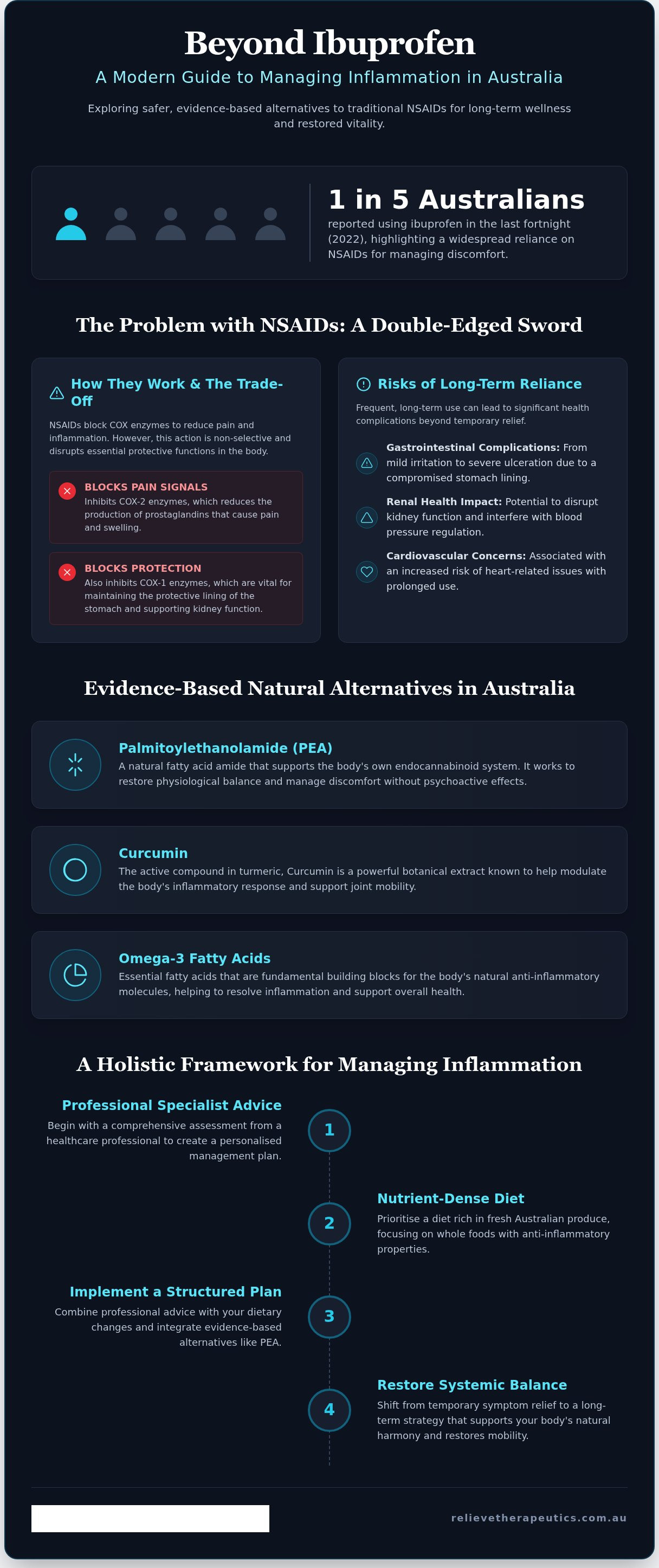
In 2022, one in five Australians reported using ibuprofen in the previous fortnight. While these medications offer temporary relief, many people now face the reality of stomach irritation, concerns regarding long-term organ health, and persistent discomfort that refuses to subside. If you are searching for alternatives to NSAIDs for inflammation Australia provides a range of sophisticated, evidence-based options that prioritise systemic balance over temporary suppression.
We understand that managing chronic inflammation is both a physical and emotional challenge. It is frustrating when standard treatments lead to unwanted side effects or fail to restore your daily mobility. You deserve a management plan that offers safety, transparency, and clinical reliability. This article promises to guide you through the most credible natural options available, helping you build a strategy that supports your recovery and long-term wellness.
We will explore the science behind Palmitoylethanolamide (PEA), examine the efficacy of traditional botanical extracts, and provide a clear framework for restoring your vitality. By focusing on purity, absorption, and physiological balance, you can move towards a future of improved movement and lasting comfort.
Key Takeaways
- Understand the biological mechanism of COX enzyme inhibition and why long-term reliance on traditional medications may impact your gastrointestinal and renal health.
- Identify evidence-based alternatives to NSAIDs for inflammation Australia provides, including how Curcumin and Omega-3 fatty acids help modulate the body's natural inflammatory response.
- Learn to implement a structured management framework that combines professional specialist advice with a nutrient-dense diet rich in fresh Australian produce.
- Discover the sophisticated role of Palmitoylethanolamide (PEA) as a natural fatty acid amide that supports the endocannabinoid system without psychoactive effects.
- Develop a safer, long-term strategy for managing discomfort that prioritises systemic balance and restores your daily mobility and vitality.
Understanding Inflammation and the Standard Role of NSAIDs
Inflammation is a biological necessity. It is the immune system's innate response to pathogens, damaged cells, or physical irritants. When you experience a minor injury, the resulting redness and heat indicate that your body is actively repairing itself. However, a distinction exists between this acute, helpful response and the persistent state of chronic inflammation. While acute inflammation resolves once the threat is gone, chronic inflammation lingers, leading to long-term tissue damage and ongoing discomfort. This persistent state often requires a more nuanced approach than a simple temporary fix.
For many Australians, the immediate response to this discomfort is to reach for Non-Steroidal Anti-Inflammatory Drugs (NSAIDs). These include common household names like ibuprofen, aspirin, and diclofenac. While these medications are accessible and effective for short-term relief, they aren't without limitations. This is why more individuals are seeking a deeper understanding of anti-inflammatory agents that offer a more sustainable path, leading to an increased interest in alternatives to NSAIDs for inflammation Australia wide.
The Mechanism of Action: Prostaglandins and Enzymes
NSAIDs function by inhibiting specific enzymes known as cyclooxygenase-1 (COX-1) and cyclooxygenase-2 (COX-2). These enzymes are responsible for the production of prostaglandins, which are lipid compounds that act as messengers in the body. Prostaglandins play a central role in signalling pain, fever, and swelling to the brain. By blocking these enzymes, NSAIDs effectively mute the pain signals, providing temporary symptomatic relief. It's a highly efficient process for managing acute flare-ups.
However, this mechanism is a reactive measure rather than a proactive one. Because NSAIDs primarily address the symptoms by blocking enzyme pathways, they don't necessarily resolve the underlying biological triggers of chronic inflammation. For those dealing with persistent issues, this can create a cycle of temporary relief followed by the return of discomfort. A truly effective management plan must look beyond simple enzyme blocking to support the body’s internal regulatory systems.
When Australians Typically Reach for NSAIDs
In the Australian context, NSAID use is deeply ingrained in daily life. We often rely on them for sports injuries sustained on the weekend, joint stiffness during colder months, or routine period discomfort. The "over-the-counter" culture in Australia makes these medications highly accessible, often leading to a pattern of over-reliance. When a tablet is available at every local chemist or supermarket, it becomes the default solution for any physical ache.
This convenience has a hidden cost. Frequent use can mask deeper physiological needs and may eventually lead to the secondary health concerns discussed later in this guide. Recognising that these drugs are designed for short-term use is the first step toward a more balanced health journey. Many Australians are now transitioning toward a holistic framework that prioritises long-term safety and systemic harmony. By exploring alternatives to NSAIDs for inflammation Australia, you can begin to support your body's natural recovery processes more effectively.
The Hidden Risks of Long-Term NSAID Reliance
While NSAIDs are effective for acute management, long-term reliance introduces physiological complications that often outweigh the benefits. For many Australians, the transition from occasional use to a daily habit occurs subtly. This shift can lead to systemic stress, particularly within the gastrointestinal, renal, and cardiovascular systems. Understanding these risks is essential for anyone exploring safer alternatives to NSAIDs for inflammation Australia wide.
Gastrointestinal Complications and Gut Health
The stomach lining relies on a delicate balance of chemicals to maintain its integrity. NSAIDs disrupt this by inhibiting the COX-1 enzyme, which is vital for producing protective compounds. Prostaglandins are essential lipid compounds that maintain the stomach's mucosal lining by stimulating mucus production and regulating acid secretion. Without this barrier, the stomach becomes vulnerable to its own digestive acids, leading to "NSAID-induced gastropathy." Symptoms range from mild indigestion to serious ulceration. For those seeking a gentler path, biological modulators like Palmitoylethanolamide (PEA) offer a way to support the body without compromising gut health.
Kidney and Heart Health Considerations
Renal function is another area of concern, especially for active Australians or those managing high blood pressure. These medications can significantly alter blood flow to the kidneys, potentially leading to renal stress or fluid retention. A study of 3,175 Australian adults found that 60.8% of NSAID users also had hypertension, a combination that requires careful clinical oversight. For individuals with existing cardiovascular conditions, the risk profile increases further. Research indicates that certain NSAID classes may elevate the risk of heart-related events by affecting blood pressure regulation.
Finding sustainable ways to manage discomfort is paramount. Many are now integrating non-opioid pain relief supplements as safer adjuncts to their routine. These options provide support without the heavy toll on vital organs. If you're looking to transition your management plan, you might consider starting with a high-quality PEA supplement to support your daily mobility.
A less discussed side effect is the "medication-overuse headache." This occurs when frequent usage leads to a rebound effect, where the body becomes accustomed to the drug and reacts with a headache as the dose wears off. It creates a cycle of dependency that is difficult to break without professional guidance. By identifying diverse alternatives to NSAIDs for inflammation Australia offers, you can avoid these rebound effects and achieve a more stable state of comfort.
Evaluating Natural Anti-Inflammatory Alternatives in Australia
After identifying the systemic risks associated with traditional medications, many individuals are transitioning toward more sustainable options. The search for alternatives to NSAIDs for inflammation Australia provides is not merely about avoiding side effects. It is about supporting the body's innate regulatory pathways with precision and clinical rigor. Modern nutraceuticals offer a way to manage discomfort while respecting the body's delicate physiological balance.
Curcumin and Omega-3: The Traditional Favourites
Natural anti-inflammatory agents such as Curcumin and Omega-3 fatty acids have long been the cornerstones of natural health. Curcumin, the active compound in turmeric, works by modulating inflammatory cytokines to reduce systemic stress. However, standard turmeric extracts often face significant bioavailability challenges, meaning the body struggles to absorb enough of the active ingredient to be effective. High-quality, lipid-bound extracts are usually required to achieve a therapeutic outcome.
Omega-3 fatty acids, typically sourced from fish oil, play a different but equally vital role. They provide the essential building blocks for "resolvins," which are molecules responsible for the resolution phase of inflammation. Rather than just blocking a signal, resolvins help the body actively "switch off" the inflammatory response once it is no longer needed. While both Curcumin and Fish Oil are effective, they often require high daily doses and consistent use over several weeks to produce noticeable results.
Palmitoylethanolamide (PEA): The Modern Science-Backed Choice
Palmitoylethanolamide (PEA) represents a sophisticated shift in how we approach chronic discomfort. Unlike botanical extracts, PEA is a fatty acid amide that your body already produces naturally in response to cellular stress or injury. It acts as a biological modulator, specifically targeting the Endocannabinoid System (ECS). This system is a vast regulatory network that maintains homeostasis, or internal balance, across your immune and nervous systems. This focus on the ECS is a significant advancement that many traditional guides overlook.
By interacting with specific nuclear receptors, PEA helps down-regulate the overactive signals that contribute to persistent inflammation. You can delve deeper into the science of how PEA works for pain and inflammation to understand the "Entourage Effect." This process describes how PEA enhances the activity of other protective compounds within your body, creating a comprehensive environment for restoration. PEA is particularly valued for its exceptional safety profile, as it lacks documented drug interactions and does not cause the gastrointestinal distress common with COX-inhibiting medications. It is a disciplined, evidence-based choice for those seeking long-term vitality.
When comparing these alternatives to NSAIDs for inflammation Australia wide, the choice often depends on your specific needs. While Curcumin and Omega-3 provide broad support, PEA offers a targeted, body-identical approach that aligns with the body's natural defensive chemistry. This combination of safety, efficacy, and biological harmony makes it a compelling partner in any personal health journey.
A Holistic Framework for Managing Inflammation Down Under
Managing chronic inflammation requires more than a single intervention. It demands a structured, multi-faceted approach that addresses root causes while supporting daily function. By adopting a holistic framework, you can reduce reliance on traditional medications and cultivate long-term systemic health. For those seeking alternatives to NSAIDs for inflammation Australia provides a unique environment where lifestyle, diet, and clinical-grade supplementation intersect.
The first step is always clinical oversight. Consult with an Australian GP or specialist to rule out underlying structural issues or specific autoimmune conditions. Professional guidance ensures your plan is safe and tailored to your unique physiology. Once a baseline is established, you can begin implementing an anti-inflammatory diet rich in local produce. Leafy greens, berries, and oily fish provide the essential nutrients needed to modulate the immune response.
Movement is the third pillar. Utilise "pacing" and low-impact movement, such as swimming or walking, to maintain joint mobility without overstressing the tissues. Finally, incorporate targeted supplements. Integrating high quality PEA capsules into your daily routine can provide the necessary support for the nervous system during this transition.
Dietary Adjustments for the Australian Lifestyle
In many Australian urban centres, highly processed "convenience" foods often dominate the daily diet. These items are frequently pro-inflammatory and can exacerbate persistent discomfort. Reducing these in favour of whole foods is a critical shift for long-term health. Hydration is equally important, particularly in the harsh Australian climate. Consistent fluid intake ensures joint lubrication and the efficient removal of metabolic waste. Consider specific local options like macadamia nuts for their Omega-7 content and wild-caught Australian salmon to support your body's natural resolution pathways.
Movement and Sleep: The Non-Negotiables
Movement acts as a natural pump for the lymphatic system. It helps move inflammatory by-products out of joint tissues, preventing the stagnation that leads to morning stiffness. However, this activity must be balanced with restorative sleep. Sleep is the period when the body performs its most intensive regulatory work, including the modulation of inflammatory cytokines. Finding the correct PEA dosage for pain and timing it with your evening routine may help support a more restful night and improved morning mobility.
If you are ready to take the next step in your health journey, you can browse our range of Australian-owned PEA capsules to support your holistic management plan.
Why Palmitoylethanolamide (PEA) is Gaining Traction
The increasing interest in Palmitoylethanolamide (PEA) reflects a significant shift in how Australians approach chronic discomfort. As a biological modulator, PEA offers a sophisticated way to manage the physiological triggers of persistent inflammation. Unlike traditional medications that simply block enzyme pathways, PEA supports the body's internal regulatory systems. This focus on systemic balance is a primary reason why many are now prioritising it when evaluating alternatives to NSAIDs for inflammation Australia provides.
One of the most compelling aspects of PEA is its relationship with the endocannabinoid system (ECS). It functions as an endogenous fatty acid amide, meaning it's a molecule your body already produces to maintain homeostasis. Crucially, PEA provides this support without any psychoactive effects, distinguishing it from other cannabinoids. For Australians managing long-term conditions like sciatica or joint stiffness, it offers a disciplined, evidence-based path to restoration without compromising mental clarity or daily function.
The PEA Advantage: Safety and Bioavailability
A major hurdle in managing chronic inflammation is the gastric irritation often caused by traditional anti-inflammatories. PEA addresses this challenge directly. Because it's a fatty acid amide, PEA is naturally recognised and utilised by human cells, bypassing the pathways that lead to stomach lining damage. It provides a reliable atmosphere of professional care for those whose digestive systems have been sensitised by previous treatments. For those beginning this transition, PEA 60 capsules are an ideal way to trial the supplement and observe its compatibility with your unique physiology.
Long-Term Management Strategies
Natural supplementation requires a different mindset than the "instant fix" culture of over-the-counter drugs. It's a process of restoration, not a quick suppression of signals. This "slow and steady" approach allows the body to gradually reset its inflammatory threshold. For consistent, sustained support, many Australians opt for bulk options like PEA 120 capsules. These strategic choices ensure that your management plan remains uninterrupted, supporting long-term outcomes and improved daily mobility.
Choosing alternatives to NSAIDs for inflammation Australia wide is about more than just avoiding side effects. It's about becoming a partner in your own health journey. By selecting high-quality, science-backed options, you can move toward a future of vitality and comfort. Explore our range of Australian-shipped PEA capsules at Relieve Therapeutics to find the right support for your needs.
Restoring Your Vitality with Evidence-Based Support
Transitioning away from a reliance on traditional medications is a significant step toward long-term systemic health. We've examined how chronic discomfort requires a sophisticated approach that prioritises your body's natural regulatory systems over simple symptom suppression. By integrating biological modulators like Palmitoylethanolamide and adopting a holistic lifestyle framework, you can protect your gastrointestinal and renal health while restoring your daily mobility.
Finding effective alternatives to NSAIDs for inflammation Australia offers involves a commitment to quality and scientific rigor. Relieve Therapeutics acts as your knowledgeable guide, providing science-backed natural support through our specialised range of PEA capsules. We offer focused 60, 120, and 180 capsule variations to suit every stage of your personal health journey. It's possible to achieve lasting comfort without the burden of heavy medication.
We invite you to take the next step toward a more balanced and vibrant life. Order high-quality PEA capsules from Relieve Therapeutics today for fast Australian delivery. You have the power to redefine your recovery, and we're here to support you with integrity and care every step of the way.
Frequently Asked Questions
Are natural anti-inflammatories as effective as ibuprofen?
Natural options work differently to ibuprofen. While ibuprofen provides rapid symptomatic relief by blocking COX enzymes, natural alternatives focus on systemic modulation. They are often used for long-term management rather than immediate suppression. For many Australians, the goal isn't just speed but sustainability and safety. When evaluating alternatives to NSAIDs for inflammation Australia provides, it's essential to consider how these substances support your body's innate recovery pathways over weeks rather than minutes.
Can I take PEA supplements alongside my regular prescription medications?
PEA generally has an exceptional safety profile with very few documented drug interactions. Because it is a fatty acid amide produced naturally by your own cells, the body recognises it easily. However, you should always consult your Australian GP or a qualified specialist before adding any new supplement to your routine. This is particularly important if you're managing complex conditions or taking specific prescription medications. Professional oversight ensures your integrative health plan remains safe and effective.
How long does it take for natural alternatives to start working for inflammation?
Natural alternatives typically require a "slow and steady" approach. Unlike the rapid effect of a pharmaceutical tablet, substances like PEA or Curcumin need time to build up in your system and modulate biological pathways. Most users report noticing a shift in their comfort levels after two to four weeks of consistent use. It's a process of restoration rather than suppression. Patience is key when transitioning to a long-term management strategy that prioritises systemic health and vitality.
What is the best natural anti-inflammatory for joint stiffness in Australia?
There isn't a single "best" option for everyone, but PEA is increasingly favoured for joint stiffness and nerve-related discomfort. Its role as a biological modulator helps regulate overactive inflammatory signals within the nervous system. Other popular Australian choices include high-quality Curcumin and Omega-3 fatty acids. Many people find that a combination of these evidence-based supplements, alongside a nutrient-dense diet, provides the most comprehensive support for maintaining daily mobility and vitality in the Australian climate.
Does Palmitoylethanolamide (PEA) have any common side effects?
PEA is remarkably well-tolerated and does not typically cause the side effects associated with traditional medications. It does not lead to the gastric irritation, kidney stress, or cardiovascular concerns often seen with long-term NSAID use. Because it's a substance your body already produces, adverse reactions are rare. This high level of safety makes it a reliable choice for individuals who have experienced sensitivity to other treatments. It offers a calm and supportive path to managing long-term discomfort.
Is it safe to take natural anti-inflammatories every day for long periods?
Yes, many natural alternatives to NSAIDs for inflammation Australia offers are specifically designed for long-term daily use. Unlike traditional medications, which are often recommended for short-term relief only, natural modulators like PEA support the body's ongoing regulatory processes. They help maintain homeostasis without the risk of organ damage or rebound effects. Consistent daily intake is often necessary to achieve and maintain the desired level of comfort and mobility over months or years.
Why should I choose PEA over other supplements like Turmeric or Fish Oil?
PEA offers a unique advantage because it is a body-identical molecule that specifically targets the endocannabinoid system. While Turmeric and Fish Oil are excellent for broad systemic support, PEA acts as a precision modulator for cellular stress. It doesn't rely on the complex bioavailability requirements of Turmeric or the high dosages often needed with Fish Oil. Choosing PEA means opting for a sophisticated, science-backed fatty acid amide that aligns perfectly with your body's internal defensive chemistry.
Do I need a prescription to buy PEA capsules in Australia?
You don't need a prescription to purchase PEA capsules in Australia. PEA is a TGA-recognised ingredient and is available over-the-counter as a dietary supplement. While therapeutic-grade compounded versions for specific medical conditions may require a doctor's script, standard high-quality capsules are accessible to all Australians. Relieve Therapeutics provides these supplements directly to consumers through our online platform. This makes it a convenient and professional option for those looking to manage their health journey independently and proactively.