

Pain from an old injury can persist beyond the expected healing period. Healthdirect Australia describes chronic pain as pain that lasts longer than expected, usually for more than three months; managing pain from old injuries means considering not only the original damage, but also how the area has healed and what may be affecting it now.
It can be frustrating when an old sports injury still affects your movement or comfort. Scar tissue, nerve damage and changes to a joint or tendon may contribute to lingering pain. Arthritis or diabetes can also complicate recovery.
This article explains why old injuries may keep hurting, how health conditions and sports injuries can affect pain, and how a care team can help shape a management plan. You’ll learn what may be happening in the body and why combining different forms of support can help address pain and day-to-day function.
Key Takeaways
- Lingering pain can involve more than the original injury, including scar tissue, nerve changes or effects on mental wellbeing.
- Conditions such as arthritis and diabetes may influence healing, so consider how your overall health affects recovery.
- Returning to activity gradually and balancing movement with rest can help support strength and mobility after a sports injury.
- A coordinated care approach can address physical and emotional aspects of persistent pain, rather than focusing on medication alone.
What Causes Chronic Pain from Old Injuries?
Managing pain from old injuries starts with understanding how healing, movement and overall health affect symptoms. A sprain that never fully heals, for example, may continue to cause discomfort long after the initial injury.
Acute and chronic pain
Acute pain usually starts suddenly after an injury, such as a cut, bruise, burn, broken bone or pulled muscle. It generally lasts fewer than three months and eases as the injury heals. Healthdirect Australia describes chronic pain as pain that persists beyond the expected healing period, usually for longer than three months. This distinction matters because ongoing pain may call for a broader assessment than short-term injury care, especially when it affects daily function.
How acute pain becomes chronic
Pain may become chronic when an injury heals slowly or incompletely, or tissue damage remains. Inadequate treatment can delay recovery, while poor nourishment or blood flow around injured tissue may contribute to stiffness and continued discomfort. Pain can also persist after treatment, including surgery. Identifying whether symptoms relate to the original damage, a complication or another condition such as arthritis can help guide care.
Medicines may ease symptoms, but paracetamol and anti-inflammatory medicines can cause side effects, and suitability varies. Use anti-inflammatory medicines cautiously and for the shortest time possible. Speak with a doctor or pharmacist before increasing a dose, and keep track of the medicines you take, especially if you use more than one pain-relief product.
Chronic pain can affect mental health as well as movement. Ongoing discomfort may contribute to anxiety, depression or self-isolation, while distress can make coping harder. Cognitive behavioural therapy can help address the relationship between physical pain and emotional strain, alongside care focused on function.
For severe chronic pain, surgery may be considered if other treatments haven’t provided relief. It may repair injury-related damage, but discuss potential benefits and risks with a medical professional.
Seek prompt medical advice if pain from an old injury is worsening, swelling develops, or movement and daily function become more limited. Sudden, severe symptoms also warrant urgent assessment.
Underlying health conditions and injury recovery
Diabetes and arthritis can affect how the body heals after an injury. Recovery also depends on movement, daily habits and support suited to your needs.
Healthy habits for pain management
Healthy habits support general wellbeing and can help you stay active while managing persistent pain. Diabetes or arthritis may make injured tissue more vulnerable to pain or reinjury, so adjust exercise to your symptoms and ability.
Light stretching, walking and other moderate movement can help maintain strength around affected muscles and joints. Increase activity gradually, prioritise good form over intensity, and avoid pushing through worsening pain. A balanced diet supports overall health, while discussing weight goals with a health professional can help tailor activity to your needs.
Pacing, sleep and stress management
Pacing means balancing activity with rest, rather than stopping movement completely or doing too much at once. For example, break a demanding household task into smaller parts and pause before pain escalates. This can help you maintain daily function while adjusting activity to your symptoms.
Sleep and stress matter too. Poor-quality sleep can provoke an inflammatory response, while persistent pain can make rest harder. A regular sleep routine, meditation or journalling may support coping. If stress or low mood affects daily life, discuss it with a health professional as part of your pain care.
Support from health professionals
A physiotherapist can tailor exercises to strengthen muscles around an old injury, improve movement and support a gradual return to activity. A GP can consider how conditions such as diabetes or arthritis affect recovery and review medicines or other care options.
For a minor sprain, rest, ice, compression and elevation may help manage symptoms. Persistent or worsening pain needs an individual assessment, especially if it limits everyday activities. A physiotherapist can help adjust movement and pacing, while a doctor can assess the injury and underlying health factors.
Causes of lingering pain after sports injuries
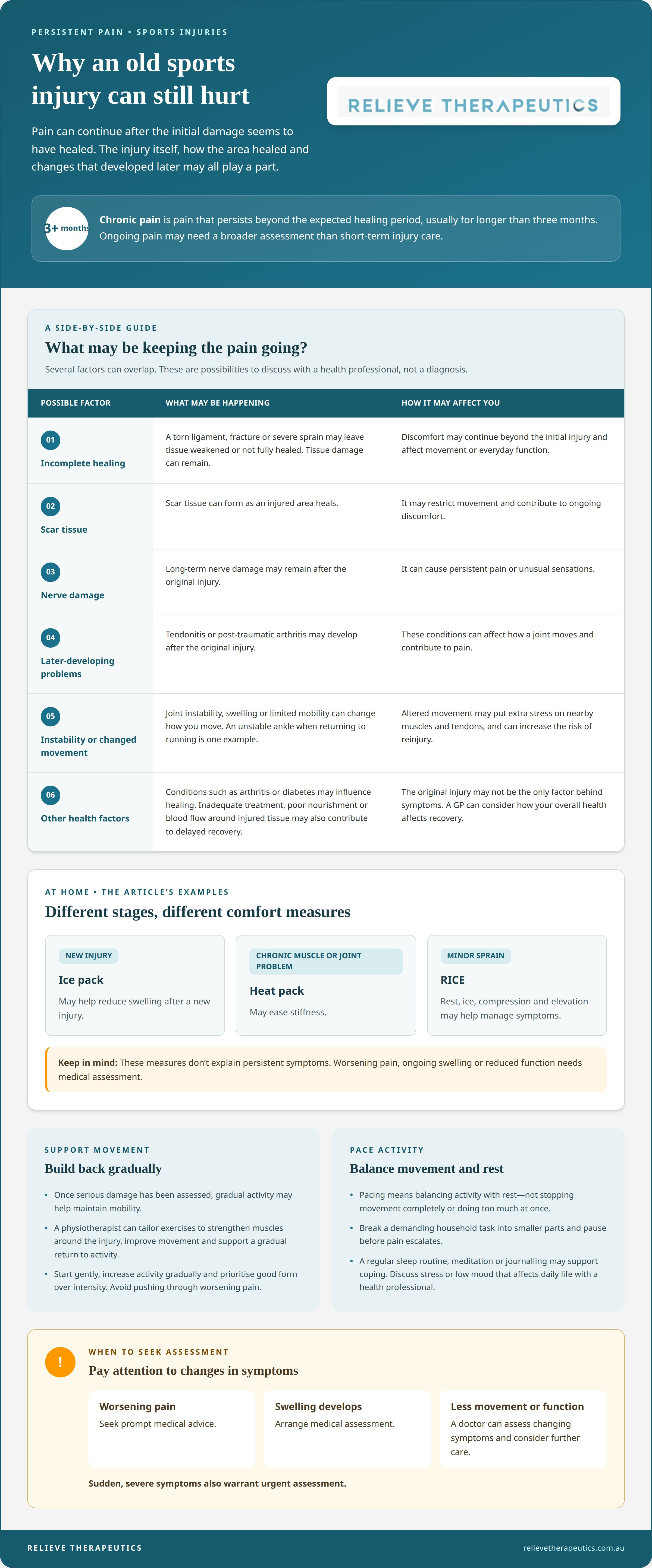
A sports injury can cause pain even after the initial damage seems to have healed. A torn ligament, fracture or severe sprain may leave tissue weakened or incompletely healed. Scar tissue can restrict movement, while long-term nerve damage may cause persistent pain or unusual sensations. The original injury may not be the only factor: tendonitis or post-traumatic arthritis can develop later and affect how a joint moves.
Symptoms may also follow an injury that did not receive orthopaedic assessment or treatment. Joint instability, swelling and limited mobility can make everyday activities difficult, while altered movement may put extra stress on nearby muscles and tendons. For example, returning to running with an unstable ankle may increase the risk of reinjury. A doctor can assess changing symptoms and consider whether further medical care is needed.
Home strategies depend on the injury and its stage. For a new injury, an ice pack may help reduce swelling. For a chronic muscle or joint problem, a heat pack may ease stiffness. Rest, ice, compression and elevation may help with a minor sprain, such as a twisted ankle. These measures don’t explain persistent symptoms, so seek medical assessment for worsening pain, ongoing swelling or reduced function.
Complete inactivity can reduce strength and make movement harder. Once serious damage has been assessed, gradual activity may help maintain mobility. Physical therapy can use tailored stretches, exercises and other movements to improve function and support the muscles around the affected area. Start gently, increase activity gradually and pause if symptoms worsen. A physiotherapist can adapt exercises to your injury and current ability.
Stress and poor sleep can add to the burden of ongoing pain, particularly when discomfort disrupts daily routines. Tracking activities that worsen symptoms can help a doctor understand the pattern and guide care. Depending on the cause, a clinician may discuss medicines, including prescription options, and explain possible side effects. Massage isn’t recommended as a long-term pain therapy. A broader plan can address movement, function and symptom relief.
A team approach to pain management
Persistent pain can affect movement, sleep, mood and everyday activities, so one treatment may not address every need. A coordinated plan can combine physical care, psychological support and medication oversight. Each role brings a different perspective: a doctor reviews the injury and treatment options, while a physiotherapist focuses on movement and function. The aim is to manage symptoms while supporting day-to-day life.
Physical therapy can use targeted movement to improve mobility and strengthen muscles around the affected area. A physiotherapist can adapt exercises to your current ability, helping you return gradually to activities such as walking or sport. Pacing matters too: breaking tasks into manageable parts can help balance activity and rest. These steps focus on function and healing, rather than expecting one intervention to remove every sensation of pain.
Persistent pain can also bring emotional strain. Anxiety, depression and self-isolation may occur alongside chronic pain, and stress can make coping more difficult. A therapist can help you talk through the experience of an injury and address related trauma. Psychological support doesn’t replace physical assessment. It can be another part of care that recognises how pain affects both body and wellbeing.
Medication decisions need clinical oversight, particularly when pain is ongoing or difficult to manage. A doctor can consider suitable options and monitor possible side effects. Opioids may be used for pain after major surgery or traumatic injuries, but their side effects and addiction risk make clinician involvement important. An anaesthetist may also advise on approaches such as massage or biofeedback. Combining these perspectives can address inflammation, activity and emotional health more fully than relying on medication alone.
A useful care plan brings these roles together around clear priorities, such as sleeping better, moving more comfortably or returning to an activity you value. Share changes in pain, mood and function with your treating team. These details can guide adjustments to treatment and lifestyle support.
Relieve Therapeutics
Relieve Therapeutics offers Palmitoylethanolamide (PEA) capsules for people exploring this dietary supplement as part of their broader wellness choices. The range includes PEA 60 Capsules, PEA 120 Capsules and PEA 180 Capsules.
PEA supplements don’t replace assessment of a persistent injury or care from health professionals. If you’re considering PEA as part of your approach to ongoing discomfort, discuss its suitability with a healthcare professional, particularly if you take medicines or have an existing health condition.
For information about the PEA capsule options, contact Relieve Therapeutics.
Take your next step towards better support
Managing pain from old injuries can be an evolving process, and your priorities may change over time. Consider what you’d most like to make easier, such as returning to an activity you value or feeling more confident in everyday movement. Clear priorities can guide conversations about support suited to your circumstances.
If you’re considering a supplement, discuss it with a health professional, particularly if you take medicines or have an existing health condition. They can help you weigh it alongside your broader care and lifestyle choices.
For questions about the available PEA capsule options, discuss your questions with Relieve Therapeutics. A considered next step can help you move forward with greater clarity and confidence.
Frequently Asked Questions
What Treatment Options Are Available When Lingering Pain Can’t Be Managed at Home?
When home measures aren’t enough, a clinician can assess the cause and discuss suitable next steps. Options may include physical therapy, medication review, injections or epidurals. Surgery may be considered in severe cases if other treatments haven’t provided relief, after discussion with a medical professional. The choice depends on what is driving the pain, how it affects function and your overall health.
What can cause pain from an old injury to return or persist?
Pain can persist or return if tissue damage remains or a later problem affects the injured area. Scar tissue, nerve damage, tendonitis and post-traumatic arthritis are possible causes. A flare after increased activity may also coincide with swelling or joint instability. Note what changed before symptoms returned, such as starting a new exercise or taking a longer walk. This can help a clinician assess the pattern.
When should persistent pain from an old injury be assessed by a doctor?
Arrange a medical assessment if pain is worsening, not improving or interfering with ordinary activities. Persistent swelling, reduced mobility or a feeling that a joint is unstable are also reasons to seek advice. Describe where the pain occurs, which movements affect it and how it changes over time. These details can help your doctor assess the injury and decide whether further investigation or treatment is appropriate.
What treatments help manage chronic pain from an old injury?
Treatment depends on the injury, symptoms and effects on daily function. A plan may combine physical therapy, clinician-guided medication and psychological support, rather than relying on one approach alone. Targeted exercises can support movement, while cognitive behavioural therapy can address the relationship between pain and distress. For persistent pain that remains difficult to manage, a medical professional may discuss procedures or other options based on the cause.
Are heat, ice, massage or topical pain relief effective for old injury pain?
Ice packs may help reduce swelling after a new injury, while heat may suit chronic muscle or joint discomfort. Rest, ice, compression and elevation may help a minor sprain. Massage isn’t recommended as a long-term pain therapy. Pain-relieving gels may become less effective over time, so discuss ongoing symptoms or the need for stronger relief with a health professional.
Can nerve pain or scar tissue cause pain years after an injury?
Yes. Long-term nerve damage and scar tissue are recognised possible causes of pain after an injury. Post-traumatic arthritis or tendonitis can also develop later and contribute to symptoms. If the painful area feels different or discomfort returns after a long period, note its location and what affects it. A doctor can assess possible causes and guide the next step.