

What if the widespread pain and "fibro fog" that dominate your daily life aren't just symptoms you have to endure, but are actually signs of a biological system that is simply "stuck" in a state of high alert? For the nearly one million Australians living with fibromyalgia, the reality of persistent musculoskeletal discomfort and the frustration of pharmaceutical side effects can feel like an endless cycle. You likely want a solution that addresses the root cause of your distress rather than just masking the symptoms with heavy medications.
In this guide, you'll discover how a PEA supplement fibromyalgia approach targets neuroinflammation to provide a natural, science-backed alternative to traditional scripts. We promise to show you how Palmitoylethanolamide (PEA) acts as a biological reset for overactive glial cells, helping to reduce daily pain scores and improve your sleep quality. We will preview the latest 2026 clinical standards for purity, explain how to navigate TGA-listed options, and provide a clear roadmap for regaining your mobility and vitality through high-purity support.
Key Takeaways
- Understand how chronic neuroinflammation keeps your nervous system in a state of high alert, and why addressing this biological "stuck" point is essential for lasting relief.
- Learn how a PEA supplement fibromyalgia strategy works with your body's internal chemistry to calm overactive glial cells and reduce sensory sensitisation.
- Compare the benefits of natural fatty acid amides against traditional gabapentinoids to achieve better pain management without the risk of cognitive "fog" or dependency.
- Discover why maintaining a consistent regimen and sourcing high-purity Australian capsules is vital for achieving predictable, long-term improvements in your daily function.
The Link Between Fibromyalgia and Chronic Neuroinflammation
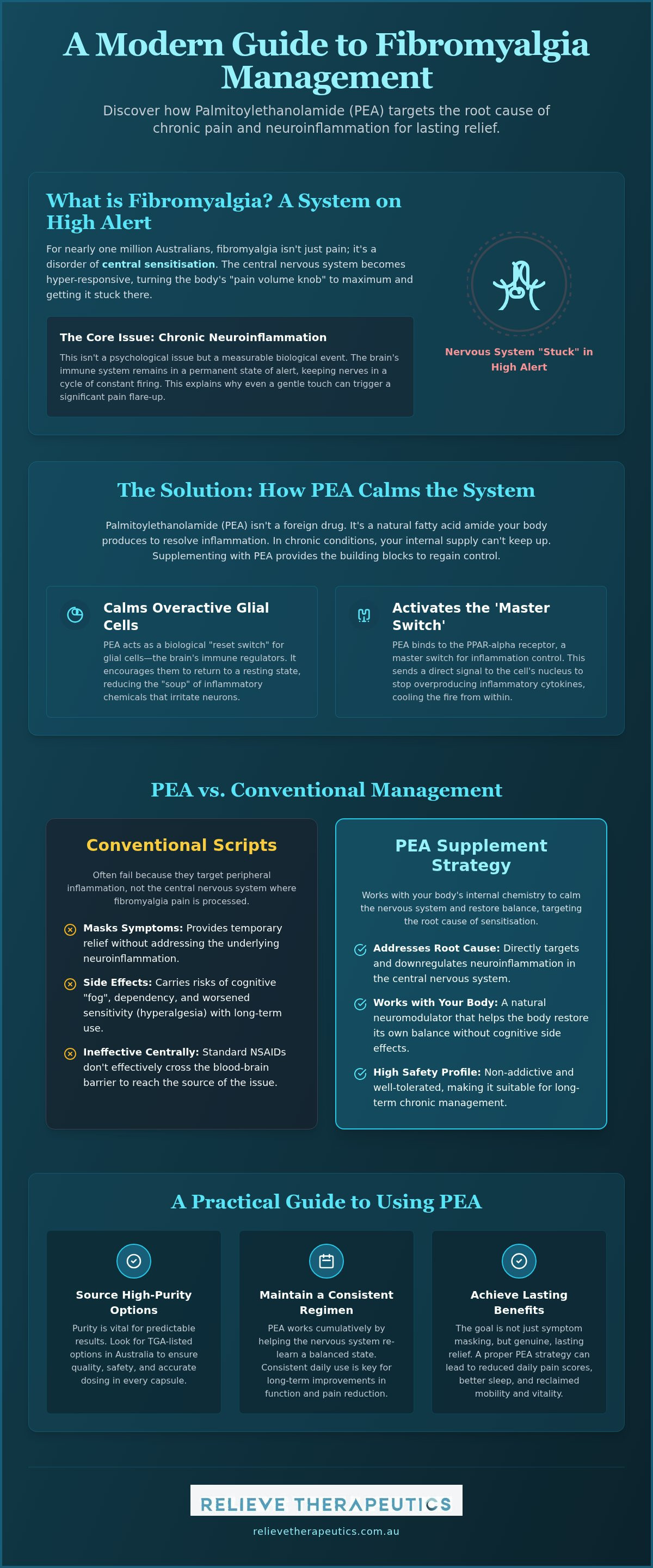
Fibromyalgia is frequently misunderstood because it doesn't present with the visible swelling or structural damage seen in conditions like arthritis. Instead, modern pain science identifies it as a disorder of central sensitisation. This is a state where your central nervous system becomes hyper-responsive to stimuli that wouldn't normally cause discomfort. It's as if the "volume knob" for pain in your brain has been turned to its maximum setting and is now stuck there. This explains why even a gentle touch or a change in temperature can trigger a significant flare-up for the estimated 3 to 5 percent of Australians living with this condition.
The primary driver behind this heightened sensitivity is chronic neuroinflammation. Unlike the temporary inflammation you might experience with a bruised muscle, neuroinflammation occurs when the brain's own immune system remains in a permanent state of high alert. This isn't a psychological issue; it's a measurable biological event where the internal environment of the nervous system becomes toxic. Clinical evidence now validates the "invisible" nature of fibromyalgia by showing that this persistent inflammatory state keeps the nerves in a cycle of constant firing. For those exploring a PEA supplement fibromyalgia strategy, the goal is to address this underlying biological "glitch" rather than merely masking the outward symptoms.
Why Traditional Pain Relievers Often Fail for Fibro
Many patients feel frustrated when standard over-the-counter options like paracetamol or non-steroidal anti-inflammatory drugs (NSAIDs) provide little to no relief. These medications are designed to target peripheral inflammation, such as the redness around a wound or joint swelling. They don't effectively cross the blood-brain barrier to reach the central nervous system where fibromyalgia pain is actually processed. Opioids present even greater challenges, as long-term use can actually worsen central sensitisation, a phenomenon known as opioid-induced hyperalgesia. To find genuine comfort, the body requires a neuromodulator that can reach the source of the distress and calm the system from within.
The Glial Cell Revolution in Pain Science
The real breakthrough in managing chronic pain involves understanding glial cells. Once thought to be simple "housekeepers" that merely held neurons together, we now know they are the primary regulators of the brain's immune response. When glial cells are activated by stress, injury, or infection, they release a "soup" of inflammatory chemicals that irritate nearby neurons. In fibromyalgia, these cells stay "on," creating a feedback loop of persistent pain. Palmitoylethanolamide (PEA) is a fatty acid amide that acts as a biological reset switch. By encouraging these glial cells to return to their resting state, a PEA supplement fibromyalgia approach helps to quiet the inflammatory noise, allowing the nervous system to regain its natural balance and function.
How Palmitoylethanolamide (PEA) Targets Fibromyalgia Mechanisms
Palmitoylethanolamide (PEA) is not a foreign chemical or a synthetic pharmaceutical. It is a fatty acid amide that your body already knows how to produce. In a healthy state, your cells synthesise PEA "on-demand" to resolve inflammation and protect tissues from damage. However, in chronic conditions like fibromyalgia, the body's internal supply often cannot keep up with the persistent demand. This is where a PEA supplement fibromyalgia strategy becomes essential. It provides the biological building blocks needed to regain control over a runaway inflammatory response.
The primary way PEA works is by activating the PPAR-alpha receptor. Scientists often refer to this receptor as a "master switch" for inflammation control. When PEA binds to this receptor, it sends a direct signal to the cell's nucleus to stop the overproduction of pro-inflammatory cytokines. By downregulating these harmful proteins, PEA helps to cool the inflammatory fire that causes so much daily distress. This mechanism is precise, targeted, and works with your body's existing pathways to restore a sense of internal calm.
Mast Cell Stabilisation and Widespread Pain
Fibromyalgia is frequently more than just muscle pain. Many Australians also experience heightened skin sensitivity, digestive issues, and a general "all-over" ache. These symptoms are often linked to mast cells. These are immune cells that, when triggered, release histamine and other irritating chemicals into the surrounding tissue. PEA acts as a natural stabiliser for these cells. It prevents them from degranulating, which reduces the chemical "soup" that irritates your nerves. This control can lead to a noticeable reduction in the skin sensitivity and digestive discomfort that often accompany a fibro flare, helping you feel more comfortable in your own skin.
The Endocannabinoid Connection
While PEA is not a cannabinoid itself, it is classified as an "endocannabinoid-like" molecule. It works through what researchers call the "entourage effect." Essentially, PEA supports your body's own calming systems by preventing the breakdown of anandamide, which is often referred to as the body's "bliss molecule." By maintaining higher levels of these natural compounds, you can better manage both the emotional and physical toll of long-term discomfort. For a more technical breakdown of this biological process, you can explore our PEA endocannabinoid supplement guide. If you are ready to begin your journey toward better management, choosing a high-purity PEA capsule ensures you are getting the clinical-grade support your system deserves.
PEA vs. Conventional Fibromyalgia Management in Australia
Choosing a management path for fibromyalgia often feels like a trade-off between relief and clarity. In Australia, many patients are prescribed gabapentinoids or antidepressants to manage central sensitisation. While these can be effective, they frequently carry a heavy burden of side effects, including significant weight gain, drowsiness, and an increase in the very "brain fog" patients are trying to escape. A PEA supplement fibromyalgia approach offers a distinct advantage because it works with your body's existing chemistry. Since PEA is a lipid already present in your tissues, it doesn't carry the same risk of dependency or cognitive impairment found in heavy pharmaceuticals.
It's vital to understand that PEA is a modulator, not an instant analgesic. Unlike a fast-acting pill that masks pain for a few hours, PEA works by gradually returning overactive glial cells to a resting state. This process takes time. Most clinical observations suggest that consistent use over three to four weeks is necessary to see a meaningful shift in daily pain scores. For Australians managing chronic conditions, this "slow and steady" approach is often more sustainable than the cycle of temporary relief followed by a crash.
Integrating this supplement into a multidisciplinary plan is the gold standard for 2026. This often includes:
- Consulting with a GP or pain specialist to monitor progress.
- Using low-impact movement to maintain joint health.
- Focusing on anti-inflammatory dietary choices.
Complementary Support: PEA and Lifestyle
Successful management rarely relies on a single "magic bullet." Instead, the most effective Australian treatment plans integrate supplementation with structured physical activity and pacing. Pacing is the practice of breaking tasks into smaller chunks to avoid overexertion. By using PEA to lower the baseline of systemic inflammation, many find it easier to engage in gentle movement without triggering a flare-up. This synergy also extends to sleep hygiene. When the nervous system is less reactive, falling into a restorative sleep state becomes more achievable, which is a cornerstone of long-term recovery.
Understanding the Safety Profile
One of the most reassuring aspects of Palmitoylethanolamide is its exceptional safety record. Extensive research has shown a lack of documented drug-to-drug interactions, making it a viable option for those who are already taking other medications. It is considered safe for long-term chronic management, which is essential for a condition like fibromyalgia that requires ongoing care. To understand more about the specific biological pathways involved, you can read our detailed guide on how does PEA work for pain. This transparency ensures you can make an informed choice alongside your healthcare professional, focusing on substance and quality over marketing hype.
Practical Guide to PEA Supplements for Fibromyalgia
Success with any natural intervention requires a structured approach and realistic expectations. Before you begin, it is essential to establish a baseline by tracking your symptoms for at least seven days. Record your pain intensity, sleep quality, and the severity of your "fibro fog" on a scale of one to ten. This objective data allows you to measure the impact of a PEA supplement fibromyalgia strategy with clarity, rather than relying on memory alone. Consistency is your most powerful tool in this process. Because PEA works by gradually modulating the activity of your immune cells, maintaining a steady daily intake is vital for long-term stabilisation.
The physical form of the supplement also plays a significant role in its efficacy. In 2026, clinical standards emphasise the use of micronised or ultra-micronised PEA. These formulations have been processed into smaller particles to overcome the naturally poor water solubility of fatty acids, ensuring the compound can be effectively absorbed by your digestive system. Be prepared for a gradual shift rather than an overnight transformation. While some Australians report subtle improvements within the first month, a window of six to eight weeks is generally required to observe the full cumulative effects on your nervous system.
The PEA Loading Phase Protocol
Most chronic pain specialists recommend a two-stage approach to supplementation to ensure the body's tissues are sufficiently saturated. The first stage involves a higher "loading" dose, typically 1200mg daily, for a period of four weeks. Following this initial month, you should assess your progress by comparing your current symptoms against your original baseline data. If you have achieved a noticeable reduction in discomfort, you can then transition to a lower maintenance dose based on your individual response. For specific milligram guidance and a more detailed breakdown of these steps, you can refer to our comprehensive guide on PEA dosage for pain.
Timing and Absorption Tips
Bioavailability refers to the proportion of a substance that enters the circulation when introduced into the body and is so able to have an active effect. To optimise this process, you should take your capsules with a meal that contains healthy fats, such as avocado, eggs, or olive oil. Splitting your total daily intake into a morning and evening dose is also highly recommended. This practice helps maintain steady plasma levels in your bloodstream, providing your nervous system with continuous support throughout the day and night. If you are ready to start your protocol with a reliable supply, you can browse our range of high-purity PEA capsules designed for consistent chronic management.
Choosing Quality PEA Capsules in Australia for Chronic Management
Navigating the supplement market can be challenging, especially when you're managing a condition as complex as fibromyalgia. While it might be tempting to opt for "cheap" bulk powders, these often present significant risks regarding purity and the presence of unlisted fillers. For a successful PEA supplement fibromyalgia regimen, the quality of the raw material is paramount. Low-grade powders may lack the micronisation necessary for absorption, rendering the supplement ineffective and unpredictable. By choosing high-purity capsules, you ensure that every dose provides the exact concentration of Palmitoylethanolamide required to support your nervous system without unnecessary additives.
Reliability is another critical factor in chronic management. Relying on international shipping for your health needs can lead to unexpected delays and gaps in your protocol. For those living with chronic neuroinflammation, even a few days without supplementation can trigger a flare-up of symptoms. Sourcing your supply from an Australian-owned and operated provider ensures consistent access and faster delivery times. This stability allows you to maintain steady plasma levels, which is the foundation of long-term comfort and improved daily function.
Sustaining Your Progress with 180-Count Supplies
Managing a chronic condition requires a long-term perspective rather than a short-term fix. While a 60-count bottle is an excellent starting point for those new to the protocol, the PEA 120 capsules or the 180-count packs are often the most strategic choice for fibromyalgia patients. These larger quantities align with the loading and maintenance phases discussed earlier, ensuring you have a continuous supply for the vital six-to-eight-week window. Bulk ordering is also more cost-effective, reducing the overall financial burden of your health journey while providing the peace of mind that comes with being prepared for the months ahead.
The Relieve Therapeutics Difference
At Relieve Therapeutics, we act as a specialist partner in your recovery journey. We focus exclusively on high-purity, single-ingredient PEA capsules to ensure you receive clinical-grade support without the clutter of unnecessary ingredients. Our approach combines clinical authority with a deep understanding of the Australian health landscape. We prioritise transparency and quality control, providing a reliable alternative to the "hype" often found in the wellness industry. Before starting any new regimen, we strongly encourage you to consult with your healthcare professional to ensure it aligns with your specific clinical needs and overall management plan.
Taking the Next Step Toward Lasting Relief
Managing fibromyalgia requires more than just masking symptoms; it demands a targeted approach that addresses the underlying neuroinflammation within your nervous system. By integrating a PEA supplement fibromyalgia protocol, you're choosing to calm overactive glial cells and restore balance to your body's natural inflammatory response. This journey is built on the foundations of patience, consistency, and clinical purity. When you focus on high-quality, single-ingredient support, you provide your system with the best possible environment for restoration and daily function.
As a specialist Australian retailer, Relieve Therapeutics is committed to providing the transparency and reliability your health journey deserves. Our capsules contain 100% pure Palmitoylethanolamide with no hidden fillers, ensuring you receive only what your body needs to thrive. We invite you to secure your supply of high-purity PEA capsules from Relieve Therapeutics Australia today and take advantage of free shipping on our bulk 180-capsule orders. You don't have to navigate the complexities of chronic pain alone; the right support is ready when you are.
Frequently Asked Questions
Is PEA effective for the 'fibro fog' associated with fibromyalgia?
PEA can assist with "fibro fog" by addressing the underlying neuroinflammation that affects cognitive processing. When glial cells in the brain are overactive, they release inflammatory cytokines that interfere with focus and memory. By calming these immune cells, PEA helps to reduce the chemical "noise" in the central nervous system. This often leads to improved mental clarity and a reduction in the cognitive fatigue that many Australians find so debilitating.
How long does it take for PEA supplements to start working for fibromyalgia pain?
Most individuals begin to notice a shift in their baseline pain levels after three to four weeks of consistent use. However, it typically takes six to eight weeks to achieve the full cumulative benefits of a PEA supplement fibromyalgia strategy. This timeline is necessary because the compound works as a biological modulator rather than an instant analgesic, gradually returning the nervous system to a more balanced and less reactive state.
Can I take PEA alongside my current fibromyalgia medications like Lyrica?
PEA is generally considered safe to take alongside common fibromyalgia medications like Lyrica (pregabalin). Clinical research has not documented any significant drug-to-drug interactions with standard pharmaceutical pain therapies. Because PEA is a lipid already present in your body, it often complements traditional treatments without increasing the burden of side effects. You should always discuss any new supplementation with your GP to ensure it fits your overall clinical plan.
Are there any side effects of long-term Palmitoylethanolamide use?
There are no known serious side effects associated with the long-term use of Palmitoylethanolamide. Since it is a fatty acid amide produced naturally by your own cells, the body processes it efficiently without the toxicity risks often found in synthetic drugs. Some users report very mild digestive changes when first starting, but these typically resolve quickly. It remains one of the most well-tolerated options for the ongoing management of chronic musculoskeletal discomfort.
What is the recommended daily dosage of PEA for widespread muscle pain?
The standard protocol for widespread muscle pain involves a loading dose of 1200mg per day, often split into two 600mg doses taken morning and night. This higher intake is maintained for the first four weeks to saturate the tissues. After this initial phase, many people find they can transition to a maintenance dose of 600mg daily, depending on their individual symptom response and the advice of their healthcare professional.
Is PEA a natural substance or a synthetic drug?
PEA is a natural substance classified as an endogenous fatty acid amide. It is found in small amounts in various foods like egg yolks and peanuts, but more importantly, your own body produces it "on-demand" to resolve inflammation. Unlike synthetic drugs that introduce foreign molecules into your system, supplementation simply replenishes your body's own natural defence mechanisms when they are overwhelmed by chronic conditions like fibromyalgia.
Why is micronised PEA considered better for absorption?
Micronised PEA is superior because it has been processed into smaller particles to enhance its bioavailability. PEA is a lipid-soluble compound, which means it doesn't dissolve easily in water or the digestive tract. By reducing the particle size, the surface area increases, allowing your body to absorb the nutrient more effectively. This ensures that a higher proportion of the supplement actually reaches your bloodstream to target overactive glial cells.
Do I need a prescription to buy PEA capsules in Australia?
You don't need a prescription to purchase a PEA supplement fibromyalgia in Australia. As of 2026, the Therapeutic Goods Administration (TGA) regulates Palmitoylethanolamide as a complementary medicine, making it available over-the-counter through specialist retailers. While it's accessible without a script, the TGA recommends consulting a healthcare professional if you intend to use the supplement for more than 21 consecutive days to ensure your chronic condition is being monitored regularly.