

An autoimmune flare-up can last from a few days to several months, depending on its severity and possible triggers. Pain may occur alongside fatigue, joint symptoms, muscle aches or a rash, and symptoms vary between people and conditions. Managing autoimmune flare-up pain naturally means considering supportive care, not replacing medical treatment.
It’s understandable to look for practical ways to ease discomfort and make daily life more manageable. Inflammation can contribute to pain, but symptoms may also reflect changes in affected tissues or the part of the body involved.
This guide explains how inflammation and tissue changes relate to autoimmune pain, what may trigger a flare and why its duration varies. It also explores how food, activity, stress management and naturopathic or herbal approaches may fit into a broader plan, and when new or worsening symptoms need medical attention.
Key Takeaways
- Autoimmune pain can relate to inflammation and affected tissues, and may occur alongside fatigue, muscle aches or other symptoms.
- Flare-ups can last from a few days to several months; stress and other possible triggers may influence their course.
- Notice whether activity, foods, drinks or stress coincide with symptom changes, and share recurring patterns with your healthcare provider.
- Food and lifestyle measures may support wellbeing, while herbal approaches need individual consideration alongside existing treatment.
1. Inflammation, tissue damage, pain and other symptoms
During an autoimmune flare, the immune system mistakenly targets parts of the body. Inflammation can cause pain, swelling and stiffness, particularly around affected joints. Symptoms depend on which tissues are involved: rheumatoid arthritis commonly affects joints, while other autoimmune conditions can affect different body systems. Pain may occur with fatigue, muscle aches or skin changes, and does not always show how much tissue damage has occurred. A diagnosed condition and changes in symptoms both matter when assessing what is happening.
Food choices may support general wellbeing, but they don’t replace treatment for an autoimmune condition. Fatty fish, leafy greens, berries, turmeric and ginger are examples of foods suggested for potential inflammation-related benefits. Limiting highly processed foods is another practical dietary approach. Responses vary, so record what you eat alongside symptom changes rather than assuming a particular food caused a flare.
For managing autoimmune flare-up pain naturally, food-based options and carefully considered supplements may offer supportive approaches. Omega-3 fatty acids, vitamins C and D, and curcumin may provide anti-inflammatory support. Turmeric contains curcumin, which is associated with anti-inflammatory and immune-modulating effects. Rehmannia is also described as an anti-inflammatory herb that may help regulate immune activity.
Herbs and supplements can affect an existing treatment plan, so discuss them with a qualified practitioner before use. Medicinal plants for autoimmune conditions should only be used when prescribed by a qualified naturopath or herbalist who has reviewed your health history and current treatment. This applies to turmeric and rehmannia, as well as other herbal products.
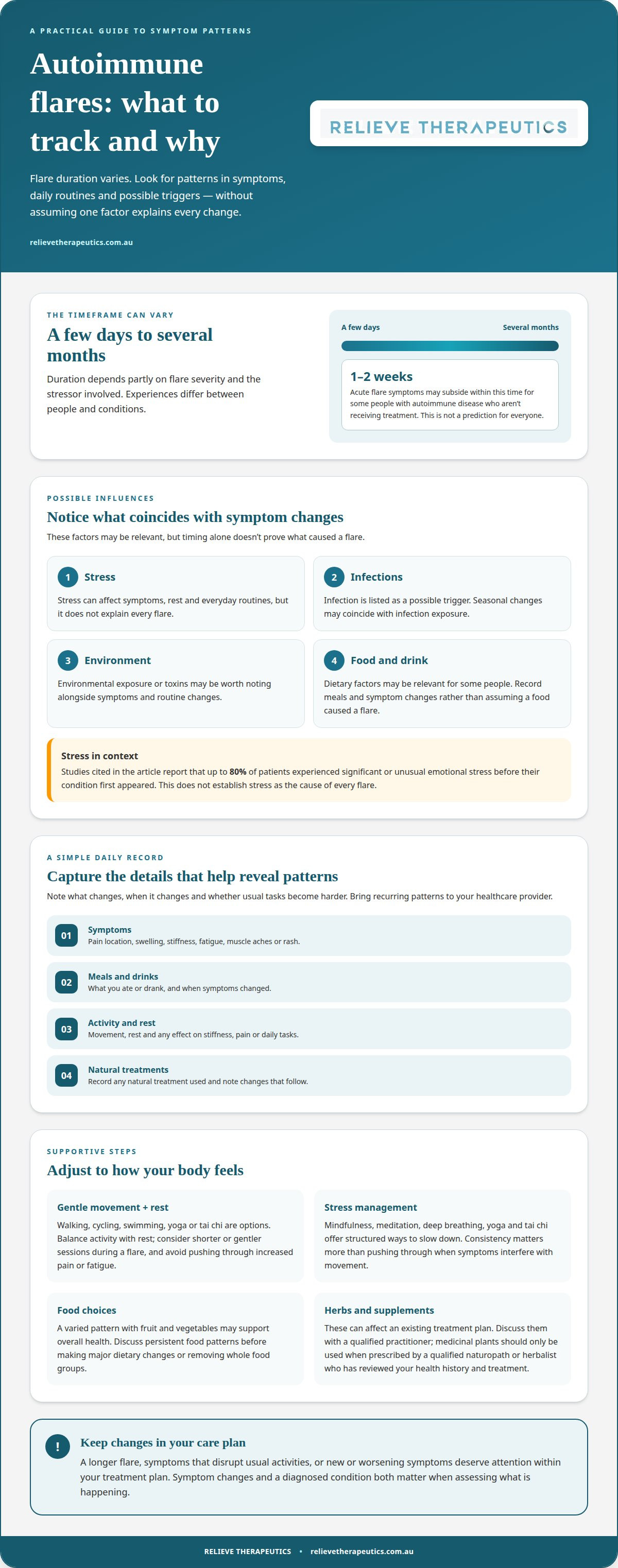
To track possible flare triggers and responses, keep a daily record of pain location, swelling, stiffness, meals, activity and any natural treatment used. Note when symptoms change and whether daily tasks become harder. Bring the record to appointments so your healthcare provider can assess patterns and changes in your quality of life.
2. How long does autoimmune flare-up last?
An autoimmune flare can last from a few days to several months. Its duration depends partly on the flare’s severity and the stressor involved. For some people with autoimmune disease who aren’t receiving treatment, acute flare symptoms may subside after one or two weeks. These timeframes vary, so a longer flare or one that disrupts usual activities deserves attention within your treatment plan.
Psychological stress can affect symptoms, but it doesn’t explain every flare. Studies cited on autoimmune disease report that up to 80% of patients experienced significant or unusual emotional stress before their condition first appeared. Stress may also accompany infections, environmental exposure or other triggers. Arthritis and other autoimmune disorders have different patterns, so one person’s experience can’t reliably predict when another person’s symptoms will settle.
Emotional trauma and prolonged pressure can make it harder to rest, follow treatment or maintain everyday routines. Rather than treating stress as the sole cause, notice whether it coincides with changes in pain, sleep or activity. One practical step is to identify a manageable source of pressure, such as an overloaded schedule, and plan a brief pause during the day.
Yoga, meditation, tai chi, mindfulness and deep breathing offer structured ways to slow down. Try a short breathing practice during a quiet part of the day, or choose gentle tai chi if sitting still feels difficult. Consistency matters more than pushing through a session when symptoms interfere with movement. Stress management may reduce inflammatory markers and support quality of life.
Acupuncture and massage aren’t established in the supplied evidence as safe or effective for every autoimmune flare. Physiotherapy is one approach used in autoimmune symptom management, but its role depends on the condition, affected tissues and current symptoms. Discuss any new therapy as part of your existing treatment plan, especially if pain or movement changes.
3. Activity, food and drink as possible symptom triggers
Autoimmune flare symptoms can come and go, and may include joint pain, fatigue, rash and muscle aches. Infections, stress, environmental toxins and dietary factors are possible triggers, but timing alone doesn’t prove what caused a flare. Seasonal changes may alter routines or coincide with infection exposure; note these alongside symptoms rather than assuming the weather caused them.
Food patterns are worth observing. Packaged and processed foods, refined ingredients and added sugar are examples to review, while fruit, vegetables and a predominantly plant-based pattern can support overall health. A Mediterranean-style diet includes vegetables, fruit, legumes, nuts and healthy fats. Gluten, dairy, soy and corn may be potential triggers for some people, but removing whole food groups can restrict nutrition. Record meals and symptom changes, then discuss persistent patterns with your healthcare provider before making major dietary changes.
Match activity to how your body feels. Walking, cycling or swimming can provide gentle, regular movement; yoga and tai chi are other options. Balance activity with rest and avoid overdoing exercise, particularly if pain or fatigue increases. During a flare, consider shorter sessions or gentler movement, and note how specific activities affect stiffness and daily tasks.
For comfort, try a comfortably warm pack or a wrapped cool pack briefly, and stop if either worsens discomfort or irritates your skin. Gentle movement may help maintain mobility, while rest allows time for recovery. Adjust both to your symptoms rather than pushing through pain.
Water supports hydration, while drinks or foods that seem to precede symptoms can be recorded in a simple diary. Include the time, activity, symptoms and their effect on usual tasks. If rheumatoid arthritis or another diagnosed condition becomes more symptomatic, or recurring symptoms noticeably affect daily life, tell your healthcare provider. Bring your notes to discuss possible triggers and whether your current treatment plan needs review.
4. Autoimmune conditions and flare-up triggers
Autoimmune conditions are chronic illnesses in which the immune system attacks parts of a person’s own body. More than 100 different autoimmune diseases can affect the body, and their symptoms depend on the tissues involved. Rheumatoid arthritis may cause joint pain, while multiple sclerosis affects the nervous system. A flare is a period when symptoms become more noticeable or severe, but its pattern differs between conditions and people.
There isn’t one established cause of autoimmunity. Possible contributors include genetic predisposition, infections, chemical exposure, psychological stress and changes in gut health. These are potential influences, not proof that a particular event caused someone’s condition. Lifestyle and nutrition may support general wellbeing, but neither explains every flare or replaces condition-specific treatment.
Gut health is one area being explored in relation to immune activity. Increased intestinal permeability allows more substances to pass through the intestinal wall, potentially prompting an immune response. An imbalanced gut microbiome and poor gut health are also described as possible contributors. These mechanisms don’t establish that a gut problem caused an individual’s autoimmune disease.
Rheumatoid arthritis, lupus, Hashimoto’s thyroiditis and multiple sclerosis illustrate why triggers and symptoms need to be considered in context. A factor linked to joint pain in one person may not affect someone with another condition in the same way. Track recurring symptom changes alongside infections, stress, food, sleep and activities. This can give your healthcare provider a clearer picture without assuming a single trigger.
Natural approaches should complement the diagnosed condition’s treatment plan. A plant-rich diet, restorative sleep and manageable activity can support general health. Medicinal plants for autoimmune conditions should only be used when prescribed by a qualified naturopath or herbalist who has reviewed your case and current treatment. The key takeaway is to look for personal patterns, not a universal trigger or cure.
Relieve Therapeutics
Relieve Therapeutics offers PEA dietary supplements for people exploring options alongside their broader approach to wellbeing. Its range includes PEA 60 Capsules, PEA 120 Capsules and PEA 180 Capsules.
PEA is not a replacement for prescribed autoimmune treatment, and these capsules aren’t a treatment for an autoimmune flare. If you’re considering a supplement while managing a chronic condition, discuss it with your healthcare provider, particularly if you take medicines or use other supplements. They can consider your health history and current treatment plan when advising whether it may be appropriate for you.
For information about the PEA capsule range, contact Relieve Therapeutics.
Choose a considered next step
A thoughtful approach to managing autoimmune flare-up pain naturally starts with a clear priority: what would make daily life more manageable? It might be moving more comfortably, getting through work with fewer interruptions or keeping a steadier routine as symptoms change. Naming that goal can help focus conversations about supportive options and how they fit alongside existing care.
Before adding a supplement, write down what you hope it will support and the treatments you already use. A healthcare professional can help you consider the whole picture, including your diagnosed condition and current treatment plan. This keeps decisions grounded in your needs rather than broad claims about natural approaches.
If you’d like to discuss PEA supplements as part of your wellbeing considerations, contact Relieve Therapeutics. A measured next step can help you make informed choices while keeping your care centred on what matters to you.
Frequently Asked Questions
How can naturopathy and herbal medicine help in autoimmunity?
Naturopathy may help organise dietary, lifestyle and herbal considerations around a person’s existing care. Rehmannia is described as potentially supporting immune regulation, while boswellia is used for joint conditions such as rheumatoid arthritis. These herbs aren’t interchangeable or suitable for everyone. A qualified naturopath or herbalist should review your health history and medicines before recommending medicinal plants.
How do I take care of myself?
Build a manageable routine around rest, sleep and everyday function. Try keeping consistent bedtimes and a restful bedroom, and discuss sleep difficulties with your healthcare provider. Turning off electronic devices at least an hour before bed is one sleep-hygiene step. If fatigue or pain disrupts your plans, prioritise essential tasks and allow time to recover rather than forcing your usual schedule.
How long does autoimmune flare-up last?
An autoimmune flare can last from a few days to several months, depending partly on its severity and the stressor. For some people with autoimmune disease who aren’t receiving treatment, acute symptoms may subside after one or two weeks. Note whether symptoms are easing, persisting or returning, and tell your healthcare provider if treatment seems less effective or flares recur more often.
What are the risk factors?
Potential contributors to autoimmune disease include genetic predisposition, infections, chemical exposure, psychological stress and changes in gut health. These factors can’t predict with certainty who will develop a condition, and a possible flare trigger isn’t necessarily the original cause. When discussing your history with a healthcare provider, include recurring infections, relevant exposures and family patterns, alongside the timing of symptom changes.
When should I see my healthcare provider?
Seek medical advice for new or worsening unexplained symptoms, especially if they interfere with usual activities. Tell your provider if established treatment seems less effective or symptoms return more often. Severe shortness of breath, severe chest pain, sudden weakness or unbearable pain needs emergency care. Sudden severe headache, persistent dizziness or weakness that prevents movement also warrants urgent attention.
Which anti-inflammatory diets or foods have evidence for autoimmune conditions?
A Mediterranean-style, predominantly plant-based diet may help reduce pain and disease severity for some people with autoimmune disorders. Practical ingredients include vegetables, fruit, leafy greens, berries, fatty fish, nuts and extra virgin olive oil. Turmeric and ginger are also suggested as potentially helpful foods. These choices can support nutrition, but they don’t replace condition-specific treatment or establish one universal diet for every autoimmune disease.