

A supplement to calm overactive nerves may support anxiety, mood, sleep or concentration when it addresses a relevant need, but it is not a stand-alone solution. Nervousness can trigger the body’s fight-or-flight response, during which the adrenal glands release adrenaline and cortisol. Understanding this response can help you consider what a supplement may, and may not, do.
It’s understandable to look for something that might ease tension or help you feel more settled. Supplement effects vary, and an option that suits one concern may not address another. Sleep, diet, stress and existing medicines also matter when weighing your options.
This guide explores how supplements may affect anxiety, mood, sleep and concentration, with a closer look at ashwagandha, rhodiola and cortisol. You’ll also find practical context on magnesium and other nutrients, along with considerations for using supplements thoughtfully alongside everyday habits that support wellbeing.
Key Takeaways
- See how nutrient status and daily habits can influence mood, sleep and concentration, and which signs may help you decide what to explore.
- Understand how ashwagandha and rhodiola relate to the stress response, including why cortisol is only one part of the picture.
- Learn how nutrients and herbal ingredients may affect anxiety through different pathways, and why supplement choices matter alongside medicines.
- Explore magnesium’s role in nerve transmission and muscle relaxation, and what to consider when weighing up a supplement dose.
1. Potential benefits for mood, sleep and concentration
Supplements may support mood, sleep and concentration when they address a nutritional need. B vitamins support energy production and the synthesis of neurotransmitters involved in natural mood balance. Vitamin B12 also helps maintain the myelin sheath around nerve fibres. These roles matter to the nervous system, but taking more than needed doesn’t automatically improve focus or emotional wellbeing.
Stress can activate the body’s fight-or-flight response, involving the release of adrenaline and cortisol by the adrenal glands. Adaptogen supplements may be intended to help the body respond to stress, but effects vary by ingredient and person. Ongoing pressure, poor sleep and existing medicines can all affect whether a product is appropriate. Read the label and follow its directions.
For anxiety-related sleep problems, melatonin is sometimes considered to support sleep timing, but it does not address every cause of sleeplessness. Ask a health professional whether it is suitable, particularly if you take medicine or have ongoing health concerns. Hops is another herbal ingredient found in some sleep preparations. Its soothing properties may appeal to people experiencing sleeplessness, but it should not replace assessment of persistent symptoms.
Build a consistent wind-down routine before adding a supplement. Set aside 30-60 minutes each night for a relaxing activity, such as reading or quiet breathing. If you’re awake in bed and can’t fall asleep after 20 minutes, get up and do something calm until sleepy. Aim for seven to eight uninterrupted hours each night to support nervous-system health.
When should someone with persistent or severe nervousness seek medical advice? Seek advice if symptoms persist, worsen or interfere with sleep, concentration or daily activities. A health professional can consider possible causes, other symptoms and current medicines before recommending a next step.
2. Ashwagandha, rhodiola and cortisol response
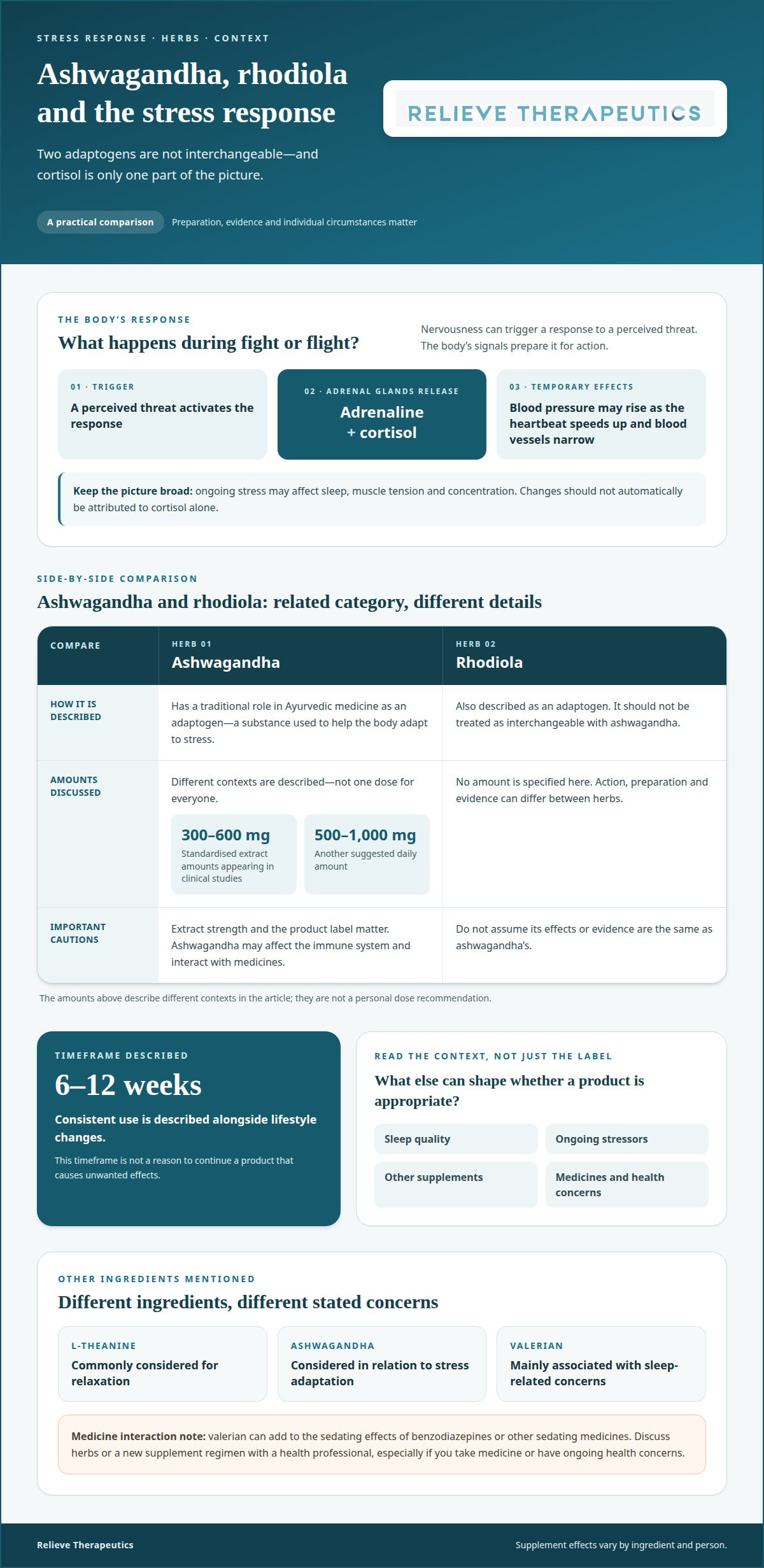
Nervousness can activate the body’s fight-or-flight response to a perceived threat. During this response, the adrenal glands release adrenaline and cortisol, a stress hormone. These chemical signals can temporarily raise blood pressure by speeding up the heartbeat and narrowing blood vessels. The response prepares the body for action, but ongoing stress may affect sleep, muscle tension and concentration. Vitamins and magnesium support other bodily processes; they do not switch off the stress response or replace care for persistent symptoms.
Ashwagandha has a traditional role in Ayurvedic medicine as an adaptogen, a substance used to help the body adapt to stress. Research discussed for this herb uses different amounts: 300-600 mg of standardised extract appears in clinical studies, while another suggested daily amount is 500-1,000 milligrams. These figures describe different contexts, not a single dose for everyone. Extract strength and the product label matter. Ashwagandha may also affect the immune system and interact with medicines, so discuss it with a health professional before use.
Rhodiola is also described as an adaptogen, but it shouldn’t be treated as interchangeable with ashwagandha. The action, preparation and evidence can differ between herbs. Adaptogens are described as working best with consistent use over 6-12 weeks and alongside lifestyle changes. That timeframe isn’t a reason to continue a product that causes unwanted effects. Consider sleep quality, stressors and other supplements together, rather than attributing every change in the nervous system to cortisol alone.
Can L-theanine, ashwagandha or valerian help with nervousness, and how do they compare? L-theanine is commonly considered for relaxation, ashwagandha for stress adaptation, and valerian mainly for sleep-related concerns. None is a universal solution. Valerian can add to the sedating effects of benzodiazepines or other sedating medicines. Do not combine herbs or start a new supplement regimen without professional advice, especially if you take medicine or have ongoing health concerns.
3. How supplements may affect anxiety
A supplement to calm overactive nerves may support processes involved in nervous-system function, especially when it addresses a nutritional need. Amino acids help form neurotransmitters, while vitamin B6 supports pathways involving serotonin and GABA. These mechanisms explain why nutrients matter, but don’t establish that a product treats anxiety. Consider symptoms, diet, medicines and whether stress has become chronic.
In Australia, the Therapeutic Goods Administration (TGA) regulates therapeutic goods, including complementary medicines. Claims about a product should be considered separately from evidence about an ingredient. A label or advertisement alone does not prove that a supplement will ease anxiety or suit your circumstances.
How much do common calming supplements cost in Australia? Prices depend on the ingredient, formulation, amount per dose and pack size. Compare these details rather than assuming products with similar names contain the same quantity or offer the same value.
What evidence supports supplements for anxiety or nervous-system overactivity? Evidence varies by ingredient and may include research on a nutrient’s role, traditional use or studies of a particular preparation. These forms of evidence are not interchangeable. For example, a nutrient’s role in normal body function does not, by itself, show that supplementation reduces anxiety symptoms.
How can you choose a safe, quality-tested supplement in Australia? Read the label for ingredients, dose, directions and warnings, then consider whether it could interact with medicines or other products. Choose a supplement to calm overactive nerves for a clearly defined need, not broad promises. Discuss your choice with a health professional, especially if you have ongoing health concerns or take medicine.
4. Does magnesium calm nerves and what is the usual dose?
Magnesium contributes to normal nerve transmission and muscle relaxation. It also regulates the NMDA receptor, which is involved in pain amplification and nervous-system hyperexcitability. These functions provide a biological reason magnesium may support a calmer feeling, but they do not mean every episode of nervousness reflects low magnesium. Diet, health conditions and other medicines can also affect whether supplementation is suitable.
There isn’t one dose that applies to everyone. A suggested amount of up to 250 milligrams before bed differs from a stated therapeutic range of 300-600 mg elemental magnesium daily. These figures describe different contexts, not interchangeable instructions. The word “elemental” matters: it refers to the magnesium itself, rather than the total weight of the compound in a supplement. Read the product label carefully and follow its directions.
Some people may notice improved sleep, reduced muscle tension and calmer anxiety within 2-4 weeks of magnesium supplementation. That timeframe is not a reason to increase the dose if effects aren’t apparent. Magnesium is involved in 300 biochemical processes, so its role extends beyond relaxation. A health professional can help assess dietary intake, symptoms, health status and potential interactions before you start.
For a practical next step, record the product’s elemental magnesium amount, when you take it, and any changes in sleep or muscle tension. Keep other supplements and medicines in view rather than changing several things at once. If symptoms persist or worsen, seek medical advice instead of relying on a higher dose. The appropriate amount depends on the formulation and your circumstances; more is not automatically better.
Relieve Therapeutics
Relieve Therapeutics offers PEA capsules for readers exploring dietary supplements as part of their wellbeing routine. Its range includes PEA 60 Capsules, PEA 120 Capsules and PEA 180 Capsules. PEA is a different ingredient from magnesium, ashwagandha and the other supplements discussed above, so the information about those ingredients shouldn’t be taken as evidence that PEA calms anxiety, improves sleep or changes cortisol.
If you’re considering PEA alongside other supplements or medicines, discuss your plans with a health professional, particularly if you have ongoing health concerns. This can help you weigh your goals and current treatments, and consider whether adding a supplement suits your circumstances. For information about Relieve Therapeutics’ PEA capsules, contact Relieve Therapeutics.
Choose a next step that fits your needs
Before adding anything, identify the change you want to support: steadier daytime focus, a calmer response to stress or a more settled bedtime routine. This gives you a practical way to discuss options with a health professional and consider whether a supplement to calm overactive nerves matches your needs. Bring a clear list of your current medicines and supplements to that conversation so potential interactions can be considered.
Keep your approach measured. Choose one change at a time and note how it fits with your routine, rather than combining several new products and habits at once. If anxiety or sleep difficulties are affecting daily life, professional advice can help you decide what support is appropriate. For information about the products available, contact Relieve Therapeutics. A thoughtful next step can make it easier to build a routine around your wellbeing.
Frequently Asked Questions
How can supplements help with anxiety?
Some supplements may support processes involved in nervous-system function, particularly when a nutrient intake is inadequate. For example, amino acids help form neurotransmitters, and vitamin B6 supports pathways involving serotonin and GABA. This doesn’t mean a supplement treats anxiety or suits everyone. Consider the specific ingredient, your diet and any medicines you take, and discuss persistent symptoms with a health professional.
Are there any supplements you should avoid?
Some supplements can interact with medicines. St John’s wort can cause serotonin syndrome when taken with an SSRI and may reduce the effect of oral contraceptives with frequent use. Chamomile may have a blood-thinning effect, while kava and kratom warrant particular caution. Before using an herbal product, discuss your medicines and health conditions with a health professional.
How does stress affect the nervous system?
Stress can activate the sympathetic nervous system, preparing the body to respond to a perceived threat. You might notice a faster heartbeat, sweating, tense muscles or digestive changes. These responses involve several body systems, not just a change in mood. For example, the body may divert energy from digestion while preparing for physical action, which can contribute to nausea.
What are the risks?
Risks include interactions with prescribed medicines, unwanted effects and choosing an ingredient that does not suit your health circumstances. Combining several products can also make it harder to identify what caused a change. Read each label, follow its directions and discuss new supplements with a health professional, especially if you take medicine or have an ongoing health issue.
What are the symptoms of an overactive nervous system?
Fight-or-flight activity may show up as a rapid heartbeat, quicker breathing, sweating, muscle tightness or trembling. Some people also experience nausea or changes in bowel habits. These symptoms can have different causes, so a list alone cannot identify what is happening. Seek medical advice if symptoms are persistent, severe or interfere with daily activities.
What naturally calms stress?
A short walk outdoors or a few slow, deep breaths can be practical starting points during a stressful moment. Regular exercise, yoga and mindfulness meditation can also form part of a routine, alongside balanced meals. Choose an approach you can practise consistently, such as a brief breathing pause before a demanding task, rather than relying on supplements alone.