

Supplements aren’t automatically safe just because they’re natural. For people exploring endometriosis supplements across Australia, omega-3, magnesium and curcumin may be options to discuss, but high-dose omega-3 and curcumin can interact with blood-thinning medicines, and supplements don’t cure endometriosis. Through Relieve Therapeutics, guidance ensures suitability depends on your individual health and medicines.
It’s understandable to look for additional ways to manage symptoms, especially when discomfort affects daily life. Weigh potential benefits against safety, rather than adding several supplements without professional guidance.
This article explains how omega-3, magnesium and curcumin may relate to symptoms, what to consider before taking them, and how medication interactions or digestive effects can influence your choices. You’ll also find practical guidance on discussing supplements with a health professional as part of your broader care.
Key Takeaways
- Match supplement choices to your symptoms, health factors and current medicines rather than starting several at once.
- Consider food sources of omega-3, such as salmon, sardines, trout and walnuts, and keep total EPA and DHA within the stated daily limit.
- Discuss supplements with a health professional, particularly if you take blood-thinning medicine or manage another medical condition.
- Notice how your digestion responds and explore fibre-rich foods as part of supporting gut health.
Are supplements like omega-3, magnesium, and curcumin safe for managing endometriosis symptoms?
Endometriosis involves tissue similar to the uterine lining growing outside the uterus, often on pelvic organs. This tissue can thicken, break down and bleed during the menstrual cycle, contributing to inflammation and adhesions. Symptoms can include heavy periods, pelvic pain, painful intercourse and infertility, and their impact varies. Supplement choices should reflect individual needs.
Omega-3, magnesium and curcumin are not interchangeable options. Omega-3 is associated with inflammation and pain signalling, while magnesium is a nutrient considered in endometriosis support. Curcumin, derived from turmeric, has also been studied for its potential relevance to symptoms. Supplements don’t cure endometriosis, and research into one ingredient doesn’t establish that it suits everyone.
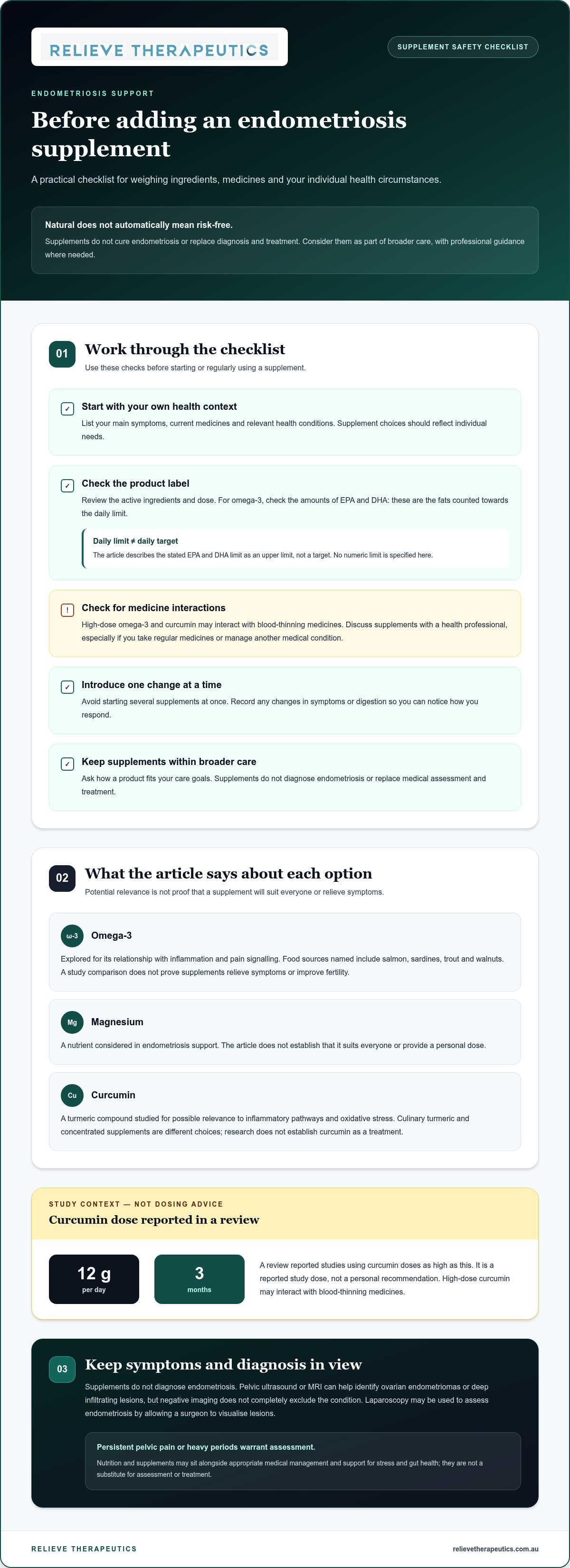
Herbal medicine may appeal to people trying to address pain or hormonal symptoms, but “natural” doesn’t mean risk-free. Curcumin is one herbal ingredient discussed in this context. A review reported studies using curcumin doses as high as 12 grams per day for 3 months. That is a reported study dose, not a personal dosing recommendation. High-dose curcumin may interact with blood-thinning medicines.
Start by listing your main symptoms, current medicines and relevant health conditions. Someone focused on period-related discomfort, for example, may consider different nutrients from someone whose priority is digestive symptoms. Check the active ingredients and dose on a supplement label, introduce one change at a time, and record any symptom or digestive changes. Discuss regular use with a health professional before starting, especially if you take medicines or have a medical condition.
Supplements do not diagnose endometriosis. Pelvic ultrasound or MRI can help identify ovarian endometriomas or deep infiltrating lesions, but negative imaging does not completely exclude the condition. Laparoscopy may be used to assess endometriosis by allowing a surgeon to visualise lesions. Persistent pelvic pain or heavy periods warrant assessment, rather than relying on supplements to explain symptoms.
A holistic approach combines nutrition and supplements with appropriate medical management and support for stress and gut health. Iron-rich foods, including leafy greens, beans, grains, nuts and seeds, can help replace iron lost through menstruation. These practical steps support broader wellbeing, while diagnosis and treatment address the condition itself.
Omega-3 fatty acids for inflammation and pain signalling
Omega-3 fats are being explored for their relationship with inflammation and pain signalling in endometriosis. Salmon, sardines, trout and walnuts are practical food sources to include in meals. A study comparing fatty-acid ratios included 64 women with endometriosis and women without it. This comparison adds context, but doesn’t prove supplements relieve symptoms or improve fertility.
For readers comparing endometriosis supplements in Adelaide, start with the label’s EPA and DHA amounts. These are the omega-3 fats counted towards the daily limit. That figure is an upper limit, not a target. Check whether a product lists EPA and DHA separately or combines them.
Curcumin, a compound found in turmeric, has been studied for possible effects on inflammatory pathways and oxidative stress. These mechanisms are relevant to endometriosis research, but they do not establish curcumin as a treatment. Culinary turmeric and concentrated supplements are different choices. Consider a product’s active ingredients and your medicines before adding a concentrated supplement.
Nutrition can support general wellbeing, but no single diet is established as a way to correct hormonal balance or treat endometriosis. A personalised approach may include regular meals, vegetables, legumes and whole grains. Change one dietary habit at a time and keep a symptom record. This can help you notice patterns without unnecessarily removing several food groups.
Use evidence to inform decisions, rather than letting it push you towards restrictive eating or multiple supplements. If you’re considering endometriosis supplements in Adelaide, take questions about ingredients and daily intake to a health professional. Endometriosis can affect fertility and quality of life, so nutrition education fits best alongside appropriate medical care. Food choices offer one area to explore as you consider your broader care plan.
Supplement safety, medication interactions and practitioner guidance
When comparing endometriosis supplements in Adelaide, consider the ingredients, dose, medicines you take and your health circumstances. Discussing a product with a health professional can help you understand how it fits alongside medical care.
Studied Doses and Safety
A review reported curcumin studies using doses as high as 12 grams per day for 3 months. This describes a study dose, not a personal recommendation. High-dose curcumin and omega-3 may interact with blood-thinning medicines. Check the ingredient list and dose, then discuss them with your practitioner, especially if you take regular medication or manage another condition.
Supplements Alongside Medical Management
Supplements may complement medical management, but they don’t replace assessment or treatment. Endometriosis involves tissue growing outside the uterus, and care may include medical options or surgery. Ask how a supplement fits your care goals. If discussing IMAGENDO® AI or imaging, clarify how ultrasound or MRI findings inform diagnostic decisions and what further assessment may be considered.
To check a product’s Australian TGA listing status, look for its listing details on the label and search for the product in the TGA’s Australian Register of Therapeutic Goods. Match the listing to the product name and formulation. A listing does not establish that the supplement is suitable for your circumstances.
If you’re pregnant, breastfeeding or trying to conceive, discuss supplements with a health professional before use. If you’re considering endometriosis supplements in Adelaide, a GP can review your medicines and health conditions; a gynaecologist can advise on endometriosis care, and an accredited practising dietitian can discuss nutrition.
Bring product labels and a list of your medicines to the appointment, including anything you use during menstruation. These details can help you discuss potential interactions and how supplements fit with your medical management.
Bloating and digestive upset
If bloating or digestive upset accompanies your symptoms, record when it occurs. Note whether it changes around your period, after eating or when you start a supplement. A simple diary can help distinguish a recurring pattern from a one-off episode. Include the product name, ingredients and dose, then share those details with a health professional.
Make food changes gradually. Fibre-rich fruit, vegetables, legumes and whole grains can support gut health. For example, add beans to one meal or choose wholegrain bread, then observe how your digestion responds. Changing several things at once can make it harder to identify what matters. Regular hydration and balanced meals can also support a consistent lifestyle.
A supplement may not suit everyone. If digestive discomfort begins after adding a product, record the timing and check the label for ingredients and directions. Avoid introducing another supplement at the same time, as this can make the pattern harder to identify. Take your record and the packaging to a GP, pharmacist or dietitian, especially if symptoms persist or affect eating.
Consider digestive symptoms alongside pelvic symptoms, painful periods and other changes, rather than automatically attributing them to endometriosis. The condition involves tissue outside the uterus, and symptom patterns vary. Laparoscopy may be used to diagnose endometriosis, while a GP or gynaecologist can assess symptoms and discuss appropriate next steps. Specialists can also help distinguish overlapping concerns.
Keep nutrition supportive rather than restrictive. Fibre-rich foods are a practical starting point, but removing whole food groups without a clear reason can limit your choices. If a particular food seems linked to discomfort, note the meal and symptom timing before changing your diet. This gives a dietitian useful details for a personalised discussion.
If you’re exploring PEA as a supplement option, view PEA capsule options. Consider it separately from digestive symptom management, and discuss supplement choices with a health professional.
Relieve Therapeutics: PEA 60 Capsules
Relieve Therapeutics offers PEA 60 Capsules for people considering palmitoylethanolamide (PEA) as part of their supplement choices. PEA is distinct from omega-3, magnesium and curcumin, so consider it as a separate option rather than a replacement for them or for medical care.
Choose between PEA 60 Capsules, PEA 120 Capsules and PEA 180 Capsules according to the supply format that suits you. If you’re managing endometriosis, discuss adding PEA with your health professional, particularly if you take medicines, have other health conditions, or are trying to conceive. Keep your current care plan in place while considering any supplement.
For details about the PEA capsule options, visit Relieve Therapeutics online.
Make your next step personal
If you’re exploring endometriosis supplements in Adelaide, turn general information into a plan that reflects your daily priorities. Decide what you most want to address, such as comfort during menstruation, digestive wellbeing or maintaining usual activities. This makes conversations about supplement choices more focused and practical.
Bring your questions and current supplement details to a health professional, then agree on what to monitor and when to review the plan. A clear record can help you discuss changes without relying on memory, while keeping your wider care in view. You don’t need to make several changes at once.
If you’d like to learn more about Relieve Therapeutics’ PEA options, contact Relieve Therapeutics. Thoughtful, informed steps can help you feel more prepared to take an active role in your care.
Frequently Asked Questions
Do these 3 popular supplements actually help with endometriosis?
Omega-3, magnesium and curcumin may be relevant to symptom support, but none cures endometriosis. Omega-3 is studied in relation to inflammation and pain signalling; magnesium is a nutrient, while curcumin has been investigated for inflammatory pathways. Evidence about an ingredient doesn’t show that every person will benefit. Consider one supplement at a time, with your symptoms and health circumstances in mind.
How do I know which supplements to start with and when to expect results?
Start by identifying your main concern, then discuss a suitable option with a health professional. Some people notice symptom changes within a few weeks, while others may need several months of consistent use. Track what you take, the dose on its label and any changes in symptoms or digestion. This record can help you assess whether continuing makes sense.
Is it safe?
Safety depends on the supplement, dose, medicines and your health circumstances. High-dose omega-3 and curcumin may interact with blood-thinning medicines, while supplements can also affect people with particular medical conditions. Check labels and discuss regular use with a health professional. For vitamin D, testing levels before supplementing helps guide decisions instead of guessing a dose.
What is endometriosis?
Endometriosis is a chronic condition in which tissue similar to the uterine lining grows outside the uterus, commonly on pelvic organs. It can contribute to pain, heavy periods and other symptoms. Pelvic ultrasound or MRI may identify some lesions, but imaging can be negative even when endometriosis is present. A surgeon can use laparoscopy to visualise and biopsy lesions.
What is the difference between natural supplements and conventional treatments for endometriosis?
Supplements are products people may consider for symptom support; conventional care includes treatments directed at managing the condition and its effects. Options can include hormonal contraceptives, progestins, GnRH analogues, aromatase inhibitors and pain-management approaches such as physiotherapy. Surgery may also be considered. A supplement shouldn’t replace prescribed treatment or delay assessment of symptoms.
Who should consider taking these supplements, and who might need extra caution?
Before considering supplements for symptom support, think about your health conditions, medicines and goals. Extra caution is important if you take blood-thinning medication, manage a medical condition, are pregnant or breastfeeding, or are trying to conceive. Bring supplement labels and a current medicines list to a health professional to discuss potential interactions and your personal circumstances.