

Poor sleep can make pain feel more intense, while pain can make restful sleep harder to achieve. Learning how to improve sleep with chronic pain means addressing both sides of this cycle: the pain itself and factors that disrupt rest, including medication effects. Take medication as prescribed and discuss sleep concerns with your doctor.
When pain keeps you awake, it can be frustrating if usual sleep advice doesn’t help. Your experience is real, and rest is not simply a matter of trying harder. This article explains how sleep and pain sensitivity can affect each other, how medications may disrupt nights, and how back pain and bedroom conditions can affect comfort. It also covers practical sleep habits and relaxation approaches that may support more restful nights, and when persistent sleep problems warrant a conversation with a health professional.
Key Takeaways
- Take medication as prescribed and discuss sleep concerns or possible medicine effects with your doctor, particularly if you have sleep-related breathing problems.
- If you’re awake in bed for more than 20 minutes, get up and try a calm activity until you feel sleepy before returning.
- Back pain and insomnia can reinforce each other, so notice how pain, sleep and daily routines interact.
- A dark, quiet, cool bedroom and comfortable pillow support may make it easier to rest and manage night-time discomfort.
What about medications and sleep?
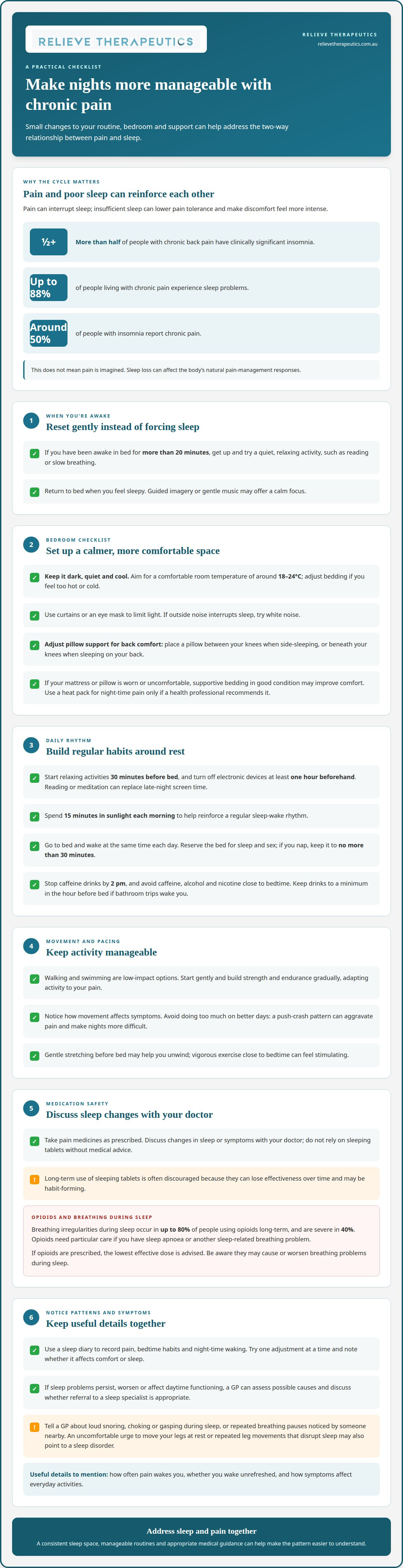
People can manage night-time pain without relying on sleeping tablets by combining prescribed pain care with calming habits. If you’ve been awake in bed for more than 20 minutes, get up and do something quiet and relaxing, such as reading or slow breathing. Return to bed when you feel sleepy; guided imagery or gentle music can also provide a calm focus.
Use pain medicines as prescribed, and discuss changes in sleep or symptoms with your doctor. Long-term use of sleeping tablets is often discouraged because they can lose effectiveness over time and may be habit-forming. Opioids also need particular care: breathing irregularities during sleep occur in up to 80% of people using opioids long-term, and are severe in 40%. People with sleep apnoea or other sleep-related breathing problems should use opioids cautiously. If opioids are prescribed, the lowest effective dose is advised, with awareness that they may cause or worsen breathing problems during sleep.
A predictable wind-down routine can support the transition to sleep. Start relaxing activities 30 minutes before bed, and turn off electronic devices at least one hour beforehand. In the morning, spend 15 minutes in sunlight every day to help reinforce a regular sleep-wake rhythm. Reading or meditation can replace late-night screen time.
Daytime movement matters too, but pacing can help prevent activity from aggravating pain. Walking and swimming are low-impact options; start gently and build strength and endurance gradually. Notice how activity affects your symptoms, and avoid doing too much on better days, which can lead to a push-crash pattern and more difficult nights. Gentle stretching before bed may help you unwind, while vigorous exercise close to bedtime can feel stimulating. Keep activity manageable and adapt it to your pain rather than pushing through a flare.
The relationship between chronic back pain and insomnia
Chronic back pain and insomnia can reinforce each other. Pain may make it difficult to fall or stay asleep, while poor sleep can lower pain tolerance and make discomfort feel more intense the next day. Over half of people with chronic back pain have clinically significant insomnia. A sore back can interrupt rest, and fatigue may then make everyday movement harder to manage.
The connection works in both directions. During deep sleep, the body repairs tissue, reduces inflammation and releases growth hormones. A well-rested brain can also process pain signals more effectively. By contrast, insufficient sleep can disrupt the body’s natural pain-management responses and increase sensitivity. Up to 88% of people living with chronic pain experience sleep problems, while around 50% of people with insomnia report chronic pain.
A GP is a useful first point of care if pain-related sleep problems persist, worsen or affect daytime functioning. Mention how often pain wakes you, whether you wake unrefreshed, and how symptoms affect daily activities. A GP can assess possible causes, including another sleep disorder, and discuss whether a referral to a sleep specialist is appropriate.
Australian pain services and Medicare-funded care may form part of treatment, depending on the service and care pathway. Discuss available options with a GP, who can explain whether Medicare-funded care applies to your situation. Treatment may need to address both pain and sleep, rather than treating either concern in isolation.
Tell a GP about loud snoring, choking or gasping during sleep, or repeated breathing pauses noticed by someone nearby, as these can suggest sleep apnoea. An uncomfortable urge to move your legs, especially at rest, or repeated leg movements that disrupt sleep may point to restless legs or another sleep disorder. Recording these symptoms alongside back pain and night-time waking can help guide an assessment.
Bedroom environment
A dark, quiet, cool bedroom can reduce distractions that make settling harder. Aim for a comfortable room temperature around 18-24°C, and adjust bedding if you feel too hot or cold. If outside noise interrupts sleep, try white noise. Keep the room dim, and use curtains or an eye mask to limit light. These changes create a consistent sleep space without requiring special equipment.
For back discomfort, adjust your support rather than forcing one sleeping position. If you sleep on your side, try placing a pillow between your knees; if you sleep on your back, try one beneath your knees. These positions may ease stress on your back. If your mattress or pillow is worn or uncomfortable, supportive bedding in good condition may improve comfort. Use a heat pack for night-time pain only if a health professional recommends it.
Sleep hygiene also means building regular patterns around the bedroom. Go to bed and wake at the same time each day, and reserve the bed for sleep and sex. If you nap, keep it to no more than 30 minutes, so it’s less likely to interfere with night-time rest. A sleep diary can help you notice links between pain, bedtime habits and waking during the night.
Review evening choices that can disturb rest. Stop caffeine drinks by 2 pm, and avoid caffeine, alcohol and nicotine close to bedtime. Keep drinks to a minimum in the hour before bed if bathroom trips wake you. A calm, uncluttered room can also make it easier to follow a regular routine. Try one adjustment at a time, such as dimming lights or changing pillow placement, and record whether it affects your comfort or sleep.
How poor sleep can increase pain sensitivity
A restless night can change how the next day’s discomfort feels. Persistent pain may make it harder to fall asleep or stay asleep, while insufficient sleep can lower the pain threshold. A familiar sensation, such as back stiffness when getting dressed, may feel more intense after broken rest. This does not mean the pain is imagined. Sleep loss can alter biochemical and inflammatory responses involved in the body’s natural pain-management systems.
The effects can build over repeated nights. When pain interrupts sleep, the body has less opportunity for restorative rest. The next day, heightened sensitivity can make ordinary movements feel more demanding, while worry about another difficult night can add tension. This combination may make it harder to settle down again. Understanding how to improve sleep with chronic pain includes recognising that pain and rest can affect each other, even when the underlying condition seems unchanged.
Keep a brief record to distinguish a recurring pattern from a single difficult night. Note your bedtime, night-time waking, morning pain and one example of how symptoms affected your day, such as walking or concentrating. Look for links across several entries instead of drawing conclusions from just one. A diary can help you describe the pattern clearly during a health appointment and identify what tends to come before a more difficult night.
Restorative sleep and pain management are connected, so persistent insomnia deserves attention alongside the pain itself. If you have diagnosed sleep apnoea or insomnia, treating that condition can lead to better pain control. A practical part of how to improve sleep with chronic pain is discussing recurring night waking, daytime effects and changes in sensitivity with a health professional. Addressing sleep as well as pain can support a broader management plan.
Relieve Therapeutics
Relieve Therapeutics offers Palmitoylethanolamide (PEA) capsules for people exploring PEA as part of their approach to persistent pain. The range includes PEA 60 Capsules, PEA 120 Capsules and PEA 180 Capsules. These dietary supplements are not a substitute for prescribed medicine or assessment of ongoing sleep problems. If pain regularly disrupts your rest, discuss sleep and pain management with a health professional, and consider whether a PEA supplement fits alongside that care. Keeping sleep habits, pain symptoms and any supplement use visible in the broader conversation can support informed decisions. For information about PEA capsules, contact Relieve Therapeutics.
Make your next step manageable
Improving rest while living with pain rarely comes down to one perfect fix. A useful next step is to notice what changes your nights and bring that pattern into conversations about your care. A brief record of sleep, pain and daytime activity can help you explain what you’re experiencing and identify which adjustments are worth keeping.
Learning how to improve sleep with chronic pain can also involve considering whether a dietary supplement belongs in your broader approach. Relieve Therapeutics offers PEA capsules, but they are not a replacement for prescribed treatment or professional advice. If you’re considering PEA alongside your existing care, discuss it with a health professional who understands your circumstances.
For information about the available PEA capsules, contact Relieve Therapeutics. Keep taking thoughtful, informed steps towards nights that feel more settled and days that are easier to manage.
Frequently Asked Questions
What’s a “normal” sleep pattern?
Sleep varies, and brief awakenings can happen as you move between sleep cycles. A cycle typically lasts about 90 minutes, and around half the night is light sleep. Useful signs of sleep quality include falling asleep in less than 30 minutes and waking fewer than twice overnight. These are general markers, not a test or a reason to worry about an occasional restless night.
How does chronic pain affect sleep, and how does poor sleep worsen pain?
Chronic pain can make it harder to settle or stay asleep; disrupted rest can then heighten sensitivity to discomfort. For example, familiar back pain may feel more intrusive after a fragmented night. Insufficient sleep can also affect biochemical and inflammatory responses involved in the body’s pain regulation. Tracking sleep and pain together can help reveal whether changes tend to occur in tandem.
Which relaxation techniques or CBT-I methods improve sleep with chronic pain?
Relaxation approaches include slow breathing, mindfulness, guided imagery and gentle stretching. Cognitive behavioural therapy for insomnia (CBT-I) commonly addresses habits and thoughts that perpetuate sleep difficulties, using methods such as stimulus control and sleep scheduling. A qualified health professional can tailor CBT-I to pain-related needs. If an exercise increases discomfort, stop and discuss an appropriate alternative rather than pushing through.
What bedroom temperature, light, noise and mattress setup may help reduce pain at night?
A bedroom temperature around 18-24°C, low light and minimal noise can support a more sleep-friendly environment. White noise may mask sounds that interrupt rest. For comfort, side sleepers can try a pillow between their knees, while back sleepers may place one under their knees. A supportive mattress and pillow in good condition may also help; comfort depends on the person and pain location.
Which medicines for chronic pain can disrupt sleep, and what are their risks?
The effects of medicines vary, so note changes in your sleep after starting or adjusting treatment and discuss them with your prescriber. Opioids can cause or worsen breathing problems during sleep, especially in people with sleep apnoea or other sleep-related breathing conditions. Long-term opioid use is associated with irregular breathing during sleep. Don’t change a prescribed dose or stop treatment on your own; seek advice about risks and alternatives.
What are the benefits and risks of sleep medicines for people with chronic pain?
Sleep medicines may be considered as part of care for sleep difficulties, but long-term use of sleeping tablets is undesirable: their effects can lessen over time, and they may be habit-forming. The right approach depends on the medicine, other treatments and your health. Discuss ongoing insomnia and possible risks with a GP or prescriber rather than increasing a dose or combining medicines on your own.