

A supplement to reduce post-workout soreness may play a supporting role: a review of 13 studies suggested omega-3 supplementation may improve muscle recovery when taken for over 4 weeks. But timing and pain quality matter too. Delayed-onset muscle soreness can occur after exercise and usually eases over time. Sharp, constant pain or severe swelling calls for medical advice.
It’s understandable to look for something to ease soreness and help you return to training comfortably. Still, supplements aren’t a substitute for recognising when pain may signal an injury or for giving your body the basics it needs to recover.
Here, you’ll learn how omega-3s may relate to post-exercise inflammation, what can help you tell ordinary soreness from injury pain, and when to seek medical advice. You’ll also find practical ways to support recovery and a clear view of where supplements may fit.
Key Takeaways
- Use when soreness begins, how it feels and how it changes to help distinguish typical post-exercise discomfort from possible injury pain.
- Omega-3s may support muscle recovery when taken consistently, but they’re not an instant fix for soreness after a workout.
- Prioritise recovery basics and use caution with supplements, particularly high-dose antioxidant products.
- Know which warning signs, including unusually dark urine or severe swelling, call for prompt medical advice.
1. Distinguishing workout soreness from injury pain
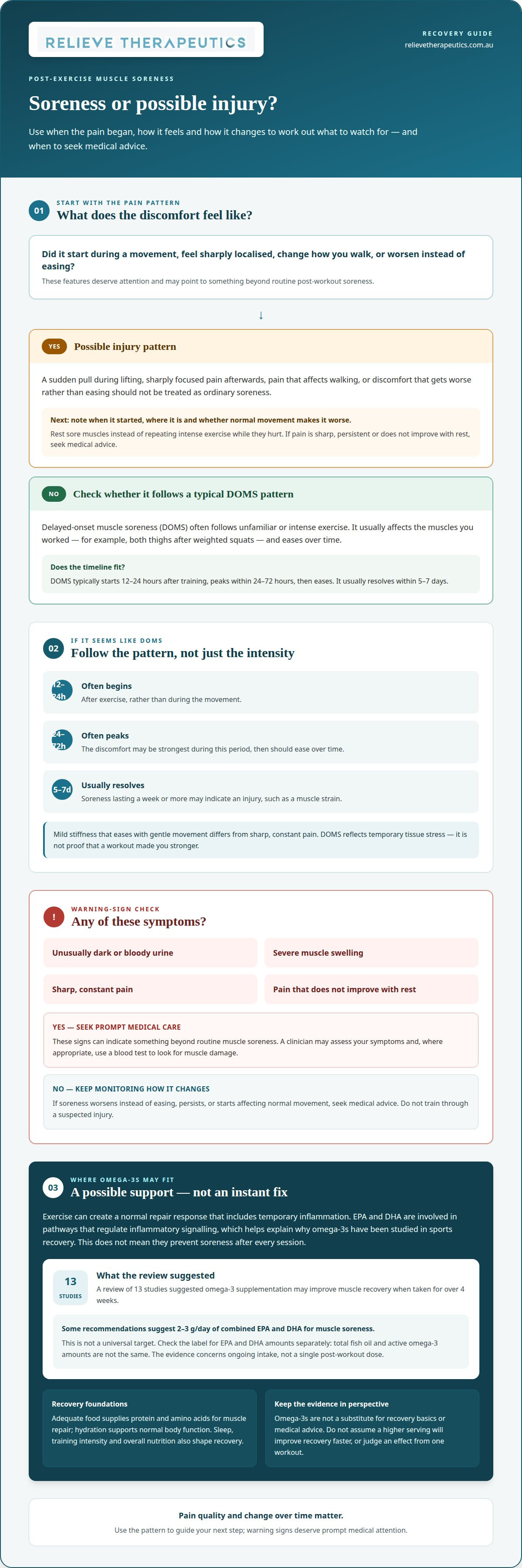
Delayed-onset muscle soreness (DOMS) usually follows unfamiliar or intense exercise. It typically begins 12 to 24 hours after training, peaks within 24 to 72 hours, then eases. The discomfort often affects the muscles you exercised, such as both thighs after weighted squats. DOMS reflects temporary tissue stress, not proof that a workout made you stronger.
Injury pain can begin during a movement or feel sharply localised afterwards. A sudden pull while lifting weight, pain that changes how you walk, or discomfort that worsens instead of easing deserves attention. DOMS usually resolves within 5-7 days. Muscle soreness lasting a week or more may indicate an injury, such as a muscle strain.
Note when the pain started, where it is and whether normal movement makes it worse. Mild stiffness that eases with gentle movement differs from sharp, constant pain. Rest sore muscles instead of repeating intense exercise while they hurt. Unusually dark or bloody urine, severe muscle swelling, or pain that doesn’t improve with rest warrants medical care. A supplement to reduce post-workout soreness should never distract from these warning signs.
How much do common muscle soreness supplements cost in Australia? There’s no single meaningful price: cost depends on ingredients, formulation, serving size and pack size. Compare the stated serving and ingredients rather than assuming a higher price means better recovery.
Does creatine reduce DOMS? The available facts don’t establish creatine as a soreness treatment. The body naturally makes about 1 g of creatine daily, but that alone doesn’t show supplementation eases post-exercise pain.
Evidence for tart cherry juice or extract should be interpreted cautiously; preparations and findings can differ. Don’t treat it as a proven remedy or assume juice and extract are interchangeable. When considering a supplement to reduce post-workout soreness, note that studied approaches include 2-3 g/day of EPA and DHA, and 2,000 international units of vitamin D for at least a week. Anti-inflammatory supplements are generally taken consistently, not as a single post-workout dose. Follow product directions and seek professional advice if you’re unsure what suits you.
2. Omega-3s and post-exercise inflammation
Exercise creates a normal repair response in muscle tissue, which can include temporary inflammation. Omega-3 fatty acids, particularly EPA and DHA, are involved in pathways that regulate inflammatory signalling. This offers a possible explanation for their study in sports recovery, but it doesn’t mean they prevent soreness after every session. Training intensity, unfamiliar movements, sleep and overall nutrition also shape how recovery feels.
A systematic review of 13 studies suggested omega-3 supplementation may improve muscle recovery when taken for over 4 weeks. The duration matters: this evidence concerns ongoing intake, not a single dose after training. Some recommendations suggest 2-3 g/day of combined EPA and DHA for muscle soreness. That figure is not a universal target; supplement labels can list different amounts of total fish oil and active omega-3s.
For a practical comparison, check the EPA and DHA amounts separately on the label, then consider how they fit with your usual intake. Oily fish can provide dietary omega-3s, while a supplement offers a measured serving. A dietitian or healthcare professional can help account for existing supplements, medicines and individual health factors. Don’t assume that a higher serving will improve recovery faster.
Omega-3s don’t replace the foundations of post-exercise recovery. After a demanding sports session, adequate food supplies protein and amino acids for muscle repair; hydration supports normal body function. Magnesium also has a role in the body, but it isn’t interchangeable with omega-3s. For example, a hard session followed by poor sleep and low food intake may still leave delayed muscle soreness, even with regular supplementation.
Use the evidence proportionately: omega-3s may be one part of a recovery plan, especially when intake is consistent over time. Track the supplement, training intensity and next-day comfort across several weeks, rather than judging effects from one workout. If soreness is sharp, persistent or accompanied by concerning symptoms, treat that as a separate issue from routine recovery and seek medical advice.
3. Supplement safety and medical advice
Start with the product label, not promises of faster recovery. Check the active ingredients, serving directions and warnings before adding a supplement to your fitness routine. Keep a record of what you take, including creatine and medicines, so a healthcare professional can review the full combination. Supplements may help fill a dietary gap, but they can’t prevent every injury or replace appropriate training, sleep and nutrition.
In Australia, are sports supplements regulated by the TGA? Not all sports nutrition products are regulated by the TGA as medicines. A product’s classification and claims determine whether TGA requirements apply, so don’t assume a sports supplement has been assessed as a therapeutic good.
High-dose vitamin C and E supplements may reduce free radicals, but they can also blunt training adaptations. Getting antioxidants from whole foods is preferable to relying on high-dose products. For example, include fruit and vegetables alongside meals that provide protein. Protein supplies amino acids the body uses to rebuild muscle tissue; more isn’t automatically better for strength or function.
Creatine isn’t a substitute for assessing persistent pain. If a supplement causes an unexpected reaction, stop taking it and seek medical advice. Prompt care is important for unusually dark or bloody urine, severe muscle swelling, sharp, constant pain, or pain that doesn’t improve with rest. These signs can indicate something beyond routine muscle soreness. A clinician may assess your symptoms and, where appropriate, use a blood test to look for muscle damage. Don’t train through a suspected injury while waiting for advice.
4. Which supplements have evidence for reducing post-workout muscle soreness?
Evidence varies by ingredient, dose and study design, so no supplement suits every recovery plan. A systematic review of 13 studies suggested omega-3 supplementation may improve muscle recovery when taken for over 4 weeks. This points to consistent intake, rather than a single post-training dose. It doesn’t establish a supplement to reduce post-workout soreness as a stand-alone treatment or guarantee relief after every session.
Vitamin D has also been studied for exercise recovery. A review found that 2,000 international units (IU) for at least a week decreased muscle damage and inflammation after exercise. That finding describes a studied approach, not a universal dose. Personal needs and existing intake matter, so avoid treating research amounts as automatic instructions for your own routine.
Curcumin, a compound found in turmeric, is another ingredient examined for exercise-related soreness. A suggested amount is 500-1500 mg/day of standardised curcumin extract, taken with meals containing fat. Formulation matters: a product labelled as turmeric isn’t necessarily equivalent to standardised curcumin extract. This distinction helps assess whether a supplement to reduce post-workout soreness resembles the ingredient used in the guidance.
Magnesium supports functions in the body, but that doesn’t make it an automatic choice for muscle soreness. Discuss magnesium supplements with a healthcare professional or dietitian before starting them, particularly if you take medicines or already use other supplements.
Assess evidence with three checks: the ingredient studied, the amount per serving, and whether use was consistent or one-off. For example, compare a label’s stated EPA and DHA amounts with the omega-3 information, rather than relying on total fish oil alone. Avoid starting several products together, since that makes effects and side effects harder to interpret. Sleep, nutrition, hydration and suitable training load remain the foundations; supplements may complement these habits, not replace them.
Relieve Therapeutics
Relieve Therapeutics offers Palmitoylethanolamide (PEA) capsules for people considering this supplement as part of their broader approach to wellbeing. The range includes PEA 60 Capsules, PEA 120 Capsules and PEA 180 Capsules. PEA is distinct from the omega-3s, vitamin D and curcumin discussed above, so don’t assume evidence for those ingredients also applies to PEA or post-workout soreness. Keep your recovery plan centred on appropriate training, nutrition and rest, and speak with a healthcare professional about supplement choices if you have persistent pain, an injury concern or questions about using supplements alongside medicines. For details about the PEA capsule options, contact Relieve Therapeutics.
Build a recovery plan that works for you
Let your next training block be guided by patterns, not pressure to add another supplement. A simple log of exercise, rest and how your body feels can help you identify what supports your routine. Change one part of your approach at a time to better understand what makes a difference. A supplement to reduce post-workout soreness should fit within that wider plan, not replace sensible training and recovery habits.
If you’re considering PEA as part of your supplement choices, take time to understand how it fits your needs and existing routine. Your response to a supplement can depend on personal health factors and other products you take. For information about Relieve Therapeutics’ PEA range, contact Relieve Therapeutics. Keep your focus on steady, informed progress, and give your body the care it needs to keep moving forward.
Frequently Asked Questions
How do post-workouts support muscle recovery and growth?
Recovery combines enough food, sleep and suitable training breaks to support muscle adaptation. Physically active people may benefit from 1.4-2 g of protein per kilogram of body weight daily. For example, spread protein across meals rather than relying on one large serving. Consistent sleep matters too: the Sleep Foundation recommends aiming for at least seven hours each night. Supplements are secondary to these habits.
What are post-workout supplements and why are they important?
Post-workout supplements are products intended to provide nutrients around exercise, such as protein or specific ingredients studied for recovery. They can offer a convenient way to add a targeted nutrient when food doesn’t fit someone’s routine. They aren’t essential for everyone, though. First consider what your usual meals provide and whether a product meets a specific need, rather than simply adding more ingredients.
What is DOMS?
DOMS stands for delayed-onset muscle soreness, the tenderness or stiffness that can follow unfamiliar or demanding exercise. It commonly follows eccentric movements, when a muscle lengthens under load, such as lowering a dumbbell during a biceps curl or walking downhill. This pattern can help explain why a new exercise feels different from ordinary fatigue during training. On its own, it doesn’t diagnose an injury.
What helps muscles recover the fastest?
Reduce heavy loading on sore muscles while they recover, and try gentle movement if it feels comfortable. For instance, choose an easy walk instead of repeating a strenuous leg session. Prioritise regular meals, fluids and a consistent bedtime. These choices support recovery without adding another supplement. If pain is sharp or limits ordinary movement, don’t treat it as routine soreness; seek medical advice.
What ingredients are typically in post-workout formulas?
Formulas vary, but products can focus on protein, creatine or ingredients studied for exercise recovery, including omega-3 fatty acids, vitamin D, curcumin and magnesium. A formula won’t necessarily contain all of these, and ingredients serve different purposes. For example, check whether an omega-3 product states its EPA and DHA amounts separately. Read the serving information rather than judging a product by its ingredient list alone.
What should you look for in supplements for muscle recovery?
Look for a clear ingredient list, the amount per serving and straightforward directions. Match the ingredients and serving details to your reason for taking the product, rather than relying on broad promises about recovery. Check the warnings and consider how it fits with any medicines or other supplements you use. If you have a health condition, take medicines or aren’t sure whether an ingredient is suitable for you, discuss it with a healthcare professional.