

What if the secret to managing long-term spinal health wasn't about masking a symptom, but rather recalibrating your body's internal "pain thermostat"? It's exhausting to wake up with that familiar morning stiffness or to feel the frustration of a recovery that seems to have stalled. You likely want to return to the golf course or the garden without the shadow of discomfort or the worry of becoming dependent on heavy pharmaceutical options. We understand that finding a reliable, evidence-based path to restoration is your priority, which is why many are now considering palmitoylethanolamide for chronic back pain.
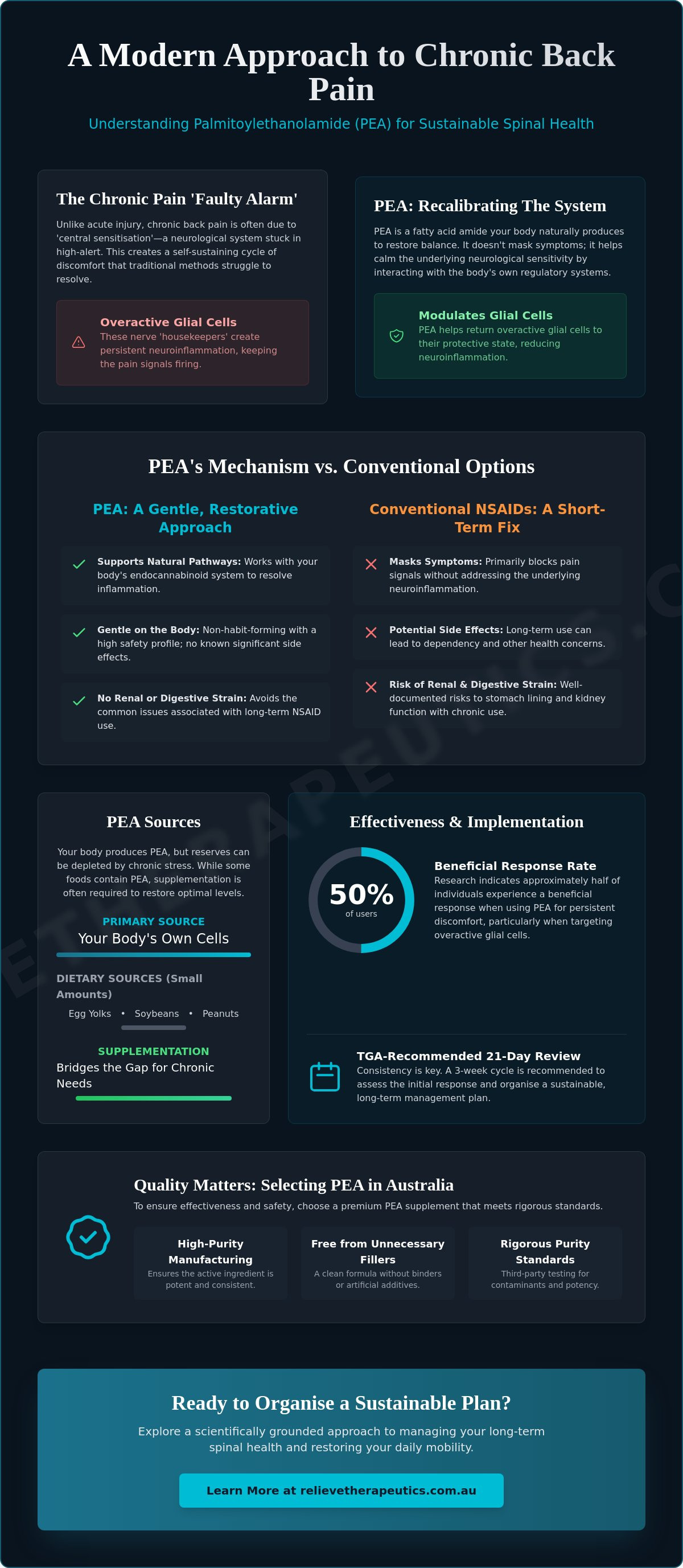
This guide explores how this fatty acid amide offers a scientifically grounded, non-habit-forming approach to restoring your daily mobility. While PEA occurs naturally in the body to regulate inflammation, research indicates that approximately 50 per cent of individuals experience a beneficial response when targeting the overactive glial cells responsible for persistent signals. We will examine the biological mechanisms of this compound, the importance of the TGA-recommended 21-day review cycle, and how to organise a sustainable management plan that supports your long-term vitality.
Key Takeaways
- Understand the "PEA deficiency" theory and how your own cells produce this bioactive lipid to naturally manage inflammation and discomfort.
- Explore the specific biological pathways, including the PPAR-alpha receptor, that make palmitoylethanolamide for chronic back pain a precise tool for calming spinal nerve sensitivity.
- Compare the safety profile of PEA against conventional pharmacy options; it offers a gentle alternative without the renal or digestive strain common with NSAIDs.
- Learn how to organise a sustainable supplement protocol that focuses on consistency and high-purity manufacturing for lasting spinal health.
- Identify the key markers of premium PEA capsules available in Australia, ensuring your choice is free from unnecessary fillers and meets rigorous purity standards.
Understanding Palmitoylethanolamide (PEA) for Chronic Back Pain Support
If you have spent months or years searching for a solution to persistent back stiffness, you have likely encountered a cycle of temporary fixes. Many Australians find themselves trapped in a loop of short-term relief followed by the return of familiar discomfort. This journey can be physically draining and emotionally taxing. To move forward, it is essential to look beyond the surface of the symptom. By understanding the biological foundations of your body's response to discomfort, you can begin to organise a more sustainable management plan. This is where the role of palmitoylethanolamide for chronic back pain becomes a vital part of the conversation.
At its core, What is Palmitoylethanolamide (PEA)? It is a bioactive lipid, a fatty acid amide that your body synthesises naturally within its own cells. Unlike external chemicals that force a change in your physiology, PEA acts as a biological modulator. It functions as a "protective" molecule, specifically designed to maintain balance and protect nerve tissue from the effects of chronic stress. In people experiencing long-term back issues, researchers have identified a "PEA deficiency" theory. This suggests that when the body is under constant physical duress, its natural reserves of this lipid are depleted, leaving the nervous system vulnerable and over-sensitised.
The biological role of PEA in the human body
Your body is designed to be self-regulating. It synthesises PEA on-demand to resolve inflammation and restore cellular calm after an injury. However, chronic stress on the spinal structures can overwhelm this internal production line. While we naturally obtain small amounts of PEA from dietary sources, the concentrations found in food are often insufficient to replenish a significant deficit. Common sources include:
- Egg yolks
- Soybeans
- Peanuts and legumes
When natural production can't keep up with the demands of persistent discomfort, the nervous system remains in a state of high alert. Supplementing with palmitoylethanolamide for chronic back pain aims to bridge this gap, providing the body with the raw materials it needs to restore its internal defences.
Why chronic back pain requires a different approach
There is a fundamental difference between an acute injury, like a sudden strain, and the "central sensitisation" associated with chronic back issues. Acute pain is a simple alarm; chronic pain is a faulty alarm system that won't turn off. Standard "band-aid" solutions often fail because they only address the immediate signal without calming the underlying neurological sensitivity. To achieve lasting results, you need an approach that supports systemic inflammatory balance. PEA targets the glial cells and mast cells that drive this sensitivity, offering a sophisticated method of support that aligns with your body's natural healing pathways.
The Science of Relief: How PEA Targets Back Discomfort
Understanding the biological "how" behind palmitoylethanolamide for chronic back pain requires a closer look at the spinal cord's microenvironment. While traditional options often focus on blocking pain signals at the site of injury, PEA works at a deeper, cellular level. It addresses the underlying neuroinflammation that often keeps the back in a state of perpetual guard. By interacting with specific receptors and signalling molecules, PEA helps to reset the body's internal inflammatory response. This isn't a temporary drug-induced block; it's a methodical recalibration of your natural biological defences.
Glial cell modulation and spinal neuroinflammation
Glial cells are often described as the "housekeepers" of the nervous system. Their primary role is to protect and support neurons, ensuring the spinal environment remains healthy. However, when you experience long-term back discomfort, these cells can become overactive. This overactivity creates a self-sustaining cycle of neuroinflammation, essentially feeding the "fire" of chronic pain. By regulating these cellular housekeepers, PEA acts to quieten the persistent distress signals that characterise chronic spinal discomfort. This process helps to reduce the overall volume of the pain experience, allowing for improved movement and daily function.
The PPAR-alpha receptor: The master switch for inflammation
One of the most significant ways PEA supports spinal health is through its interaction with the PPAR-alpha receptor. Think of this receptor as a master switch located inside the nucleus of your cells. When PEA binds to this receptor, it effectively turns off the expression of pro-inflammatory genes. This action is particularly relevant for protecting sciatic nerve health and reducing the "nerve-type" pain that often accompanies lower back issues. A comprehensive scientific review of PEA for chronic pain confirms that this compound effectively modulates these inflammatory pathways without the adverse effects associated with conventional drugs.
Beyond the PPAR-alpha receptor, PEA also facilitates what researchers call the "Entourage Effect." It works by supporting your internal endocannabinoid system, specifically by preventing the breakdown of anandamide, often referred to as the "bliss molecule." By increasing the levels of your body's own calming lipids, PEA helps to down-regulate pro-inflammatory cytokines in the lower back. This dual action makes palmitoylethanolamide for chronic back pain a unique ally in long-term spinal care. If you're ready to support your recovery with a science-backed approach, starting with high-quality PEA capsules can be a practical first step toward restoring your mobility.
Natural Back Pain Relief: Comparing PEA to Conventional Options
Choosing the right support for long-term spinal health requires a clear framework. For many Australians, the default choice is often a trip to the local chemist for over-the-counter relief. While these traditional options provide a quick fix, they often fail to address the underlying biological imbalances. In contrast, palmitoylethanolamide for chronic back pain offers a sophisticated alternative that prioritises systemic safety and long-term function. It represents a shift from reactive masking to proactive biological modulation.
PEA vs. traditional anti-inflammatories for the back
Standard anti-inflammatories, such as ibuprofen or aspirin, primarily work by masking pain signals. They inhibit specific enzymes to provide immediate, yet temporary, relief. However, this "masking" effect does not resolve the cellular stress within the spine. PEA takes a different path by modulating the inflammatory response at its source. This is particularly beneficial for those who cannot tolerate NSAIDs due to sensitive stomachs, renal concerns, or cardiovascular risks. Because PEA is a lipid already present in our cells, it lacks the gastrointestinal and kidney-related side effects common with pharmaceutical alternatives. As highlighted in a scientific review of PEA for chronic pain, this compound maintains a high safety profile even when used over extended periods. We always recommend consulting an Australian healthcare professional before adjusting your current management plan to ensure it aligns with your specific health history.
The benefit of a non-habit-forming supplement
There is a growing and valid concern across Australia regarding the use of stronger, opioid-based medications for back discomfort. These substances often carry risks of dependency, cognitive fog, and "rebound" pain, where the discomfort returns more intensely as the drug wears off. PEA provides a dignified and sustainable solution. It is entirely non-habit-forming and does not interact with the brain's reward centres. Instead, it supports your internal endocannabinoid system to promote a natural state of balance. This makes it an ideal component of a holistic back-care programme that includes physiotherapy, gentle movement, and nutritional support. By choosing palmitoylethanolamide for chronic back pain, you are investing in a strategy that respects your body's long-term vitality. It allows you to maintain focus and clarity while supporting the structural integrity of your spine. This methodical approach ensures you can remain active and engaged in your daily life without the shadow of pharmaceutical reliance.
Implementation: Finding Your Optimal PEA Routine for Back Health
Integrating a new protocol into your spinal health routine requires a structured and disciplined approach. While the biological mechanisms of palmitoylethanolamide for chronic back pain are well-documented, their efficacy depends heavily on how you manage your daily intake. This is not a reactive treatment for occasional discomfort. It is a methodical strategy designed to support your body's internal defences over the long term. By following a clear, consistent schedule, you can provide your nervous system with the steady support it needs to recalibrate.
Recommended dosage and consistency for back support
To achieve the best results, most clinical protocols suggest a total daily intake of 1200mg. This is typically divided into three 400mg doses to maintain a stable concentration of the lipid within your system. Consistency is far more important than an immediate high dosage; skipping days can disrupt the cumulative effect that PEA relies upon. Because PEA is lipophilic, taking your capsules with a meal containing healthy fats, such as avocado or olive oil, can significantly aid the absorption process. Choosing high quality PEA capsules is essential to ensure you are receiving a standardised, pure product without unnecessary fillers that might hinder your progress. As per TGA guidelines, we recommend consulting with your healthcare provider every 21 days to review your progress and ensure your chronic pain is being managed appropriately.
Managing expectations: The cumulative effect
It is vital to understand that PEA is not a "quick fix" drug. It functions through a "loading phase" that typically lasts between 4 and 8 weeks. During this time, the compound is working at a cellular level to down-regulate overactive glial cells and restore inflammatory balance. Approximately 50 per cent of individuals experience a beneficial response during this window, with some reporting profound improvements in mobility. We encourage you to keep a simple daily diary to track subtle changes that might otherwise go unnoticed. You may find you are waking up with less stiffness, sitting for longer periods at your desk, or feeling more confident during your morning walk. Staying the course for at least 60 days allows you to fully evaluate the impact on your spinal health. If you are ready to begin this journey toward restoration, you can select the right PEA capsule quantity for your needs and start your protocol today.
Quality Matters: Selecting the Right PEA Capsules in Australia
The Australian wellness landscape offers numerous options, yet discernment is required when your spinal health is at stake. For individuals exploring palmitoylethanolamide for chronic back pain, the distinction between a generic supplement and a premium formulation is significant. Purity, manufacturing integrity, and local accountability are the pillars of a successful protocol. Selecting a product isn't just about the active ingredient; it's about ensuring that compound reaches your cells in its most bioactive form. When you are managing long-term discomfort, you deserve a product that matches the scientific rigor of the studies you've read.
In Australia, the quality of dietary supplements can vary because not all products undergo the same level of content verification. Choosing a partner that prioritises batch consistency is the only way to ensure your daily dose is accurate and effective. When you rely on palmitoylethanolamide for chronic back pain, you need the certainty that every capsule contains exactly what is on the label. This level of professional care is what distinguishes a dedicated therapeutic approach from a casual one. It ensures your body receives the raw materials it needs without the interference of substandard production methods.
Purity and manufacturing standards
Premium PEA should be free from unnecessary flow agents and synthetic fillers. Many mass-produced international brands prioritise manufacturing speed, using additives like magnesium stearate that can hinder absorption or trigger sensitivities in the digestive tract. A high-quality formulation respects your body's biology by delivering the lipid without these interferences. This is why choosing an Australian-based supplier is vital for quality control. Local distribution ensures the product hasn't been sitting in uncontrolled temperatures during long international transits, which can compromise the integrity of the lipids. For those ready to initiate their protocol, starting with PEA 60 capsules offers a focused entry point to evaluate the cumulative benefits over the first month of use.
Why choose Relieve Therapeutics for your back support
Relieve Therapeutics acts as a knowledgeable guide rather than a high-pressure retailer. We understand that managing long-term discomfort requires a steady, disciplined, and evidence-based approach. To support your journey, we provide three straightforward supply options: PEA 60 Capsules, PEA 120 Capsules, and PEA 180 Capsules. This tiered structure allows you to plan your initial loading phase and subsequent maintenance with precision and ease. We're committed to transparency, providing the scientific context you need to feel confident and informed. By focusing on purity and reliable Australian shipping, we ensure your focus remains entirely on your recovery and daily vitality. Supporting your back health is a long-term commitment, and we are here to act as your reliable ally every step of the way. Take the first step toward a more comfortable, active lifestyle today.
Empowering Your Journey Toward Lasting Spinal Vitality
Managing long-term discomfort is a journey that requires the right biological support. By moving away from temporary masks and focusing on glial cell modulation, you can address the neurological sensitivity at the heart of your experience. We've explored how palmitoylethanolamide for chronic back pain acts as a natural protective molecule, helping to restore balance to an overactive nervous system. Success hinges on a disciplined routine, a commitment to a 60-day loading phase, and the use of standardised, high-purity ingredients.
As an Australian-owned and operated specialist, we take pride in providing pure PEA with no hidden nasties. Our capsules are designed for those who value scientific rigor and transparency in their health journey. With fast local shipping across Australia, your path toward improved mobility and reduced morning stiffness is closer than ever. It's time to move beyond frustration and toward a sustainable, non-habit-forming management plan.
View our range of high-quality PEA capsules for back support and take a proactive step toward a more comfortable future today. Your body has the capacity for restoration; it simply needs the right tools to begin.
Frequently Asked Questions
Is palmitoylethanolamide effective for lower back nerve pain?
Yes, palmitoylethanolamide is specifically recognised for its ability to support the management of neuropathic discomfort. It works by down-regulating overactive glial cells that contribute to persistent nerve signals in the lower back. This biological approach helps to quieten the "faulty alarm" system often found in long-term spinal issues, providing a steady foundation for recovery and improved daily function.
Can I take PEA along with my current back pain medication?
You can typically take PEA alongside other medications as it is generally well-tolerated with no major drug interactions reported in clinical studies. It is often used as a complementary support to existing management plans to enhance overall comfort. However, we always recommend a consultation with your Australian healthcare provider before adding any new supplement to your routine to ensure it aligns with your specific history.
How long does it take for PEA to start working for chronic back pain?
Most individuals need to allow a loading phase of 4 to 8 weeks to experience the full cumulative benefits of the supplement. While some may notice subtle changes in morning stiffness or sleep quality earlier, the biological process of recalibrating the inflammatory response takes time. Consistency with palmitoylethanolamide for chronic back pain is the key to achieving a meaningful and lasting response.
Are there any side effects of taking PEA capsules for a long time?
PEA is regarded as safe for long-term use with no major side effects reported in clinical trials. Some individuals might experience mild digestive discomfort when first starting the protocol, but this typically resolves quickly. Because it is a lipid naturally produced by your own cells, the body processes it without the renal or hepatic strain common with traditional pharmaceutical options.
Does PEA help with sciatica and shooting leg pain?
Clinical research indicates that PEA can be effective for sciatica and related radicular pain. One controlled study on patients with low back pain-sciatica found that 600mg of PEA per day yielded a number needed to treat of 1.7 for pain relief. This suggests a high probability of functional improvement for those experiencing shooting discomfort that radiates from the spine down the leg.
What is the best time of day to take my PEA supplement?
The best approach is to divide your daily intake into multiple doses, such as 400mg taken three times throughout the day. Taking your capsules with a meal containing healthy fats is essential for optimal absorption. This consistent schedule ensures a steady concentration of the lipid remains in your system, providing continuous support for your nervous system and spinal health.
Is PEA a legal and safe supplement to buy in Australia?
Yes, palmitoylethanolamide for chronic back pain is legal and widely available throughout Australia. The Therapeutic Goods Administration (TGA) updated the Poisons Standard in October 2024 to include new scheduling for non-human use, but therapeutic supplements for human consumption remain accessible through reputable providers. It is important to choose an Australian-owned brand to ensure the product meets local purity and manufacturing standards.
Can PEA help with the inflammation caused by a bulging disc?
PEA can support the body's natural response to the chemical inflammation associated with a bulging or herniated disc. It works by binding to the PPAR-alpha receptor to turn off pro-inflammatory genes at the site of the structural stress. This helps to reduce the irritation of the surrounding nerves, which is often the primary driver of the discomfort experienced during disc-related flare-ups.