

Pain and poor sleep can reinforce each other: pain can interrupt rest, and a poor night’s sleep can heighten pain sensitivity the following day. According to the Sleep Health Foundation, chronic pain is persistent or recurring pain that lasts longer than the normal healing period, usually 3 to 6 months. Breaking the cycle of pain and poor sleep can start with understanding what may be disrupting rest.
If pain keeps you awake or leaves you tired during the day, it can be hard to know which habit to change first. This guide explains how sleep routines, caffeine, nicotine, alcohol, evening meals and naps may affect rest when you live with chronic pain.
You’ll also learn what sleep problems to watch for, including ongoing difficulty sleeping and signs of a possible sleep disorder. The aim is to offer practical ways to support better rest while recognising when persistent sleep concerns are worth discussing with a health professional.
Key Takeaways
- Keeping bed and wake times steady, with a calming wind-down routine, may help support your body clock.
- Notice how caffeine, nicotine, alcohol and late heavy meals affect your rest, then consider adjusting your evening habits.
- If you need a nap, keeping it brief and earlier in the day may reduce fatigue without interfering as much with night-time sleep.
- Ongoing insomnia, loud snoring, gasping or pauses in breathing are signs to discuss with a health professional.
Consistent sleep schedules and evening routines
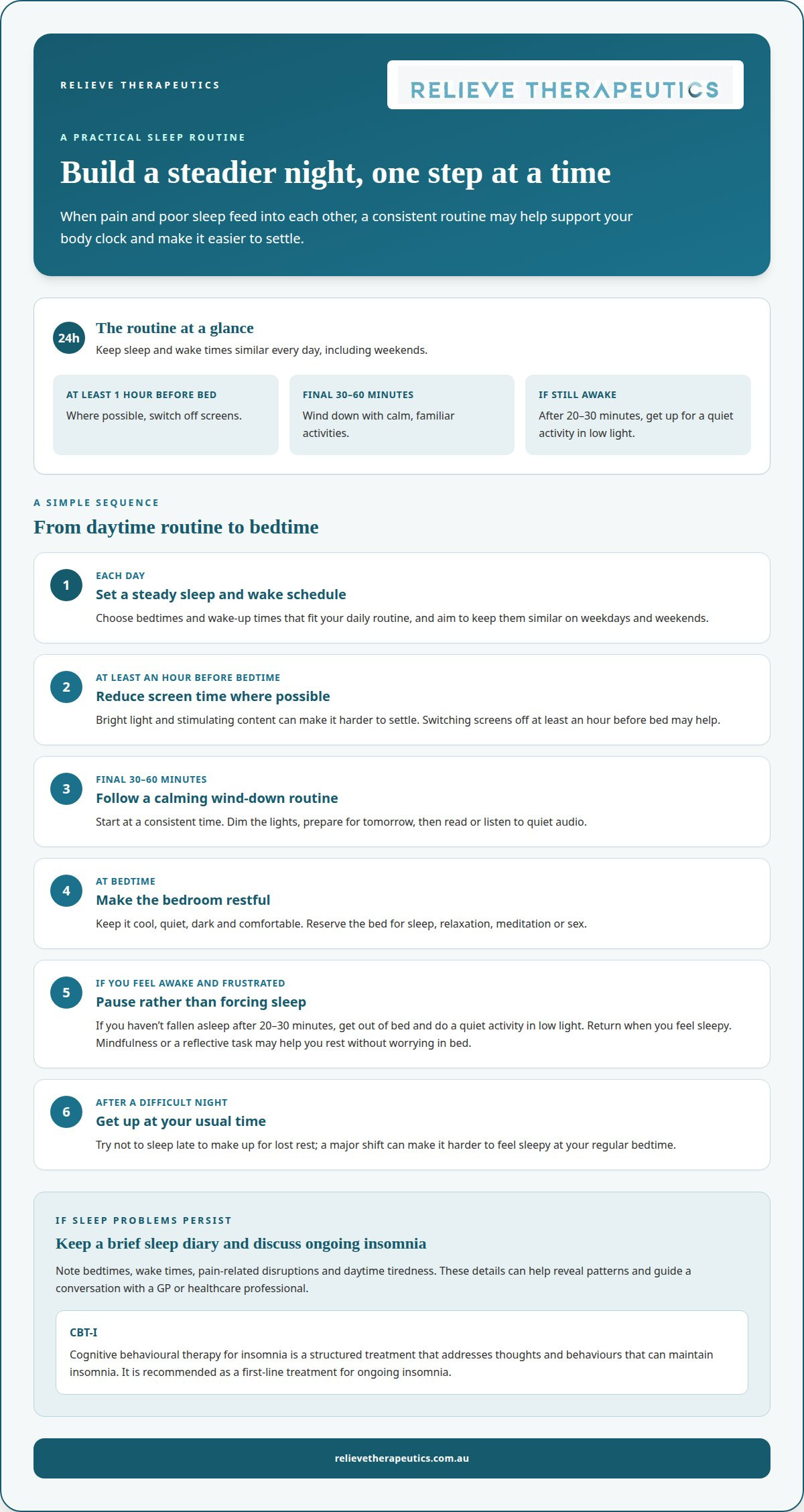
With chronic pain, a regular sleep schedule can help keep your body clock steady. Aim for similar bedtimes and wake-up times every day, including weekends. After a difficult night, try to get up at your usual time rather than sleeping late. A major shift can make it harder to feel sleepy at your regular bedtime. Choose a schedule that allows for regular sleep and fits your daily routine.
Build a calming routine before bed, using the final 30-60 minutes to help you wind down. For example, dim the lights, prepare for tomorrow, then read or listen to quiet audio. Where possible, switch off screens at least an hour before bedtime; stimulating content and bright light can make it harder to settle. Keep the bedroom cool, quiet, dark and comfortable, and reserve the bed for sleep, relaxation, meditation or sex.
If you’re awake and frustrated, avoid forcing sleep. If you haven’t fallen asleep after 20-30 minutes, get out of bed and do a quiet activity in low light. Return when you feel sleepy. Mindfulness or a reflective task can help you rest without turning the bed into a place for worrying about sleep. Try setting aside time earlier in the evening to write down worries and possible next steps.
Cognitive behavioural therapy for insomnia (CBT-I) is a structured treatment that addresses thoughts and behaviours that can maintain insomnia. It is recommended as a first-line treatment for ongoing insomnia. Australians experiencing persistent sleep problems can discuss CBT-I with a GP or healthcare professional, who can explain access options. Before that conversation, keep a brief sleep diary noting bedtimes, wake times, pain-related disruptions and daytime tiredness. These details can help reveal patterns and guide discussion of next steps.
Keeping bedtime and wake-up time consistent, including on weekends, may support your body’s internal clock. After a poor night’s sleep, try to get up at roughly the same time each day. Keep that schedule through the week, weekends included.
Start a calming evening routine about an hour before bedtime. Begin at a consistent time so the routine supports your regular daily schedule.
Caffeine, nicotine, alcohol and meals before bed
Coffee isn’t the only source of caffeine. Tea, cola and energy drinks can contain it too. Caffeine can remain in your system for many hours, so an evening coffee may still affect bedtime. Try reducing or avoiding caffeine after noon, then notice whether settling becomes easier. Check your usual drinks, including afternoon tea and soft drinks, before choosing a practical change.
Nicotine can also make it harder to settle for sleep. If you use nicotine, reducing or avoiding it, especially after noon, may support better rest. Include all nicotine products in your evening routine review, not just cigarettes. A simple record of use and wakeful periods can help you see whether timing coincides with disrupted nights.
Alcohol may make you feel sleepy at first, but it can disrupt deeper sleep later in the night. As a result, rest may feel less restorative even if you fall asleep quickly. Limiting alcohol before bed may help; notice whether your sleep differs after an evening drink. Avoid using alcohol to manage pain or bring on sleep, as it does not address the cause of discomfort.
Large meals close to bedtime can leave you uncomfortable when you’re trying to rest. Where possible, avoid heavy food and alcohol near bedtime, and consider whether meal timing affects your comfort. For example, note whether a late, substantial dinner is followed by difficulty settling. If hunger prompts a late snack, keep it modest rather than having a heavy meal. Change one habit at a time, such as moving coffee earlier or adjusting dinner timing. A brief record of drinks, meals and sleep can reveal patterns without assuming one food or substance explains every difficult night. These observations can also give you useful details to discuss with a health professional if poor sleep continues.
Napping while managing pain
Pain can interrupt sleep, while poor-quality sleep can make pain harder to manage. A daytime nap may ease fatigue after a difficult night, but its timing and length matter. A full sleep cycle takes approximately 90 minutes, so a longer nap may leave you waking from deeper sleep. It can also reduce sleepiness at bedtime. For some people, breaking the cycle of pain and poor sleep starts with balancing daytime rest against their need for sleep at night.
If you need a nap, aim for 20-30 minutes in the early afternoon, keeping it under half an hour. For example, after a difficult night, set aside a brief rest soon after lunch rather than dozing late in the day. A quiet, comfortable place can help you settle. If you don’t fall asleep, resting calmly still gives you a pause without extending the nap. Track nap timing and how readily you sleep that night. This can reveal whether daytime rest is easing fatigue or disrupting bedtime.
During a night-time flare-up, follow the pain-management plan you’ve already agreed on with your healthcare professional. Try adjusting your position or using a quiet breathing exercise while allowing your body to rest. Don’t change medication doses or timing on your own. Discuss sleep-related concerns about pain medication with your GP or pharmacist.
After a disrupted night, avoid compensating with a long or late nap. A short rest in the early afternoon may help manage daytime tiredness while preserving sleep pressure for bedtime. If pain repeatedly wakes you, record when pain and awakenings occur, along with any naps. These details can help you describe the pattern when discussing ongoing sleep problems with a healthcare professional. To take a more considered approach to breaking the cycle of pain and poor sleep, notice how naps affect daytime function and your usual bedtime. Aim for enough rest to manage the day without shifting more sleep into it.
Signs of sleep problems associated with chronic pain
Approximately 53-90% of individuals with chronic pain report a high level of chronic insomnia. Signs include repeated waking, difficulty falling asleep, or waking unrefreshed. Daytime tiredness, reduced concentration and struggling with usual tasks can also signal that poor rest needs attention. Note how often these problems occur and whether pain wakes you.
Pain and sleep can affect each other in both directions. Pain may interrupt rest, while even one poor night can increase pain sensitivity the next day. This can make movement and daily activities feel harder. A GP can consider pain and sleep disruption together rather than treating them as unrelated.
CBT-I is a recommended first-line treatment for ongoing insomnia. It addresses patterns and behaviours that can maintain sleep difficulties; a GP or healthcare professional can discuss access in Australia. Sleep studies assess possible sleep disorders, while pain treatment should reflect the person’s symptoms and health needs.
Costs for CBT-I, sleep studies and pain treatment vary by service and access pathway. Discuss likely costs with the relevant health professional before proceeding. There is no single price that applies to every Australian service.
Medicines can affect sleep in different ways, including disrupting rest or causing drowsiness. The effect depends on the medicine and its timing, so discuss concerns with a GP or pharmacist. Combining sleeping pills with opioid pain medicines can create serious safety risks, including excessive sedation and slowed breathing. Don’t combine them without medical advice.
See a GP when sleep problems persist, affect daytime function, or may relate to medication. Loud snoring, gasping or pauses in breathing are reasons to discuss possible sleep apnoea. Australians can start with a GP or healthcare professional to discuss insomnia, CBT-I, sleep assessment and pain management. Call 000 in an emergency.
Chronic pain affects the quality of life of millions of people worldwide. One study found that people with chronic pain increased their physical activity after a more restful night’s sleep.
Relieve Therapeutics
Relieve Therapeutics offers PEA capsules in 60, 120 and 180 capsule supplies for people considering a supplement as part of their approach to persistent pain. These products are not a substitute for assessing ongoing sleep problems or getting advice about treatment. If you’re considering PEA, discuss whether it suits your circumstances with a health professional, particularly if you take medicines or have questions about your health.
Sleep routines, pain management and suitable health advice each have a role in addressing disrupted rest. Relieve Therapeutics provides a focused option for readers exploring PEA supplements alongside those broader considerations. For product enquiries, contact Relieve Therapeutics.
Take a considered next step
Breaking the cycle of pain and poor sleep is a gradual process, not a test of willpower. Rather than expecting every night to be uninterrupted, consider what a more manageable day would look like for you. That might mean feeling more alert for a morning task or having more capacity for an activity that matters. A useful goal is personal, practical and focused on daily life.
If sleep disruption continues, discuss your concerns and priorities with a GP or healthcare professional. The conversation can help you consider how pain, sleep and any current treatments fit together. If you’re exploring PEA capsules as part of your broader approach, make that choice with a clear understanding of your needs and health circumstances.
For product enquiries, contact Relieve Therapeutics. You can take the next step at a pace that feels considered, with support for the questions that matter to you.
Frequently Asked Questions
What is chronic pain?
According to the Sleep Health Foundation, chronic pain is persistent or recurring pain lasting longer than the normal healing period, usually 3 to 6 months. It may continue even after an injury has healed, or arise alongside a long-term condition. If pain persists or affects your daily activities, record what changes it and discuss that pattern with your GP or healthcare professional.
What sleep habits help people living with chronic pain?
Consistent sleep and wake times, a relaxing wind-down routine and a comfortable bedroom can support rest. Keep a simple sleep diary to identify patterns, noting bedtime, wake-ups, pain disruptions and daytime naps. For example, if a nap seems to make it harder to sleep at night, record when and how long you napped. Discuss persistent sleep concerns with a GP or healthcare professional.
What evidence-based treatments can improve both chronic pain and sleep?
CBT-I is a recommended first-line treatment for ongoing insomnia. A GP can also consider pain and sleep disruption together and tailor pain treatment to the person’s symptoms and health needs.