

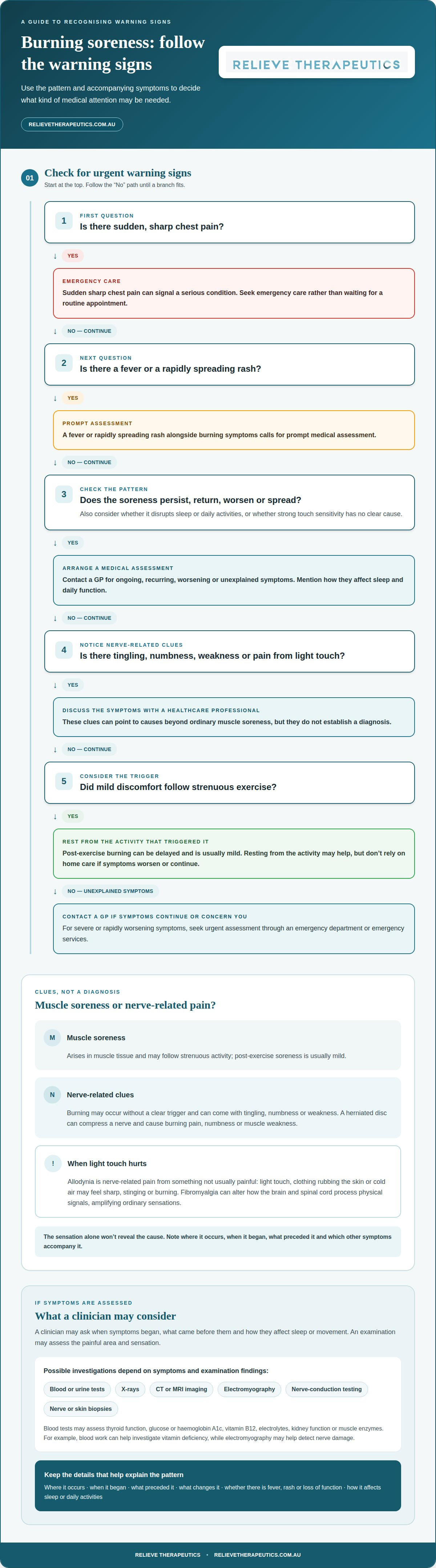
Burning soreness should be taken seriously if it persists, keeps returning, worsens or spreads, or occurs with a fever or rapidly spreading rash. Numbness, tingling, weakness, or pain that disrupts sleep or daily activities also warrants medical attention. Burning after strenuous exercise can be delayed and is usually mild, but ongoing symptoms deserve closer attention.
It’s understandable to wonder whether the feeling comes from an overworked muscle or something that needs treatment. Burning soreness can have different causes, so the sensation alone won’t reveal what’s happening. Noting where it occurs and what other symptoms accompany it can help you explain the pattern to a healthcare professional.
This article covers common causes of burning soreness, how nerve-related symptoms can differ from muscle soreness or skin irritation, and when to seek medical care in Australia. You’ll also learn which warning signs call for prompt attention and what a healthcare professional may consider when assessing persistent or unexplained symptoms.
Key Takeaways
- Notice whether the discomfort follows exercise or comes with tingling, numbness or weakness; these clues can help distinguish muscle soreness from possible nerve pain.
- Seek medical care for symptoms that persist, keep returning or worsen, especially if they affect sleep or daily activities.
- Learn how skin conditions, shingles and mouth sores can cause burning, and which changes may need prompt attention.
- Understand that autoimmune conditions can affect pain sensitivity, and that PEA capsules are a supplement option rather than a substitute for assessment of concerning symptoms.
When Should Burning Muscle Pain Be Taken Seriously?
Burning after strenuous exercise can be delayed and is usually mild, but ongoing or unexplained symptoms deserve attention. Tingling, numbness, weakness or pain from light touch can point to causes beyond ordinary muscle soreness. The pattern and accompanying symptoms help show when burning soreness needs closer attention.
Nerve Pain and Muscle Pain
Nerve pain arises from affected or damaged nerves, while muscle pain arises in tissues such as muscles. The distinction matters because burning in an arm, leg or back can have causes beyond recent exercise. Muscle soreness after strenuous activity is usually mild; nerve-related pain may come with tingling, numbness or weakness.
Notice whether symptoms follow an activity or appear without an obvious trigger. A herniated disc, for example, can compress a nerve and cause burning pain, numbness or muscle weakness. These signs don’t establish a diagnosis, but persistent or spreading burning soreness is worth discussing with a healthcare professional.
Burning Neuropathic Pain
Burning neuropathic pain describes burning or stinging sensations linked to nerve injury, nerve damage or nervous system malfunction. It can occur spontaneously, without a clear trigger, or alongside numbness and tingling. This matters because the nerve may respond abnormally even when nearby skin or muscle hasn’t been injured.
Allodynia is nerve-related pain caused by something that is not usually painful. Light touch, clothing rubbing against skin or cold air may feel sharp, stinging or burning, sometimes like a bad sunburn. Experts believe fibromyalgia can alter how the brain and spinal cord process physical signals, amplifying them. This central sensitisation can make ordinary sensations painful.
Serious Symptoms and Medical Emergencies
Take burning muscle pain seriously if it persists, returns, spreads to several muscles, or disrupts sleep and daily activities. Strong touch sensitivity without a clear cause also warrants medical attention. Numbness or weakness alongside pain can help explain the symptom pattern.
Burning soreness alone doesn’t identify a medical emergency. Sudden sharp chest pain can signal aortic dissection, a serious condition; seek emergency care rather than waiting for a routine appointment. A fever or rapidly spreading rash with burning symptoms also calls for prompt assessment. The location, onset and accompanying symptoms help determine urgency.
When to seek medical care
Arrange a medical assessment if a burning sensation persists, returns or worsens, including after taking medication. A fever or rapidly spreading rash alongside it also needs prompt attention. If burning soreness affects sleep or daily function, describe when it began, where it occurs and what makes it change. These details help a doctor assess the pattern.
Can home remedies help burning soreness, and which are safe? Resting from an activity that triggered mild discomfort may help after exercise, but don’t rely on home care if symptoms worsen or continue. A doctor or pharmacist can advise whether a medicine or topical treatment is suitable, taking your health conditions and other medicines into account.
How can burning soreness be prevented? Prevention depends on the cause. Note whether symptoms follow a particular exercise, wrist position or cold exposure, then discuss recurring patterns with a doctor. For neuropathic pain, rehabilitation may involve regular exercise, appropriate nutrition, stress reduction and regular reviews with a GP.
What Australian health services can I contact for advice about burning soreness? Contact a GP for ongoing or unexplained symptoms. Seek urgent assessment through an emergency department or emergency services if symptoms are severe or rapidly worsening. Mention any fever, rash or loss of function, as these details help indicate urgency.
What an assessment may involve
A clinician may ask when symptoms began, what preceded them and how they affect sleep or movement. A physical examination can assess the painful area and sensation. Depending on the findings, investigations may include blood or urine tests, X-rays, CT or MRI imaging, electromyography, nerve-conduction testing, or nerve and skin biopsies.
Blood tests may assess thyroid function, glucose or haemoglobin A1c, vitamin B12, electrolytes, kidney function or muscle enzymes. The tests selected depend on symptoms and examination findings. For example, blood work can help investigate vitamin deficiency, while electromyography may help detect nerve damage.
Treatment depends on the suspected cause. Options for neuropathic pain can include oral pain medicines, antidepressants, anti-seizure medicines or topical treatments; physiotherapy may also be considered. A clinician weighs symptoms, other health conditions and medicines before recommending an approach. Don’t start or change a medicine without appropriate advice.
Skin conditions and oral sores that can cause burning
Burning soreness can come from irritated or infected skin, oral sores, or changes in nerve signals. Depending on the cause, symptoms may include stinging, sharp tenderness, redness, itching, tingling or visible blisters.
Rosacea can cause facial flushing and uncomfortable skin sensations during flare-ups. Spicy foods, alcoholic beverages, sunlight and stress may trigger symptoms; Helicobacter pylori is also listed as a possible trigger. These triggers can help explain why burning or stinging appears with visible redness, rather than after exercise or pressure on muscle tissue.
Shingles is another cause to recognise. The Centers for Disease Control and Prevention (CDC) says it commonly causes a painful, itchy or tingly rash. It usually appears as a blistering rash on one side of the torso. A band-like patch of blisters with burning or tingling is therefore a different pattern from generalised skin irritation.
Cellulitis is a bacterial infection affecting the deepest layers of the skin, and antibiotics can treat it. Increasing redness, warmth and tenderness around affected tissue can occur with infection. A clinician can assess the skin and determine whether treatment is needed, particularly if the area is expanding or accompanied by fever.
Mouth sores can also cause a sharp or burning sensation while eating or speaking. Canker sores commonly heal on their own, while herpes simplex viruses HSV-1 and HSV-2 can cause oral or genital lesions. Their appearance and location differ, so a sore inside the mouth isn’t automatically a cold sore.
Anxiety may coincide with burning skin, but the sensation alone doesn’t establish anxiety as the cause. Stress is a recognised trigger for rosacea flare-ups, and visible flushing may accompany that response. Fibromyalgia can also affect how the brain and spinal cord process physical signals, increasing sensitivity without visible skin damage. Nerve damage, infection and skin irritation remain distinct possible causes; persistent symptoms or a spreading rash need medical assessment.
What autoimmune disease can make the skin feel like it is burning?
A burning sensation alone can’t identify a specific autoimmune disease. Autoimmune disorders may be associated with nerve-related burning pain, but the affected area, other symptoms and medical history help distinguish possible causes.
The immune system can affect nerves or other tissues, and nerve injury can alter how sensations are felt. A burning feeling may also occur with infections, injuries or other conditions. It doesn’t, by itself, establish autoimmune disease or neuropathy. A clinician considers the broader pattern rather than relying on one symptom.
Fibromyalgia is a chronic condition affecting muscles and bones, with increased sensitivity to pain and external stimuli. Experts believe it can change how the brain and spinal cord receive and process physical signals. This altered processing may make ordinary sensations feel painful, but it doesn’t mean the person has an autoimmune disease.
Spinal problems can also produce burning symptoms away from the spine. Sciatica involves compression or irritation of the sciatic nerve, which travels from the lower back through the buttocks and into each leg. Herniated discs, bone spurs or spinal stenosis may compress it. Symptoms can include lower-back and leg pain, tingling or burning, often along the nerve’s path.
Circulatory conditions create a different pattern. Peripheral vascular disease can cause leg pain and fatigue that worsen with exercise and improve with rest. Raynaud phenomenon occurs when small arteries in fingers or toes spasm and narrow after cold exposure. It can cause burning, stinging or numbness in those extremities.
Record where symptoms occur, what brings them on and whether numbness or weakness accompanies them. Those details help a clinician distinguish nerve, spinal and circulation-related causes. If you’re exploring supplement options alongside appropriate care, learn about PEA capsules; supplements don’t diagnose or treat the underlying cause.
Relieve Therapeutics
Relieve Therapeutics offers Palmitoylethanolamide (PEA) capsules as a dietary supplement option for people exploring approaches to ongoing discomfort. Its range includes PEA 60 Capsules, PEA 120 Capsules and PEA 180 Capsules. PEA supplements don’t identify the cause of burning symptoms or replace medical assessment, particularly when pain persists, worsens or comes with other concerning signs.
If you’re considering PEA as part of your broader approach, review the capsule options and consider how supplements fit alongside advice from your healthcare professional. For questions about Relieve Therapeutics’ PEA capsules, contact Relieve Therapeutics.
Take a considered next step
Understanding what may be behind burning soreness can help you make a more informed choice about what to do next. Keep track of when the sensation occurs, what affects it and how it changes. This practical record can guide a conversation with a healthcare professional and help clarify whether a supplement fits your broader wellbeing routine.
PEA capsules are a dietary supplement, not a diagnosis or substitute for medical care. If you’re considering them, weigh that choice alongside appropriate advice for your symptoms and health needs. Relieve Therapeutics offers PEA capsules for people who want to explore this supplement as part of their wellbeing routine.
Contact Relieve Therapeutics to discuss its PEA capsules. A thoughtful next step can help you move forward with greater confidence.
Frequently Asked Questions
Can Muscles Burn Without an Abnormal Blood Test?
Yes, a burning muscle sensation can occur even when blood test results are normal. Blood tests assess particular factors, such as muscle enzymes or electrolyte levels, rather than every possible cause of pain. For example, soreness after strenuous exercise may not indicate an abnormal blood result. If symptoms persist or affect daily activities, discuss the pattern and test findings with your doctor.
Can muscle burning occur with normal blood tests?
Yes. Normal blood results don’t assess every nerve or explain every source of discomfort. Depending on your symptoms, a clinician may consider tests such as electromyography or nerve-conduction testing, which assess nerve and muscle function. Imaging may also be considered for spinal concerns. Tell your doctor if symptoms change, especially if weakness, numbness or reduced movement develops.
How Can You Tell Whether Burning Comes From Muscles or Nerves?
The pattern can offer clues, but it can’t confirm the cause by itself. Muscle soreness after strenuous exercise often follows the area worked, while nerve-related symptoms may include tingling, numbness or pain without an obvious trigger. For example, discomfort with tingling down a leg follows a different pattern from soreness after lifting. A clinician can assess these details alongside an examination.
Is burning skin a symptom of anxiety?
Burning skin alone can’t establish anxiety as the cause. Stress may trigger rosacea flare-ups, which can involve facial flushing and uncomfortable sensations, but infection, irritation and nerve conditions are also possible explanations. Note whether the sensation occurs with visible changes, such as redness or blisters, and whether it continues when you feel calm. Persistent or worsening symptoms need medical assessment.
What disease causes burning muscles at rest?
Burning muscles at rest alone can’t identify a specific disease. Fibromyalgia can involve heightened sensitivity to pain, while neuropathy may cause spontaneous pain without an obvious trigger. Other possibilities depend on the affected area and accompanying symptoms. A doctor may consider your history, examination and relevant tests to investigate the cause, particularly if the discomfort keeps returning or disrupts sleep.
Where on the body can burning soreness occur, and what might the location indicate?
Burning can occur in different areas, and location may offer useful clues. Burning or tingling travelling from the lower back through the buttock and leg may follow the sciatic nerve. Symptoms in fingers or toes after cold exposure can occur with Raynaud phenomenon. Leg pain that worsens with exercise and eases with rest may suggest a circulation issue. These patterns guide assessment, but don’t diagnose the cause.