

Chronic pain and medicines used to treat it can both contribute to brain fog. A supplement to reduce brain fog from pain isn’t a one-size-fits-all solution: brain fog can have several causes, and supplements may be more relevant when a nutrient deficiency is involved.
Forgetfulness, slow or unclear thoughts, and difficulty concentrating can make everyday tasks harder. It’s understandable to look for something that helps, but identifying what may be driving the symptoms is a useful first step.
This article explains how pain, pain medicines and other health conditions may affect concentration and memory, and what to consider before taking supplements. It also covers why checking for a possible deficiency can matter and how to weigh supplement options alongside other potential causes of brain fog.
Key Takeaways
- Brain fog can have several causes, so consider pain, medicines and other health factors rather than assuming one explanation.
- Notice when memory or concentration changes began and whether they’re affecting everyday activities; this can help guide a conversation about possible causes.
- Supplements may be more relevant when a nutrient deficiency is involved, so learn why identifying the underlying issue matters before choosing one.
- Understand how pain medicines may contribute to brain fog and what information can help you discuss possible side effects with a health professional.
1. What causes brain fog?
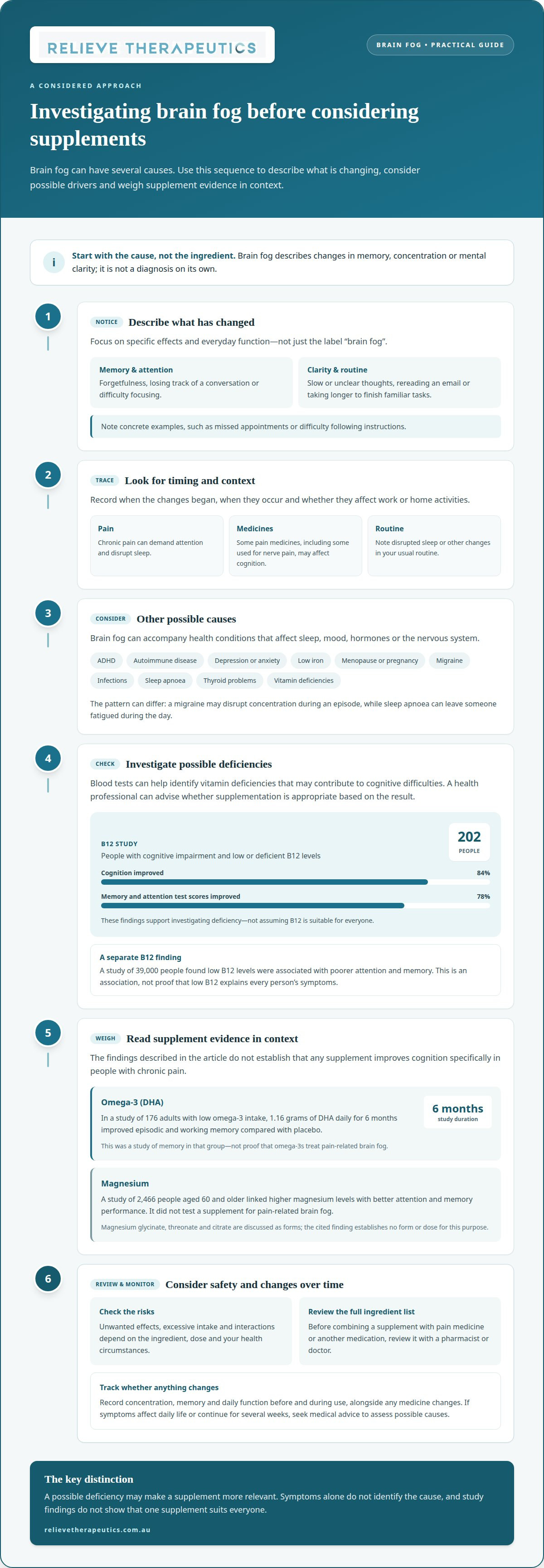
Brain fog describes changes in memory, concentration or mental clarity; it isn’t a diagnosis on its own. Chronic pain can disrupt sleep and demand attention, while pain medicines, including some used for nerve pain, may affect cognition. Glutamate signalling and changes in cellular energy are also being explored as possible links between pain and thinking, but these are not settled explanations.
Other possible causes include ADHD, autoimmune disease, depression, anxiety, low iron, menopause, migraines, infections, pregnancy, sleep apnoea, thyroid problems and vitamin deficiencies. A useful first step is to note when the changes began, which medicines you take and whether your routine has shifted, such as through disrupted sleep. Blood tests can help identify vitamin deficiencies that may contribute to cognitive difficulties.
In a study of 202 people with cognitive impairment and low or deficient B12 levels, B12 supplementation improved cognition in 84% and memory and attention test scores in 78%, according to The study authors. This supports investigating deficiency, not assuming B12 suits everyone. In Australia, assess supplement claims against evidence and review product labels for ingredients and directions. Costs vary with the ingredient, formulation and pack size, so there’s no single price for brain-fog or pain supplements.
Magnesium evidence for pain-related brain fog is indirect. A study of 2,466 people aged 60 and older linked higher magnesium levels with better attention and memory performance, but it didn’t test a supplement for pain-related fog. Magnesium glycinate, threonate and citrate are discussed as forms; the cited finding establishes no form or dose for this purpose.
Risks include unwanted effects, excessive intake and interactions with medicines. These depend on the ingredient, dose and your health circumstances. Before combining a supplement with pain medicine or another medication, review the full ingredient list with a pharmacist or doctor. To assess whether a supplement helps, record your concentration, memory and daily function before and during use, alongside any medicine changes. If symptoms affect daily life or continue for several weeks, seek medical advice to assess possible causes.
2. Illnesses and health conditions associated with brain fog
Brain fog can accompany conditions that affect sleep, mood, hormones or the nervous system. Examples include migraine, autoimmune disorders, depression, anxiety, thyroid problems, sleep apnoea and infections. The effect can differ: a migraine may disrupt concentration during an episode, while sleep apnoea can leave someone fatigued during the day. Brain fog can also occur alongside pregnancy or menopause, so changes in health and routine are useful context.
Vitamin status may be relevant, too. A study of 39,000 people found that low vitamin B12 levels were associated with poorer attention and memory. That finding describes an association, not proof that low B12 explains every person’s symptoms. A blood test can help identify a deficiency, and a doctor can advise whether supplementation is appropriate based on the result.
Fish oil contains omega-3 fatty acids, including DHA, which has a role in brain function. In a study of 176 adults with low omega-3 intake, taking 1.16 grams of DHA daily for 6 months improved episodic and working memory compared with placebo. This provides evidence about memory in that study group, not proof that omega-3s treat pain-related brain fog. Omega-3s are also discussed in relation to inflammation, but that does not establish a specific cognitive benefit for people with chronic pain.
Which supplements have evidence for improving cognitive symptoms in people with chronic pain? The findings described here don’t establish that any supplement improves cognition specifically in people with chronic pain. The omega-3 study examined adults with low intake, while B12 findings related to people with low or deficient levels. Those details matter when weighing whether a supplement to reduce brain fog from pain is relevant to an individual’s situation.
Choosing a supplement to reduce brain fog from pain should start with the suspected cause, not an ingredient’s popularity. Note whether concentration changes coincide with migraine, disrupted sleep or a diagnosed condition, then discuss that pattern and any supplement use with a health professional.
3. Brain fog symptoms and definition
Brain fog is a descriptive term for changes in thinking, not a diagnosis or a single disease. It can affect memory, attention and the mental effort needed to complete familiar tasks. For example, you might reread an email several times or lose track of a conversation. These experiences can feel like cognitive impairment, but the phrase “brain fog” alone doesn’t identify a cause or measure severity.
Symptoms can include fatigue, disorientation, mental exhaustion, forgetfulness, slow or unclear thoughts, and difficulty focusing or recalling information. You might struggle to follow a recipe, remember why you entered a room or find the right word during a meeting. Symptoms may vary throughout the day; pain, poor sleep or a demanding activity can make concentration harder at particular times.
Focus on function, not just the label. Record specific examples, such as missed appointments, difficulty following instructions or needing longer to finish routine work. Note when each change occurs and whether it coincides with pain, disrupted sleep or a medicine change. This simple record can help a health professional understand the pattern without treating one difficult afternoon as proof of ongoing cognitive impairment.
Inflammation and cellular energy production are sometimes discussed as possible contributors to changes in thinking, but symptoms alone can’t reveal those processes. Evidence about a biological mechanism doesn’t establish the cause of an individual’s concentration problems. Instead, track changes over time: are they new, becoming more frequent or affecting work and home activities? This distinction helps you describe the problem clearly and supports a more focused assessment.
Seek medical advice if memory or concentration problems interfere with daily life or persist for several weeks. A health professional can consider your symptoms, health history and medicines, then decide whether further assessment is appropriate. If symptoms appear suddenly or are severe, seek prompt medical care. Clear examples, such as becoming disoriented on a familiar route, are more useful than saying only that your thinking feels “off”.
4. Pain medication and brain fog
Pain medicines can contribute to brain fog, including medicines used for nerve pain. Possible effects include difficulty concentrating, slower thinking or memory changes. Timing can offer a useful clue: note whether symptoms began after starting a medicine, changing its dose or adding another treatment. Pain itself can also affect attention, so timing helps describe the pattern but doesn’t identify the cause on its own.
Keep a short record before a medical review. Include each medicine’s name, when you take it, when fogginess appears and how it affects a daily activity, such as following a conversation. Note pain levels, disrupted sleep and anxiety at the same time. These details can help distinguish a recurring pattern from an isolated difficult day.
Don’t stop or alter prescribed pain treatment on your own. Instead, consult the prescriber or a pharmacist about your symptoms, the medicine’s intended benefit and possible alternatives. They can consider whether the treatment, another medicine, the underlying pain or a separate health issue may be contributing. Bring a complete list of medicines and supplements, since combinations can matter.
Brain fog symptoms may lift after a few days or weeks, but persistent or worsening changes deserve medical attention. A clinician can assess memory and concentration, review your treatment history and consider other causes. If fogginess affects driving, work or managing medicines, describe that specific risk rather than reporting only tiredness.
Supplements aren’t a substitute for reviewing a possible medicine side effect. A supplement’s effects also can’t be judged by expectation alone; placebo-controlled research is designed to distinguish an intervention’s effects from those of a placebo. For yourself, record symptoms and daily function consistently, then discuss the pattern during a medical review. The key is to address pain treatment and changes in thinking together, without changing medicines independently.
Relieve Therapeutics
Relieve Therapeutics offers PEA capsules for people considering a supplement as part of their approach to pain. The range includes PEA 60 Capsules, PEA 120 Capsules and PEA 180 Capsules. The research discussed above doesn’t establish PEA as a treatment for brain fog, so consider the evidence and your own health needs before choosing a supplement. PEA is not a replacement for investigating possible causes of concentration or memory changes, or reviewing pain medicines with a health professional.
If you’re considering PEA capsules and would like more information, contact Relieve Therapeutics.
Take a considered next step
Choosing a supplement to reduce brain fog from pain is best approached as part of a broader plan, not as a quick fix. Before making a change, decide what you hope to improve in daily life, such as staying focused through a conversation or completing familiar tasks. This gives you a practical outcome to discuss and a clearer way to judge whether your approach is useful.
Bring your priorities and current list of supplements and medicines to a health professional. Their advice can help you weigh possible benefits, risks and how an option fits with your existing care. If you’re exploring PEA, take time to consider how it fits your needs and the available evidence.
Contact Relieve Therapeutics to discuss your questions about PEA capsules. A thoughtful, informed next step can help you move forward with greater confidence.
Frequently Asked Questions
What causes brain fog?
Brain fog can have several possible causes, including chronic pain, medicine side effects, sleep problems, mood conditions and nutrient deficiencies. The combination varies from person to person. A practical starting point is to note when concentration changes occur and whether they coincide with a medicine change, poor sleep or another health issue. This record can help a doctor decide what to investigate, including whether blood tests are appropriate.
What is brain fog syndrome?
“Brain fog syndrome” isn’t a specific medical diagnosis; brain fog is a descriptive term for difficulties with thinking, memory or concentration. It doesn’t identify why those changes are happening. For instance, trouble following a conversation may relate to a range of underlying factors. If these difficulties affect daily activities, describe the specific change and its impact during a medical appointment.
What are brain fog symptoms?
Symptoms may include forgetfulness, difficulty concentrating, slow or unclear thoughts, mental exhaustion and disorientation. In everyday life, this might mean losing track of a conversation, struggling to recall a familiar name or finding it harder to organise a routine task. Note which difficulties occur and how they affect work, home responsibilities or social activities; concrete examples make changes easier to explain.
Is brain fog normal?
Occasional difficulty concentrating can happen, but ongoing or disruptive changes shouldn’t simply be dismissed as normal. Pay attention if memory problems interfere with daily life or continue for several weeks. For example, repeatedly missing appointments or struggling to manage familiar tasks gives a doctor useful context. Seek medical advice to discuss possible causes, particularly if the changes are worsening or affecting your quality of life.
What is brain fog, and what does brain fog mean?
Brain fog is a general description of feeling mentally slowed, unfocused or less able to recall information. It isn’t a formal diagnosis and doesn’t point to one particular disease. The phrase can describe different experiences, from losing your train of thought to needing extra time for familiar tasks. Explaining what has changed in your routine is more informative than relying on the label alone.
What causes brain fog associated with chronic pain?
Chronic pain may compete for attention and disrupt sleep, while some pain medicines can also affect concentration or memory. Other contributors, such as anxiety, a health condition or a nutrient deficiency, may overlap. Note when symptoms appear in relation to pain, sleep and medicine use, then discuss that pattern with a doctor. Don’t stop or change prescribed treatment without medical advice.