

Natural pain relief rarely comes from a single fix. Practical natural ways to manage daily pain levels may combine gentle movement, heat or cold for comfort, and mind-body practices such as slow breathing or mindfulness. Speak with a doctor or qualified health professional before starting a new treatment, supplement or exercise routine, particularly if you have an underlying condition.
Living with ongoing discomfort can affect sleep, mood and the activities that make a day feel manageable. It’s understandable to look for options that support comfort without expecting one approach to work for everyone. This guide explores three natural approaches, explains when professional medical advice matters, and looks at how emotional support can help you cope with persistent pain. You’ll also find practical ways to build supportive habits gradually, so you can consider what may fit your needs and daily routine.
Key Takeaways
- Talk with a doctor or qualified health professional before starting a new supplement, treatment or exercise routine, especially if you have an underlying condition.
- Match heat or cold to the discomfort, and place a cloth barrier between your skin and the heat or cold source.
- Try gentle mindfulness or slow breathing to build a calmer response to pain, starting with a short, quiet practice.
- Support daily function with steady routines, enjoyable activities and emotional support when persistent pain affects your wellbeing.
- Explore common questions about natural approaches, including where the evidence is still inconclusive.
1. Consulting a doctor before starting treatment or exercise
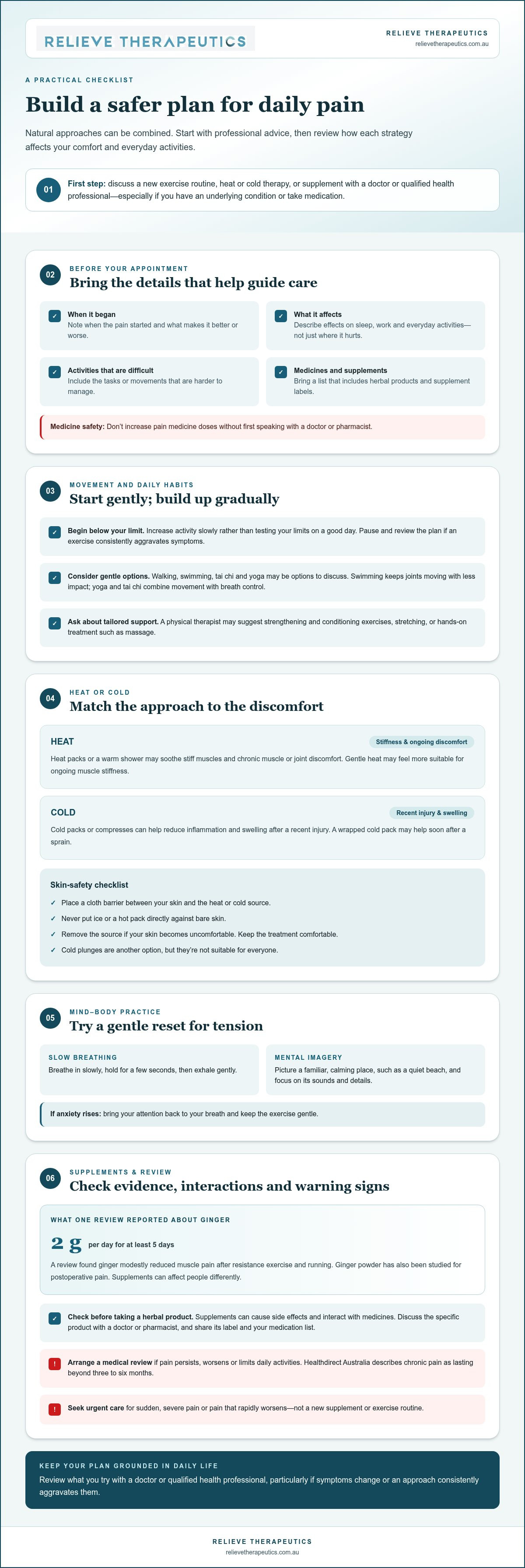
Before starting exercises, heat or cold therapy, or a pain-relief supplement, discuss your plan with a doctor or qualified health professional. This matters particularly if you have an underlying condition or take medication, because a treatment that suits one person may not suit another. According to Healthdirect Australia, chronic pain lasts beyond three to six months. If pain is persistent, describe how it affects sleep, work and everyday activity, not just where it hurts.
Before an appointment, note when the pain began, what makes it better or worse, and which activities are difficult. Bring a list of medicines and supplements, including herbal products. These details can help a doctor or physical therapist recommend safe, tailored exercises and identify whether a new approach needs adapting. Don’t increase pain medicine doses without first speaking with a doctor or pharmacist.
Start movement gradually rather than testing your limits on a good day. A physical therapist may suggest strengthening and conditioning exercises, stretching, or hands-on treatment such as massage. Gentle options can include walking, swimming, tai chi or yoga. Swimming keeps joints moving with less impact, while yoga and tai chi combine movement with breath control. Increase activity slowly, and pause to review your plan if an exercise consistently aggravates symptoms.
Heat and cold may also be part of a physical therapy plan. Heat can soothe stiff muscles; cold can help reduce inflammation and swelling. Place a cloth between your skin and the heat or cold source to reduce the risk of skin injury. A review found that ginger taken at two grams per day for at least five days modestly reduced muscle pain after resistance exercise and running. Ginger powder has also been studied for postoperative pain, but supplements can affect people differently.
What are the risks and side effects of herbal supplements for pain? Herbal products can cause side effects and interact with medicines. Discuss a specific supplement with a doctor or pharmacist before taking it, and share the product label and your medication list so they can assess possible interactions.
When should someone with daily pain see a doctor or seek urgent care? Arrange a medical review if pain persists, worsens or limits daily activities. Seek urgent care for sudden, severe pain or pain that rapidly worsens, rather than relying on a new supplement or exercise routine.
Breathing exercises and mental imagery can help manage tension alongside movement. Try breathing in slowly, holding your breath for a few seconds, then exhaling gently. For mental imagery, picture a familiar, calming place, such as a quiet beach, and focus on its sounds and details. If anxiety rises during practice, bring your attention back to your breath and keep the exercise gentle.
2. Heat and cold therapy
Choose heat or cold to suit the discomfort. Heat packs or a warm shower may soothe stiff muscles and chronic muscle or joint discomfort. Cold packs and compresses can reduce swelling and inflammation after a recent injury. For example, a wrapped cold pack may help soon after a sprain, while gentle heat may feel more suitable for ongoing muscle stiffness.
Protect your skin whenever you apply heat or cold. Place a cloth barrier between your skin and the source, and remove it if your skin becomes uncomfortable. Options include heating pads, warm showers, ice packs and cold compresses. Cold plunges are another option, but they’re not suitable for everyone. Keep the treatment comfortable, and never place ice or a hot pack directly against bare skin.
If home strategies and guided physical therapy aren’t enough, discuss other options with a healthcare professional. Treatment decisions depend on the cause of the pain, its effect on daily activities, and what you’ve already tried. TENS therapy may help some people with chronic pain that hasn’t responded to other treatments, but published evidence doesn’t support its use for some chronic pain conditions. A tailored discussion is more useful than treating TENS as a solution for everyone.
Cognitive behaviour therapy, or CBT, can help people address thoughts and behaviours linked with persistent pain. A licensed mental health professional can use CBT to help ease symptoms of depression, anxiety and other concerns. Talking therapies also offer space to explore how pain affects relationships, work or sleep. For example, someone might work on managing tension before an activity that has become stressful.
Acupuncture and trigger point therapy are other approaches to consider. Evidence about acupuncture’s effectiveness for pain management is inconclusive, so it shouldn’t be presented as a certain remedy. Trigger point therapy applies focused pressure to tight areas of muscle. Discuss either approach with a qualified health professional, especially if you have an underlying condition or are already receiving treatment.
Mindfulness can complement these approaches by directing attention to the present moment without judgement. Try quietly noticing your breathing and bodily sensations rather than immediately reacting to discomfort. Combining non-medicine treatments may be more effective for pain management than relying on one approach alone. Keep a simple record of the strategies you try and their effects on daily function, then discuss practical next steps with your healthcare team.
3. How can I relieve pain naturally?
Mindfulness meditation offers a structured way to notice pain without immediately judging or resisting it. Find a quiet space, sit comfortably and begin with a five-to-ten-minute session. Bring attention to the breath; when thoughts wander, gently return focus to breathing. Notice sensations as they arise, rather than labelling them as good or bad. A systematic review and meta-analysis of mindfulness meditation for chronic pain examined 38 studies. Mind-body approaches may help by changing how pain is perceived, though they don’t remove its underlying cause.
Slow breathing can complement meditation when pain brings tension or anxiety. Breathe in gently, pause briefly, then exhale slowly. Prayer offers a familiar focus for some people, while guided imagery invites you to picture a calming scene, such as walking along a quiet beach. Imagine sensory details, including the sound of waves and the warmth of the sun. If focusing inward feels uncomfortable, shift your attention to a neutral object in the room.
What natural strategies can help manage daily pain levels? Consider combining gentle movement, relaxation techniques and enjoyable activities, adjusting each to your abilities. Yoga and tai chi bring together breath control, meditation and movements that stretch and strengthen muscles.
Yoga may be useful for some people with chronic lower-back pain. One study found that 12 weeks of yoga significantly reduced lower-back pain. The American College of Physicians lists yoga as a first-line treatment for chronic lower-back pain. Begin with gentle poses and controlled stretching, rather than forcing a movement through pain. A doctor or physical therapist can help you choose exercises that fit your condition, especially if a headache or other pain changes during practice.
Can mindfulness, meditation, or breathing exercises reduce pain? These practices may help you feel calmer and more in control, and regular practice can support persistent pain management. Try a brief breathing exercise before a challenging activity, then notice whether it changes your tension or focus.
Relaxation practice can be extended to 10 to 20 minutes. Sit quietly, loosen your shoulders and move attention through the body, releasing muscle tension as you go. Afterwards, allow a minute or two for thoughts to return before resuming activity. This simple sequence creates a clear start and finish, making it easier to practise regularly.
Which natural pain remedies have evidence of benefit, and how effective are they? Yoga has shown benefit for lower-back pain in a 12-week study, while mindfulness research includes 38 studies, but these findings don’t establish the same effect for every person or pain condition. Acupuncture may be one approach to consider alongside other pain-management options.
4. Emotional coping strategies and psychological support
Persistent pain can affect mood, confidence and connection with others. Stress, anxiety and reduced enjoyment of usual activities may intensify the experience of pain. That doesn’t mean the pain is imagined. Emotional wellbeing and physical symptoms can influence each other, so coping strategies have a place alongside practical care.
Cognitive behaviour therapy with a licensed mental health professional can help address depression, anxiety and other concerns linked with persistent pain. Sessions may involve recognising thoughts that increase distress and practising more workable responses. For example, if a flare-up makes you expect every movement to cause harm, a therapist can help you plan a gradual return to valued activities. The aim is to support daily function, not demand that pain disappear.
How can pacing, sleep, and relaxation help prevent daily pain flare-ups? Pacing helps you avoid doing too much on better days and needing extended rest afterwards. Try starting with one-third of what you think you can manage. Pair this with a consistent bedtime and wake-up time, and use a calming routine to ease tension before sleep.
Sleep deprivation can make pain feel worse, so build a routine that’s easy to repeat. Keep bedtime and wake-up times regular, avoid daytime naps, and put screens away at least an hour before bed. A supportive pillow or pressure-relieving mattress may make resting more comfortable. If sleep problems persist, speak with a GP. A brief journal can help you track sleep, movement and pain patterns to discuss.
Small ergonomic changes can reduce strain during everyday tasks. At a desk, place the screen at eye level, support your feet and change position regularly. During household jobs, keep frequently used items within easy reach to avoid repeated bending or stretching. A walking aid, brace or other support device may help with some tasks, but the right option depends on the person and activity. A physiotherapist or occupational therapist can assess movement and joint needs.
Social support can make living with pain feel less isolating. Tell a trusted friend what practical help would be useful, such as company on a short walk or help with shopping. Peer support groups offer a space to share experiences and coping techniques with people who understand daily challenges. Notice whether a group’s discussions leave you feeling supported, and balance shared experiences with advice from health professionals.
What Australian resources or services can help people manage chronic pain? A GP can help coordinate care and discuss referrals to relevant health professionals, such as a psychologist, physiotherapist or occupational therapist. Peer support groups offer shared understanding, while a mental health professional can provide structured support for emotional wellbeing.
5. Natural pain relief questions
Natural approaches can support comfort and daily function, but the right fit depends on the type of pain. Arthritis, muscle soreness and recurring headaches may call for different strategies. Treat natural pain relief as a considered plan, not a single remedy: note what you try, what changes, and whether it helps you move or sleep more comfortably.
Can relaxation techniques help with pain linked to stress? Slow breathing, mindfulness and enjoyable activities may help you feel calmer and more in control. Try a short breathing practice before a stressful task, then note how your tension and pain respond. These techniques can support coping, but they don’t establish the cause of pain or replace assessment when symptoms persist.
Does acupuncture provide pain relief? Evidence about acupuncture’s effectiveness for managing pain is inconclusive. Some research reports benefits for shoulder, neck, headache and arthritis pain, but results don’t establish a consistent effect across conditions. If considering acupuncture, discuss your type of pain, other treatments and health circumstances with a qualified health professional. Treat it as one possible part of a broader plan, not a guaranteed solution.
Can ginger or turmeric help? A review found that two grams of ginger per day for at least five days modestly reduced muscle pain after resistance exercise and running. A study also found ginger powder as effective as ibuprofen for controlling postoperative pain. A 2021 review reported that curcumin reduced pain similarly to non-steroidal anti-inflammatory drugs, and recommended turmeric as an adjunct to that therapy rather than a replacement. These findings relate to particular contexts, not every kind of daily pain.
Supplements can interact with medicines, so discuss a product with a doctor or pharmacist before taking it. Share its label and your current medication list. This is particularly important if you’re managing arthritis or another ongoing condition, or considering a supplement alongside prescribed treatment. Don’t stop or change prescribed medicine based on a supplement study.
How can you judge whether an approach is helping? Choose one change at a time, such as a relaxation practice before bed or gentle movement after sitting. Keep a brief record of the activity, your pain and its effect on daily function. A health professional can help interpret the pattern and adjust your plan. If an approach increases discomfort or disrupts normal activity, pause and seek advice rather than pushing through.
For natural pain relief, the clearest takeaway is to combine practical self-management with informed decisions. A remedy’s reported benefit may apply to a specific condition or study setting, while your priorities may be sleeping better, moving more easily or managing stress. Explore further natural pain relief information as you consider what to discuss with your healthcare professional.
Relieve Therapeutics: PEA 60 Capsules
Relieve Therapeutics offers PEA 60 Capsules for adults considering palmitoylethanolamide (PEA) as part of their approach to daily pain. PEA is a dietary supplement, not a replacement for medical assessment or prescribed treatment. Evidence and suitability can vary, so discuss PEA with a doctor or pharmacist before use, particularly if you take medicines or have an underlying condition.
Choose the supply size that suits your needs: PEA 60 Capsules, PEA 120 Capsules or PEA 180 Capsules. Review the product information and take questions about supplements to your healthcare professional. A considered plan can keep supplements in perspective alongside movement, sleep and other approaches discussed in this guide.
For more information, visit relievetherapeutics.com.au.
Take your next step with confidence
A sustainable approach starts with noticing what supports your daily function, then discussing meaningful changes with a health professional. Building a personal plan around natural ways to manage daily pain levels is less about finding a perfect remedy and more about making informed choices you can maintain. Keep your priorities clear, such as moving more comfortably or returning to an activity that matters to you.
If you’re considering PEA as part of that plan, Relieve Therapeutics offers PEA 60 Capsules, PEA 120 Capsules and PEA 180 Capsules. Speak with a doctor or pharmacist about whether a supplement fits your circumstances and current medicines. This helps keep any new option in context with your broader care.
For product information or enquiries, contact Relieve Therapeutics. Each thoughtful step can help you shape a pain-management approach that feels informed and practical.
Frequently Asked Questions
How can I relieve pain naturally?
Natural ways to manage daily pain levels may include gentle movement, relaxation practice and a steady sleep routine. Make your choices more useful by recording when pain occurs, what you were doing and which activities become easier or harder. For example, note whether a short walk affects morning stiffness or breathing practice helps you settle before bed. Share persistent or changing patterns with your healthcare professional.
What herb is good for pain and inflammation?
Ginger has evidence for modestly reducing muscle pain after exercise: a review examined two grams per day for at least five days. A 2021 review reported that curcumin reduced pain similarly to non-steroidal anti-inflammatory drugs, and recommended turmeric as an adjunct rather than a replacement. These findings relate to specific uses, not every pain condition. Ask a doctor or pharmacist about herbal products because they can interact with medicines.
What is the fastest home remedy for pain?
For a recent injury with swelling, apply a wrapped ice pack promptly; for ongoing muscle or joint stiffness, try gentle heat, such as a heat pack or warm shower. Place a cloth between your skin and either source to help prevent injury. Choose the option that suits the discomfort, and remove it if your skin becomes uncomfortable. Sudden or severe pain needs medical attention, not just a home remedy.
How does regular low-impact exercise affect chronic pain?
Gentle, regular movement can help keep joints flexible and muscles strong, while inactivity can worsen chronic pain symptoms. Walking, swimming and stretching offer ways to stay active without making every session strenuous. Start with an activity suited to your current ability, then increase it gradually rather than pushing through a flare. A physical therapist can tailor exercises to your condition and help adjust movements that aggravate symptoms.
What dietary changes may help with inflammation and pain?
When considering natural ways to manage daily pain levels, start with meals rich in omega-3 fatty acids, antioxidants and whole grains, which can support joint and muscle health. Limiting processed foods and added sugars may also help reduce pain levels. For a practical start, add a whole-grain option and an antioxidant-rich fruit or vegetable to a meal, then observe how the pattern fits your routine. Staying hydrated supports general wellbeing.
Do heat or cold packs help different types of pain, and how should they be used safely?
Heat can soothe stiff muscles, while cold can reduce inflammation and swelling, especially after a recent injury. Use a cloth barrier between the pack and your skin, and check the area during use. For example, choose cold for a newly swollen ankle and gentle heat for persistent muscle tightness. Stop if your skin becomes uncomfortable, and seek medical advice if pain is severe or worsening.