

Could the painkiller that helps you get through the day also affect your kidneys? If you’re worried about kidney damage from painkillers, the answer depends on more than the medicine’s name. The type of medicine, how much and how often you take it, and how long you use it all matter. Dehydration, existing kidney disease and other health conditions can also affect the risk.
It’s understandable to feel caught between protecting your kidney health and keeping pain manageable. Not all pain medicines carry the same risks: anti-inflammatory medicines such as ibuprofen can reduce blood flow to the kidneys, while paracetamol is generally considered less risky for the kidneys when taken as directed. That doesn’t mean you should stop a prescribed medicine or leave pain untreated without advice.
This guide explains which medicines may affect kidney function, who may be more vulnerable and why warning signs can be difficult to interpret. You’ll also find practical steps for preparing a medicine review, when to seek urgent care and what to discuss with a doctor or pharmacist. We cover options beyond pain medicines, too, while keeping supplements in perspective: they aren’t substitutes for medical care or treatment for kidney injury.
Key Takeaways
- Kidney risk varies with the medicine, dose, duration and personal health. Concern alone doesn’t confirm kidney injury.
- NSAIDs may affect kidney blood flow, and dehydration, some health conditions or other medicines can increase vulnerability.
- If you’re worried about kidney damage from painkillers, make a list of what you take and discuss it with a doctor or pharmacist.
- Compare medicine categories and non-medicine approaches to prepare for a conversation about managing pain and considering kidney health.
- PEA supplements may be a topic to discuss as part of pain management, but they are not kidney treatment or a substitute for prescribed care.
Worried about kidney damage from painkillers? Start with the real risks
If you’re worried about kidney damage from painkillers, separate a possible risk from a confirmed health problem. Medication-related kidney injury means a medicine has affected the kidneys’ ability to filter waste and balance fluid. The effect may be sudden or develop over time, but taking a painkiller does not, by itself, show that injury has occurred.
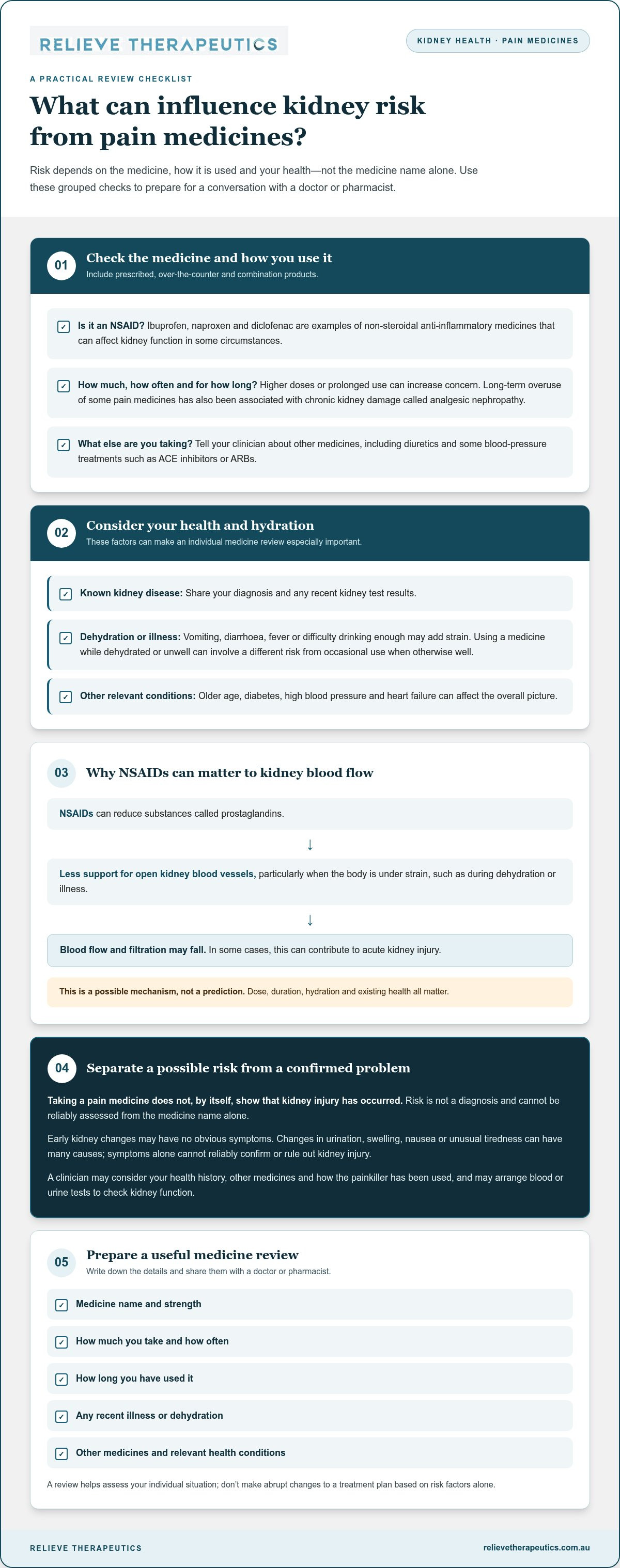
Risk depends on several factors: the medicine, how much and how often it is taken, how long it is used, hydration and a person’s health. Using a medicine while dehydrated or unwell may involve a different risk from occasional use when someone is otherwise well. Existing kidney disease, older age, diabetes, high blood pressure and heart failure can also make a medicine review especially important. Risk is not a diagnosis, and it cannot be reliably assessed from the medicine name alone.
Which painkillers are most often linked with kidney concerns?
Non-steroidal anti-inflammatory drugs, known as NSAIDs, are an important category to discuss. Examples available in Australia include ibuprofen, naproxen and diclofenac. These medicines can affect kidney function in some circumstances, particularly with higher doses or prolonged use. The risk may rise when someone is dehydrated or has certain existing health conditions. Whether a medicine is prescribed or bought over the counter, its suitability depends on the individual. Tell your doctor or pharmacist about both types, including combination products.
Long-term overuse of some pain medicines has also been associated with a condition called analgesic nephropathy, a form of chronic kidney damage. This term describes a possible consequence of sustained exposure. It is not something that can be identified simply because a person uses pain relief.
Does taking a painkiller mean your kidneys are damaged?
Pain medicine use alone does not diagnose kidney damage. A medicine may carry a potential risk without causing injury in a particular person. Feeling well doesn’t always rule out a kidney problem either, as early kidney changes can produce no obvious symptoms. Changes in urination, swelling, nausea or unusual tiredness can have many causes, so symptoms alone cannot reliably confirm or exclude kidney injury.
A clinician considers the whole picture, including your health history, other medicines and how the painkiller has been used. They may arrange blood or urine tests to check kidney function and interpret the results alongside symptoms and previous health information. Don’t assume a symptom proves the medicine caused harm, and don’t rely on the absence of symptoms as proof that everything is fine.
To make a review more useful, write down the medicine’s name and strength, how much you take, how often and for how long. Note any recent illness or dehydration, too. Share the list with a doctor or pharmacist, particularly if you have a condition that may affect kidney health or take medicines such as diuretics or some blood-pressure treatments. This helps them assess your individual situation without turning pain relief into an all-or-nothing decision.
How pain medicines can affect your kidneys, and who may be more vulnerable
Your kidneys filter waste from the blood and help regulate fluid and mineral balance. They also adjust blood flow through a fine network of vessels so filtration can continue as your body’s needs change. Some medicines can influence this process. The effect depends on the circumstances and the person, not simply on whether a medicine belongs to a particular category.
What happens in the kidneys when certain pain medicines are used?
NSAIDs such as ibuprofen, naproxen and diclofenac can reduce the production of substances called prostaglandins. In the kidneys, prostaglandins help keep blood vessels open, particularly when the body is under strain, such as during dehydration or illness. If their effect is reduced, blood flow into the kidneys may fall. This can lower filtration and, in some cases, contribute to acute kidney injury.
This describes a possible mechanism, not a prediction that injury will happen. The dose, duration of use, hydration and existing health all matter. A clinician can help interpret those factors and decide whether a medicine review or kidney-function testing is appropriate. Don’t use the mechanism alone to diagnose a problem or make abrupt changes to a treatment plan.
Who should take extra care with pain medicines?
Some circumstances make an individual review particularly worthwhile. They are reasons to discuss your situation with a doctor or pharmacist, not a checklist that can tell you whether your kidneys are healthy.
- Known kidney disease: Reduced kidney function may affect how your body responds to medicines. Share your diagnosis and any recent kidney test results.
- Older age or dehydration: Kidney function and the body’s ability to maintain fluid balance can change with age. Vomiting, diarrhoea, fever or difficulty drinking enough may add strain.
- Other health conditions: Diabetes, high blood pressure and heart failure can be relevant when considering kidney risk and pain relief.
- Other medicines: Diuretics and some blood-pressure medicines, including ACE inhibitors or ARBs, may affect the overall risk when used alongside an NSAID. A pharmacist or doctor can review the combination, including non-prescription products.
Medicine, dose, duration and existing health all shape the potential kidney risk. One factor alone doesn’t establish that a particular painkiller is unsafe for you, and having none of these factors doesn’t guarantee zero risk. If you’re worried about kidney damage from painkillers, bring a complete list of your medicines to a health professional. Include products bought over the counter as well as prescribed medicines, and mention any recent illness or dehydration.
As you consider pain-management approaches, you can also explore information about pain-support options to help prepare questions for a healthcare professional.
Comparing pain relief options when kidney health is a concern
Choosing pain relief is not simply a matter of finding the option labelled “gentler”. Kidney function, the cause of the pain, other health conditions and medicines all affect the discussion. The comparison below outlines general differences, not personal treatment advice. No medicine or supplement is right for everyone. A pharmacist or doctor can review your circumstances before you change how you manage pain.
NSAIDs and paracetamol: why the choice is individual
NSAIDs, including ibuprofen, naproxen and diclofenac, can reduce kidney blood flow in some circumstances. Paracetamol is generally considered less likely to affect the kidneys when used as directed, but it isn’t risk-free: taking too much can cause serious liver injury. These medicines also differ in how they may interact with health conditions and other treatments.
| Option | What to consider |
|---|---|
| NSAIDs | May affect kidney function, particularly with dehydration, existing kidney problems, some other medicines, or higher-dose or prolonged use. Their suitability needs individual review. |
| Paracetamol | Generally considered less likely than NSAIDs to affect the kidneys when taken as directed. Taking more than directed can be dangerous, particularly for the liver. |
| Non-medicine strategies | Movement, heat or other approaches may support pain management for some causes. The appropriate option depends on the condition and a clinician’s advice. |
This comparison isn’t a reason to switch, stop or combine medicines on your own. If you have kidney disease, take medicines for blood pressure or fluid balance, or use several products for pain, ask a pharmacist or doctor to review the full list. Combination products can contain the same active ingredient as a separate pain medicine, so check labels to help avoid accidental duplication. A clinician can also consider what is causing the pain and whether further assessment is needed.
Non-medicine approaches and supplements: what they can and cannot do
For some types of pain, a clinician may suggest suitable movement, physiotherapy, heat or changes to daily activities as part of a broader plan. These approaches aren’t interchangeable: what may help a stiff joint may not suit a new injury or another underlying cause. Get tailored advice, especially if pain is persistent, worsening or affecting normal activities.
Supplements need careful consideration, too. “Natural” doesn’t automatically mean kidney-safe, and a supplement isn’t a proven substitute for prescribed pain treatment. Ingredients may have side effects or interact with medicines, so include supplements in a medication review. If you’re worried about kidney damage from painkillers, use the conversation to compare the potential benefits and risks of each option rather than assuming one category is universally safe.
For broader context on supplement categories and questions to consider, see this non-opioid pain relief supplement guide. It can help you prepare questions, but decisions about pain management and kidney health are best discussed with a healthcare professional who understands your medical history.
What to do if worried about kidney damage from painkillers
If you’re worried about kidney damage from painkillers, take a measured next step rather than trying to diagnose the cause yourself. Don’t abruptly stop a prescribed medicine or take extra pain relief to compensate. A doctor or pharmacist can review your medicines and help you plan how to manage pain while considering your kidney health.
- Write down what you take. Record each medicine’s name and strength, how much you take, how often and for how long. Include prescribed medicines, over-the-counter products, combination remedies and supplements. Note relevant symptoms, when they began, and any recent vomiting, diarrhoea, fever or difficulty drinking fluids.
- Arrange an appropriate review. Contact your GP or pharmacist to discuss your concerns, particularly if you have known kidney disease or take several medicines. Explain what the pain relief is for and whether it’s helping.
- Follow the agreed plan. A clinician may review your health history and medicines, examine you, or arrange blood and urine tests to assess kidney function when appropriate. Ask what the results mean and what to do about ongoing pain. Don’t change prescribed treatment without medical advice.
When should you seek urgent medical help?
Get urgent medical assessment for severe, sudden or rapidly worsening symptoms. Seek emergency help if someone is seriously unwell, has difficulty breathing, collapses, becomes confused or is difficult to wake. In Australia, call Triple Zero (000) for an emergency. A marked reduction in urination, blood in the urine or new swelling should also be assessed promptly, especially if symptoms are worsening or occur with feeling very unwell.
These signs can have different causes; none proves kidney injury on its own. Not noticing a change doesn’t rule out a kidney problem either. Don’t wait for a routine appointment if symptoms are severe or deteriorating. If you’re unsure how urgently to act, contact a health professional for advice.
What should you discuss with a GP or pharmacist?
Bring your medicine and symptom record, and mention any history of kidney problems, diabetes, high blood pressure or heart failure. Ask whether your current pain relief needs review in light of your health and other medicines, whether kidney-function tests are appropriate, and what options may address the cause of your pain. A pharmacist can help check medicine combinations; a GP can assess your health and arrange further investigation when needed.
Once medical questions are addressed, you can discuss whether a dietary supplement belongs in your broader pain-management conversation. Relieve Therapeutics sells PEA capsules as a supplement, not as kidney treatment or a replacement for prescribed medicines. Explore PEA supplement options as information to discuss with your healthcare professional, particularly if you have kidney disease or take other medicines.
Where PEA supplements fit, and why they are not kidney treatment
After reviewing medicines and seeking clinical advice where needed, you may also want to ask about supplements as one part of a broader pain-management discussion. Palmitoylethanolamide, usually shortened to PEA, is a fatty acid amide studied in relation to pain. That interest does not establish that PEA treats kidney injury, protects the kidneys or replaces pain medicines prescribed for you.
Relieve Therapeutics sells PEA as a dietary supplement, not prescription pain medication. Each serving contains 600 mg PEA, 150 mg Quercetin and 30 mg Luteolin. The ultra-micronised PEA capsules are produced in a GMP-certified facility in Australia, and each batch receives third-party quality-control testing for purity, potency and heavy metals. These details describe the product and its quality controls; they don’t demonstrate a kidney-related benefit or establish that it is suitable for every person.
What can readers reasonably understand about PEA?
Research into PEA relates to pain, not treatment of kidney injury. Evidence about possible pain-related effects should be considered on its own terms, rather than taken as proof of effectiveness for a particular person or of kidney safety. Information about long-term kidney safety in large populations remains limited, so people with kidney concerns should not assume a supplement is harmless simply because it is not a conventional pain medicine.
For more background on proposed mechanisms and pain research, read this PEA science and pain overview. Mechanism explanations can provide context, but they don’t confirm that a product prevents or treats disease.
How to consider a supplement alongside pain medicines
If you’re worried about kidney damage from painkillers, mention any supplement you’re considering to your GP or pharmacist. This is especially relevant if you have diagnosed kidney disease, take several medicines, or are being assessed for possible kidney problems. Share the label or ingredient list so the health professional can consider the full combination and your medical history.
- Ask whether the supplement is appropriate alongside your current medicines and health conditions.
- Discuss what evidence applies to your pain concern and what remains uncertain.
- Agree on a pain-management plan before making changes to prescribed treatment.
Don’t stop, reduce or replace prescribed medicines with a supplement unless the clinician managing your care advises you to do so. PEA is an optional topic for a healthcare discussion, not a recommendation to treat pain or kidney damage. If you’d like to review the product details as part of that conversation, you can explore Relieve Therapeutics PEA capsules.
Take a thoughtful next step towards pain support
If you’re worried about kidney damage from painkillers, you don’t have to choose between ignoring pain and making medication changes on your own. Work with a healthcare professional on a plan that considers both your comfort and your longer-term health. It can also help to note what makes daily activities easier or harder, so the conversation covers practical outcomes as well as medicine risks.
Supplements may be one topic to raise as part of that discussion, but they aren’t kidney treatments or substitutes for prescribed care. Keep your GP or pharmacist informed about anything you’re considering, and use their advice to guide decisions that fit your circumstances.
If you’d like to learn more about PEA as an optional supplement to discuss with your healthcare professional, explore Relieve Therapeutics PEA capsules. Relieve Therapeutics offers ultra-micronised PEA capsules in 60, 120 and 180 capsule options. Review the product details and discuss whether PEA fits your situation with your healthcare professional.
Frequently Asked Questions
Can one dose of a painkiller damage your kidneys?
A single dose doesn’t automatically mean kidney damage has occurred, although individual circumstances matter. For example, a person who is dehydrated or already has kidney disease may need different advice from someone without those concerns. If you’re uneasy after taking a medicine, write down its name, strength and when you took it, then speak with a pharmacist or GP. Don’t use symptoms alone to decide whether your kidneys have been affected.
Are NSAIDs or paracetamol harder on the kidneys?
NSAIDs and paracetamol have different risk profiles, so neither is the right choice for everyone. NSAIDs can affect kidney function in some circumstances; paracetamol has other important precautions, including the risk of serious harm if too much is taken. For example, check with a pharmacist before using a product that combines ingredients if you already take another pain medicine. A GP or pharmacist can consider your health, medicines and reason for pain before you make changes.
Can kidney damage from painkillers be reversed?
Recovery depends on what caused the kidney problem and how extensive it is, so no general answer can predict an individual outcome. Some changes may improve after the cause is addressed, while other kidney problems may need ongoing care. A clinician can assess your medicine history and kidney function, then explain what the findings mean for you. Seek advice promptly if you suspect a medicine is affecting you, and discuss prescribed treatment with its prescriber before changing it.
How do doctors check whether painkillers have affected the kidneys?
Doctors assess the whole picture rather than relying on one symptom or test result. They may ask when you started the medicine, how often you use it, and whether you’ve recently been unwell or dehydrated. Blood tests can measure substances such as creatinine, while urine tests can look for changes that need follow-up. Your clinician interprets results in context, including previous test results, because a single reading may not tell the full story.
Does drinking extra water prevent kidney damage from painkillers?
No, drinking extra water isn’t a guaranteed way to prevent medicine-related kidney problems. Staying hydrated supports general health, but fluid needs differ, and some people with kidney or heart conditions may have been advised to limit fluids. If you have vomiting, diarrhoea or difficulty keeping fluids down, ask a health professional for advice rather than forcing extra water. Follow any individual fluid guidance you’ve already received from your care team.
Should I stop taking prescribed painkillers if I am worried about my kidneys?
Don’t stop or change a prescribed medicine solely because of online information. Contact the prescriber or a pharmacist to review your concern, especially if you have new symptoms or a history of kidney problems. If you’re worried about kidney damage from painkillers, have the medicine packaging or an up-to-date list handy, including non-prescription products and supplements. Severe or rapidly worsening symptoms need urgent medical assessment rather than waiting for a routine medication review.
Is PEA proven safe for people with kidney disease?
PEA has not been established as a kidney treatment or as proven safe for every person with kidney disease. It is a dietary supplement, not a replacement for prescribed care, and available information doesn’t settle its long-term kidney safety for all users. If you have kidney concerns, show your GP or pharmacist the specific product label and ingredient list before use. They can consider it alongside your health history and current medicines.