

Plantar fasciitis is irritation of the band of tissue beneath the foot that supports the arch and helps absorb impact. A supplement for plantar fasciitis in Australia may be considered as one part of a broader approach, alongside practical measures such as rest, ice, stretching and supportive footwear. Because other conditions can also cause heel pain, an assessment can help clarify its cause.
Heel pain can make everyday walking and exercise difficult, and it’s understandable to want a clear way forward. This article explains plantar fasciitis, outlines treatment options and describes when professional assessment may be appropriate. It also explains how supplements fit into the discussion, so you can weigh them alongside approaches that address foot movement, support and recovery.
Key Takeaways
- Recognise common plantar fascia symptoms and understand why recovery can take time.
- Explore practical treatment options, including stretching, supportive footwear and activity adjustments.
- Know when persistent or unexplained heel pain warrants professional assessment.
- Consider supplements as one part of a broader approach, and use a consistent routine when assessing their role.
1. What is a Plantar Fasciitis?
Plantar fasciitis describes pain linked to irritation of the plantar fascia, the strong band beneath the foot. It supports the arch and helps absorb impact during walking, running and jumping. Symptoms commonly include tenderness around the heel bone, stiffness and discomfort when standing or walking. Pain can feel more noticeable after rest or when taking the first steps of the day, then change as you move. Repeated pressure on hard surfaces or footwear with limited cushioning may aggravate symptoms.
A heel spur can occur alongside plantar fasciitis, but the spur itself isn’t necessarily the source of heel pain. Pain is typically associated with irritation of the plantar fascia. Flat feet don’t automatically cause heel pain, and an image showing a heel spur doesn’t explain symptoms on its own. Massage and stretching may form part of care, but persistent discomfort needs attention to the broader pattern, including activity and footwear.
Recovery varies. Plantar fasciitis symptoms can take several months to settle, while most cases improve within 6 to 18 weeks after appropriate treatment. For most people, the condition improves spontaneously within a year; when treatment has been delayed, improvement may take 6 to 12 months or longer. Persistent heel pain may be described as chronic plantar fasciitis. These timeframes aren’t a reason to ignore worsening pain or difficulty walking.
Are plantar fasciitis supplements regulated by the TGA in Australia? The TGA’s role depends on how a product is classified and supplied. Check the product label and its Australian regulatory status rather than assuming all supplements are treated alike.
Does private health insurance cover supplements for plantar fasciitis in Australia? Cover depends on your policy’s benefits and exclusions. Review the wording on supplements before relying on a rebate.
What are the risks and side effects of supplements for plantar fasciitis? Effects and risks depend on the ingredient, dose, health conditions and other medicines. Read the label and discuss suitability with a health professional.
Can plantar fasciitis supplements interact with common medicines? Some ingredients may interact with medicines. Ask a pharmacist or doctor to review the product ingredients alongside your current medicines.
2. Plantar fasciitis treatment options
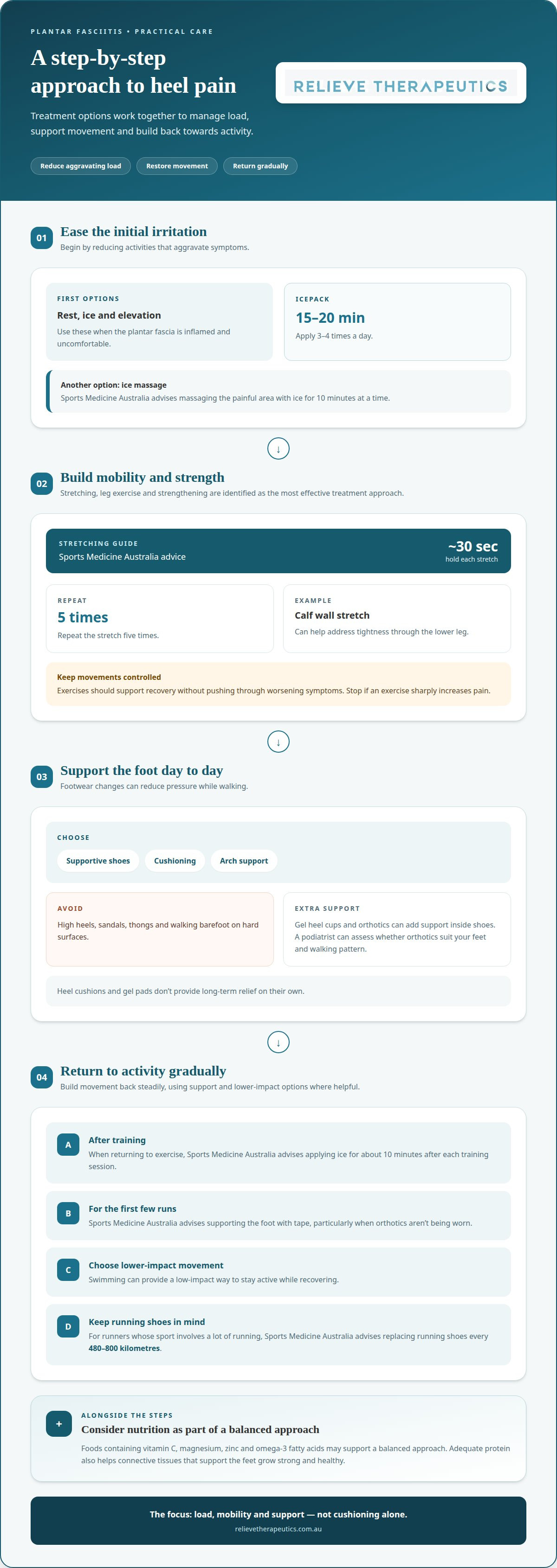
Start by reducing activities that aggravate symptoms, then build movement back gradually. Rest, ice and elevation are initial options when the plantar fascia is inflamed and uncomfortable. An icepack can be applied for 15-20 minutes, 3-4 times a day. Sports Medicine Australia also advises ice massage on the painful area for 10 minutes at a time.
Stretching the foot, leg exercise and strengthening are identified as the most effective treatment approach. Sports Medicine Australia advises holding stretches for about 30 seconds and repeating them five times. A calf wall stretch can help address tightness through the lower leg; use controlled movements and stop if an exercise sharply increases pain. Exercises should support recovery without pushing through worsening symptoms.
Footwear changes can reduce pressure while walking. Choose supportive shoes with cushioning and arch support, and avoid high heels, sandals, thongs and walking barefoot on hard surfaces. Gel heel cups and orthotics can add support inside shoes, although heel cushions and gel pads don’t provide long-term relief on their own. A podiatrist can assess whether orthotics suit your feet and walking pattern.
- Return to activity gradually: Sports Medicine Australia advises applying ice for about 10 minutes after each training session when returning to exercise. It also advises supporting the foot with tape for the first few runs, particularly when orthotics aren’t being worn.
- Adjust activity: Swimming can provide a low-impact way to stay active while recovering. For runners, Sports Medicine Australia advises replacing running shoes every 480-800 kilometres when the sport involves a lot of running.
- Consider nutrition: Foods containing vitamin C, magnesium, zinc and omega-3 fatty acids may support a balanced approach. Adequate protein also helps connective tissues that support the feet grow strong and healthy.
These steps address load, mobility and support rather than relying on cushioning alone. Choose changes that help you move comfortably and support steady recovery.
3. When to seek professional evaluation
Heel pain should be assessed because several structures and conditions can cause it. Pain associated with the plantar fascia may feel different from discomfort involving the heel bone, Achilles tendon, joints or muscles. A podiatrist or doctor can examine your foot, discuss your activity and consider other possible causes. This is important when symptoms don’t follow a familiar pattern or make walking uncomfortable.
Arrange an assessment if pain persists, worsens or keeps returning despite changes to exercise and footwear. Also seek advice if heel pain limits standing, interrupts daily activities or makes it difficult to resume your usual movement. A clinician can consider where the pain is, when it appears and whether inflammation or another issue may be involved. These details help guide suitable care and avoid treating the wrong cause.
Before an appointment, note details that clarify the pattern: whether pain is strongest after rest, during walking or after exercise; which activities aggravate it; and whether rest changes it. Mention any recent change in activity, footwear or arch support. Bring a list of medicines and supplements, as these can inform discussions about treatment options. This record gives the clinician a clearer picture without relying on memory alone.
Professional assessment is particularly useful when recovery stalls or symptoms interfere with everyday tasks. A podiatrist can assess foot movement and support needs, while a doctor can consider broader health factors. An assessment may distinguish plantar fascia irritation from a tendon problem or another source of heel pain. That distinction shapes the next steps, including whether stretching, strengthening or activity changes are appropriate.
Don’t use a supplement instead of investigating persistent heel pain. Supplements may be considered alongside a care plan, but they can’t identify the cause of symptoms. If pain is severe, worsening or preventing comfortable movement, seek medical assessment promptly. Clear advice about the cause can help direct care towards recovery and reduce the risk of continuing an unsuitable exercise routine.
4. How long might supplements take to help plantar fasciitis?
There isn’t a reliable instant timeframe for a supplement to ease plantar fasciitis symptoms. Plantar fascia tissue may take several weeks to heal properly, so changes in discomfort can’t be attributed to a supplement alone. A daily supplement routine is recommended for 90 days before judging whether it works. That period is a way to assess a routine, not a promise of improvement.
Keep the wider recovery plan consistent during those 90 days. Stretching, strengthening and supportive footwear address different factors affecting the foot, while a supplement is only one possible component. Changing several things at once makes it harder to identify what may be helping. For example, note when you begin a supplement and whether you also change exercise, footwear or stretching.
Track function as well as pain. Record whether your first steps after rest feel different, how long you can walk comfortably and which activities bring symptoms on. A simple daily note can show patterns that memory may miss. Look for changes across ordinary tasks, rather than relying on one unusually comfortable or painful day. These observations help make a 90-day review more considered.
After following a routine, compare your notes with how you felt at the start. If heel pain remains unchanged, worsens or limits walking, seek professional assessment rather than extending supplementation by default. A clinician can reassess the cause and review your supplement, medicines and other care. If symptoms improve, treat that change as one part of recovery, alongside measures that support movement and tissue healing.
For an Australian reader considering a supplement for plantar fasciitis, the practical question is whether a consistent routine fits their broader care plan. Follow the product label, avoid exceeding its directions and account for any changes in symptoms. A 90-day assessment gives you a defined review point, while professional advice helps address persistent pain and keeps the focus on suitable care.
Relieve Therapeutics
Relieve Therapeutics offers PEA capsules for readers considering a supplement as part of their broader approach to plantar fasciitis. The range includes PEA 60 Capsules, PEA 120 Capsules and PEA 180 Capsules. PEA is a supplement option, not a replacement for assessment or care addressing the cause of heel pain.
If you’re considering supplementation, think about how it fits alongside the stretching, footwear adjustments and other measures discussed above. Read the product label, follow its directions and involve a health professional in decisions about suitability, particularly if you take medicines or other supplements. Keeping a symptom record can also help you assess changes over time.
For information about PEA capsules and choosing an option to suit your needs, contact Relieve Therapeutics.
Make your next step a considered one
Persistent heel discomfort can make it tempting to try several changes at once. A steadier approach is to track what you’re taking and how your everyday movement changes. This record can help you and your health professional discuss whether a supplement for plantar fasciitis in Australia fits your broader care plan, particularly if you use medicines or manage other health conditions.
Supplements aren’t a substitute for identifying the cause of heel pain. If symptoms continue to affect walking or daily activities, prioritise a professional assessment and use that advice to guide your next decisions. A supplement may be one part of your plan, considered alongside appropriate care and a consistent routine.
For information about PEA supplements and support with your next step, contact Relieve Therapeutics. A clear, considered plan can help you move forward with confidence.
Frequently Asked Questions
What is a Plantar Fasciitis?
Plantar fasciitis is a painful condition involving the plantar fascia, the connective tissue beneath the foot. The name describes a problem with this tissue, not simply a bony growth on the heel. A heel spur seen on an X-ray doesn’t establish the cause of someone’s pain. The distinction matters because treatment needs to address the source of symptoms, not just an image finding.
Can supplements replace a doctor’s care for heel pain?
No. A supplement for plantar fasciitis in Australia can’t assess what is causing heel pain or rule out other conditions. For example, pain around the heel may involve structures other than the plantar fascia, so relying on a supplement alone could delay appropriate assessment. If discomfort persists, worsens or affects everyday movement, seek professional care and discuss any supplement as one part of your wider plan.
How is it treated?
Treatment usually combines changes that reduce aggravating loads with a gradual return to movement. For example, temporarily swap an activity that provokes heel pain for a more comfortable option, then progress as symptoms allow. A clinician can tailor exercises to your foot and assess whether extra support is appropriate. Treatment focuses on function and recovery, not simply masking discomfort.
What causes it?
Plantar fascia pain is associated with irritation in the tissue beneath the foot, but heel pain can have other causes. Repeated loading through activities such as walking, running or jumping places demands on this tissue. A heel spur doesn’t necessarily cause pain, and flat feet alone don’t mean someone will develop symptoms. An assessment can help distinguish possible causes.
What else helps heel pain besides supplements?
Daily habits can support comfort without relying on supplements. Choose footwear that feels supportive for the activities you need to do, and avoid continuing exercise that clearly aggravates symptoms. A balanced diet can provide nutrients without supplements, particularly when it includes a variety of whole foods. If heel pain persists despite practical adjustments, professional assessment can help guide your next step.
Which supplements may help plantar fasciitis, and what is the evidence?
PEA is one supplement option, but evidence about pain in other conditions doesn’t establish that it treats plantar fasciitis specifically. If you’re considering a supplement for plantar fasciitis in Australia, understand that nutrients such as vitamin C, magnesium, zinc and omega-3 may support a balanced diet, but aren’t established here as a proven plantar fascia treatment. Relieve Therapeutics offers PEA capsules; discuss suitability with a health professional, especially if you take medicines.