
What if the reason your pain relief efforts have fallen short isn't the solution itself, but simply your expectations around timing? If you've been searching for answers on how long does PEA take to work, you're not alone. Many Australians exploring Palmitoylethanolamide (PEA) as a natural approach to managing chronic discomfort find themselves in exactly the same position: cautiously hopeful, but uncertain about what to expect and when.
That uncertainty is completely understandable. When you've already navigated the frustration of ineffective pain management options, the last thing you want is to invest in something new without a clear picture of the journey ahead. You deserve honest, evidence-based guidance, not vague promises.
This article walks you through the realistic timeline for PEA to take effect, the biological processes that drive its action, and the factors that can influence your individual response. By the end, you'll have a grounded understanding of what to expect, and the confidence to make an informed decision about whether PEA is the right fit for your pain relief goals.
Key Takeaways
- PEA (Palmitoylethanolamide) is a naturally occurring fatty acid amide that works by interacting with the endocannabinoid system to help modulate pain and reduce inflammation at a cellular level.
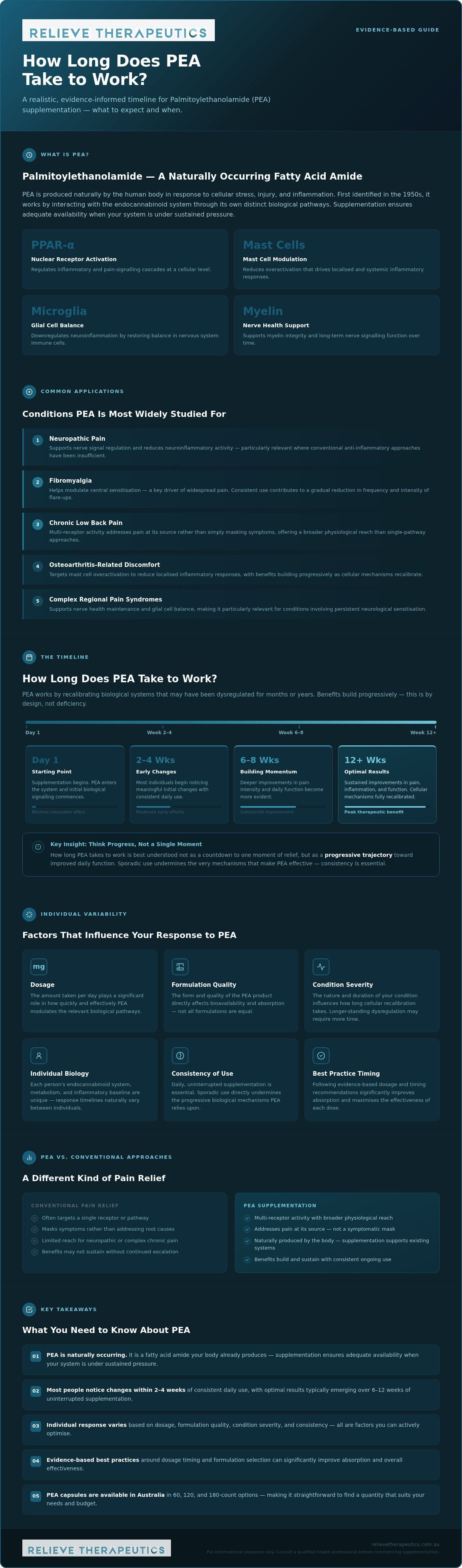
- Understanding how long does PEA take to work is essential for setting realistic expectations - most individuals begin noticing meaningful changes within a few weeks of consistent supplementation, with optimal results typically emerging over a longer period.
- Your individual response to PEA can be influenced by several key factors, including dosage, formulation quality, and the nature of your condition - all of which are explored in detail throughout this article.
- Following evidence-based best practices around dosage and timing can significantly improve absorption and help you get the most from your PEA supplementation journey.
- Australians can conveniently purchase PEA capsules online in 60, 120, and 180-count options, making it straightforward to find a quantity that suits your needs and budget.
What is Palmitoylethanolamide (PEA) and How Does It Work?
Palmitoylethanolamide, commonly known as PEA, is a naturally occurring fatty acid amide produced by the human body in response to cellular stress, injury, and inflammation. First identified in the 1950s, it belongs to the same family of lipid signalling molecules as the endocannabinoids, though it operates through its own distinct biological pathways. Your body already knows how to use it. Supplementation simply ensures there's enough of it available when your system is under sustained pressure.
At its core, PEA works by interacting with peroxisome proliferator-activated receptor-alpha (PPAR-alpha), a nuclear receptor that plays a central role in regulating inflammatory and pain-signalling cascades. It also modulates mast cell activity and influences glial cell behaviour in the nervous system, two mechanisms that are particularly relevant for individuals managing persistent discomfort. The result is a multi-layered biological response that addresses pain at its source rather than simply masking symptoms.
The Science Behind PEA: Mechanisms of Action
PEA's ability to regulate pain signals stems from its influence over specialised immune cells in the nervous system, particularly microglia and mast cells. When these cells become overactivated, they amplify pain perception and drive neuroinflammation. PEA helps restore balance by downregulating this excessive activation. Research published in peer-reviewed journals, including studies compiled in systematic reviews of PEA's clinical use, has consistently found that PEA supplementation is associated with meaningful reductions in pain intensity across a range of chronic conditions. Unlike many conventional pain management supplements that target a single receptor or pathway, PEA's multi-receptor activity gives it a broader physiological reach. This is one reason why understanding how long does PEA take to work matters so much: its benefits build progressively as these cellular mechanisms are gradually recalibrated.
Common Applications of PEA
PEA is most widely studied in the context of neuropathic pain, chronic low back pain, fibromyalgia, and osteoarthritis-related discomfort. Its capacity to support nerve health makes it particularly relevant for conditions where conventional anti-inflammatory approaches have proven insufficient. Many individuals managing fibromyalgia or complex regional pain syndromes report that consistent PEA use contributes to a gradual but noticeable reduction in the frequency and intensity of flare-ups.
Consistency is the operative word here. Because PEA works by modulating underlying biological processes rather than delivering an immediate analgesic effect, regular supplementation is essential. Sporadic use undermines the very mechanisms that make PEA effective. This is why how long does PEA take to work is best understood not as a countdown to a single moment of relief, but as a progressive trajectory toward improved daily function.
- Neuropathic pain: supports nerve signal regulation and reduces neuroinflammatory activity
- Fibromyalgia: helps modulate central sensitisation, a key driver of widespread pain
- Chronic inflammation: targets mast cell overactivation to reduce localised and systemic inflammatory responses
- Nerve health maintenance: supports myelin integrity and glial cell balance over time
For Australians seeking a natural, evidence-informed approach to chronic pain management, PEA capsules offer a practical and accessible starting point, available in 60, 120, and 180-count options to suit varying supplementation needs.
How Long Does PEA Take to Work?
There's no single answer that applies to everyone, and any source claiming otherwise isn't being fully honest with you. What the clinical literature does tell us is that most individuals begin to notice meaningful changes within two to four weeks of consistent daily supplementation. Deeper, more sustained improvements in pain intensity and daily function tend to emerge over a longer horizon, typically between six and twelve weeks of uninterrupted use.
This isn't a slow-acting supplement in the negative sense. It's a compound that works by recalibrating biological systems that have often been dysregulated for months or years. That kind of restoration takes time by design, not by deficiency.
Individual Variability: What Affects the Onset of Effects?
Understanding how long does PEA take to work for you specifically means looking at several intersecting variables. No two people arrive at supplementation from the same biological starting point, and that matters enormously for the timeline.
- Dosage and consistency: Taking PEA at a clinically relevant dose, every day without gaps, is the single most influential factor. Inconsistent use interrupts the gradual cellular recalibration that underpins PEA's effectiveness.
- Formulation and absorption: Not all PEA products behave the same way in the body. Bioavailability varies depending on how the compound is processed and delivered, which is why formulation quality matters when selecting a supplement.
- Severity and chronicity of the condition: Someone managing a recently developed inflammatory issue may respond more quickly than someone whose nervous system has been sensitised over several years. Longer-standing conditions often require a longer recalibration period.
- Individual metabolism: Factors including age, body composition, gut health, and concurrent medications can all influence how efficiently PEA is absorbed and utilised at a cellular level.
- Lifestyle factors: Sleep quality, physical activity, and dietary patterns all interact with the inflammatory pathways PEA targets. Supporting these areas alongside supplementation can meaningfully accelerate and deepen results.
Setting Realistic Expectations
Patience isn't passive here. It's a deliberate strategy. The individuals who report the most significant outcomes with PEA are almost universally those who committed to a consistent protocol for at least eight to twelve weeks before drawing conclusions. Stopping at week three because the change feels subtle is one of the most common reasons people underestimate what PEA can genuinely deliver.
If you've reached the twelve-week mark with no discernible improvement despite consistent, quality supplementation, that's a reasonable point to reassess and consult a healthcare professional about whether an alternative or adjunct approach is warranted. Honest self-assessment matters as much as patience.
For those ready to begin a structured, evidence-informed approach to managing chronic discomfort, exploring PEA capsules from Relieve Therapeutics is a practical first step, available in 60, 120, and 180-count options to support your supplementation journey from the outset.
Knowing how long does PEA take to work isn't just about managing expectations. It's about giving yourself the best possible conditions for a genuine, lasting response.
Optimising Your PEA Experience: Dosage and Best Practices
Knowing that PEA works is one thing. Knowing how to take it correctly is what separates a meaningful outcome from a disappointing one. The clinical evidence points clearly to dosage consistency and formulation quality as the two variables most within your control, and both deserve careful attention from day one of your supplementation protocol.
Most clinical studies examining PEA for chronic pain conditions have used daily doses ranging from 300mg to 1200mg, typically divided across two administrations. A common starting point is 600mg per day, often split into a morning and evening dose, with some protocols escalating to 1200mg daily during the initial weeks before tapering to a maintenance dose. The right amount for you will depend on the nature and severity of your condition, which is why speaking with a healthcare professional before beginning is always advisable.
How to Take PEA for Maximum Effectiveness
Timing matters more than most people realise. Taking PEA with a meal that contains healthy fats, such as avocado, olive oil, or nuts, can meaningfully improve absorption, since PEA is a lipid-based compound that benefits from the presence of dietary fat during digestion. Splitting your daily dose between morning and evening also helps maintain steadier plasma levels throughout the day, which supports the continuous cellular modulation that underpins how long does PEA take to work for each individual.
Capsule form, as offered by Relieve Therapeutics in 60, 120, and 180-count options, is the most practical and consistent delivery method for most people. It removes the guesswork around dosing and ensures you're receiving a standardised amount each time. Staying well hydrated throughout the day also supports overall absorption and helps your body process the compound efficiently.
Tracking Your Progress with PEA
Progress with PEA is rarely dramatic in any single day. It accumulates gradually, which makes tracking essential. A simple daily journal, noting pain intensity on a consistent scale, sleep quality, mobility, and mood, gives you an objective reference point that memory alone can't reliably provide.
- Rate your pain daily: Use a consistent 0-10 scale each morning and evening to identify trends over weeks, not just days.
- Note functional improvements: Changes in how long does PEA take to work often show up first as improved sleep or reduced morning stiffness before pain scores shift noticeably.
- Record any lifestyle changes: Diet, exercise, and stress levels all interact with PEA's mechanisms, so logging these helps identify what's supporting or hindering your response.
- Consult a professional at the eight-week mark: If you've maintained a consistent protocol without noticeable improvement, a healthcare professional can help assess whether a dosage adjustment or complementary approach is warranted.
Some individuals also find that combining PEA with complementary supplements such as omega-3 fatty acids or magnesium supports the broader anti-inflammatory environment in which PEA operates. Any combination approach should be discussed with a qualified practitioner to ensure compatibility with your current health circumstances.
Potential Side Effects and Considerations
PEA's safety profile is one of its most consistently reported strengths in the clinical literature. As a compound your body produces naturally, it tends to be well tolerated across a broad range of individuals. That said, "well tolerated" doesn't mean "without any considerations," and approaching any new supplementation protocol with informed awareness is simply good practice.
The most commonly reported side effects are mild and transient. These include:
- Gastrointestinal discomfort: mild nausea or loose stools, particularly when beginning supplementation or taking PEA on an empty stomach
- Appetite changes: some individuals report a temporary shift in appetite during the early weeks of use
- Fatigue: occasionally noted during the initial adjustment period, typically resolving within the first two weeks
These effects are generally short-lived. Taking PEA with food, as already discussed in the context of optimising absorption, also tends to minimise digestive sensitivity. If symptoms persist beyond the first few weeks, that warrants a conversation with your healthcare provider rather than simply pushing through.
Who Should Consult a Doctor Before Taking PEA?
Certain individuals should seek professional guidance before beginning PEA supplementation. This includes anyone who is pregnant or breastfeeding, since PEA hasn't been studied extensively in these populations. People managing autoimmune conditions, liver-related disorders, or those taking immunosuppressant medications should also consult their doctor first. PEA influences immune cell activity, which means its interaction with medications that modulate immune function deserves careful professional assessment. Similarly, if you're currently taking blood-thinning agents or other lipid-based compounds, your prescribing doctor is best placed to evaluate compatibility. Understanding how long does PEA take to work in your specific context is partly a clinical question, not just a supplementation one.
Long-Term Use of PEA: What to Consider
For individuals managing chronic conditions, long-term PEA use is generally considered appropriate based on current evidence, with no significant safety signals emerging from extended clinical observations. The more relevant question isn't whether it's safe to continue, but whether it remains necessary and effective for your specific circumstances.
Reassessing your supplementation every three to six months is a sensible approach. Track whether your pain scores and functional capacity continue to reflect the improvements you observed in the earlier months, and discuss your progress openly with your healthcare provider. Pain management is rarely static, and your supplementation strategy shouldn't be either. Maintaining that ongoing dialogue ensures your approach stays calibrated to your actual needs rather than habit alone.
If you're ready to begin a well-informed supplementation protocol with a product designed for consistent, quality delivery, explore PEA capsules from Relieve Therapeutics, available in 60, 120, and 180-count options to suit where you are in your journey.
Where to Buy PEA Capsules in Australia
Once you've made an informed decision to begin a PEA supplementation protocol, the next practical question is straightforward: where do you buy it, and how do you choose well? For Australians, the most reliable path is purchasing directly from a dedicated, transparent supplier rather than navigating the inconsistent quality landscape of general marketplace platforms.
Why Choose Relieve Therapeutics for PEA Capsules?
Relieve Therapeutics operates as a direct-to-consumer supplier of PEA capsules, which removes the intermediary layers that can compromise product integrity and inflate cost. Buying directly means you're receiving a product that's been handled, stored, and dispatched under consistent quality conditions, with full visibility into what you're taking. That transparency matters, particularly for a compound where formulation quality directly influences how long does PEA take to work for each individual.
Customer support is locally based, which means questions about your order, dosage guidance, or product suitability are handled by a team that understands the Australian context. There's no navigating offshore call centres or waiting across time zones for a response.
Making Your Purchase: A Step-by-Step Guide
Purchasing from Relieve Therapeutics is designed to be straightforward. Three quantity options are available to suit different stages of your supplementation journey:
- 60 Capsules: a practical entry point for those beginning their first protocol and wanting to assess their individual response before committing to a larger supply
- 120 Capsules: suited to individuals who've already established that PEA is working for them and want continuity without frequent reordering
- 180 Capsules: the most cost-efficient option for those committed to a longer-term supplementation plan, particularly relevant given that meaningful outcomes typically build over eight to twelve weeks of consistent use
The online store is straightforward to navigate. Select your preferred quantity, proceed to checkout, and complete your purchase through a secure payment process. Standard shipping is available across Australia, with delivery timeframes dependent on your location. Once your order is placed, you'll receive confirmation and tracking information so you know exactly when to expect your capsules.
It's worth checking the Relieve Therapeutics website directly for current shipping options and any available multi-pack pricing, as these details are subject to update. If you have questions before purchasing, contacting their customer support team is the most reliable way to get accurate, current information tailored to your circumstances.
Understanding how long does PEA take to work is only part of the equation. Having a dependable, quality source you can return to consistently is what makes a long-term protocol genuinely sustainable. Explore PEA capsules from Relieve Therapeutics and take the first step toward a structured, evidence-informed approach to managing chronic discomfort.
Your Path to Lasting Relief Starts Here
Managing chronic discomfort is a long game, and understanding how long does PEA take to work is the foundation of playing it well. Consistent daily supplementation, quality formulation, and realistic expectations across an eight to twelve week window are the three pillars that separate meaningful outcomes from missed opportunities.
PEA isn't a quick fix. It's a progressive, evidence-informed approach to addressing pain at its biological source, and that distinction matters enormously when you're making decisions about your health.
Relieve Therapeutics makes it straightforward to begin. As a direct-to-consumer Australian business, they offer transparent, high-quality PEA capsules in 60, 120, and 180-count options, with local customer support and accessible pricing that removes unnecessary barriers. You're not navigating a complicated system. You're simply taking a well-informed next step.
Give your body the consistency it needs to respond. Order your PEA capsules today for natural pain relief and start building the foundation for genuine, lasting change.
Frequently Asked Questions
How quickly can I expect PEA to start working for pain relief?
Most people begin noticing subtle but meaningful changes within two to four weeks of consistent daily supplementation. Understanding how long does PEA take to work means accepting that the timeline is progressive rather than immediate. PEA recalibrates overactivated immune cells and inflammatory pathways that have often been dysregulated for extended periods, so earlier improvements frequently appear as better sleep quality or reduced morning stiffness before pain scores shift noticeably.
Deeper, more sustained relief typically emerges between six and twelve weeks of uninterrupted use. Stopping prematurely because early changes feel subtle is one of the most common reasons people underestimate PEA's genuine potential.
Are there any side effects associated with taking PEA?
PEA is generally well tolerated, which reflects its status as a compound your body already produces naturally. The most commonly reported side effects are mild and transient, including slight nausea, loose stools, or temporary appetite changes during the initial weeks. Taking your capsules with a meal containing healthy fats, such as olive oil or avocado, tends to minimise digestive sensitivity considerably.
If any side effects persist beyond the first two to three weeks of supplementation, consulting a healthcare professional is the appropriate next step rather than simply continuing and hoping they resolve.
What is the best dosage of PEA for nerve pain?
Clinical studies examining PEA for neuropathic conditions have commonly used daily doses ranging from 600mg to 1200mg, typically split across two administrations. A practical starting point for many individuals is 600mg per day, divided into a morning and evening dose, which helps maintain steadier plasma levels throughout the day. Some protocols use a higher loading dose during the first several weeks before tapering to a maintenance level.
Because individual factors including body composition, metabolic rate, and the severity of nerve involvement all influence the optimal amount, discussing your specific circumstances with a qualified healthcare professional before beginning is strongly advisable.
Can I take PEA alongside other medications or supplements?
PEA is generally considered compatible with many common supplements, and some practitioners suggest that omega-3 fatty acids or magnesium may complement its anti-inflammatory mechanisms. However, PEA influences immune cell activity, which means it warrants professional assessment if you're taking immunosuppressant medications, blood-thinning agents, or other lipid-based compounds.
Anyone managing autoimmune conditions or taking prescription medications should consult their doctor before adding PEA to their routine. This isn't a precaution unique to PEA; it's simply responsible supplementation practice that protects your overall health management plan.
How should I store PEA capsules for optimal freshness?
PEA capsules should be stored in a cool, dry location away from direct sunlight and humidity. A cupboard or pantry shelf away from the stovetop or dishwasher is ideal. Avoid storing them in bathrooms, where fluctuating heat and moisture can gradually compromise the integrity of the capsule shell and the compound itself.
Always keep the lid firmly sealed between uses and check the expiry date printed on the packaging before beginning a new bottle. Storing your capsules correctly ensures the formulation performs as intended throughout your supplementation protocol.
Is PEA suitable for everyone, or are there contraindications?
PEA is appropriate for most healthy adults seeking natural support for chronic discomfort, but certain groups should seek professional guidance first. This includes people who are pregnant or breastfeeding, individuals managing autoimmune or liver-related conditions, and those taking prescription immunosuppressants. PEA hasn't been extensively studied in these populations, so professional assessment is the responsible starting point.
If you're unsure whether PEA is suitable for your specific health circumstances, speaking with your GP or a qualified naturopath before purchasing is the most reliable way to get guidance that's tailored to your individual situation.